Oil prices were sold off following news of sanctions.
2026-08-26 17:49:00
Brent crude oil prices fell significantly. The market had previously held strong expectations for new sanctions against Iran, but the actual sanctions implemented were less severe than anticipated by trading funds. This, coupled with a continued rise in US crude oil inventories, put significant downward pressure on international oil prices. The decline in oil prices effectively alleviated market anxiety about inflation, giving the US dollar index a brief respite. Meanwhile, positive signals continued to emerge from Middle East geopolitical negotiations, with the resumption of discussions related to shipping in the Strait of Hormuz. These multiple positive factors, including supply expectations, further fueled the sell-off in crude oil.  Investors' emotional reaction to the sanctions announcements was far more intense than the actual sanctions themselves. Many trading funds anticipated the risks and began actively selling Brent crude oil contracts. The fundamental data of continuously rising US crude oil inventories has become the most direct negative driver suppressing oil prices at this stage. Affected by the weakening Brent crude oil prices and the accompanying decline in US Treasury yields, the US dollar has temporarily halted its previous strong upward trend. Coupled with the volatile rise in major global stock indices and increased risk appetite, the safe-haven appeal of the US dollar has been further weakened, bringing significant downward resistance to its trend. On the surface, the US Treasury Department, by publicly announcing an increase in the minimum repurchase scale of US Treasury bonds and simultaneously launching sanctions against Iran, has bought itself a certain buffer window in the financial markets. Its policy objectives of trying to lower international oil prices and ease the pressure of high interest rates in the US Treasury market are gradually beginning to show initial results. The US Treasury Department previously made high-profile statements, threatening to isolate Iran as an economic outcast, but the final implemented plan was merely a slight tightening of the existing sanctions framework that Tehran had accepted for many years. A week ago, when news of a new round of stringent restrictions first emerged, risk aversion in the crude oil market cooled rapidly, with bullish funds initially pushing up oil prices significantly. Ultimately, the market found the actual policy measures from the Ministry of Finance to be relatively mild, and tensions eased. Investors, following the classic "buy the rumor, sell the fact" trading logic, began closing their long positions in Brent crude. Following this round of long position liquidation, news of continued easing of tensions in the Middle East amplified the sell-off in crude oil. Iran and Oman have returned to the negotiating table for substantive consultations, negotiating a temporary passage through the Strait of Hormuz for 30 to 60 days. If the trial runs are successful, this passage mechanism could potentially become a long-term, permanent arrangement. Meanwhile, Pakistani mediators revealed that dialogue between Iran and the US-Israel alliance has made some progress, increasing the possibility of further easing of geopolitical tensions. Meanwhile, tanker traffic on this globally vital oil shipping route remains sluggish, with only five tankers passing through the strait daily, far below the 10-day average of 15, reflecting weak short-term demand for crude oil transport. Shipping in the Bab el-Mandeb Strait, on the other hand, remained smooth and stable, with a total of 31 vessels passing through that day, compared to 29 the previous day. The overall volume is largely consistent with the long-term average, and there were no significant congestion or disruptions.
 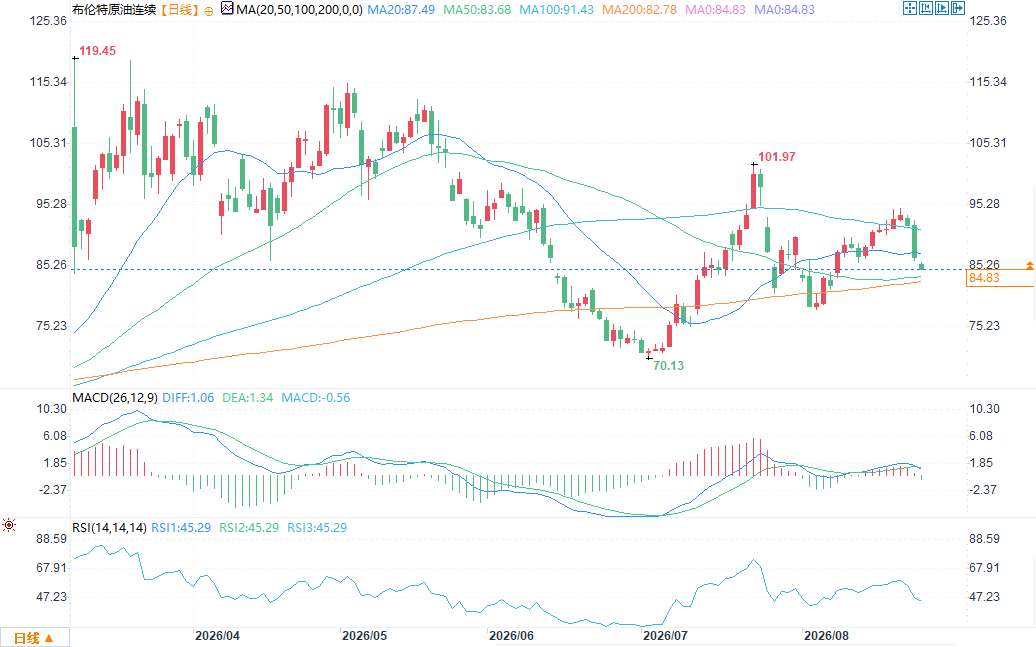 (WTI Crude Oil Daily Chart Source: EasyForex) Data released by the American Petroleum Institute (API) showed a crude oil inventory increase of 4.2 million barrels, a larger-than-expected increase that directly pressured Brent crude oil prices downward. If subsequent official data from the U.S. Energy Information Administration (EIA) confirms this increase, it will mark the fourth consecutive five-day cycle of inventory growth. This data points to weakening market demand against the backdrop of a significant increase in crude oil production, further easing the supply-demand balance, a typical bearish signal for crude oil. The decline in oil prices helps alleviate market concerns about accelerating U.S. inflation—if inflation continues to rise rapidly, it is highly likely to force the Federal Reserve to accelerate the pace of monetary policy tightening. Futures market pricing indicates a 38% probability of a federal funds rate hike in September; and a 72% probability of at least one rate hike by 2026.
Investors' emotional reaction to the sanctions announcements was far more intense than the actual sanctions themselves. Many trading funds anticipated the risks and began actively selling Brent crude oil contracts. The fundamental data of continuously rising US crude oil inventories has become the most direct negative driver suppressing oil prices at this stage. Affected by the weakening Brent crude oil prices and the accompanying decline in US Treasury yields, the US dollar has temporarily halted its previous strong upward trend. Coupled with the volatile rise in major global stock indices and increased risk appetite, the safe-haven appeal of the US dollar has been further weakened, bringing significant downward resistance to its trend. On the surface, the US Treasury Department, by publicly announcing an increase in the minimum repurchase scale of US Treasury bonds and simultaneously launching sanctions against Iran, has bought itself a certain buffer window in the financial markets. Its policy objectives of trying to lower international oil prices and ease the pressure of high interest rates in the US Treasury market are gradually beginning to show initial results. The US Treasury Department previously made high-profile statements, threatening to isolate Iran as an economic outcast, but the final implemented plan was merely a slight tightening of the existing sanctions framework that Tehran had accepted for many years. A week ago, when news of a new round of stringent restrictions first emerged, risk aversion in the crude oil market cooled rapidly, with bullish funds initially pushing up oil prices significantly. Ultimately, the market found the actual policy measures from the Ministry of Finance to be relatively mild, and tensions eased. Investors, following the classic "buy the rumor, sell the fact" trading logic, began closing their long positions in Brent crude. Following this round of long position liquidation, news of continued easing of tensions in the Middle East amplified the sell-off in crude oil. Iran and Oman have returned to the negotiating table for substantive consultations, negotiating a temporary passage through the Strait of Hormuz for 30 to 60 days. If the trial runs are successful, this passage mechanism could potentially become a long-term, permanent arrangement. Meanwhile, Pakistani mediators revealed that dialogue between Iran and the US-Israel alliance has made some progress, increasing the possibility of further easing of geopolitical tensions. Meanwhile, tanker traffic on this globally vital oil shipping route remains sluggish, with only five tankers passing through the strait daily, far below the 10-day average of 15, reflecting weak short-term demand for crude oil transport. Shipping in the Bab el-Mandeb Strait, on the other hand, remained smooth and stable, with a total of 31 vessels passing through that day, compared to 29 the previous day. The overall volume is largely consistent with the long-term average, and there were no significant congestion or disruptions. (WTI Crude Oil Daily Chart Source: EasyForex) Data released by the American Petroleum Institute (API) showed a crude oil inventory increase of 4.2 million barrels, a larger-than-expected increase that directly pressured Brent crude oil prices downward. If subsequent official data from the U.S. Energy Information Administration (EIA) confirms this increase, it will mark the fourth consecutive five-day cycle of inventory growth. This data points to weakening market demand against the backdrop of a significant increase in crude oil production, further easing the supply-demand balance, a typical bearish signal for crude oil. The decline in oil prices helps alleviate market concerns about accelerating U.S. inflation—if inflation continues to rise rapidly, it is highly likely to force the Federal Reserve to accelerate the pace of monetary policy tightening. Futures market pricing indicates a 38% probability of a federal funds rate hike in September; and a 72% probability of at least one rate hike by 2026.
- Risk Warning and Disclaimer
- The market involves risk, and trading may not be suitable for all investors. This article is for reference only and does not constitute personal investment advice, nor does it take into account certain users’ specific investment objectives, financial situation, or other needs. Any investment decisions made based on this information are at your own risk.