Inflation driven by supply-side shocks leaves the Federal Reserve's interest rate hikes without a clear direction.
2026-08-27 18:01:02
The global economy is currently at an extremely unique turning point: on the one hand, supply-side shocks, represented by bottlenecks in crude oil, energy, AI hardware computing power, and high-end manufacturing, are making inflation highly sticky; on the other hand, the labor market is experiencing structural bleeding and micro-level cooling. Under the shadow of stagflation—a combination of supply-side pressure and weakening employment—global macroeconomic data are diverging, and central banks are facing the most challenging decision-making choices in history. 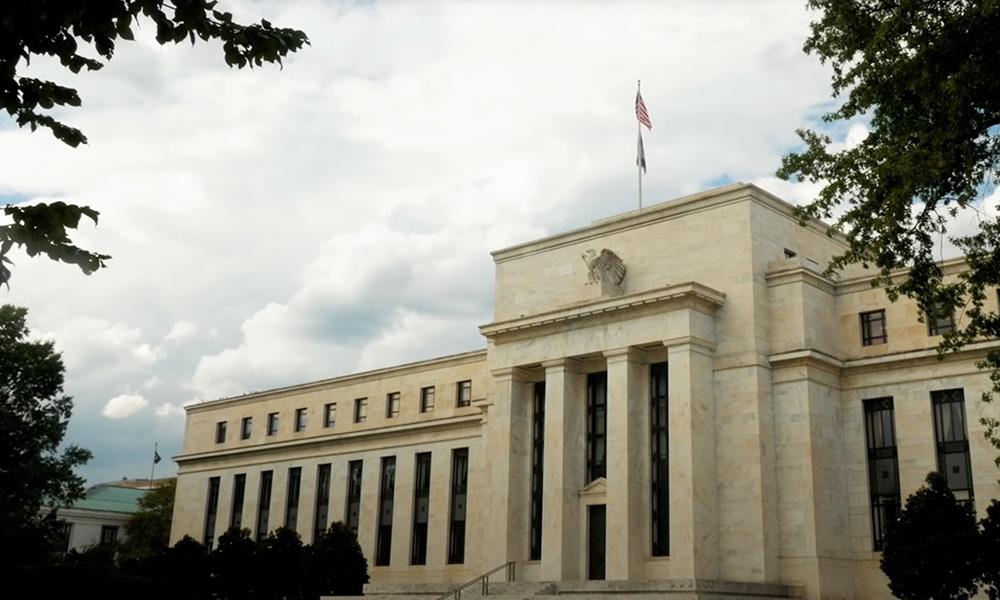
The paradoxical macroeconomic landscape: the recent tearing apart of real data in the United States
Recent macroeconomic data released by the United States reveals a highly contradictory "two-sidedness": Total employment is declining, but the unemployment rate appears to be decreasing: Data shows that US non-farm payrolls decreased by 23,000 jobs in a single month, far below expectations; however, the nominal unemployment rate has slightly fallen to 4.1%. This contradiction stems from the "frustrated job seeker effect"—a large number of unemployed people who have been unable to find matching jobs for a long time give up submitting resumes and withdraw from the labor market, causing the denominator to shrink and masking the chill in the real job market. Nominal wages are failing to keep pace with sticky inflation: Although average wages have maintained a growth rate of about 3.2%, the inflation rate remains anchored around 3.5% due to supply-side drivers (such as fluctuations in international oil prices and rising energy and hardware costs driven by the surge in Capex in the technology sector). Workers' real purchasing power is continuously shrinking. The divergence between asset frenzy and microeconomic recession in the real economy: Due to cost reduction and efficiency gains brought by AI, companies have reduced labor costs through layoffs, which in turn has boosted the profits of tech giants (such as Nvidia and Broadcom) and led to a high-level consolidation in the US stock market, creating a kind of isolated recession where "the real economy is reducing its workforce and the financial sector is reducing its reliance on external investments." Meanwhile, recently released PCE data shows that core inflation is fully in line with expectations. John Williams, president of the Federal Reserve Bank of New York, has explicitly stated that if monthly PCE inflation can remain stable at 0.2% or lower, it means that inflation will naturally and steadily decline to the Fed's 2% target level, implying that the Fed does not need to take additional interest rate hikes, as the current interest rate level can effectively suppress inflation.This phenomenon is not unique to the United States: many countries around the world are witnessing the effects of "supply suppression + structural unemployment".
This heterogeneous shock, triggered by supply-side bottlenecks and technological changes, is simultaneously manifesting in other major economies: India (high growth and high youth unemployment): India's per capita GDP has maintained a high growth rate of 6.6%, but with a lack of absorption capacity in mid-to-high-end industries on the supply side, the youth unemployment rate has soared to 17.7%, and a large number of college graduates are facing structural employment difficulties. Europe and emerging markets (energy and supply chain pressures): Geopolitical uncertainties in energy supply, coupled with the heavy capital investment brought about by carbon neutrality and energy transition, have kept production costs high; however, the demand for labor in traditional manufacturing and service industries has clearly peaked.Historical experience: How should central banks respond when "supply-side inflation" meets "weak employment"?
Looking back at the central bank's actions over the past few decades in response to different inflationary characteristics, three historical paths can be identified: Path 1: The "capitulationist easing" of the 1970s. Faced with two oil crises (supply-side surges), the Federal Reserve (under Burns) rushed to lower interest rates due to concerns about a collapse in employment. This resulted in uncontrolled inflation expectations across society, entering a vicious cycle of "wages and prices," causing severe and prolonged stagflation. Path 2: The "Volcker-style hard landing" of the 1980s. After Paul Volcker took over as Chairman of the Federal Reserve, he completely abandoned compromises on the supply side, raising interest rates to 20%. The central bank forcibly boosted demand at the cost of creating a 10% deep unemployment rate and a major recession in the real economy, thereby killing supply-side inflation. Path 3: The "super-strong safety cushion interest rate hike" of 2022-2023. Supply chain disruptions following the pandemic and the Russia-Ukraine conflict led to inflation soaring to 9.1%. The Federal Reserve dared to aggressively raise interest rates by 500 basis points back then, and this time, isn't inflation also caused by supply-side factors? Why then have they raised rates so much? This seems to contradict my earlier point that "central banks don't want to raise interest rates due to supply-side inflation." However, if we extend the timeline and review that period of history, you'll find that the central bank's behavior perfectly confirms the "empirical pattern" summarized earlier: When inflation first started to rise in 2021, former Federal Reserve Chairman Powell repeatedly told the world that this wave of inflation was "temporary" and caused by supply-side problems due to supply chain disruptions caused by the pandemic. Therefore, the Federal Reserve remained on hold throughout 2021, refusing to raise interest rates. This perfectly fits the pattern of "not easily raising interest rates due to supply-side inflation." But the problem lies in the fact that the US government directly distributed trillions of dollars in subsidies to the public during the pandemic, causing "supply disruption" to turn into "extremely overheated demand after receiving the money," and the inflation rate soared to 9.1%, which led to serious inflationary expectations throughout society.Conclusion: The Federal Reserve maintains a hawkish stance in words but a dovish one in reality.
Based on the current situation and historical experience, the Federal Reserve's decision-making environment is vastly different from that of 2022—the "safety cushion" of the job market has been significantly depleted, and the marginal risk of interest rate hikes is rising exponentially. The Fed's ultimately preferred response logic is as follows: Interest rate hikes are completely blocked: raising interest rates cannot increase the supply of a single drop of oil or an AI chip, but it will directly crush fragile ordinary businesses and the labor market, and even trigger a bursting of the technology asset bubble and financial risks. Meanwhile, observing the FedWatch data, the September rate hike expectation rose to 40% last night due to the PCE, but then fell back to 36% the next day. In the short term, the Fed will likely maintain high interest rates through verbal hawkish rhetoric to prevent inflation expectations from completely derailing; however, once the employment situation deteriorates (non-farm payrolls plummet, unemployment rate truly peaks) and crosses the critical point, the Fed's priority will immediately shift from "fighting inflation" to "saving jobs and protecting the financial system." It cannot be ruled out that the central bank will ultimately choose to compromise with unemployment and financial stability—by initiating "preventative interest rate cuts" to bail out the real economy and capital markets, while silently accepting a supply-side inflation center of around 3% as the new normal in practice.- Risk Warning and Disclaimer
- The market involves risk, and trading may not be suitable for all investors. This article is for reference only and does not constitute personal investment advice, nor does it take into account certain users’ specific investment objectives, financial situation, or other needs. Any investment decisions made based on this information are at your own risk.