Escalating trade tensions between the US and Canada, coupled with uncertainty surrounding Federal Reserve policy, have pushed USD/CAD hovering around 1.3850, awaiting a breakout.
2026-08-28 15:11:03
The USD/CAD pair held steady around 1.3850 in early European trading on Friday, as investors reduced directional trades ahead of the Jackson Hole speech, resulting in a narrow trading range. Previously, the US dollar was supported by US inflation data, while the Canadian dollar was influenced by the Canadian economic outlook and trade concerns, leading to a clear tug-of-war between USD/CAD above 1.38. Latest market information indicates that the USD/CAD pair continued to trade around 1.3850 in early European trading on Friday. 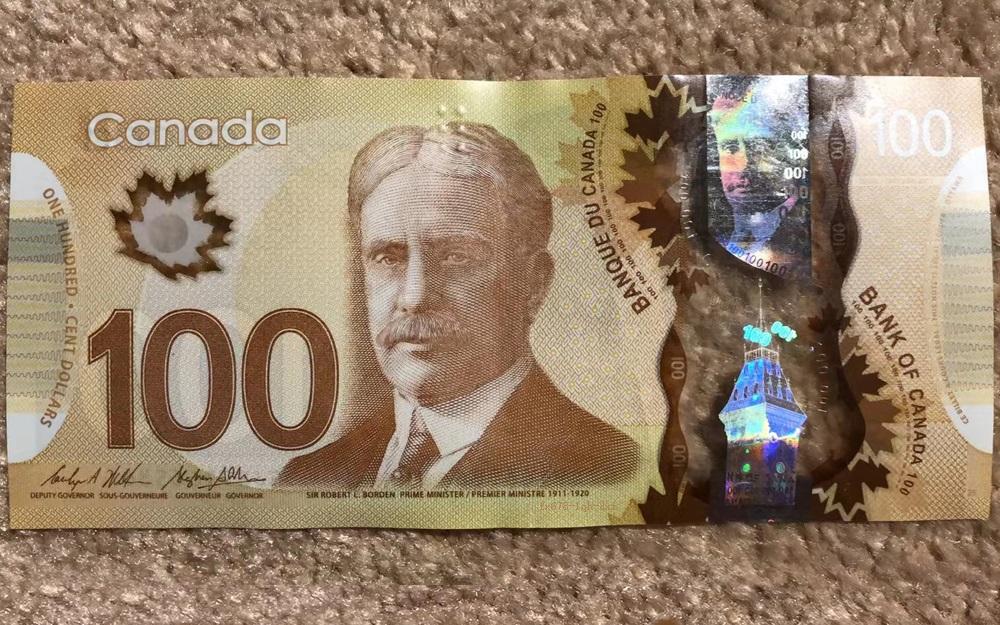 The US core PCE rose 3.3% year-on-year in July, in line with market expectations but still significantly higher than the Fed's 2% target. Inflation stickiness has led investors to reassess the Fed's future interest rate path, with market expectations for further rate hikes in September and later this year rising. This has provided some support for the US dollar, but the market is still awaiting further confirmation of policy direction from Warsh's speech. Currently, the dollar index is around 99.13, near a one-week high, but it is still expected to decline for the second consecutive month. The dollar's short-term rebound is more driven by expectations of Fed policy than by the formation of a new long-term strong trend. If Warsh clearly emphasizes inflation risks at Jackson Hole and hints at the possibility of further rate hikes if necessary, US Treasury yields and the dollar may rise in tandem, pushing USD/CAD out of its current trading range. Conversely, if Warsh does not release a clear hawkish signal but focuses on long-term factors such as productivity, demographics, or economic growth, the market may lower its expectations for further rate hikes, and the dollar may come under renewed pressure. In this scenario, USD/CAD will face further downward pressure. The Canadian dollar has recently been significantly affected by trade concerns. The escalating trade friction between the United States and Canada has begun to impact market assessments of Canada's economic growth prospects, with related tariffs already affecting the market's perception. The Canadian economy is highly sensitive to external trade; if tariff pressure continues to escalate, exports, business investment, and manufacturing activity could be dragged down, weakening the fundamental support for the Canadian dollar. Currently, Canada still needs to assess the actual impact of tariffs on economic growth and inflation. Market opinion suggests that the Bank of Canada may not immediately change its policy due to the escalation of trade measures, but rather wait for more economic data to confirm the extent of the impact. The economic rebound in the second quarter has also provided the Bank of Canada with room to remain on the sidelines. If the Canadian economy continues to show resilience, the Canadian dollar will receive some support; however, if trade concerns further impact business investment and consumption, the likelihood of the Bank of Canada adopting a more accommodative policy in the future may increase, which would put pressure on the Canadian dollar. International oil prices are a crucial variable affecting the Canadian dollar. Recently, crude oil prices have remained relatively high, and energy export revenues have provided some support for the Canadian dollar. As Canada is a major energy exporter, rising crude oil prices typically improve its terms of trade and, to some extent, offset the pressure from a stronger US dollar. Therefore, the USD/CAD pair currently presents a relatively complex fundamental combination. In the US, high core PCE and rising interest rate expectations supported the US dollar. In Canada, trade concerns weighed on the Canadian dollar, but high oil prices and the Bank of Canada's wait-and-see approach limited further weakening. From an interest rate differential perspective, if US inflation remains high while the Canadian economy slows significantly due to tariffs, the US-Canada interest rate differential may tilt further towards the US dollar, giving USD/CAD upward momentum. Conversely, if US inflation cools rapidly while the Canadian economy remains stable, the interest rate advantage may gradually narrow, and the exchange rate may re-enter a downward trend. The market is currently most focused on the Jackson Hole speech. Since Warsh's remarks could affect the entire US dollar yield curve, USD/CAD may experience significant short-term volatility after the speech. If US yields rise rapidly, the US dollar may break through recent highs; if the market re-bets on a shift towards easing by the Federal Reserve, the US dollar may fall rapidly. In addition, attention should be paid to Canadian trade policy and changes in the oil market. If US-Canada trade concerns escalate further while oil prices correct, the Canadian dollar may face double pressure, giving USD/CAD significant upward momentum. Conversely, if oil prices continue to rise and ease pressure on Canadian trade terms, while the US dollar weakens due to the Fed's comments, the exchange rate may retest key support levels. From a market sentiment perspective, USD/CAD has not yet formed a clear one-sided trend; the area around 1.3850 reflects investors' cautious stance as they await the resolution of major events. Therefore, before the Jackson Hole speech, the risk of chasing highs and lows is relatively high, and the market is more likely to maintain range-bound trading. From a daily chart perspective, USD/CAD remains weak, with the price trading below the 20-day Bollinger Band middle line and the 100-day moving average, indicating that the medium-term bearish structure remains unchanged. The RSI is around 40, suggesting limited upward momentum and the possibility of further downward movement. The first resistance level to watch is the 1.3905-1.3915 area, which represents a dense resistance formed by the 20-day Bollinger Band middle line and the 100-day moving average. A successful break above this area would alleviate the short-term weakness, with further targets around 1.4000 and 1.4065. The first support level to watch is the psychological level of 1.3800. A break below this level would likely lead to a further test of the lower Bollinger Band around 1.3740. A decisive break below 1.3740 could open up more room for further correction. Looking at the 4-hour chart, USD/CAD has been fluctuating around 1.3850 recently, with short-term moving averages gradually flattening and the MACD showing weakening bearish momentum, indicating the market is awaiting a new fundamental catalyst. If the price breaks through the 1.3905-1.3915 area, the 4-hour structure could turn bullish, potentially testing the 1.4000 area. However, if the rebound is met with resistance and the price breaks below 1.3800, the bears could regain control, with the next target at 1.3740. Currently, 1.3800 is a crucial level to watch for short-term downside, while 1.3915 is a key resistance level that will determine whether the price can break out of its weak structure.
 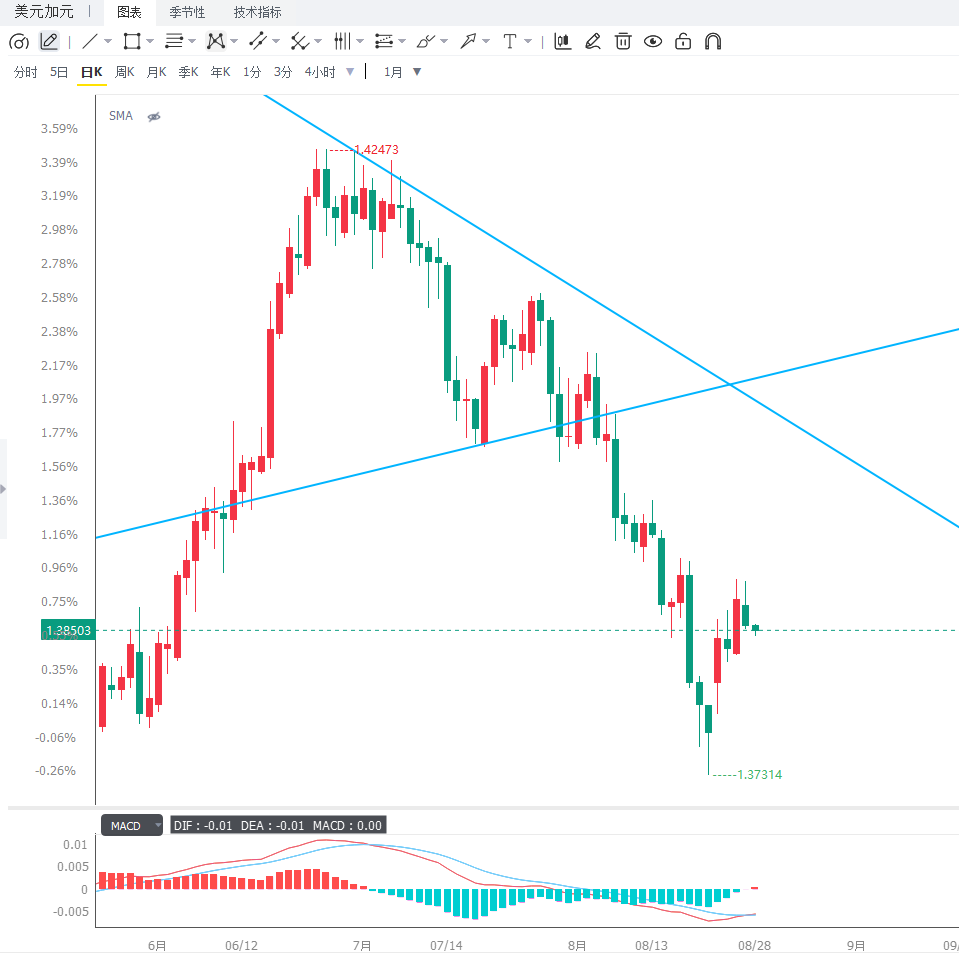 The USD/CAD pair is currently at the intersection of three factors: expectations for Federal Reserve policy, the Canadian economic outlook, and oil prices. The US core PCE rate remains at 3.3%, bringing renewed attention to the risk of further rate hikes and providing support for the US dollar. Meanwhile, escalating US-Canada trade concerns are limiting the Canadian dollar's performance. In the short term, 1.3905-1.3915 is a key resistance level. If Warsh releases hawkish signals, strengthening the US dollar and US Treasury yields, USD/CAD may break through this area and further test 1.4000 or even 1.4065; if Warsh's stance is dovish, and oil prices remain high, the exchange rate may revert to moving towards 1.3800 and 1.3740. In the medium term, the actual impact of US-Canada trade concerns on Canadian economic growth will become a new important pricing factor for the Canadian dollar. Investors should focus on Federal Reserve policy signals, Canadian economic data, oil prices, and changes in the US-Canada interest rate differential. The current technical structure remains bearish, but there are clear directional risks in the fundamentals. Only a decisive break above 1.3915 would confirm a short-term rebound for USD/CAD; until then, the exchange rate is more likely to remain in a range-bound trading pattern.
The US core PCE rose 3.3% year-on-year in July, in line with market expectations but still significantly higher than the Fed's 2% target. Inflation stickiness has led investors to reassess the Fed's future interest rate path, with market expectations for further rate hikes in September and later this year rising. This has provided some support for the US dollar, but the market is still awaiting further confirmation of policy direction from Warsh's speech. Currently, the dollar index is around 99.13, near a one-week high, but it is still expected to decline for the second consecutive month. The dollar's short-term rebound is more driven by expectations of Fed policy than by the formation of a new long-term strong trend. If Warsh clearly emphasizes inflation risks at Jackson Hole and hints at the possibility of further rate hikes if necessary, US Treasury yields and the dollar may rise in tandem, pushing USD/CAD out of its current trading range. Conversely, if Warsh does not release a clear hawkish signal but focuses on long-term factors such as productivity, demographics, or economic growth, the market may lower its expectations for further rate hikes, and the dollar may come under renewed pressure. In this scenario, USD/CAD will face further downward pressure. The Canadian dollar has recently been significantly affected by trade concerns. The escalating trade friction between the United States and Canada has begun to impact market assessments of Canada's economic growth prospects, with related tariffs already affecting the market's perception. The Canadian economy is highly sensitive to external trade; if tariff pressure continues to escalate, exports, business investment, and manufacturing activity could be dragged down, weakening the fundamental support for the Canadian dollar. Currently, Canada still needs to assess the actual impact of tariffs on economic growth and inflation. Market opinion suggests that the Bank of Canada may not immediately change its policy due to the escalation of trade measures, but rather wait for more economic data to confirm the extent of the impact. The economic rebound in the second quarter has also provided the Bank of Canada with room to remain on the sidelines. If the Canadian economy continues to show resilience, the Canadian dollar will receive some support; however, if trade concerns further impact business investment and consumption, the likelihood of the Bank of Canada adopting a more accommodative policy in the future may increase, which would put pressure on the Canadian dollar. International oil prices are a crucial variable affecting the Canadian dollar. Recently, crude oil prices have remained relatively high, and energy export revenues have provided some support for the Canadian dollar. As Canada is a major energy exporter, rising crude oil prices typically improve its terms of trade and, to some extent, offset the pressure from a stronger US dollar. Therefore, the USD/CAD pair currently presents a relatively complex fundamental combination. In the US, high core PCE and rising interest rate expectations supported the US dollar. In Canada, trade concerns weighed on the Canadian dollar, but high oil prices and the Bank of Canada's wait-and-see approach limited further weakening. From an interest rate differential perspective, if US inflation remains high while the Canadian economy slows significantly due to tariffs, the US-Canada interest rate differential may tilt further towards the US dollar, giving USD/CAD upward momentum. Conversely, if US inflation cools rapidly while the Canadian economy remains stable, the interest rate advantage may gradually narrow, and the exchange rate may re-enter a downward trend. The market is currently most focused on the Jackson Hole speech. Since Warsh's remarks could affect the entire US dollar yield curve, USD/CAD may experience significant short-term volatility after the speech. If US yields rise rapidly, the US dollar may break through recent highs; if the market re-bets on a shift towards easing by the Federal Reserve, the US dollar may fall rapidly. In addition, attention should be paid to Canadian trade policy and changes in the oil market. If US-Canada trade concerns escalate further while oil prices correct, the Canadian dollar may face double pressure, giving USD/CAD significant upward momentum. Conversely, if oil prices continue to rise and ease pressure on Canadian trade terms, while the US dollar weakens due to the Fed's comments, the exchange rate may retest key support levels. From a market sentiment perspective, USD/CAD has not yet formed a clear one-sided trend; the area around 1.3850 reflects investors' cautious stance as they await the resolution of major events. Therefore, before the Jackson Hole speech, the risk of chasing highs and lows is relatively high, and the market is more likely to maintain range-bound trading. From a daily chart perspective, USD/CAD remains weak, with the price trading below the 20-day Bollinger Band middle line and the 100-day moving average, indicating that the medium-term bearish structure remains unchanged. The RSI is around 40, suggesting limited upward momentum and the possibility of further downward movement. The first resistance level to watch is the 1.3905-1.3915 area, which represents a dense resistance formed by the 20-day Bollinger Band middle line and the 100-day moving average. A successful break above this area would alleviate the short-term weakness, with further targets around 1.4000 and 1.4065. The first support level to watch is the psychological level of 1.3800. A break below this level would likely lead to a further test of the lower Bollinger Band around 1.3740. A decisive break below 1.3740 could open up more room for further correction. Looking at the 4-hour chart, USD/CAD has been fluctuating around 1.3850 recently, with short-term moving averages gradually flattening and the MACD showing weakening bearish momentum, indicating the market is awaiting a new fundamental catalyst. If the price breaks through the 1.3905-1.3915 area, the 4-hour structure could turn bullish, potentially testing the 1.4000 area. However, if the rebound is met with resistance and the price breaks below 1.3800, the bears could regain control, with the next target at 1.3740. Currently, 1.3800 is a crucial level to watch for short-term downside, while 1.3915 is a key resistance level that will determine whether the price can break out of its weak structure. The USD/CAD pair is currently at the intersection of three factors: expectations for Federal Reserve policy, the Canadian economic outlook, and oil prices. The US core PCE rate remains at 3.3%, bringing renewed attention to the risk of further rate hikes and providing support for the US dollar. Meanwhile, escalating US-Canada trade concerns are limiting the Canadian dollar's performance. In the short term, 1.3905-1.3915 is a key resistance level. If Warsh releases hawkish signals, strengthening the US dollar and US Treasury yields, USD/CAD may break through this area and further test 1.4000 or even 1.4065; if Warsh's stance is dovish, and oil prices remain high, the exchange rate may revert to moving towards 1.3800 and 1.3740. In the medium term, the actual impact of US-Canada trade concerns on Canadian economic growth will become a new important pricing factor for the Canadian dollar. Investors should focus on Federal Reserve policy signals, Canadian economic data, oil prices, and changes in the US-Canada interest rate differential. The current technical structure remains bearish, but there are clear directional risks in the fundamentals. Only a decisive break above 1.3915 would confirm a short-term rebound for USD/CAD; until then, the exchange rate is more likely to remain in a range-bound trading pattern.
- Risk Warning and Disclaimer
- The market involves risk, and trading may not be suitable for all investors. This article is for reference only and does not constitute personal investment advice, nor does it take into account certain users’ specific investment objectives, financial situation, or other needs. Any investment decisions made based on this information are at your own risk.