Warsh's "hawkish" maneuver ignited a dollar rally, sending it to its biggest two-month gain. Japan's record intervention failed, and the focus now shifts to next week's non-farm payrolls report.
2026-08-29 09:02:02
The dollar index rose 0.55% on Friday to close at 99.66, marking its biggest one-day gain since June 17, while also posting a weekly gain of nearly 0.9%, its best performance in 10 weeks. The immediate trigger for this strong rebound was Federal Reserve Chairman Warsh's hawkish remarks at the Jackson Hole symposium, but the deeper context lies in the continued fact that US inflation remains above target (July PCE up 3.7% year-on-year) and the labor market remains resilient, prompting the market to reassess the Fed's policy path. 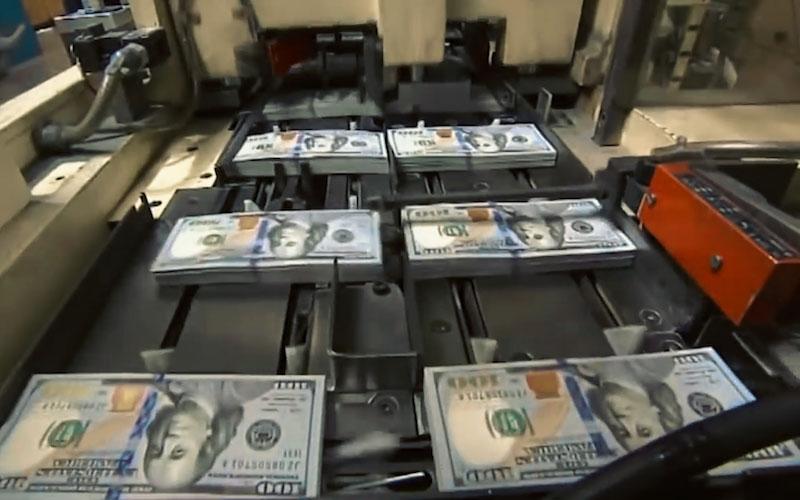 The dollar had previously been pressured by expectations of interest rate cuts, but Warsh's speech completely reversed short-term sentiment, with US Treasury yields rising in tandem, further supporting the dollar. Technically, after breaking through the key resistance level of 99.5, the dollar index's short-term target is the 100 mark, while major non-US currencies such as the euro and pound sterling are generally under pressure, reflecting a renewed shift in interest rate expectations towards the dollar. Warsh issues the strongest signal yet of a rate hike. Federal Reserve Chairman Kevin Warsh's keynote speech at the Jackson Hole Global Central Bank Symposium was seen by the market as the clearest hint of a policy shift since he took the helm of the Fed. He explicitly stated that if policymakers cannot be confident that inflation is returning to the 2% target at a sufficiently rapid pace, then the Fed "still has work to do," a statement interpreted by himself and former Philadelphia Fed President Harker as a possibility of a rate hike. Warsh emphasized that the current financial environment "shows almost no policy constraints," the labor market is "stable," the economy is showing resilience, and inflation has been above target for nearly six consecutive years, constituting sufficient conditions for a rate hike. It's worth noting that Warsh deliberately avoided providing "forward guidance" or a "reaction function," but by elaborating on his assessment of the economic situation (such as half of the items in the PCE goods basket showing annual growth exceeding 3%), he effectively provided the market with a clear decision-making framework. He also unusually mentioned that the Fed needs "undistorted market signals," indirectly criticizing the Treasury's intervention in long-term bond yields and demonstrating his stance on maintaining monetary policy independence. This speech was more hawkish than his previous three press conferences and won applause from attending officials, marking Warsh's shift from a "reformer" to a "traditional central banker." Interest Rate Hike Expectations Rise Sharply Following Warsh's speech, the market's probability of a 25 basis point rate hike in September jumped from about 35% to 57%-60%, fully priced in the expectation of at least one rate hike before December. This jump (over 20 percentage points) is relatively rare in recent years, reflecting the market's high regard for Warsh's personal authority—despite his previous vague statements, investors quickly adjusted their positions once he made a clear statement. Capital Economics analysts pointed out that if inflation data remains strong in the future, the Federal Reserve may take action earlier than its predicted December. It is worth noting that Warsh did not reveal a specific timetable and emphasized that most policymakers at the July meeting believed they should wait for more data, but only one inflation report (August CPI) is available before the September meeting. This means that under the data-dependent strategy, whether or not to raise interest rates depends almost entirely on this report and non-farm payroll data. Furthermore, three Fed officials (Collins, Hammark, and Goolsby) expressed concerns about inflation in their speeches around Thursday, with Hammark stating bluntly that "high inflation means a need for interest rate hikes," forming the initial outline of a policy consensus. Major currency pairs diverged . The euro fell 0.6% against the dollar to 1.1581, hitting its lowest level since August 19th during the session, and fell 0.81% for the week, ending a four-week winning streak. The euro's weakness was not only suppressed by the strong dollar but also reflected relatively weak European economic data and concerns about rising energy import costs due to the situation in the Middle East. The pound fell 0.47% to 1.3528 against the dollar, ending a four-week winning streak, weighed down by risks of a UK recession and post-Brexit trade tensions. The Canadian dollar fell 0.37% to 1.39 against the dollar, its biggest weekly decline in two months, down about 1%, primarily dragged down by the breakdown of US-Canada trade negotiations and the imposition of tariffs on each other. Despite a strong rebound in Canadian GDP in the second quarter, uncertainty surrounding the new tariffs outweighed positive economic data. Japan's record-breaking currency intervention The dollar rose 0.45% to 160.09 against the yen, its third weekly gain in four weeks. Although Tokyo's core CPI accelerated for the third consecutive month in August (strengthening the case for a Bank of Japan rate hike), the US-Japan interest rate differential continued to dominate the exchange rate, and the Bank of Japan's decision to keep interest rates unchanged in July continued to drive carry trades. Data released by the Japanese Ministry of Finance showed that between July 30 and August 26, Japanese authorities intervened in the foreign exchange market with a record 15.4 trillion yen (approximately US$96.5 billion), far exceeding the previous record of 6.3 trillion yen on April 30. The intervention was concentrated on July 30-31, when the yen fell to a 40-year low of around 164 against the dollar. The Bank of Japan intervened to buy yen, and unusually, it coordinated with the US and South Korea (the Bank of Korea intervened in the won simultaneously) to enhance the effect. Following the intervention, the yen quickly strengthened to 155.20, subsequently stabilizing around 159.50. US Treasury Secretary Bessant stated that he would support Japan "at all costs" and allowed Japan to use the Federal Reserve's crisis-time reserve tools, meaning Japan had almost unlimited intervention ammunition. However, the Bank of Japan kept interest rates unchanged in July, while the market expected only a 65% probability of a rate hike in September. The interest rate disadvantage did not fundamentally change, and carry trade remained active. The symbolic significance of the intervention outweighed its practical effect; it demonstrated the Japanese government's political resolve but failed to reverse the yen's medium- to long-term weakness unless the Bank of Japan simultaneously tightened monetary policy or the Federal Reserve shifted to cutting interest rates. This intervention also highlighted the fragility of global exchange rate coordination, as unilateral intervention often has limited effectiveness in the face of large interest rate differentials. Overall, the strengthening of the US dollar was widespread, with only the Japanese yen's gains limited due to expectations of Japanese intervention; other currencies were under significant pressure. Key Data and Central Bank Meetings in the Coming Week The coming week (August 31 to September 4) will be a crucial window for determining whether the Federal Reserve will raise interest rates in September. The most important data will be the August non-farm payrolls report on September 4 (Friday). ING predicts only 65,000 new jobs, but the "rigid" pattern of low hiring and low layoffs may make wage growth a focus—if average hourly wages rise by more than 0.4% month-on-month, it will strengthen inflationary transmission pressures. Prior to this, the July JOLTS job openings (reflecting labor demand) will be released on August 31; the August ADP private sector employment (a precursor to non-farm payrolls) and ISM manufacturing index (manufacturing activity) will be released on September 1; and initial jobless claims and the ISM services index, as well as July factory orders, will be released on September 2. These data will collectively paint a comprehensive picture of economic momentum. Regarding central banks, the Bank of Canada is expected to maintain its interest rate at 2.25% on September 1st, but may make cautious comments on the US-Canada trade friction. Bank of Japan board member Hajime Takada (September 1st) will speak; he is the most hawkish member and proposed raising rates to 1.25% in July (which was rejected). His comments may further increase expectations for a September rate hike by the Bank of Japan (currently priced in at 65%). Barclays expects the Bank of Japan to raise rates in September, followed by two more hikes in January and July 2027 to reach 1.75%. If US data is strong and the Bank of Canada is dovish, the US dollar index may break through the 100 mark; if employment is weak, the probability of a rate hike will decrease, and the dollar may give back its gains.
The dollar had previously been pressured by expectations of interest rate cuts, but Warsh's speech completely reversed short-term sentiment, with US Treasury yields rising in tandem, further supporting the dollar. Technically, after breaking through the key resistance level of 99.5, the dollar index's short-term target is the 100 mark, while major non-US currencies such as the euro and pound sterling are generally under pressure, reflecting a renewed shift in interest rate expectations towards the dollar. Warsh issues the strongest signal yet of a rate hike. Federal Reserve Chairman Kevin Warsh's keynote speech at the Jackson Hole Global Central Bank Symposium was seen by the market as the clearest hint of a policy shift since he took the helm of the Fed. He explicitly stated that if policymakers cannot be confident that inflation is returning to the 2% target at a sufficiently rapid pace, then the Fed "still has work to do," a statement interpreted by himself and former Philadelphia Fed President Harker as a possibility of a rate hike. Warsh emphasized that the current financial environment "shows almost no policy constraints," the labor market is "stable," the economy is showing resilience, and inflation has been above target for nearly six consecutive years, constituting sufficient conditions for a rate hike. It's worth noting that Warsh deliberately avoided providing "forward guidance" or a "reaction function," but by elaborating on his assessment of the economic situation (such as half of the items in the PCE goods basket showing annual growth exceeding 3%), he effectively provided the market with a clear decision-making framework. He also unusually mentioned that the Fed needs "undistorted market signals," indirectly criticizing the Treasury's intervention in long-term bond yields and demonstrating his stance on maintaining monetary policy independence. This speech was more hawkish than his previous three press conferences and won applause from attending officials, marking Warsh's shift from a "reformer" to a "traditional central banker." Interest Rate Hike Expectations Rise Sharply Following Warsh's speech, the market's probability of a 25 basis point rate hike in September jumped from about 35% to 57%-60%, fully priced in the expectation of at least one rate hike before December. This jump (over 20 percentage points) is relatively rare in recent years, reflecting the market's high regard for Warsh's personal authority—despite his previous vague statements, investors quickly adjusted their positions once he made a clear statement. Capital Economics analysts pointed out that if inflation data remains strong in the future, the Federal Reserve may take action earlier than its predicted December. It is worth noting that Warsh did not reveal a specific timetable and emphasized that most policymakers at the July meeting believed they should wait for more data, but only one inflation report (August CPI) is available before the September meeting. This means that under the data-dependent strategy, whether or not to raise interest rates depends almost entirely on this report and non-farm payroll data. Furthermore, three Fed officials (Collins, Hammark, and Goolsby) expressed concerns about inflation in their speeches around Thursday, with Hammark stating bluntly that "high inflation means a need for interest rate hikes," forming the initial outline of a policy consensus. Major currency pairs diverged . The euro fell 0.6% against the dollar to 1.1581, hitting its lowest level since August 19th during the session, and fell 0.81% for the week, ending a four-week winning streak. The euro's weakness was not only suppressed by the strong dollar but also reflected relatively weak European economic data and concerns about rising energy import costs due to the situation in the Middle East. The pound fell 0.47% to 1.3528 against the dollar, ending a four-week winning streak, weighed down by risks of a UK recession and post-Brexit trade tensions. The Canadian dollar fell 0.37% to 1.39 against the dollar, its biggest weekly decline in two months, down about 1%, primarily dragged down by the breakdown of US-Canada trade negotiations and the imposition of tariffs on each other. Despite a strong rebound in Canadian GDP in the second quarter, uncertainty surrounding the new tariffs outweighed positive economic data. Japan's record-breaking currency intervention The dollar rose 0.45% to 160.09 against the yen, its third weekly gain in four weeks. Although Tokyo's core CPI accelerated for the third consecutive month in August (strengthening the case for a Bank of Japan rate hike), the US-Japan interest rate differential continued to dominate the exchange rate, and the Bank of Japan's decision to keep interest rates unchanged in July continued to drive carry trades. Data released by the Japanese Ministry of Finance showed that between July 30 and August 26, Japanese authorities intervened in the foreign exchange market with a record 15.4 trillion yen (approximately US$96.5 billion), far exceeding the previous record of 6.3 trillion yen on April 30. The intervention was concentrated on July 30-31, when the yen fell to a 40-year low of around 164 against the dollar. The Bank of Japan intervened to buy yen, and unusually, it coordinated with the US and South Korea (the Bank of Korea intervened in the won simultaneously) to enhance the effect. Following the intervention, the yen quickly strengthened to 155.20, subsequently stabilizing around 159.50. US Treasury Secretary Bessant stated that he would support Japan "at all costs" and allowed Japan to use the Federal Reserve's crisis-time reserve tools, meaning Japan had almost unlimited intervention ammunition. However, the Bank of Japan kept interest rates unchanged in July, while the market expected only a 65% probability of a rate hike in September. The interest rate disadvantage did not fundamentally change, and carry trade remained active. The symbolic significance of the intervention outweighed its practical effect; it demonstrated the Japanese government's political resolve but failed to reverse the yen's medium- to long-term weakness unless the Bank of Japan simultaneously tightened monetary policy or the Federal Reserve shifted to cutting interest rates. This intervention also highlighted the fragility of global exchange rate coordination, as unilateral intervention often has limited effectiveness in the face of large interest rate differentials. Overall, the strengthening of the US dollar was widespread, with only the Japanese yen's gains limited due to expectations of Japanese intervention; other currencies were under significant pressure. Key Data and Central Bank Meetings in the Coming Week The coming week (August 31 to September 4) will be a crucial window for determining whether the Federal Reserve will raise interest rates in September. The most important data will be the August non-farm payrolls report on September 4 (Friday). ING predicts only 65,000 new jobs, but the "rigid" pattern of low hiring and low layoffs may make wage growth a focus—if average hourly wages rise by more than 0.4% month-on-month, it will strengthen inflationary transmission pressures. Prior to this, the July JOLTS job openings (reflecting labor demand) will be released on August 31; the August ADP private sector employment (a precursor to non-farm payrolls) and ISM manufacturing index (manufacturing activity) will be released on September 1; and initial jobless claims and the ISM services index, as well as July factory orders, will be released on September 2. These data will collectively paint a comprehensive picture of economic momentum. Regarding central banks, the Bank of Canada is expected to maintain its interest rate at 2.25% on September 1st, but may make cautious comments on the US-Canada trade friction. Bank of Japan board member Hajime Takada (September 1st) will speak; he is the most hawkish member and proposed raising rates to 1.25% in July (which was rejected). His comments may further increase expectations for a September rate hike by the Bank of Japan (currently priced in at 65%). Barclays expects the Bank of Japan to raise rates in September, followed by two more hikes in January and July 2027 to reach 1.75%. If US data is strong and the Bank of Canada is dovish, the US dollar index may break through the 100 mark; if employment is weak, the probability of a rate hike will decrease, and the dollar may give back its gains.- Risk Warning and Disclaimer
- The market involves risk, and trading may not be suitable for all investors. This article is for reference only and does not constitute personal investment advice, nor does it take into account certain users’ specific investment objectives, financial situation, or other needs. Any investment decisions made based on this information are at your own risk.