Bessant makes a tough statement! The US is rolling out new secondary sanctions every week, focusing on banks and increasing economic pressure on Iran.
2026-08-31 09:42:02
U.S. Treasury Secretary Scott Bessant stated on Sunday (August 30) that the U.S. Treasury Department will continue to roll out new secondary sanctions on a weekly basis, with the core objective of further tightening the economic encirclement of Iran. Initial actions will focus on the banking sector, warning global financial institutions against holding Iranian funds or assisting the regime. This statement, coming on the eve of the G20 finance ministers and central bank governors meeting, signifies that Washington is moving secondary sanctions from the warning stage to a normalized enforcement stage within the framework of its "economic exile" operation. 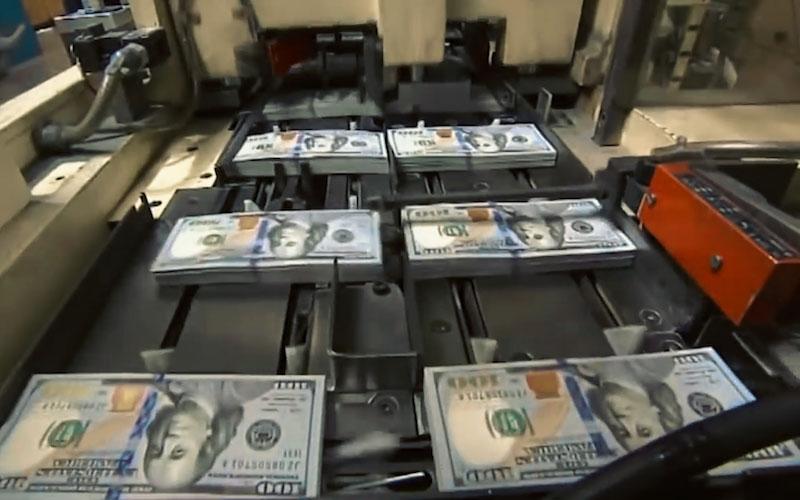
From individual banks to systemic isolation: The pace of secondary sanctions is accelerating.
On August 28, the U.S. Treasury Department's Financial Crimes Enforcement Network (FinCEN) issued rule recommendations against several branches of the Egyptian state-owned bank Banque Misr in the United Arab Emirates, proposing to revoke their correspondent banking authority with U.S. financial institutions. The U.S. has identified these branches as "key nodes" for the Iranian regime to obtain dollars, processing approximately $1.8 billion in transactions for 103 companies suspected of being linked to Iranian shadow banking networks between January 2024 and June 2026. These clients include entities alleged to have provided cover for the Iranian Ministry of Defense and the Islamic Revolutionary Guard Corps, as well as entities assisting with the flow of funds related to the Supreme Leader. In an interview in Asheville, North Carolina, Bessant pointed out that this is just the beginning. "You'll see more of these kinds of moves every week. We're going to start with the banks and make it clear to them: holding Iranian funds and assisting the Iranian regime is unacceptable." He further stated that the next step could be to completely exclude an institution from the dollar-based financial system. This statement elevates secondary sanctions from targeting specific transactions or branches to systematically cutting off dollar clearing channels. The core logic of secondary sanctions lies in not only punishing entities that directly deal with Iran, but also threatening to cut off their access to the global dollar system, thereby forcing third-country banks, businesses, and governments to voluntarily sever ties. The US has previously included digital assets, technology, gold, aviation, and shipping in its list of potential secondary sanctions risks, demanding that countries cease related activities within a specified timeframe, or face unilateral action.The G20 meeting became a platform for exerting pressure, with severing economic ties being a clear demand.
At the G20 finance ministers' meeting, Bessant plans to deliver a clear message directly to finance ministers and central bank governors: economic ties with Iran must be severed, or they may face secondary sanctions. This arrangement carries strong symbolic and substantive significance. The G20 encompasses major economies and emerging markets, including countries with energy, trade, or financial ties to Iran. The US is exerting public pressure through multilateral forums to create collective expectations and reduce room for hesitation and circumvention among participating countries. This current action is a continuation and escalation of Operation Economic Outcast, launched on August 24. This operation is positioned as an "economic assault" on Iran's global financial connections, aiming to sever every economic lifeline supporting the regime until it is isolated. The US has already imposed sanctions on nearly 60 entities, individuals, and vessels, involving nuclear technology and missile procurement, cyber activities, and oil revenue networks, and has explicitly demanded the closure of the National Bank of Iran's overseas branches in several countries. Bessant emphasized that the Treasury Department has identified the nodes, intermediaries, and networks used by Iran for oil smuggling and sanctions circumvention. The action will not be taken overnight, but rather will allow countries a limited adjustment period, and the implementation will be expedited. Any entity assisting Iran in money laundering or capital flows may be excluded from the dollar system. This stance was initially demonstrated in the recent handling of Banque Misr's UAE branch: the measures are currently limited to the relevant branch; the bank can still conduct dollar transactions at its Cairo headquarters and other overseas locations. This shows that the US is adopting a precise rather than a comprehensive blockade strategy, conveying deterrence while retaining some operational flexibility.Potential impact on the global financial and energy landscape
The normalization of secondary sanctions will significantly increase compliance costs and legal risks associated with business dealings with Iran. Banks, as clearing hubs, will face severe constraints on their cross-border payment capabilities if their correspondent banking relationships are severed, impacting customer business and market confidence. For economies reliant on Iranian oil or with indirect trade ties, their options are further compressed: continuing trade may incur sanctions, while severing ties will incur short-term trade and energy adjustment costs. Meanwhile, the US continues to emphasize that "no one is above sanctions," transmitting pressure to all parties, including major trading partners. The UAE and Egypt have stated they will conduct investigations and coordination to ensure the stability of their local financial systems and cooperate with relevant reviews. These developments indicate that secondary sanctions are no longer an occasional tool but have been incorporated into a regular mechanism of sustained pressure.Editor's Summary
The US Treasury Department's weekly rollout of secondary sanctions, prioritizing banks, and leveraging G20 forums to amplify its message indicates a more intensive and systematic phase of pressure on the Iranian economy. From targeted measures against specific branches to threats of complete exclusion of institutions from the dollar system, and demands for countries to proactively sever ties, the policy logic is clear and the pace of implementation is accelerating. Relevant data and statements are from the latest official and authoritative reports, reflecting a shift from strategic pronouncements to routine implementation. Global financial institutions and relevant countries need to reassess their risk exposure, and the exclusive role of the dollar system is further strengthened in this process. The future trajectory still depends on the actual speed of response from various countries and the pace at which the US releases subsequent specific lists.Frequently Asked Questions
Q: What are secondary sanctions? What is the essential difference between them and ordinary sanctions? A: Secondary sanctions are an extraterritorial law enforcement tool used by the United States against entities in third countries. Ordinary sanctions primarily restrict direct transactions between entities within U.S. jurisdiction and sanctioned entities, while secondary sanctions target foreign banks, companies, or individuals conducting specific business with sanctioned entities (such as Iran), even if these entities have no direct jurisdictional ties with the U.S. Their power lies in threatening to cut off the other party's access to the dollar clearing system, including revoking correspondent banking relationships and prohibiting U.S. financial institutions from doing business with them. Once effective, affected institutions will find it difficult to conduct cross-border dollar payments and trade settlements, effectively paralyzing their operations. The measures taken against Banque Misr's UAE branch fall into this category, with FinCEN proposing rule recommendations to revoke its correspondent account privileges with U.S. financial institutions. The U.S. has also expanded the scope of actions that can trigger secondary sanctions, covering areas such as digital assets, gold, and shipping, making the risks more uncertain and deterrent. The core of this tool is to leverage the dollar's dominant position in global finance, forcing third countries to choose between "doing business with Iran" and "retaining dollar access," thereby amplifying the spillover effects of unilateral sanctions. Q: Why focus on banks initially rather than directly expanding the crackdown on oil trade? A: Banks are the core hub for cross-border capital flows. Iran has long obtained US dollars through shadow banking networks, frontline companies, and third-country financial institutions for oil sales revenue, purchasing sensitive materials, and supporting related activities. Cutting off banking channels directly disrupts the chain of fund conversion and transfer, having a more systemic effect than simply restricting tankers or trade contracts. US assessments show that Banque Misr's UAE branch processed approximately $1.8 billion in suspected related transactions over two and a half years, a typical example. Starting with banks can quickly create a demonstration effect and send a clear signal to global peers: holding Iranian funds or providing facilitation is unacceptable. The crackdown may escalate to completely excluding specific institutions from the dollar system, further raising compliance thresholds. Oil trade itself has already been affected by multiple rounds of sanctions and blockades, making the fund clearing process a remaining critical loophole. Prioritizing the banking sector reflects a strategy of "precisely cutting off the lifeline," while also providing concrete case support for subsequent pressure in multilateral forums such as the G20. Q: What role does the G20 play in this pressure campaign? What was the intention behind Bessente's message? A: The G20, bringing together finance ministers and central bank governors from major developed and emerging economies, is an important platform for conveying policy signals and shaping collective expectations. Bessente planned to explicitly demand during the meeting that all parties sever economic ties with Iran, or face the risk of secondary sanctions. This arrangement escalates bilateral pressure into a multilateral public statement, reducing the space for countries to observe privately or selectively implement measures. The intentions include: first, demonstrating the US's resolve and indicating that actions have entered a normalized phase of weekly progress; second, using peer pressure to urge countries with ties to Iran to accelerate adjustments; and third, laying the groundwork for the legitimacy and justification of subsequent specific sanctions lists. The actions against Banque Misr before the meeting provided a directly applicable case. For members reliant on energy imports or with indirect trade, the message has substantial binding force. By "giving an adjustment period but emphasizing accelerated pace," the US maintained diplomatic flexibility while minimizing room for delay, ultimately aiming to create a widespread perception that "non-cooperation leads to isolation." Q: What was the scope and actual impact of the measures taken against Banque Misr's UAE branch? A: The current measures are precisely targeted at Banque Misr's branch in the UAE, aiming to sever its correspondent banking relationship with US financial institutions through FinCEN rules, thereby cutting off the dollar channel. The bank's headquarters in Cairo and its locations in Paris, Frankfurt, and Riyadh are temporarily unaffected and can continue dollar transactions. This design avoids impacting the overall Egyptian state-owned banks while precisely targeting identified key nodes. The US claims these branches serve 103 companies suspected of being part of an Iranian shadow banking network, involved in activities related to the defense and Revolutionary Guard. The actual impact depends on the final implementation date and enforcement strength of the rules: if formally implemented, the cross-border dollar business of the relevant branches will be severely restricted, and customers may divert to other channels, but in the short term, it will increase compliance costs and operational friction. The central banks of the UAE and Egypt have announced coordinated investigations and cooperation, indicating that local regulators are actively responding to maintain the stability and reputation of the financial system. This incident also serves as a warning to other banks with similar businesses: even with limited measures, reputational and regulatory risks have significantly increased. Q: What chain reactions might this series of actions have on global financial markets and energy trade? A: The normalization of secondary sanctions will raise the risk premium for business related to Iran, prompting banks and companies to strengthen due diligence and shrink gray-area transactions. The exclusivity of dollar clearing channels will be further strengthened, potentially accelerating the shift of some transactions to non-dollar settlements or shadow channels, but the scale and efficiency are usually difficult to completely replace. In the energy sector, Iran's oil exports are already restricted, and increased difficulty in recovering funds will further compress its foreign exchange earnings, potentially exacerbating internal economic pressures and indirectly affecting global supply expectations and oil price volatility. For third-party economies, rising compliance costs, trade route adjustments, and potential sanctions risks coexist, requiring a balance between short-term interests and long-term market access. Information dissemination at the G20 helps to unify expectations but also increases policy uncertainty. Overall, the actions have strengthened the spillover effect of US unilateral tools while testing multilateral coordination and the actual willingness of all parties to implement them. The market will closely monitor the specific content of the weekly lists and the reactions of the targeted institutions to assess the actual depth and breadth of the pressure transmission.- Risk Warning and Disclaimer
- The market involves risk, and trading may not be suitable for all investors. This article is for reference only and does not constitute personal investment advice, nor does it take into account certain users’ specific investment objectives, financial situation, or other needs. Any investment decisions made based on this information are at your own risk.