A Century-Long Game Between the US Central Bank and the Treasury: Historical Review and Trend Predictions for 2026
2026-09-01 21:06:03
In the grand scheme of modern macroeconomics, the fiscal ambitions of the government and the monetary rationality of the central bank have always been sworn enemies, each with their own agenda. One side is eager to stimulate growth and fulfill political promises through fiscal policy; the other must uphold its independence and safeguard inflation and monetary credibility. Throughout the century-long history of the US economy, the power struggle between the Treasury and the Federal Reserve is arguably the most dramatic example of this game. From the 1951 Agreement, which laid the foundation for central bank independence by tearing up the White House white paper after World War II, to the behind-the-scenes interference by successive presidents in political elections, to the current clash between "shadow easing" (short-term lending and long-term buying) and hawkish high interest rates—this decades-long contest has never ceased. When political impulses meet the ironclad laws of monetary policy, who can ultimately control the highest valve of the US economy? 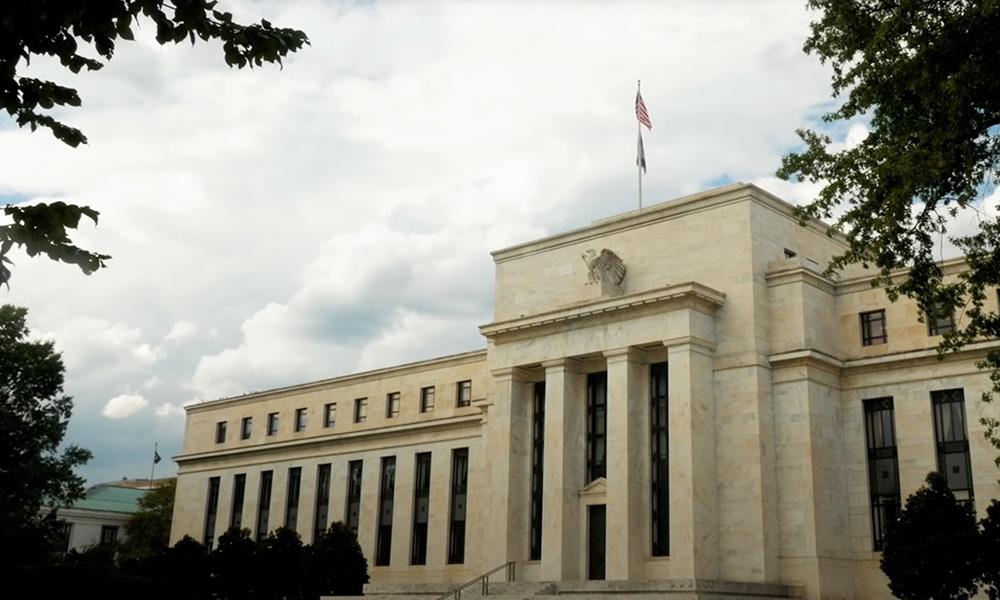
On the eve of the Great Depression: Mellon's "Wall Street Feast" and the beginning and end of the crash
In 1920s Wall Street, Treasury Secretary Andrew Mellon was an absolute economic dictator. As the third richest man in America at the time and the head of several major financial groups, Mellon not only served as Chairman of the Federal Reserve Board but also acted as a de facto Treasury Secretary, controlling both national tax revenue and monetary policy. To maximize profits for his businesses and his associates, Mellon initiated an extremely fervent "government intervention mode": massively cutting taxes—from a top personal income tax rate of 66% to 24%—while simultaneously pressuring the Federal Reserve to lower interest rates: in 1927, when the economy was already overheated, Mellon forcibly implemented a low-interest-rate policy, ostensibly to "help Britain return to the gold standard," but in reality, to inject massive liquidity into the US stock market. This poisonous combination of fiscal and monetary easing directly fueled the frenzied "Roaring Twenties." Retail investors and institutions leveraged their investments, and margin lending on Wall Street surged by 300%. The moment of collapse (October 1929): The Federal Reserve, lacking independence, became an appendage of politicians. When the bubble grew uncontrollably, the Fed frantically raised interest rates, but it was too late. "Black Tuesday" swept Wall Street, and the Great Depression erupted. Even more absurd was the handling of the aftermath—Mellon continued to use political power to hijack monetary policy, even proposing the famous "liquidation theory": "Liquidate labor, liquidate stocks, liquidate farmers, liquidate real estate…this will spit out the rotten flesh in the system." Under his control, the Fed watched thousands of banks fail and monetary policy tighten by a third without taking any action. The Dow Jones Industrial Average plummeted from its peak of 381 points in September 1929 to 41.2 points in July 1932, a drop of 89%. This tragedy made the US Congress acutely aware that placing the monetary gates in the hands of politicians and the Treasury Secretary could easily trigger a devastating economic catastrophe.The White House infighting of 1951: Truman's "Red Plane" roar and the nightmare of postwar inflation.
Although the Banking Act of 1935 removed the Treasury Secretary from the Federal Reserve Board of Governors, the outbreak of World War II once again turned the Federal Reserve into a "printing press" for the Treasury. However, to raise money for the war effort, the Federal Reserve was forced to commit to keeping long-term Treasury yields firmly at a low of 2.5%—meaning that for every bond issued by the Treasury, the Federal Reserve had to print money to pay for it. After World War II, price controls were lifted, and pent-up wartime demand exploded. Coupled with the global buying frenzy triggered by the Korean War, the US inflation rate soared to 21% in early 1951. The power struggles and intrigue within the White House: Then-Federal Reserve Chairman Thomas McAbe couldn't sit still. He demanded a halt to bond purchases and interest rate hikes to curb inflation, which directly angered President Truman. To maintain low government debt issuance costs, Truman initiated a series of outrageous administrative interventions: The White House "Gate Incident": Truman summoned all members of the Federal Open Market Committee (FOMC) to the White House. After the meeting, the White House unilaterally released a press release to the media, falsely claiming that "the Federal Reserve has pledged to the President to continue supporting the government in maintaining low-interest-rate Treasury bonds." Public refutation and betrayal: Faced with the White House's forced hijacking, the Federal Reserve was in an uproar. The FOMC directly released the meeting minutes to Congress, publicly refuting Truman and exposing the White House's fabrication. Truman was furious and privately denounced Federal Reserve officials as "betrayers." The birth of the 1951 Treasury-Federal Reserve Agreement: Seeing both sides suffering losses, Assistant Secretary of the Treasury William McChesney Martin intervened, and ultimately, a compromise was reached in March 1951: The Federal Reserve would stop pegging its bonds to the 2.5% Treasury yield; the Federal Reserve would regain its independent monetary policy decision-making power and would no longer pay for Treasury debt; Truman forced McAdams to resign and appointed Martin, "his own man," to succeed him as Chairman of the Federal Reserve. However, to Truman's surprise, Martin demonstrated extremely strong professional independence upon taking office. Martin famously said, "The job of the central bank is to take away the cocktail bowl just as the party is getting lively." The 1951 agreement thus established the independent foundation of the modern Federal Reserve.Comparative Evaluation: The Essence of "Short-Term Trading and Long-Term Buying" Hedging in 2026
Comparing this to history, the confrontation between Treasury Secretary Bessant and Federal Reserve Chairman Warsh in August 2026 is a implicit reenactment of the "1951 model" in the era of financial engineering. Tactical Upgrade (Shadow Easing): Unlike Truman, Treasury Secretary Bessant did not directly order the Fed to cut interest rates in 2026. Instead, he utilized the Treasury's balance sheet—drastically reducing the issuance of long-term Treasury bonds and shifting to issuing excessive short-term bills (T-Bills). This "issuing short and buying long" strategy essentially artificially lowered long-term market interest rates without the Fed's consent, a form of "shadow monetary policy" that circumvents legal constraints. The Fed's Counterattack: Chairman Warsh's hawkish remarks at the Jackson Hole symposium essentially revealed the Treasury's hand: "You use fiscal tools to inject liquidity at the front end, and I will maintain a higher policy rate at the back end." Brief Assessment: The intervention in 2026 was no longer a crude administrative coercion, but evolved into a highly sophisticated policy hedging game. The Treasury uses short-term debt to boost short-term growth, while the Federal Reserve uses high interest rates to maintain long-term inflation. This internal friction of "one foot on the gas and one foot on the brake" is significantly increasing the overall macroeconomic friction costs of the market.Linear extrapolation: Where will the century-long game ultimately lead?
As the Treasury continues its "short-term quantitative easing" while the Federal Reserve maintains its "high-pressure anti-inflation" policy stance, the resulting policy angle will lead to a severely inverted or abnormally steep yield curve. This will create ample opportunities for arbitrage using "fiscal liquidity" and "high central bank interest rates," significantly increasing asset price volatility (especially in US stocks and gold). Historically, the Fed's independence has repeatedly succumbed to the pressure of repaying the massive national debt. If the US national debt continues to rise, high interest rates will lead to an explosive increase in government interest payments (even exceeding the defense budget). The analysis suggests that the Fed will ultimately be forced to compromise between "allowing the inflation center to shift upward" and "rescuing from fiscal default risk," moving from absolute independence to implicit cooperation. Finally, just as the Banking Act of 1935 and the Agreement of 1951 were both born after crises, the current asset-backed hedging strategy is unsustainable. The ultimate outcome of this scenario will be a new "policy restructuring": Congress may pass new legislation to redefine the legitimate boundaries between the Treasury and the Federal Reserve in managing liquidity in the Treasury market—the Federal Reserve may gain an implicit veto over the Treasury's bond maturity structure in exchange for moderate concessions on the inflation target (such as raising it to 3%).- Risk Warning and Disclaimer
- The market involves risk, and trading may not be suitable for all investors. This article is for reference only and does not constitute personal investment advice, nor does it take into account certain users’ specific investment objectives, financial situation, or other needs. Any investment decisions made based on this information are at your own risk.