Eurozone inflation rose to 3.3%, and the European Central Bank signaled further interest rate hikes, causing the euro to continue its low-level fluctuations against the US dollar.
2026-09-02 15:46:03
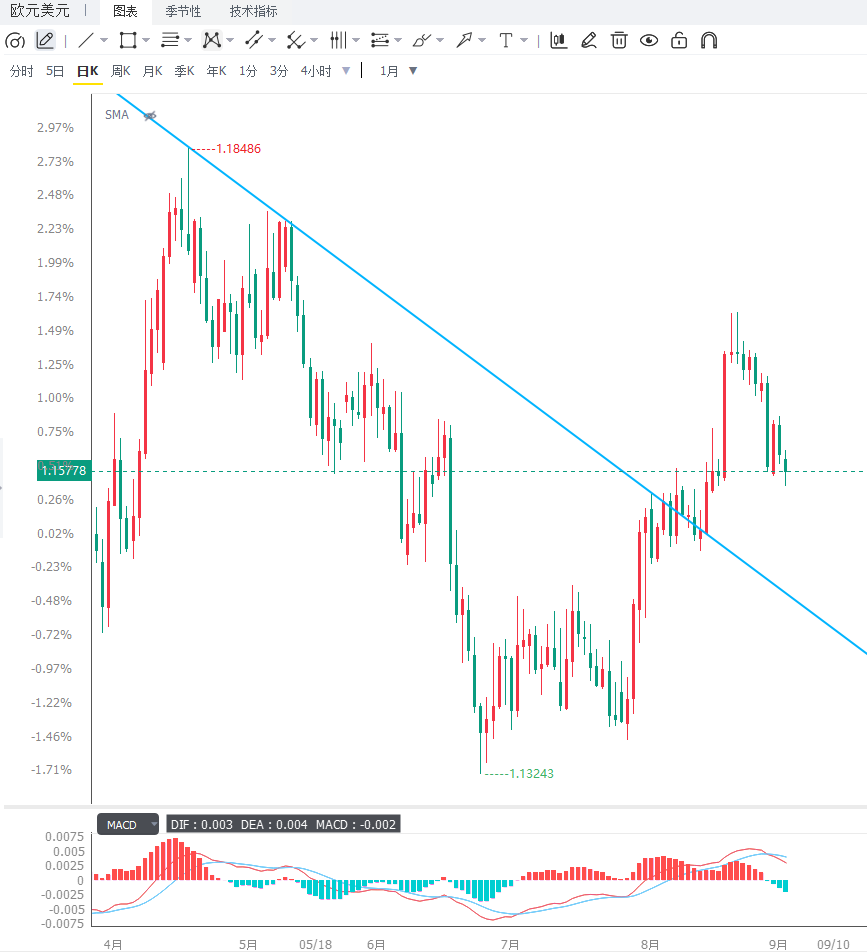
The European Central Bank's policy stance is shifting further towards a hawkish position. ECB Governing Council member and Central Bank of Ireland Governor Gabriel Makhlouf recently stated that if inflation begins to "go in the wrong direction," the ECB must be prepared to raise interest rates further. He also pointed out that the current eurozone inflation rate has exceeded 3%, while economic growth is slightly stronger than expected before the summer, a combination that is unsettling policymakers.  This statement comes against the backdrop of a significant resurgence of inflationary pressures in the Eurozone. Latest data shows that the Eurozone's Consumer Price Index (CPI) rose 3.3% year-on-year in August, up from 2.9% in July, reaching its highest level since September 2023 and remaining above the European Central Bank's (ECB) 2% medium-term target for several consecutive months. Energy prices are the main driver of this inflation surge, with energy inflation rising by approximately 14.3% year-on-year, significantly higher than the previous figure. Meanwhile, core inflation, excluding food and energy, fell slightly to 2.4%, indicating that current inflationary pressures are primarily concentrated on energy supply shocks rather than overall demand overheating. For the ECB, this inflationary structure increases the complexity of policy decisions. On the one hand, rising energy prices directly push up overall inflation and may gradually transmit to other sectors through transportation, manufacturing, and service costs; on the other hand, there are currently no clear signs of core inflation and wages spiraling out of control. Therefore, the ECB needs to avoid excessively tightening policy due to short-term energy shocks while simultaneously preventing inflation expectations from becoming unanchored. Makhlouf's latest remarks have effectively released a relatively clear policy signal. He anticipates that the ECB's policy decision next week will not be surprising, with the market widely interpreting it as a likely increase in the deposit rate from the current 2.25% to 2.50%. The market has already largely priced in this outcome, so the real factor influencing the euro's trajectory is not whether there will be a rate hike in September, but rather whether the ECB will signal further rate increases. More importantly, Makhlouf believes that even with a deposit rate of 2.5%, monetary policy will still be insufficient to significantly restrict economic activity. He judges that a truly restrictive policy level will likely only emerge after interest rates exceed **2.75%**. This means that if inflation risks continue to expand, the ECB still has room to further raise policy rates. This assessment also implies that the market's previous expectation that a September rate hike might be the "last rate hike" risks being repriced. If energy prices remain high in the future, or if inflation begins to spread from the energy sector to core goods and services, the ECB may need to push policy rates to 2.75% or even higher. For the euro, this would create new interest rate support and could potentially widen the interest rate differential between the euro and other major currencies. However, Makhlouf did not commit to the ECB raising rates consecutively. He emphasized that it is currently impossible to determine whether further action will be needed after next week's rate hike, and the ECB should continue to adhere to its "meeting-by-meeting" decision-making approach rather than providing a clear policy path in advance. This statement implies that the ECB wants to maintain policy flexibility while avoiding premature market expectations of consecutive rate hikes. From a policy framework perspective, this strategy has some merit. The ECB is not currently facing typical demand-driven inflation. Recent research shows that this round of inflation is largely due to energy supply shocks, especially after the Middle East situation and energy transportation were affected, leading to a significant rise in oil and gas prices. The ECB has previously emphasized that compared to the inflation cycle of 2021-2022, the current energy shock is more of a supply-side factor, thus requiring a more gradual policy response. However, the problem is that if energy prices remain high, the supply shock may eventually evolve into broader inflationary pressures. Businesses may pass on costs by raising product and service prices, and consumers' real income may also be squeezed. If wage growth subsequently accelerates again, it could create a second round of inflationary effects. Makhlouf has explicitly stated that he has not seen a second round of wage-driven inflation, and the related risks remain manageable. This is a key reason why the ECB can adopt a gradual approach to interest rate hikes. Strong economic growth further bolsters the ECB's confidence in tightening policy. Makhlouf anticipates that the ECB may slightly raise its economic growth forecast this year, partly because recent economic data is stronger than previously anticipated. The European economy was previously pressured by both energy costs and trade uncertainty, but its actual performance has not deteriorated as previously feared. This has changed the ECB's policy mix: inflation is above target, while economic growth has not stalled significantly. If the economy continues to be resilient, the cost of raising interest rates for the ECB will be relatively low, allowing for a more proactive approach to controlling inflation. For the euro, the difference between the ECB's hawkish signals and expectations for US monetary policy will be the core factor determining the euro/dollar exchange rate. Currently, the US is also affected by rising energy prices and higher US Treasury yields, leading to increased market expectations for further tightening by the Federal Reserve. Therefore, even if the ECB signals an interest rate hike, it does not mean the euro can unilaterally and sustainably strengthen. Of particular note is the recent resurgence of the US dollar's safe-haven appeal, with the yield on 10-year US Treasury bonds rising to approximately 4.80%, while rising oil prices have simultaneously boosted inflation expectations in Europe and the US. In this environment, the euro faces dual pressure from the dollar's interest rate advantage and the flow of safe-haven funds. If the European Central Bank (ECB) only raises interest rates by 25 basis points, while the Federal Reserve's policy expectations continue to shift towards a hawkish stance, the euro's upside potential may be limited. Therefore, the ECB's policy communication after its September meeting will be more important than the interest rate decision itself. If the central bank emphasizes that energy inflation is a temporary factor and suggests that a rate of around 2.5% is sufficient to manage current risks, the euro may experience a "buy the rumor, sell the fact" correction; conversely, if the ECB believes that rising energy prices may spread to core inflation and explicitly reserves the space to continue raising interest rates to 2.75%, the euro may receive stronger medium-term support. The ECB's core logic can be summarized as follows: interest rate hikes are highly certain, but subsequent hikes still depend on whether inflation continues to worsen. This means that the future euro's performance will be more influenced by the combined effects of energy prices, core inflation, wage growth, and economic activity data, rather than simply following the interest rate decision itself. From the daily chart of EUR/USD, the exchange rate has been fluctuating repeatedly within the 1.15 to 1.17 range recently, remaining in a sideways consolidation phase after a period of adjustment. Currently, the price is around 1.1570, with the 100-day moving average near 1.1565 acting as a key short-term support level. If this level holds, the euro may have a chance to rebound towards the central area near 1.1600 and further test the resistance near 1.1710. A decisive break above 1.1710 could reopen the possibility of a move towards the 1.18 area. Conversely, if the exchange rate falls below 1.1565, the support near 1.1490 needs to be monitored; a further breach could plunge the euro back into a weaker trend. Looking at the 4-hour chart, EUR/USD remains in a slightly bearish short-term consolidation pattern, but expectations of further interest rate hikes by the European Central Bank provide some fundamental support for the euro. 1.1600 is a crucial level currently being contested by bulls and bears. If the exchange rate can regain and stabilize above this area, a short-term rebound could extend to 1.1650 or even 1.1710. However, if it continues to be pressured below 1.1600 and breaks below 1.1565, the market may retest the 1.1500 area. Overall, the technical picture has not yet formed a clear trend breakout. Subsequent policy signals from the European Central Bank and US employment and inflation data will determine whether the euro can break out of its current consolidation pattern.
  Editor's Summary: The latest hawkish statement from the European Central Bank (ECB) indicates that rising Eurozone inflation to 3.3% and resilient economic growth are jointly increasing the likelihood of further interest rate hikes. Raising the deposit rate to 2.50% in September has become a highly anticipated policy path. However, the key factor determining the euro's subsequent performance is whether the ECB considers 2.5% sufficient or believes interest rates need to move further above 2.75%. In the short term, the ECB's hawkish signals are beneficial to the euro, but the dollar is simultaneously supported by high US yields, rising oil prices, and expectations of Fed policy tightening, thus limiting the euro's upside potential. If energy prices continue to climb and drive down core inflation and inflation expectations, the ECB may further tighten policy, potentially providing stronger support for the euro. If the energy shock gradually subsides and core inflation remains moderate, the September rate hike may represent a temporary policy high. Currently, the most important factor for the market to watch is not the magnitude of a single rate hike, but rather the ECB's attitude towards the 2.75% capping interest rate level and whether it will continue to adhere to a meeting-by-meeting approach.
This statement comes against the backdrop of a significant resurgence of inflationary pressures in the Eurozone. Latest data shows that the Eurozone's Consumer Price Index (CPI) rose 3.3% year-on-year in August, up from 2.9% in July, reaching its highest level since September 2023 and remaining above the European Central Bank's (ECB) 2% medium-term target for several consecutive months. Energy prices are the main driver of this inflation surge, with energy inflation rising by approximately 14.3% year-on-year, significantly higher than the previous figure. Meanwhile, core inflation, excluding food and energy, fell slightly to 2.4%, indicating that current inflationary pressures are primarily concentrated on energy supply shocks rather than overall demand overheating. For the ECB, this inflationary structure increases the complexity of policy decisions. On the one hand, rising energy prices directly push up overall inflation and may gradually transmit to other sectors through transportation, manufacturing, and service costs; on the other hand, there are currently no clear signs of core inflation and wages spiraling out of control. Therefore, the ECB needs to avoid excessively tightening policy due to short-term energy shocks while simultaneously preventing inflation expectations from becoming unanchored. Makhlouf's latest remarks have effectively released a relatively clear policy signal. He anticipates that the ECB's policy decision next week will not be surprising, with the market widely interpreting it as a likely increase in the deposit rate from the current 2.25% to 2.50%. The market has already largely priced in this outcome, so the real factor influencing the euro's trajectory is not whether there will be a rate hike in September, but rather whether the ECB will signal further rate increases. More importantly, Makhlouf believes that even with a deposit rate of 2.5%, monetary policy will still be insufficient to significantly restrict economic activity. He judges that a truly restrictive policy level will likely only emerge after interest rates exceed **2.75%**. This means that if inflation risks continue to expand, the ECB still has room to further raise policy rates. This assessment also implies that the market's previous expectation that a September rate hike might be the "last rate hike" risks being repriced. If energy prices remain high in the future, or if inflation begins to spread from the energy sector to core goods and services, the ECB may need to push policy rates to 2.75% or even higher. For the euro, this would create new interest rate support and could potentially widen the interest rate differential between the euro and other major currencies. However, Makhlouf did not commit to the ECB raising rates consecutively. He emphasized that it is currently impossible to determine whether further action will be needed after next week's rate hike, and the ECB should continue to adhere to its "meeting-by-meeting" decision-making approach rather than providing a clear policy path in advance. This statement implies that the ECB wants to maintain policy flexibility while avoiding premature market expectations of consecutive rate hikes. From a policy framework perspective, this strategy has some merit. The ECB is not currently facing typical demand-driven inflation. Recent research shows that this round of inflation is largely due to energy supply shocks, especially after the Middle East situation and energy transportation were affected, leading to a significant rise in oil and gas prices. The ECB has previously emphasized that compared to the inflation cycle of 2021-2022, the current energy shock is more of a supply-side factor, thus requiring a more gradual policy response. However, the problem is that if energy prices remain high, the supply shock may eventually evolve into broader inflationary pressures. Businesses may pass on costs by raising product and service prices, and consumers' real income may also be squeezed. If wage growth subsequently accelerates again, it could create a second round of inflationary effects. Makhlouf has explicitly stated that he has not seen a second round of wage-driven inflation, and the related risks remain manageable. This is a key reason why the ECB can adopt a gradual approach to interest rate hikes. Strong economic growth further bolsters the ECB's confidence in tightening policy. Makhlouf anticipates that the ECB may slightly raise its economic growth forecast this year, partly because recent economic data is stronger than previously anticipated. The European economy was previously pressured by both energy costs and trade uncertainty, but its actual performance has not deteriorated as previously feared. This has changed the ECB's policy mix: inflation is above target, while economic growth has not stalled significantly. If the economy continues to be resilient, the cost of raising interest rates for the ECB will be relatively low, allowing for a more proactive approach to controlling inflation. For the euro, the difference between the ECB's hawkish signals and expectations for US monetary policy will be the core factor determining the euro/dollar exchange rate. Currently, the US is also affected by rising energy prices and higher US Treasury yields, leading to increased market expectations for further tightening by the Federal Reserve. Therefore, even if the ECB signals an interest rate hike, it does not mean the euro can unilaterally and sustainably strengthen. Of particular note is the recent resurgence of the US dollar's safe-haven appeal, with the yield on 10-year US Treasury bonds rising to approximately 4.80%, while rising oil prices have simultaneously boosted inflation expectations in Europe and the US. In this environment, the euro faces dual pressure from the dollar's interest rate advantage and the flow of safe-haven funds. If the European Central Bank (ECB) only raises interest rates by 25 basis points, while the Federal Reserve's policy expectations continue to shift towards a hawkish stance, the euro's upside potential may be limited. Therefore, the ECB's policy communication after its September meeting will be more important than the interest rate decision itself. If the central bank emphasizes that energy inflation is a temporary factor and suggests that a rate of around 2.5% is sufficient to manage current risks, the euro may experience a "buy the rumor, sell the fact" correction; conversely, if the ECB believes that rising energy prices may spread to core inflation and explicitly reserves the space to continue raising interest rates to 2.75%, the euro may receive stronger medium-term support. The ECB's core logic can be summarized as follows: interest rate hikes are highly certain, but subsequent hikes still depend on whether inflation continues to worsen. This means that the future euro's performance will be more influenced by the combined effects of energy prices, core inflation, wage growth, and economic activity data, rather than simply following the interest rate decision itself. From the daily chart of EUR/USD, the exchange rate has been fluctuating repeatedly within the 1.15 to 1.17 range recently, remaining in a sideways consolidation phase after a period of adjustment. Currently, the price is around 1.1570, with the 100-day moving average near 1.1565 acting as a key short-term support level. If this level holds, the euro may have a chance to rebound towards the central area near 1.1600 and further test the resistance near 1.1710. A decisive break above 1.1710 could reopen the possibility of a move towards the 1.18 area. Conversely, if the exchange rate falls below 1.1565, the support near 1.1490 needs to be monitored; a further breach could plunge the euro back into a weaker trend. Looking at the 4-hour chart, EUR/USD remains in a slightly bearish short-term consolidation pattern, but expectations of further interest rate hikes by the European Central Bank provide some fundamental support for the euro. 1.1600 is a crucial level currently being contested by bulls and bears. If the exchange rate can regain and stabilize above this area, a short-term rebound could extend to 1.1650 or even 1.1710. However, if it continues to be pressured below 1.1600 and breaks below 1.1565, the market may retest the 1.1500 area. Overall, the technical picture has not yet formed a clear trend breakout. Subsequent policy signals from the European Central Bank and US employment and inflation data will determine whether the euro can break out of its current consolidation pattern. Editor's Summary: The latest hawkish statement from the European Central Bank (ECB) indicates that rising Eurozone inflation to 3.3% and resilient economic growth are jointly increasing the likelihood of further interest rate hikes. Raising the deposit rate to 2.50% in September has become a highly anticipated policy path. However, the key factor determining the euro's subsequent performance is whether the ECB considers 2.5% sufficient or believes interest rates need to move further above 2.75%. In the short term, the ECB's hawkish signals are beneficial to the euro, but the dollar is simultaneously supported by high US yields, rising oil prices, and expectations of Fed policy tightening, thus limiting the euro's upside potential. If energy prices continue to climb and drive down core inflation and inflation expectations, the ECB may further tighten policy, potentially providing stronger support for the euro. If the energy shock gradually subsides and core inflation remains moderate, the September rate hike may represent a temporary policy high. Currently, the most important factor for the market to watch is not the magnitude of a single rate hike, but rather the ECB's attitude towards the 2.75% capping interest rate level and whether it will continue to adhere to a meeting-by-meeting approach.
- Risk Warning and Disclaimer
- The market involves risk, and trading may not be suitable for all investors. This article is for reference only and does not constitute personal investment advice, nor does it take into account certain users’ specific investment objectives, financial situation, or other needs. Any investment decisions made based on this information are at your own risk.