Adjusting too quickly will put pressure on the economy, while adjusting too slowly will lead to a loss of control over the exchange rate. The Bank of Japan is backed into a corner. What will happen at the next interest rate meeting?
2026-09-02 15:56:03
On Wednesday, September 2nd, the foreign exchange market underwent a new round of pricing adjustments around the Bank of Japan's (BOJ) policy path. BOJ Policy Board member Hajime Takada recently stated that monetary policy needs to consider a wider range of options and cannot simply follow the traditional pace of adjustments. He also emphasized that policy actions need to be more flexible, and interest rate changes should be reassessed at each meeting. These statements indicate that discussions within the BOJ regarding the pace of policy normalization are intensifying. The core contradiction in the USD/JPY market recently is not simply exchange rate fluctuations, but rather the rebalancing of monetary policies among major global economies, inflation paths, and risk appetite in financial markets. The exchange rate is currently trading around 159.60, experiencing slight intraday pressure. The market's focus is currently on whether the BOJ will further adjust its policy framework. Meanwhile, changes in dollar asset yields, expectations regarding Federal Reserve policy, and global risk events continue to influence the dollar liquidity environment. The volatility of USD/JPY is essentially still influenced by both interest rate differential expectations and capital allocation behavior. 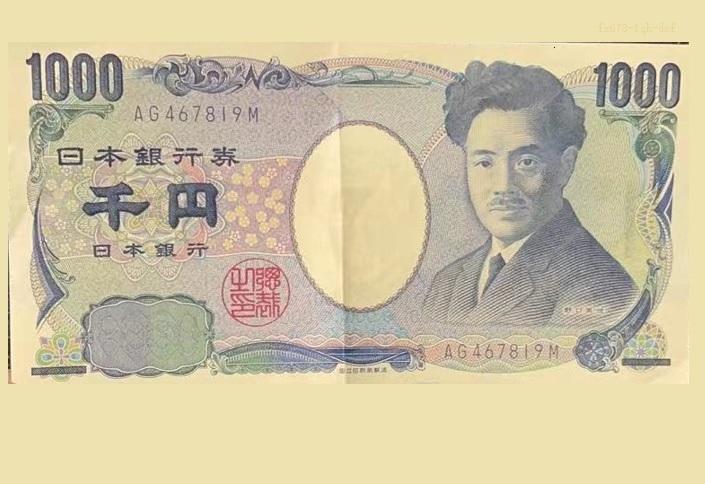
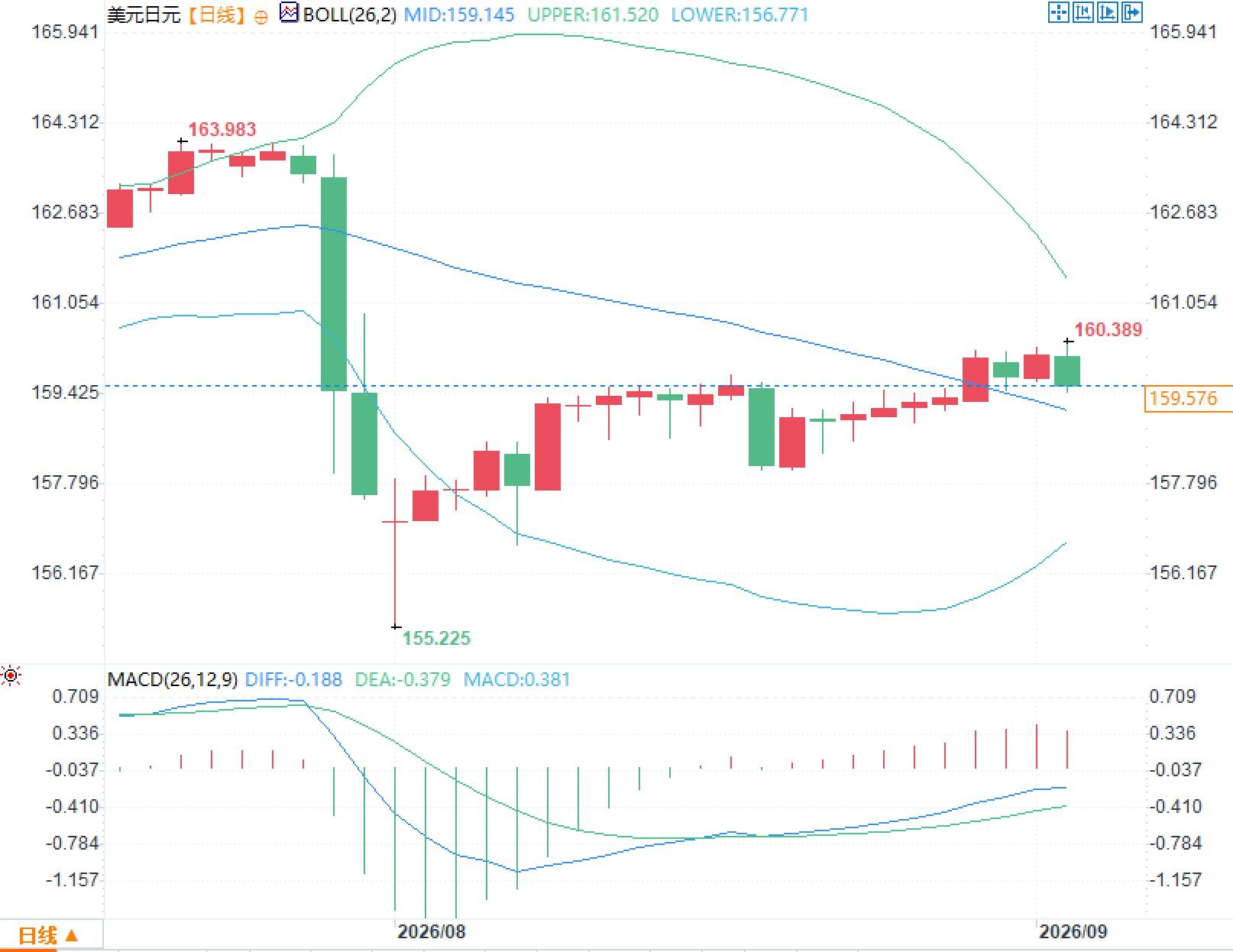 Regarding the MACD indicator, the fast and slow lines have gradually recovered after the previous rapid decline, and the changes in the histogram show that short-term momentum has recovered somewhat, but overall it is still in a recovery phase. Meanwhile, the candlestick pattern indicates a decrease in market trading activity and a contraction in volatility, with funds awaiting new macroeconomic catalysts. Expectations of a policy shift by the Bank of Japan, the pace of Federal Reserve policy, and changes in the global bond market will remain important factors influencing the future fluctuations of the USD/JPY exchange rate.
Shift in Bank of Japan's policy language: From cautious observation to flexible response
For a considerable period, the Bank of Japan's policy communication has focused on stabilizing market expectations, emphasizing economic data, wage growth, and the sustainability of inflation trends. However, recent information released by policymakers indicates that the decision-making body is re-evaluating the traditional gradual adjustment model. Hajime Takada suggests that the Bank of Japan needs to consider a broader range of policy options, rather than being limited to a fixed-range interest rate adjustment path. He believes that the neutral interest rate level may not be easily calculated using traditional models and needs to be assessed in conjunction with changes in the economic environment. This means that the Bank of Japan's future policy communication may rely more on actual data feedback rather than locking in a single path in advance. From a financial market perspective, changes in policy language often affect investors' expectations of future interest rate trajectories. When the market perceives an adjustment in the central bank's policy framework, bond yields, exchange rate volatility, and capital flows will all be repriced. However, the Bank of Japan still faces the challenge of balancing economic growth, corporate financing costs, and financial market stability. Too rapid a policy adjustment could increase economic pressure, while insufficient adjustment could lead the market to believe that the central bank's ability to address inflation and exchange rate volatility is limited. Therefore, the Bank of Japan's future policy path will still need to depend on changes in economic data.The core contradiction behind USD/JPY: The logic of carry trades is changing.
The USD/JPY exchange rate has long been significantly influenced by carry trades. In the past, the market focused heavily on the difference between Japan's low-interest-rate environment and the high-interest-rate environments of other major economies. However, as the Bank of Japan gradually exits its long-term easing policy, the market is reassessing this logic. Currently, USD/JPY volatility is mainly influenced by three factors: First, changes in expectations regarding the normalization of Bank of Japan policy. If the market believes that Japan's interest rate environment is gradually adjusting, the logic of capital allocation may change. Second, expectations regarding Federal Reserve policy remain significant. Changes in the US interest rate environment affect the attractiveness of dollar assets and influence the foreign exchange market through capital flows. Third, changes in market risk appetite. When global financial markets face uncertainties, safe-haven demand, asset allocation adjustments, and changes in liquidity all exacerbate exchange rate volatility. Recently, Bank of Japan officials have consistently signaled their concern about inflation risks and policy flexibility, leading to a significant increase in market discussion about the scope for future policy adjustments. Bank of Japan Governor Kazuo Ueda has also stated that policy meetings will be based on economic and price conditions, and will pay attention to changes in inflation risks. Therefore, the current focus of the USD/JPY market has shifted from simple interest rate comparisons to a comprehensive interplay between the credibility of Bank of Japan policy, the global interest rate cycle, and economic data.Technical Analysis: Amidst a consolidation and correction pattern, the market awaits further confirmation from fundamentals.
From a daily technical perspective, the USD/JPY pair has entered a consolidation phase after experiencing significant volatility. Chart data shows that the Bollinger Band's middle line is flattening, and the price is fluctuating around the medium-term moving average, indicating that the market's bullish and bearish forces are rebalancing. Regarding the MACD indicator, the fast and slow lines have gradually recovered after the previous rapid decline, and the changes in the histogram show that short-term momentum has recovered somewhat, but overall it is still in a recovery phase. Meanwhile, the candlestick pattern indicates a decrease in market trading activity and a contraction in volatility, with funds awaiting new macroeconomic catalysts. Expectations of a policy shift by the Bank of Japan, the pace of Federal Reserve policy, and changes in the global bond market will remain important factors influencing the future fluctuations of the USD/JPY exchange rate.
- Risk Warning and Disclaimer
- The market involves risk, and trading may not be suitable for all investors. This article is for reference only and does not constitute personal investment advice, nor does it take into account certain users’ specific investment objectives, financial situation, or other needs. Any investment decisions made based on this information are at your own risk.