GBP/USD fell to near a three-week low, with the 1.3500 level becoming a key dividing line between bulls and bears.
2026-09-03 10:20:04
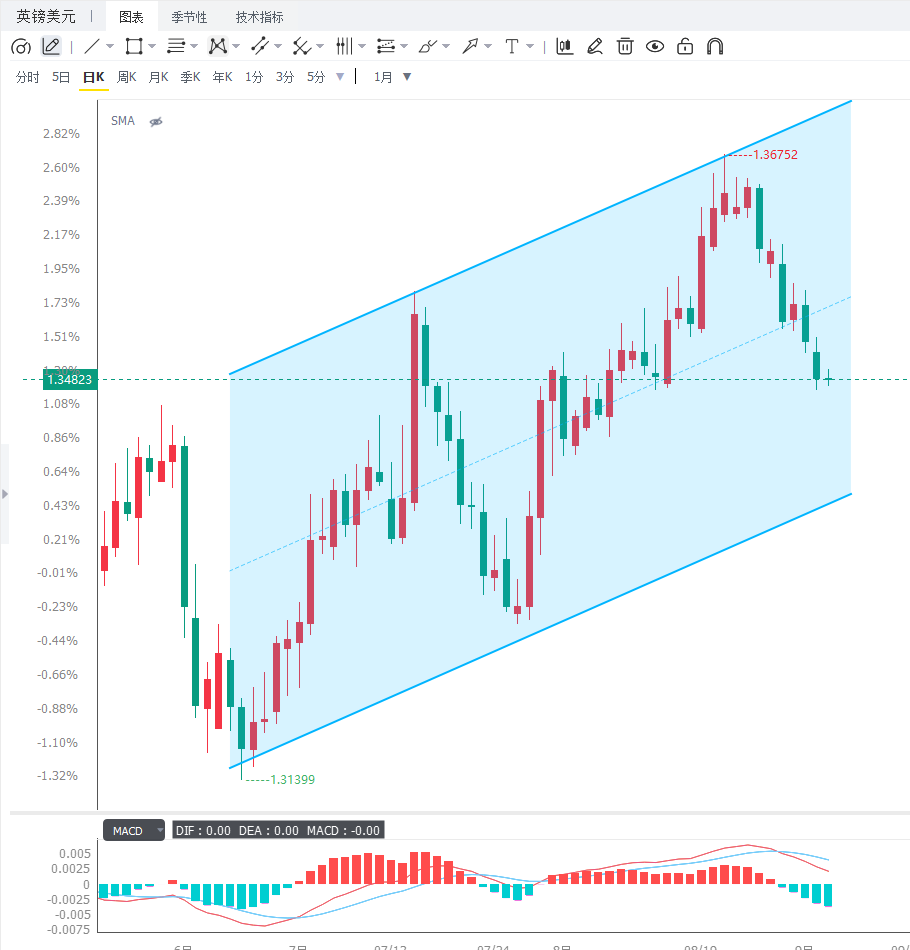
The pound/dollar pair continued to consolidate below the psychological level of 1.3500 during Asian trading on Thursday, after hitting a near three-week low. Its short-term movement is clearly influenced by the renewed support for the US dollar. The core contradiction in the current foreign exchange market lies between expectations of US monetary policy and geopolitical risks, while the UK itself lacks sufficiently strong positive catalysts, putting the pound under relative pressure during periods of dollar strength.  After a brief adjustment, the US dollar has stabilized again, with expectations of Federal Reserve policy becoming a key factor supporting it. Fed Chairman Kevin Warsh previously signaled a hawkish stance, suggesting that policymakers might reconsider tightening monetary policy if inflation fails to consistently move towards the 2% policy target. As the market increased bets on a September policy adjustment, US interest rate expectations shifted significantly, providing some support for the dollar. Rising energy prices further reinforced this logic. The recent oil market rebounded rapidly due to the situation in the Middle East and shipping risks in the Strait of Hormuz. For the US, higher energy prices could increase inflationary pressures and reduce market expectations for a rapid shift to easing by the Fed. If energy prices remain high, the market might even reassess the interest rate path in the coming months, providing additional support for the dollar. Geopolitical risks also provide another layer of support for the dollar. Recent tensions between the US and Iran have escalated, with Iran retaliating after US attacks on targets, raising security risks in the Gulf region. Meanwhile, tensions surrounding the Strait of Hormuz continue to influence market sentiment. As this shipping route is a vital global energy transport corridor, any sign of disruption could quickly drive up crude oil and refined product prices, triggering safe-haven demand in financial markets. This environment is generally unfavorable for the GBP/USD exchange rate. The US dollar is supported by both US interest rate expectations and safe-haven inflows, creating a relatively clear dual advantage. While the pound may also be affected by changes in global risk sentiment, current market demand for the dollar is stronger, thus the exchange rate remains under downward pressure. However, recent declines in US Treasury yields have, to some extent, prevented the dollar bulls from further expanding their advantage. The previous rapid rise in yields had already boosted the dollar; if yields continue to fall, the dollar's interest rate advantage may weaken, providing some breathing room for the GBP/USD. Therefore, the future direction of the dollar depends not only on speeches by Federal Reserve officials but also on changes in the US Treasury market. Currently, the UK lacks strong catalysts that can significantly alter market pricing, so the pound is likely to follow the dollar's fluctuations in the short term. The market needs to pay attention to any new changes in UK domestic inflation, economic growth, and Bank of England policy expectations. If UK economic data improves, or the Bank of England signals a more hawkish policy stance, the pound may find support independent of the dollar's movements; conversely, if the UK economy weakens, the pound's defensive capabilities may further decline. Recent US macroeconomic data will be a key directional indicator for the exchange rate. Thursday's US ISM Services PMI will be the first test of the US economy's resilience. The service sector is a crucial component of the US economy; if the data is significantly stronger than expected, the market may further bet on the Federal Reserve maintaining high interest rates, potentially leading to continued dollar strength. Unexpectedly weak data could alleviate market concerns about policy tightening, providing a short-term rebound opportunity for GBP/USD. The true determinant of market direction will likely be Friday's US non-farm payroll report. Continued strength in the job market suggests the US economy still has a strong capacity to withstand high interest rates, and could also increase market expectations that the Federal Reserve will maintain a tight policy stance. Conversely, if job creation slows significantly, the unemployment rate rises, or wage growth cools, the dollar may be significantly pressured, and GBP/USD could experience a strong recovery. Furthermore, developments in the Middle East remain a significant external variable. If tensions escalate further, safe-haven funds may flow back into the US dollar, while rising oil prices could reinforce US inflation risks, creating double pressure on the GBP/USD pair. If the situation eases significantly, both the dollar's safe-haven premium and the energy price risk premium will decline, potentially allowing the GBP/USD to rebound further. From a daily chart perspective, the GBP/USD has been under significant pressure recently and is gradually approaching a key support area. Although the medium-term uptrend structure has not been completely broken, the price has fallen back to near a key technical area, giving short-term bears a slight advantage. Currently, the first resistance level to watch is the psychological level of 1.3500. If the price re-establishes itself above this level, it may recover towards the 1.3520-1.3580 area; if it fails to recover 1.3500 and continues to weaken, the support level below will gradually become the focus of the market. On the daily chart, 1.3500 is a crucial dividing line between short-term bullish and bearish sentiment; a break below this level would require close monitoring of the support around 1.3425. From a 4-hour chart perspective, GBP/USD is currently trading near the 200-period moving average, while remaining above the 50% Fibonacci retracement level of the previous July-August rally. If this area provides effective support, a technical rebound is still possible; however, a break below this support area on the 4-hour chart would signify a further weakening of the previous upward structure, potentially leading to a move towards 1.3425 or even 1.3357 for support. On the upside, 1.3521 corresponds to the 38.2% Fibonacci retracement level, serving as the first short-term resistance. Further resistance lies around 1.3580, and a subsequent break above this area would present stronger resistance at the previous cycle high near 1.3676. The current 4-hour trend is weak, with 1.3425 and 1.3357 forming a significant support zone, while 1.3521 and 1.3580 are key levels that bulls need to break through to regain control.
  Editor's Summary: The current weakness in GBP/USD stems primarily from the dollar, rather than solely from negative factors affecting the pound. A hawkish outlook from the Federal Reserve, inflationary risks from rising energy prices, and escalating tensions in the Middle East have collectively increased the dollar's attractiveness, while declining US Treasury yields have temporarily limited further upside for the dollar. In the short term, 1.3500 is a crucial level for determining whether GBP/USD can find support. A retest and break above 1.3521 could lead to a further correction towards 1.3580; however, a break below this key support level would see 1.3425 and 1.3357 become important areas to watch in the next phase. Subsequent US ISM Services PMI and non-farm payroll data will determine changes in dollar interest rate expectations, while the Middle East situation could further amplify exchange rate volatility through oil prices and safe-haven flows.
After a brief adjustment, the US dollar has stabilized again, with expectations of Federal Reserve policy becoming a key factor supporting it. Fed Chairman Kevin Warsh previously signaled a hawkish stance, suggesting that policymakers might reconsider tightening monetary policy if inflation fails to consistently move towards the 2% policy target. As the market increased bets on a September policy adjustment, US interest rate expectations shifted significantly, providing some support for the dollar. Rising energy prices further reinforced this logic. The recent oil market rebounded rapidly due to the situation in the Middle East and shipping risks in the Strait of Hormuz. For the US, higher energy prices could increase inflationary pressures and reduce market expectations for a rapid shift to easing by the Fed. If energy prices remain high, the market might even reassess the interest rate path in the coming months, providing additional support for the dollar. Geopolitical risks also provide another layer of support for the dollar. Recent tensions between the US and Iran have escalated, with Iran retaliating after US attacks on targets, raising security risks in the Gulf region. Meanwhile, tensions surrounding the Strait of Hormuz continue to influence market sentiment. As this shipping route is a vital global energy transport corridor, any sign of disruption could quickly drive up crude oil and refined product prices, triggering safe-haven demand in financial markets. This environment is generally unfavorable for the GBP/USD exchange rate. The US dollar is supported by both US interest rate expectations and safe-haven inflows, creating a relatively clear dual advantage. While the pound may also be affected by changes in global risk sentiment, current market demand for the dollar is stronger, thus the exchange rate remains under downward pressure. However, recent declines in US Treasury yields have, to some extent, prevented the dollar bulls from further expanding their advantage. The previous rapid rise in yields had already boosted the dollar; if yields continue to fall, the dollar's interest rate advantage may weaken, providing some breathing room for the GBP/USD. Therefore, the future direction of the dollar depends not only on speeches by Federal Reserve officials but also on changes in the US Treasury market. Currently, the UK lacks strong catalysts that can significantly alter market pricing, so the pound is likely to follow the dollar's fluctuations in the short term. The market needs to pay attention to any new changes in UK domestic inflation, economic growth, and Bank of England policy expectations. If UK economic data improves, or the Bank of England signals a more hawkish policy stance, the pound may find support independent of the dollar's movements; conversely, if the UK economy weakens, the pound's defensive capabilities may further decline. Recent US macroeconomic data will be a key directional indicator for the exchange rate. Thursday's US ISM Services PMI will be the first test of the US economy's resilience. The service sector is a crucial component of the US economy; if the data is significantly stronger than expected, the market may further bet on the Federal Reserve maintaining high interest rates, potentially leading to continued dollar strength. Unexpectedly weak data could alleviate market concerns about policy tightening, providing a short-term rebound opportunity for GBP/USD. The true determinant of market direction will likely be Friday's US non-farm payroll report. Continued strength in the job market suggests the US economy still has a strong capacity to withstand high interest rates, and could also increase market expectations that the Federal Reserve will maintain a tight policy stance. Conversely, if job creation slows significantly, the unemployment rate rises, or wage growth cools, the dollar may be significantly pressured, and GBP/USD could experience a strong recovery. Furthermore, developments in the Middle East remain a significant external variable. If tensions escalate further, safe-haven funds may flow back into the US dollar, while rising oil prices could reinforce US inflation risks, creating double pressure on the GBP/USD pair. If the situation eases significantly, both the dollar's safe-haven premium and the energy price risk premium will decline, potentially allowing the GBP/USD to rebound further. From a daily chart perspective, the GBP/USD has been under significant pressure recently and is gradually approaching a key support area. Although the medium-term uptrend structure has not been completely broken, the price has fallen back to near a key technical area, giving short-term bears a slight advantage. Currently, the first resistance level to watch is the psychological level of 1.3500. If the price re-establishes itself above this level, it may recover towards the 1.3520-1.3580 area; if it fails to recover 1.3500 and continues to weaken, the support level below will gradually become the focus of the market. On the daily chart, 1.3500 is a crucial dividing line between short-term bullish and bearish sentiment; a break below this level would require close monitoring of the support around 1.3425. From a 4-hour chart perspective, GBP/USD is currently trading near the 200-period moving average, while remaining above the 50% Fibonacci retracement level of the previous July-August rally. If this area provides effective support, a technical rebound is still possible; however, a break below this support area on the 4-hour chart would signify a further weakening of the previous upward structure, potentially leading to a move towards 1.3425 or even 1.3357 for support. On the upside, 1.3521 corresponds to the 38.2% Fibonacci retracement level, serving as the first short-term resistance. Further resistance lies around 1.3580, and a subsequent break above this area would present stronger resistance at the previous cycle high near 1.3676. The current 4-hour trend is weak, with 1.3425 and 1.3357 forming a significant support zone, while 1.3521 and 1.3580 are key levels that bulls need to break through to regain control. Editor's Summary: The current weakness in GBP/USD stems primarily from the dollar, rather than solely from negative factors affecting the pound. A hawkish outlook from the Federal Reserve, inflationary risks from rising energy prices, and escalating tensions in the Middle East have collectively increased the dollar's attractiveness, while declining US Treasury yields have temporarily limited further upside for the dollar. In the short term, 1.3500 is a crucial level for determining whether GBP/USD can find support. A retest and break above 1.3521 could lead to a further correction towards 1.3580; however, a break below this key support level would see 1.3425 and 1.3357 become important areas to watch in the next phase. Subsequent US ISM Services PMI and non-farm payroll data will determine changes in dollar interest rate expectations, while the Middle East situation could further amplify exchange rate volatility through oil prices and safe-haven flows.
- Risk Warning and Disclaimer
- The market involves risk, and trading may not be suitable for all investors. This article is for reference only and does not constitute personal investment advice, nor does it take into account certain users’ specific investment objectives, financial situation, or other needs. Any investment decisions made based on this information are at your own risk.