Silver prices surged and then fluctuated more sharply. What key variable is the market waiting for?
2026-09-03 18:46:04
On Thursday, September 3rd, the international silver market is undergoing a repricing process driven by macroeconomic expectations, interest rate paths, and safe-haven demand. After a recent rapid rebound, market focus has gradually shifted from its commodity attributes to changes in the global liquidity environment; prices are currently trading around $65.50, with a slight increase during the day. Investors are awaiting the release of the US August non-farm payroll data to assess whether the resilience of the labor market will affect the Federal Reserve's subsequent monetary policy pace. Market forecasts suggest that US August non-farm payrolls may improve from the sluggish performance in July, with market expectations of approximately 95,000 new jobs, while July's data showed a decline. Meanwhile, the unemployment rate is expected to remain around 4.1%, indicating that the overall labor market is still in a slow adjustment phase. Employment data has a significant impact on interest rate expectations; if the labor market performs better than expected, the market may reassess inflationary pressures and policy space. The core contradiction in the current silver market lies in the ongoing interplay between interest rate expectations and safe-haven demand. On the one hand, changes in real interest rates will affect the attractiveness of interest-free assets; on the other hand, fluctuations in the energy market, uncertainty in global economic growth, and the need for capital allocation may also increase attention to the precious metals market. 
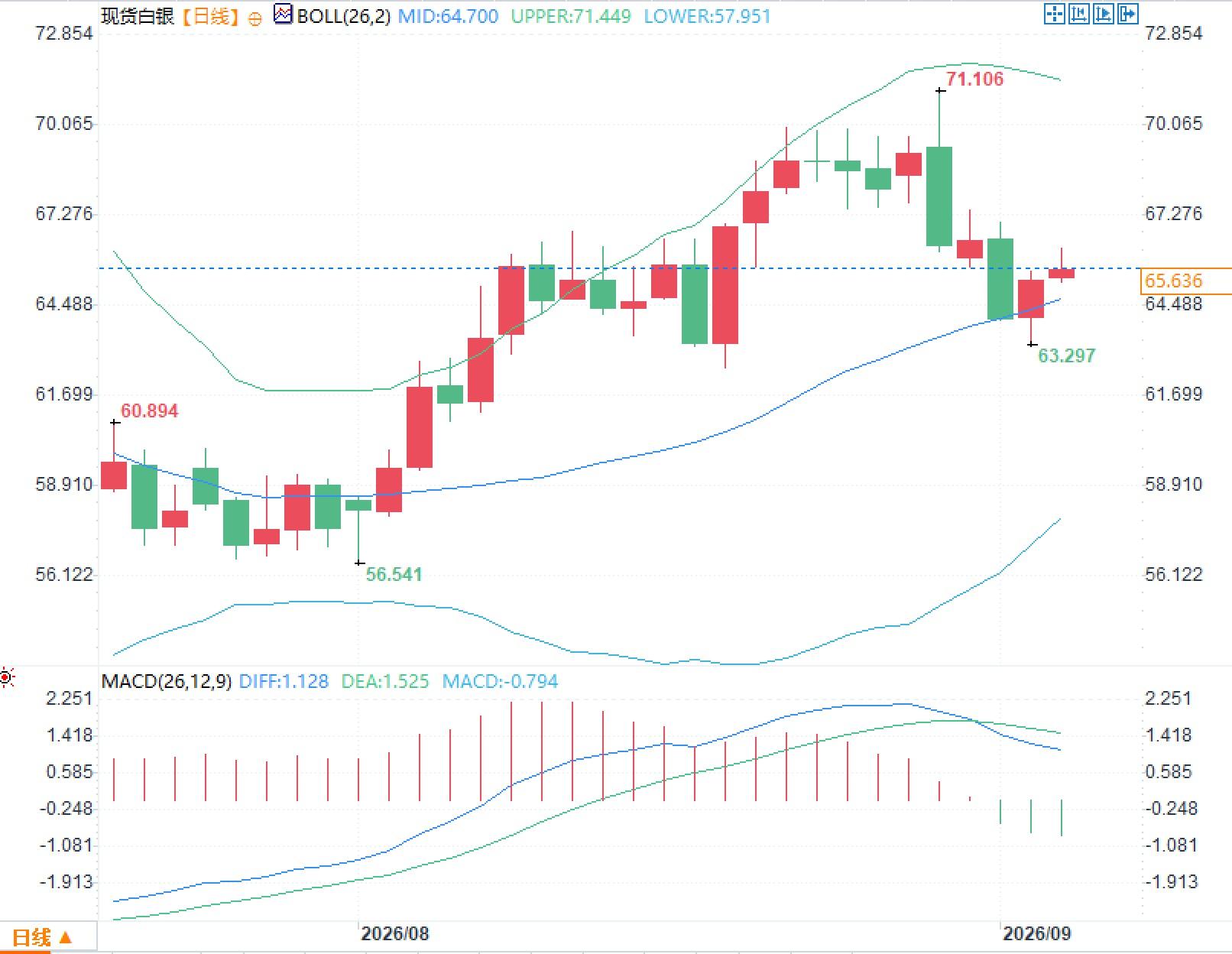 The Bollinger Bands indicator shows that the overall channel remains expanding, but the speed of movement along the upper band has slowed, indicating that short-term volatility is rebalancing. As for the MACD indicator, the fast and slow lines are converging at high levels, suggesting that the momentum driving the price upward has cooled. Currently, the silver market is awaiting new catalysts. After the release of the non-farm payroll data, the market may reassess the employment situation, interest rate expectations, and changes in risk appetite, and the technical structure may also adjust as funds are reallocated.
Employment data has become an important variable in the short-term pricing of silver.
US employment market data has always been a crucial indicator influencing the Federal Reserve's policy decisions. The market focuses on the non-farm payroll report, not only on the number of new jobs, but also on the employment structure, wage growth, and changes in the unemployment rate—factors that collectively determine the persistence of inflationary pressures. If the employment market remains stable, the Fed is likely to continue emphasizing the importance of monitoring inflation changes, rather than adjusting its policy direction based solely on changes in a single month's data. Even strong employment data does not necessarily indicate an immediate shift in the policy environment, as inflation indicators remain a key basis for monetary policy. For silver, changes in the interest rate environment have a dual impact. Higher interest rates typically increase the opportunity cost of holding non-interest-bearing assets, while when interest rate expectations stabilize, silver's financial attributes may regain market attention. Therefore, the impact of non-farm payroll data is more about adjusting market expectations than a single indicator determining the trend. Currently, traders are assessing whether the employment data will change their judgment on the future policy path. If the economic data meets expectations, the market may continue to price in the existing policy environment; if the data deviates significantly, it could trigger increased asset price volatility.Increased volatility in energy markets complicates silver's fundamentals.
Besides employment data, changes in the energy market are also a significant factor influencing precious metals. Recent restrictions on energy transportation have raised concerns about the stability of energy supply. Energy price fluctuations can affect the policy decisions of major central banks worldwide through inflation expectations. Rising energy prices typically increase market attention to inflationary pressures. If inflation expectations resurface, the market may increase its expectations for the duration of higher interest rates, impacting the valuation of precious metal assets. However, silver prices are not solely determined by interest rates. As a commodity with both financial and industrial attributes, silver prices are also influenced by manufacturing demand, the global economic cycle, and changes in supply chain inventories. During periods of improved economic growth expectations, industrial demand may increase market focus; while during periods of increased economic uncertainty, the safe-haven properties of precious metals may come into play. Therefore, the current silver market does not have a single driving factor that dominates. Employment data, inflation expectations, energy prices, and global capital flows collectively constitute the market pricing framework.Technical analysis indicates the market is entering a phase of power rebalancing.
From a daily chart technical perspective, after a significant rise, spot silver prices have been consolidating around the middle Bollinger Band. Chart data shows that prices recently refreshed a recent high before undergoing a correction, indicating a clear exchange between bulls and bears in the high-level market. The Bollinger Bands indicator shows that the overall channel remains expanding, but the speed of movement along the upper band has slowed, indicating that short-term volatility is rebalancing. As for the MACD indicator, the fast and slow lines are converging at high levels, suggesting that the momentum driving the price upward has cooled. Currently, the silver market is awaiting new catalysts. After the release of the non-farm payroll data, the market may reassess the employment situation, interest rate expectations, and changes in risk appetite, and the technical structure may also adjust as funds are reallocated.Frequently Asked Questions
Question 1: Why does US employment data affect the silver market? Answer: Employment data influences market expectations regarding the Federal Reserve's policy path, and changes in policy expectations affect the interest rate environment. Silver is a non-interest-bearing asset, so the market typically focuses on the impact of changes in real interest rates on its valuation. Question 2: What does rising energy prices mean for silver? Answer: Changes in energy prices can affect inflation expectations and further influence the policy decisions of major central banks globally. Silver possesses both financial and industrial attributes, therefore a comprehensive analysis of inflation, economic growth, and capital flows is necessary.- Risk Warning and Disclaimer
- The market involves risk, and trading may not be suitable for all investors. This article is for reference only and does not constitute personal investment advice, nor does it take into account certain users’ specific investment objectives, financial situation, or other needs. Any investment decisions made based on this information are at your own risk.