Ultimatum or maximum pressure? The Trump team mobilizes in full force, and the suspense surrounding the Fed's September rate hike is on the verge of exploding.
2026-09-07 11:35:05
With only about ten days left until the Federal Open Market Committee's September policy meeting, tensions between the Trump administration and the independent central bank have escalated dramatically. Over the past week, almost the entire White House leadership, from the president and vice president to the Treasury Secretary and senior economic advisors, has mobilized with unprecedented frequency and public intensity to send clear signals to the Fed: not only should interest rates not be raised at this meeting, but they should even begin to cut rates. Even by Trump's long history of criticizing the Fed, the breadth, density, and directness of this action are rare, surpassing all previous attempts at public intervention in central bank monetary policy. This game is not only about short-term interest rate trends, but also profoundly reflects the White House's thirst for control of the economic narrative and the Fed's difficult situation in defending its institutional credibility under immense political pressure. 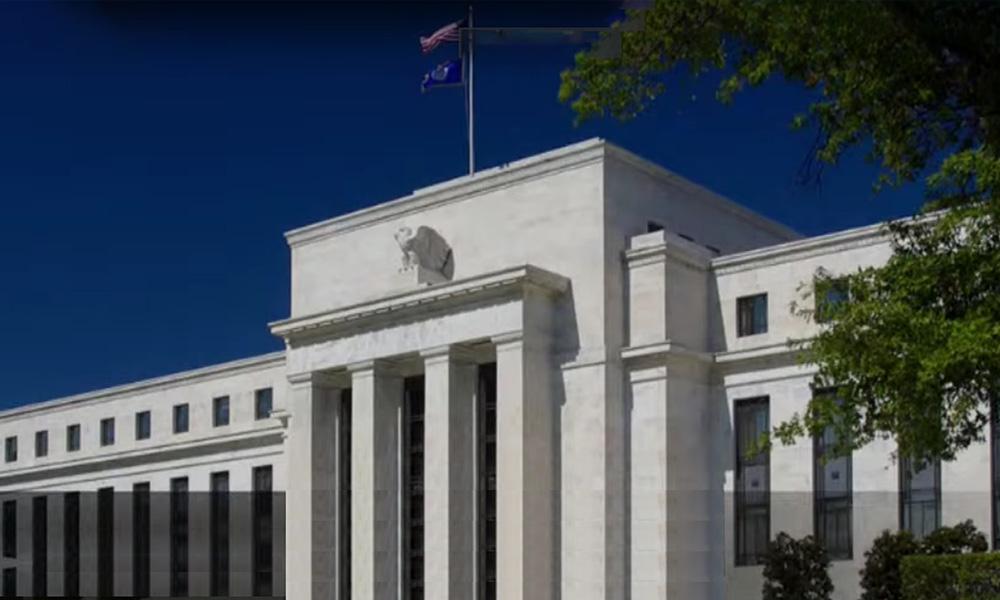
The White House launches a full-scale attack: from the president's tweets to advisors denouncing the "clown."
While President Trump didn't launch a direct personal attack on current Federal Reserve Chairman Kevin Warsh, as he had in his past attacks on former Chairman Powell, his pressure tactics were more aggressive and threatening. Over the weekend, he posted on Truth Social, stating in a strong tone that unless the Federal Reserve lowers interest rates to his liking, he would consider imposing a new round of tariffs on countries with which the United States has a trade surplus. This statement was unusual, as it marked the first time Trump had explicitly linked tariffs directly to the Fed's interest rate decisions, sending a dangerous signal to the market: if the central bank does not cooperate with the executive branch's economic stimulus agenda, the White House is willing to use trade policy to create external shocks and force interest rates down. Meanwhile, the president's senior economic advisor, Peter Navarro, used even stronger language in an interview with former White House strategist Steve Bannon. He called some members of the Federal Open Market Committee "clowns" and warned that raising interest rates in the current economic environment would be "extremely irresponsible" and would "precisely strike at the industries and communities in America that need prosperity the most." Navarro also defended Warsh, saying he was "trying to do the right thing," implying divisions within the committee and that Warsh himself was facing immense pressure from hawkish members. Vice President JD Vance, in a public speech earlier last week, stated that the government was using multiple tools, including tax cuts and deregulation, to lower the overall interest rate environment, but "it would be very beneficial if the Fed could provide some cooperation." Treasury Secretary Scott Bessant, in an interview, took a technical approach, pointing out that given the supply shock has not fully subsided, the Fed's past practice has been to postpone rate hikes unless a clear second- or third-order inflation transmission effect is observed—implying that current data does not support a hasty tightening of monetary policy.The timing window is delicate: election anxiety and market betting intertwine.
The timing of this pressure campaign is extremely sensitive. The September policy meeting is scheduled for September 15-16, less than two months before the November midterm elections. Polls continue to show widespread voter dissatisfaction with the high cost of living and interest rates on mortgages and auto loans, undoubtedly putting immense political pressure on the ruling party. The White House clearly hopes to boost short-term economic confidence through monetary easing, thereby mitigating the pre-election headwinds. However, market expectations for a rate hike have not diminished significantly despite the White House's strong intervention. According to the latest pricing of federal funds rate futures, traders believe the probability of a rate hike at this meeting hovers around 60%, although the strong August non-farm payroll report released last Friday slightly increased this probability. The report showed that the unemployment rate remained stable at 4.1%, and average hourly earnings rose 0.3% month-over-month and 3.1% year-over-year, with no signs of runaway wage growth. This provided some support for the White House's argument that "growth does not lead to inflation," but also gave hawkish members of the Federal Reserve more confidence to maintain their stance on rate hikes.Walsh's Dilemma: Pledge of Independence vs. Realpolitik
Facing mounting pressure from the White House, Federal Reserve Chairman Kevin Warsh is under intense scrutiny. According to a Wall Street Journal report last month, Trump had spoken with Warsh multiple times to discuss interest rate policy. While this report was corroborated by several government aides, Trump himself denied it, claiming he had only spoken with Warsh once since taking office. This contradictory information reflects the anxiety and division within the White House regarding the central bank's influence on policy. Warsh, on the other hand, has explicitly defended the Fed's independence on several occasions. During his congressional testimony in July, he specifically cited the June decision to keep interest rates unchanged, contrary to some people's expectations of a rate cut, to demonstrate that decisions were based entirely on economic data, not political directives. At the same time, he acknowledged that the president and other elected officials have the right to express their opinions on monetary policy. This subtle stance of "having the right to speak, but not being listened to" attempts to find a balance between institutional dignity and realpolitik. It's worth noting that history is not without precedent—in May 2019, during Trump's first term, Vice President Pence, Treasury Secretary Mnuchin, and economic advisor Kudlow also called for interest rate cuts. At that time, the Federal Reserve did not immediately yield, but it did initiate a rate-cutting cycle two months later. Now, a similar scenario is unfolding again, leading the market to speculate whether history will repeat itself.Core Disagreement: The Classic Debate Between Growth and Inflation
The White House's rationale for this pressure focuses on a reinterpretation of the relationship between economic growth and inflation. Government officials have repeatedly emphasized that robust capital spending and tax cuts can significantly expand the economy's supply-side capacity, thereby supporting higher levels of output without triggering inflation. They cite the fact that the core consumer price index's annualized rate over the past three months is only 1.6% to try and prove that inflationary pressures are subsiding. However, the core personal consumption expenditures price index, which the Federal Reserve relies on more heavily, still has an annualized rate above 3% over the past three months, creating a divergence that makes it difficult for policymakers to reach a consensus. More importantly, several Federal Reserve officials have expressed deep concern in recent speeches. They believe that inflation has significantly exceeded the long-term target of 2% for five consecutive years, and that in addition to tariffs and rising energy prices due to geopolitical conflicts, there are also widespread signs of rising prices in the service and housing sectors. At the July meeting, three regional Fed presidents—Beth Hammark, Neal Kashkari, and Lori Logan—all voted for a 25-basis-point rate hike, which failed to pass only because the majority vote remained unchanged. Warsh himself stated explicitly at the Jackson Hole Economic Symposium that the Federal Reserve's attention must be "completely focused on inflation," and disclosed that over 54% of the 199 sub-items of the PCE price index had risen by more than 3% in the past twelve months—a signal that should not be taken lightly. The government's attempt to deny the traditional link between growth and inflation is, in effect, challenging the deeply ingrained Phillips Curve theory in economics—a theory that posits that a tightening labor market and rising wages will be transmitted to overall prices through the demand side. Although August wage data was relatively mild, the demand for large-scale equipment driven by investment in artificial intelligence infrastructure is actually pushing up the prices of some industrial goods, casting doubt on the optimistic assumption that supply expansion can indefinitely offset inflation.Summary: The suspense lasted until the very last moment; the data ultimately decided the outcome.
In summary, while the Trump administration's comprehensive and intense pressure campaign is impressive, its ability to truly sway the decisions of Warsh and the majority of the Federal Open Market Committee remains highly uncertain. The Fed has a strong hawkish faction, and several officials have publicly stated they will closely monitor the August Consumer Price Index (CPI) report to be released on Friday—this data is considered the final crucial piece of the puzzle, directly determining whether inflation is steadily declining or rebounding. If the CPI is stronger than expected, the probability of a rate hike could rise rapidly; if it shows a cooling trend, the White House's pressure might yield unexpected results. However, this struggle over interest rates has already transcended purely economic and technical levels, becoming a classic case study of how the resilience of the US central bank system, the boundaries of executive power, and the logic of electoral politics intertwine and collide. The final outcome will not only determine whether or not a rate hike occurs, but will also shape the market's fundamental trust in the Fed's independence over a longer period.Frequently Asked Questions
Question 1: Isn't the Federal Reserve an independent institution? Is such public pressure from the White House legal or in accordance with precedent? Answer: The Federal Reserve legally enjoys independent monetary policy-making power, and its governors and regional Fed presidents are not directly ordered by the executive branch. However, it is within the scope of freedom of speech for elected officials such as the president and the Treasury secretary to express their opinions on economic policy, and this is not illegal. Historically, many presidents have expressed different views on the Federal Reserve, but it is extremely rare for an administration to mobilize almost all key officials to speak out in unison on the eve of a meeting, supplemented by tariff threats. While this approach does not cross legal boundaries, it clearly impacts the political tacit understanding and traditional norms upon which the central bank's independence depends. Question 2: Why did Trump specifically emphasize "interest rate cuts" rather than just "pausing interest rate hikes"? Answer: The current federal funds rate is in a restrictive range. The White House believes that economic growth remains robust, but high interest rates are suppressing sensitive areas such as housing, automobiles, and small and medium-sized enterprise investment. The government hopes that interest rate cuts will directly reduce financing costs for consumers and businesses, releasing a clear signal of "economic dividends" before the midterm elections. "Pausing rate hikes" merely maintains the status quo and cannot generate the same political and economic boost, thus the White House's goals are more aggressive. Question 3: Why did a strong jobs report actually increase the probability of a rate hike? Does this contradict the government's logic? Answer: In the mainstream analytical framework of the Federal Reserve, strong employment usually means an overheated labor market, which may be transmitted to inflation through wage increases. Therefore, better-than-expected non-farm payroll data strengthens the basis for rate hikes by hawkish members. The government's view, however, emphasizes that if job growth is accompanied by an increase in labor productivity, it will not trigger inflation—the two interpret the same data in completely opposite ways, which is the core difference in understanding in the current game. Question 4: What consequences will Warsh face if he really resists the pressure and does not raise rates? What will happen if he does raise rates? Answer: If Warsh chooses not to raise rates, he may be seen by the market as bowing to political pressure, damaging the Fed's credibility in the long term, and potentially triggering a repricing of inflation expectations in the bond market. If he insists on raising rates, the White House may escalate trade tariff retaliation, or even consider weakening the Fed's power through legislation or personnel appointments. At the same time, the stock market may be under pressure in the short term, further intensifying pre-election political conflicts. Regardless of the choice, Warsh will find it difficult to emerge unscathed. Question 5: How should ordinary investors understand the impact of this game on asset prices? Answer: The market has already partially priced in the probability of an interest rate hike, but the real volatility will be concentrated after the CPI data release and the meeting's decision. If a rate hike is implemented, short-term US Treasury yields may rise, the dollar will strengthen, and gold and tech stocks will be under pressure; if there is an unexpected pause, risk assets may experience a brief rally. More importantly, this political interference itself has increased the uncertainty of the Fed's future policy path. Investors should be wary of the risk of continued amplified volatility and prepare contingency plans.- Risk Warning and Disclaimer
- The market involves risk, and trading may not be suitable for all investors. This article is for reference only and does not constitute personal investment advice, nor does it take into account certain users’ specific investment objectives, financial situation, or other needs. Any investment decisions made based on this information are at your own risk.