The pound sterling rebounded slightly, supported by expectations of fiscal and investment policies, while the market focused on UK and US inflation data.
2026-09-08 13:58:05
GBP/USD continued its rebound in Asian trading on Tuesday, rising to around 1.3540. The pound has been relatively stable recently, driven by both a decline in the US dollar index and positive signals from UK domestic policy environment encouraging investment and economic growth, which has improved short-term market sentiment towards the pound. Meanwhile, the dollar's failure to sustain its upward trend after strong employment data has also provided some support for the pound against the dollar.  In the UK, Chancellor of the Exchequer John Healy recently announced a series of measures aimed at lowering investment barriers, expanding investment authority in local economic zones, and promoting the application of emerging technologies. This has shifted market focus to the UK's economic growth and private investment prospects. Meanwhile, the UK government's emphasis on controlling regulatory costs and maintaining fiscal discipline has provided short-term support for the pound. However, the UK's economic fundamentals remain under some pressure. Data from the UK Office for National Statistics shows that monthly GDP growth in June was 0.3%, and real GDP for the three months to June grew by 0.4% compared to the previous three months. While the economy continues to expand, the growth rate has slowed. July GDP data will be released on September 11th, so the market will assess whether the UK economy can maintain its current growth momentum based on the latest economic activity data. The Bank of England is currently maintaining the Bank Rate at 3.75%, with its next monetary policy meeting scheduled for September 17th. The Bank of England has previously stated that fluctuations in Middle Eastern energy prices may continue to transmit to UK inflation, and policy still needs to be adjusted around the 2% inflation target. Therefore, changes in the relationship between UK economic growth and energy prices will continue to influence market judgments on the future path of monetary policy. Regarding the US dollar, the US added 162,000 non-farm payroll jobs in August, and the unemployment rate remained at 4.1%, stronger-than-expected employment data boosted market expectations for a Fed tightening in September. However, the dollar index has remained relatively weak recently, indicating that the policy benefits from the employment data have not yet fully translated into sustained upward momentum for the dollar. This week, the US PPI and CPI will be important risk events for GBP/USD. The US August PPI is scheduled to be released on September 10, and the CPI will be released on September 11. If inflation data is higher than expected, the market may further increase expectations for Fed tightening, and the dollar is expected to rebound, thus suppressing GBP/USD; if inflation is moderate, the dollar's weakness may continue, and the pound may continue to test recent highs. From the current market structure, the short-term trend of GBP/USD is still affected by three factors: expectations of the UK-US interest rate differential, UK economic data, and the dollar index. If the UK's July GDP is stable and US inflation does not significantly exceed expectations, the pound may maintain relative resilience; conversely, if US inflation rebounds and pushes up dollar yields, GBP/USD may come under renewed pressure. From a daily chart perspective, GBP/USD is currently trading around 1.3540, remaining above the 100-day moving average and the lower Bollinger Band, indicating a short-term bias towards a slightly bullish consolidation. The first resistance level is around 1.3560, which also coincides with the 20-day Bollinger Band middle line. A decisive break and hold above this level would target resistance around 1.3600 and 1.3660. On the downside, the key support level is the 1.3455-1.3445 area, which is close to both the lower Bollinger Band and the 100-day moving average, representing significant technical support. A break below this area would significantly weaken the short-term bullish bias. On the 4-hour chart, GBP/USD has maintained a relatively stable upward trend since rebounding from its lows, but significant selling pressure remains around 1.3560. If the exchange rate can break through 1.3560 and further stabilize above 1.3600, the upside potential could extend towards 1.3660. However, if it fails to break higher multiple times, a retest of the support levels around 1.3500 and 1.3455 should be anticipated. Short-term trading should focus on the dollar's volatility before and after the release of US PPI and CPI data.
 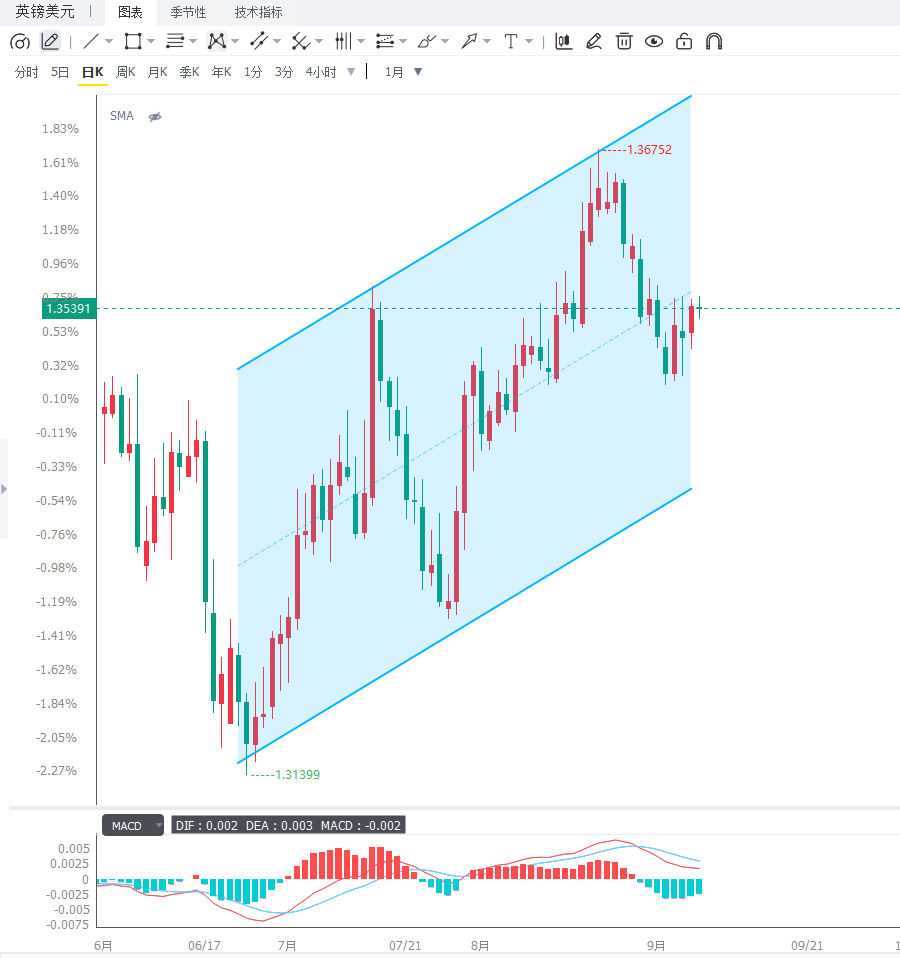 In summary, GBP/USD is currently in a phase of improving fundamentals and technicals, but upward pressure remains significant. UK economic policies signaling investment and growth are providing some support for the pound, while a decline in the US dollar index further improves the exchange rate's performance. However, the resilience of the US job market and expectations regarding Federal Reserve policy may still limit the pound's upside potential. Short-term focus is on whether the 1.3560 level can be broken, as well as US PPI and CPI data. If the US dollar continues to weaken, GBP/USD is expected to advance towards the 1.3600-1.3660 area; if US inflation picks up again, a pullback to around 1.3455 should be anticipated.
In the UK, Chancellor of the Exchequer John Healy recently announced a series of measures aimed at lowering investment barriers, expanding investment authority in local economic zones, and promoting the application of emerging technologies. This has shifted market focus to the UK's economic growth and private investment prospects. Meanwhile, the UK government's emphasis on controlling regulatory costs and maintaining fiscal discipline has provided short-term support for the pound. However, the UK's economic fundamentals remain under some pressure. Data from the UK Office for National Statistics shows that monthly GDP growth in June was 0.3%, and real GDP for the three months to June grew by 0.4% compared to the previous three months. While the economy continues to expand, the growth rate has slowed. July GDP data will be released on September 11th, so the market will assess whether the UK economy can maintain its current growth momentum based on the latest economic activity data. The Bank of England is currently maintaining the Bank Rate at 3.75%, with its next monetary policy meeting scheduled for September 17th. The Bank of England has previously stated that fluctuations in Middle Eastern energy prices may continue to transmit to UK inflation, and policy still needs to be adjusted around the 2% inflation target. Therefore, changes in the relationship between UK economic growth and energy prices will continue to influence market judgments on the future path of monetary policy. Regarding the US dollar, the US added 162,000 non-farm payroll jobs in August, and the unemployment rate remained at 4.1%, stronger-than-expected employment data boosted market expectations for a Fed tightening in September. However, the dollar index has remained relatively weak recently, indicating that the policy benefits from the employment data have not yet fully translated into sustained upward momentum for the dollar. This week, the US PPI and CPI will be important risk events for GBP/USD. The US August PPI is scheduled to be released on September 10, and the CPI will be released on September 11. If inflation data is higher than expected, the market may further increase expectations for Fed tightening, and the dollar is expected to rebound, thus suppressing GBP/USD; if inflation is moderate, the dollar's weakness may continue, and the pound may continue to test recent highs. From the current market structure, the short-term trend of GBP/USD is still affected by three factors: expectations of the UK-US interest rate differential, UK economic data, and the dollar index. If the UK's July GDP is stable and US inflation does not significantly exceed expectations, the pound may maintain relative resilience; conversely, if US inflation rebounds and pushes up dollar yields, GBP/USD may come under renewed pressure. From a daily chart perspective, GBP/USD is currently trading around 1.3540, remaining above the 100-day moving average and the lower Bollinger Band, indicating a short-term bias towards a slightly bullish consolidation. The first resistance level is around 1.3560, which also coincides with the 20-day Bollinger Band middle line. A decisive break and hold above this level would target resistance around 1.3600 and 1.3660. On the downside, the key support level is the 1.3455-1.3445 area, which is close to both the lower Bollinger Band and the 100-day moving average, representing significant technical support. A break below this area would significantly weaken the short-term bullish bias. On the 4-hour chart, GBP/USD has maintained a relatively stable upward trend since rebounding from its lows, but significant selling pressure remains around 1.3560. If the exchange rate can break through 1.3560 and further stabilize above 1.3600, the upside potential could extend towards 1.3660. However, if it fails to break higher multiple times, a retest of the support levels around 1.3500 and 1.3455 should be anticipated. Short-term trading should focus on the dollar's volatility before and after the release of US PPI and CPI data. In summary, GBP/USD is currently in a phase of improving fundamentals and technicals, but upward pressure remains significant. UK economic policies signaling investment and growth are providing some support for the pound, while a decline in the US dollar index further improves the exchange rate's performance. However, the resilience of the US job market and expectations regarding Federal Reserve policy may still limit the pound's upside potential. Short-term focus is on whether the 1.3560 level can be broken, as well as US PPI and CPI data. If the US dollar continues to weaken, GBP/USD is expected to advance towards the 1.3600-1.3660 area; if US inflation picks up again, a pullback to around 1.3455 should be anticipated.
- Risk Warning and Disclaimer
- The market involves risk, and trading may not be suitable for all investors. This article is for reference only and does not constitute personal investment advice, nor does it take into account certain users’ specific investment objectives, financial situation, or other needs. Any investment decisions made based on this information are at your own risk.