Why did oil prices and US Treasury yields both experience a "flash crash"?
2026-09-08 21:50:07
In the geopolitical game, financial markets often price information in the most sensitive and dramatic ways. On September 8th, the Middle East situation reached a critical juncture: the escalating conflict between the US and Israel over Iran posed a severe challenge to navigation in the Strait of Hormuz. The UAE urgently activated multiple alternative routes and accelerated port construction on its east coast; the UK intensified economic sanctions against Iran; and European refined oil supply stalled, forcing African refinery giant Dangote to operate at full capacity to fill the gap. However, at the very moment this series of geopolitical crises burst onto the screen, an extremely unusual and profound scene unfolded on the market: crude oil prices, which had previously surged due to war fears, suddenly plummeted from their highs, experiencing a sharp "dip" in sync with the US 10-year Treasury yield!  The micro-pricing mechanism behind the double "plunge" Conventional financial logic dictates that soaring oil prices lead to increased inflation expectations, which in turn push up US Treasury yields; conversely, falling oil prices lead to decreased inflation expectations, which in turn push down US Treasury yields. However, in the extreme escalation of the "Hormuz crisis," the simultaneous flash crash of oil prices and US Treasury yields revealed a rapid shift in market trading drivers: Oil price plunge: from "extreme supply chain panic" to "alternative supply chain rescue." The earlier surge in crude oil prices reflected extreme panic over the "complete blockage of Middle Eastern oil routes." However, after news of the UAE quickly activating the Arabian Gulf-Red Sea-Gulf of Oman bypass and Nigeria's Dangot refinery operating at full capacity to rush diesel/jet fuel shipments to Europe was confirmed, the market realized that the global energy supply chain was rapidly initiating self-rescue and alternative solutions. The extremely high "supply chain risk premium" for crude oil was instantly squeezed out, leading to rapid profit-taking by long positions and triggering a sharp drop in oil prices from their highs.
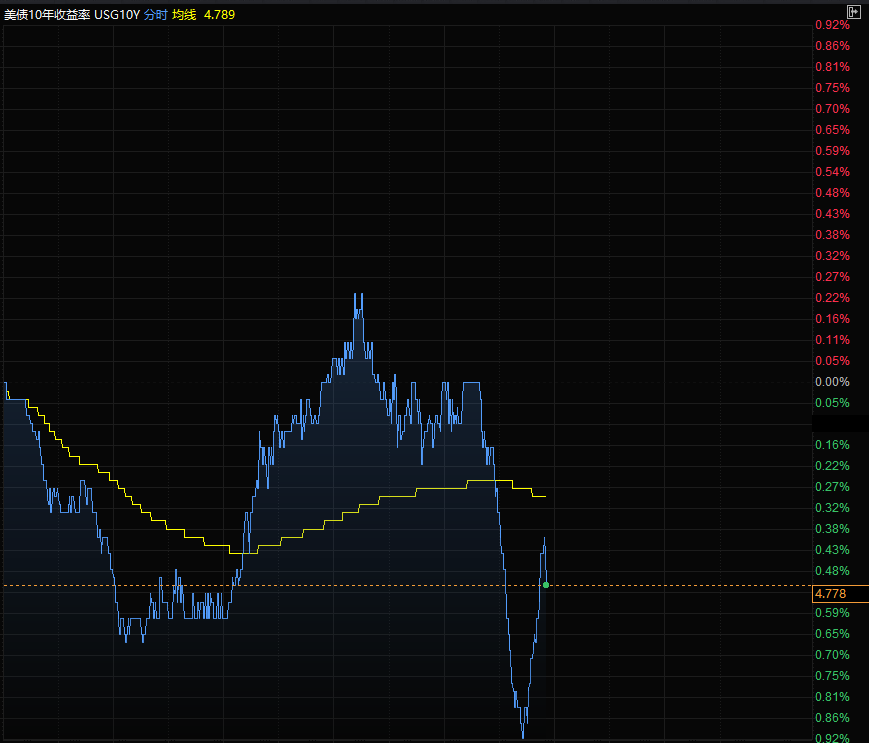 (10-year US Treasury yield intraday chart, source: EasyTrade)
 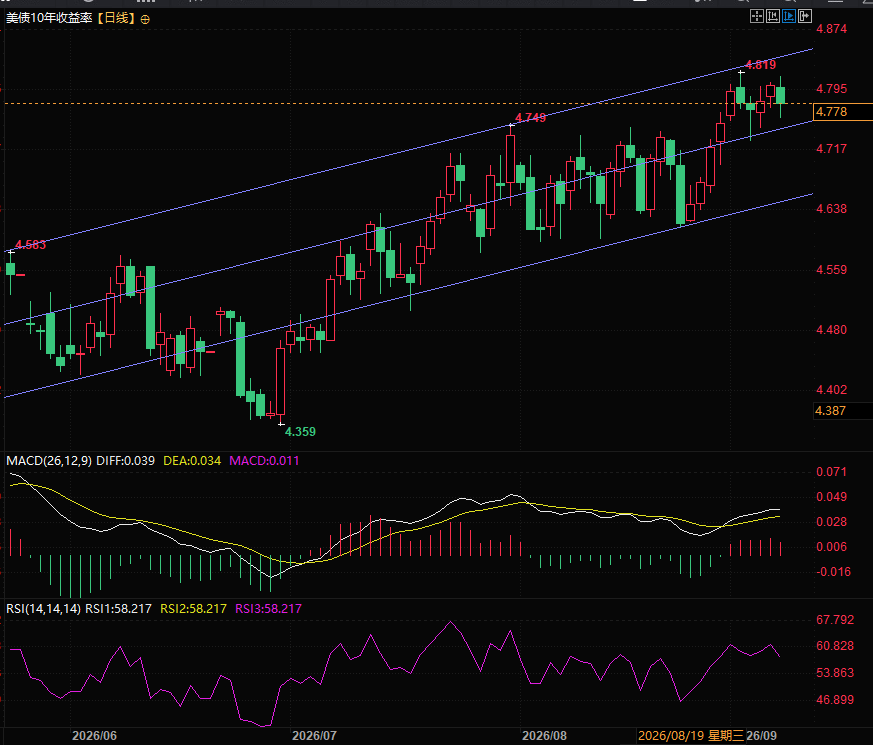 (Daily chart of 10-year US Treasury yield, source: EasyTrade)
The micro-pricing mechanism behind the double "plunge" Conventional financial logic dictates that soaring oil prices lead to increased inflation expectations, which in turn push up US Treasury yields; conversely, falling oil prices lead to decreased inflation expectations, which in turn push down US Treasury yields. However, in the extreme escalation of the "Hormuz crisis," the simultaneous flash crash of oil prices and US Treasury yields revealed a rapid shift in market trading drivers: Oil price plunge: from "extreme supply chain panic" to "alternative supply chain rescue." The earlier surge in crude oil prices reflected extreme panic over the "complete blockage of Middle Eastern oil routes." However, after news of the UAE quickly activating the Arabian Gulf-Red Sea-Gulf of Oman bypass and Nigeria's Dangot refinery operating at full capacity to rush diesel/jet fuel shipments to Europe was confirmed, the market realized that the global energy supply chain was rapidly initiating self-rescue and alternative solutions. The extremely high "supply chain risk premium" for crude oil was instantly squeezed out, leading to rapid profit-taking by long positions and triggering a sharp drop in oil prices from their highs.US Treasury yields plunge: a double whammy of "inflation expectations disengagement" and "rapid safe-haven buying".
Inflation Expectations Disengaged: Oil prices are the anchor for inflation expectations. The sharp pullback in oil prices instantly disengaged market inflation expectations, directly lowering nominal US Treasury yields. Rapid Safe-Haven Demand: The real dangers of escalating conflict and obstruction of the Taiwan Strait have not been eliminated. To avoid uncertainty, global funds continue to flock to US Treasuries, the ultimate safe-haven asset. Overwhelming buying pressure squeezed yields downwards, and this, combined with the cooling inflation effect caused by the oil price pullback, created a flash crash in US Treasury yields.Comparative analysis and gradation evaluation of catalytic factors
Combining the latest geopolitical and macroeconomic developments, the "magnitude" triggered by different events on Wall Street traders' screens exhibits clear hierarchical differences: Deconstructing the "Wall Street Shock Level" of Geopolitical and Macroeconomic Events: First Tier: Fatal Catalysts (Core of the Flash Crash) Related Events: Strait of Hormuz obstruction & UAE alternative route activation. Transmission Mechanism and Asset Reaction: The obstruction of the Strait of Hormuz directly triggered extreme risk aversion in the financial markets, with funds flowing into US Treasuries; simultaneously, the UAE announced alternative routes and accelerated operations at its East Coast ports, effectively squeezing out the extremely extreme "supply disruption panic premium" for crude oil. The temporary easing of supply concerns triggered profit-taking in oil prices and a cooling of inflation expectations, directly leading to a synchronized plunge in oil prices and US Treasury yields. Second Tier: Strong Catalyst (Supply Substitution Implemented) Related Event: Dangote Refinery operating at full capacity to fill fuel shortages in Europe. Transmission Mechanism and Asset Reaction: This news confirms both a substantial disruption in Middle Eastern refined oil supply and active substitution by other global production capacity. The rapid implementation of supply-side "firefighting" measures accelerated the liquidation and correction of long positions in refined oil and crude oil at high levels. Third Tier: Intermediate Catalyst (Trend Consolidation) Related Event: UK escalates sanctions against Iran & localized armed incidents. Transmission Mechanism and Asset Reaction: Comprehensive Western sanctions and political instability solidify long-term wartime expectations, preventing excessive market risk appetite and providing solid geopolitical support for continued capital inflows into safe-haven assets such as US Treasuries. Fourth Tier: Strategic Catalyst (Long-Term Strategic Foundation) Related Event: China-Qatar trade meeting and Gulf diplomatic stabilization efforts. Transmission Mechanism and Asset Reaction: China and Qatar's diplomatic stabilization efforts focus on securing long-term core energy channels such as liquefied natural gas (LNG). Although the event had a limited immediate impact on the financial market, it formed a key foundation for long-term strategic stability in the region.Conclusion: The New Normal of Macroeconomics Under a Double Plunge
The simultaneous plunge in oil prices and US Treasury yields is not a logical contradiction, but rather a "risk premium rebalancing" in the market under extreme geopolitical circumstances. The oil price correction reflects a rational adjustment in the market from "extreme supply chain disruption panic" to "alternative supply chain rescue." Alternatively, it could be due to increased market risk appetite, with institutions withdrawing funds from safe-haven US Treasuries to buy stocks and commodities; increased selling of US Treasuries leads to lower prices and higher yields. This is the classic scenario: risk assets rise while safe-haven assets are sold off. The plunge in US Treasury yields is the inevitable result of cooling inflation expectations and geopolitical demand for safe havens. As long as the Middle East conflict and channel games continue, this extreme volatility and asset linkage driven by geopolitical black swan events will remain the core theme of the global macroeconomic landscape. (10-year US Treasury yield intraday chart, source: EasyTrade) (Daily chart of 10-year US Treasury yield, source: EasyTrade)
- Risk Warning and Disclaimer
- The market involves risk, and trading may not be suitable for all investors. This article is for reference only and does not constitute personal investment advice, nor does it take into account certain users’ specific investment objectives, financial situation, or other needs. Any investment decisions made based on this information are at your own risk.