Ahead of the release of UK GDP and US inflation data, the pound sterling traded in a narrow range against the dollar, awaiting directional guidance.
2026-09-09 11:22:07
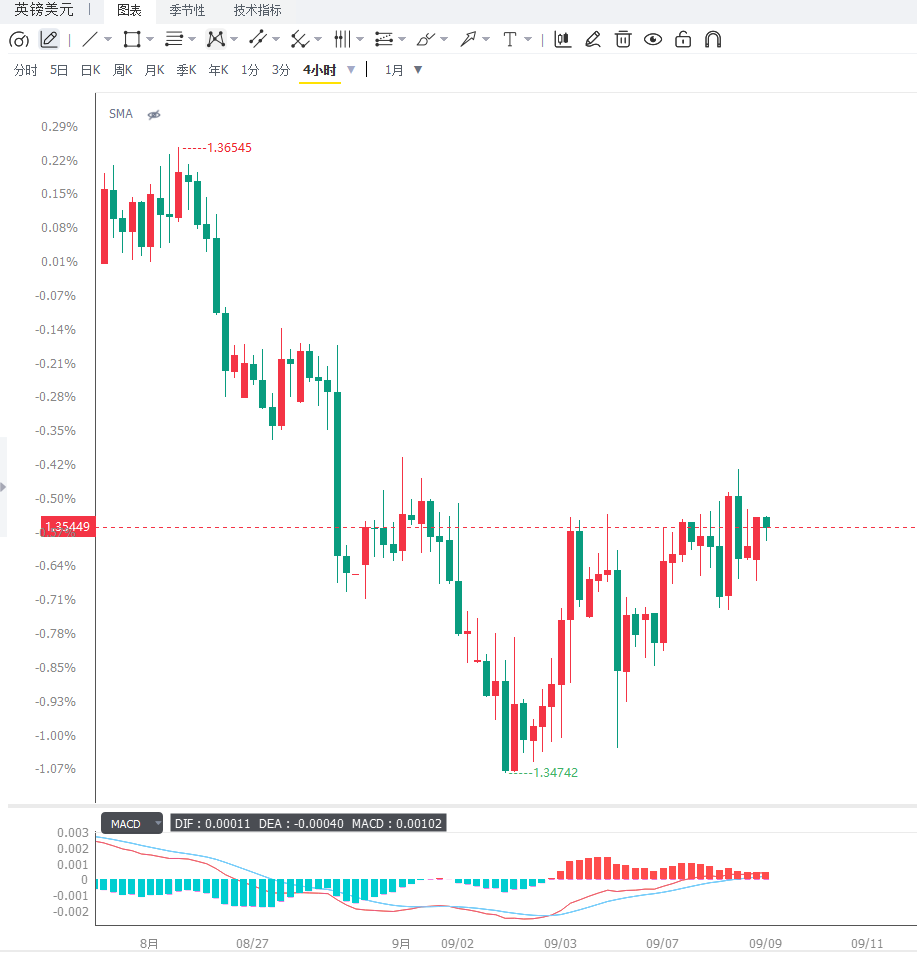
The British pound maintained a modest rise against the US dollar in Asian trading on Wednesday, with GBP/USD trading around 1.3550 . However, the exchange rate has not yet broken out of the previous trading day's overall trading range, indicating that while the bulls hold a certain advantage, the willingness to chase higher prices remains limited. The market is currently more inclined to wait for new macroeconomic data to confirm the direction, with UK monthly GDP and US PPI and CPI being important catalysts for the exchange rate in the short term.  In the UK, investors are awaiting the latest monthly GDP data. Market sentiment remains divided on the UK's economic growth prospects. On one hand, fiscal discipline and the government's policy stance of promoting economic growth are supporting the pound; on the other hand, high energy prices could reignite inflationary pressures and further compress household real income and corporate profit margins. If UK economic data is stronger than expected, the market may increase its expectation that UK interest rates will remain high, thus supporting the pound. In the US, market attention is focused on this week's inflation data. The US Producer Price Index (PPI) will be released first, followed by the Consumer Price Index (CPI). Recent stronger-than-expected US employment data has significantly increased market bets on a further rate hike by the Federal Reserve in September. Currently, the interest rate swap market is pricing in approximately a 60% probability of a 25 basis point rate hike ; therefore, whether the PPI and CPI show a continued cooling of inflation will directly affect whether this expectation is further strengthened. If US inflation is higher than expected, US Treasury yields may continue to rise, providing new support for the US dollar, while GBP/USD will face downward pressure. Especially with the continued rise in energy prices, the market is concerned that energy costs may be passed back to the production and consumption ends. If the PPI first shows increasing price pressure, followed by a stronger-than-expected CPI, investors may further reduce their bets on a shift towards looser US monetary policy. However, the US dollar also faces certain external constraints. The recent significant strengthening of the yen has driven the dollar index back from its previous highs, weakening the dollar's upward momentum against major currencies. Changes in Bank of Japan policy expectations and rising Japanese government bond yields have led to some funds flowing back into yen assets, putting temporary pressure on the dollar. Against this backdrop, even with pressure from US interest rate hike expectations, GBP/USD has not experienced a significant one-sided decline. Meanwhile, geopolitical risks remain a potential supporting factor for the dollar. Continued rises in energy prices and further tensions in the Middle East have prompted some investors to increase their allocation to safe-haven assets such as the dollar. If risk events escalate further, the demand for the dollar as a safe haven could increase rapidly, offsetting some of the pound's own positive factors. Therefore, GBP/USD currently exhibits a typical oscillating pattern of "pound supported, dollar bolstered, and bulls and bears awaiting data confirmation." From a market expectation perspective, the release dates of UK economic growth data and US inflation data are relatively close, making it difficult for investors to judge the exchange rate direction based on a single economic indicator. If UK GDP is stronger than expected while US inflation cools, the pound could benefit doubly; conversely, if the UK economy is weak and US inflation rebounds, the pound/dollar exchange rate could face significant downward pressure. From a daily chart perspective, GBP/USD is currently in a consolidation phase after a rebound, with the price remaining above key medium-term moving averages, and the overall structure has not yet turned bearish. The 1.3520-1.3500 area forms the first support zone, with the 1.3500 level also holding significant psychological importance. If the price can continue to hold above this area, the bullish structure still has a chance to continue. Further downside support is around 1.3475 ; a break below this level could lead to a further short-term pullback. On the upside, the first target is the 1.3550-1.3575 area; a break above 1.3575 would target 1.3600, followed by 1.3630 and the previous high around 1.3675. From the 4-hour chart, GBP/USD is currently in a slightly bullish consolidation phase, with the price above the 200-period moving average around 1.3500 , but also facing resistance at the Fibonacci level around 1.3550. If the price can effectively break through 1.3553 and further stabilize above 1.3575, the short-term bulls may gain new momentum, with 1.3599-1.3600 becoming the next target area. A further break above 1.3630 could extend the rebound towards 1.3675. Conversely, if the price continues to be resisted around 1.3550 and falls below 1.3524, the market may retest 1.3500; if the 200-period moving average is breached, the area around 1.3477 will become the next important support level. With UK GDP and US inflation data to be released soon, a 4-hour technical breakout needs confirmation in conjunction with changes in the US dollar index and US Treasury yields.
  In summary, the GBP/USD pair remains in a tug-of-war between bulls and bears. The pound is supported by UK economic expectations and fiscal policy stability, while the dollar is supported by expectations of US interest rate hikes and safe-haven demand. The short-term direction will be truly determined by the repricing of UK GDP and US PPI/CPI data on the UK-US interest rate differential . Technically, the area around 1.3500 is a key zone for bulls to hold, while 1.3575 is a short-term breakout confirmation level. A break above 1.3600 could open up further upside potential; a break below 1.3500 would significantly weaken the short-term rebound structure. Currently, the market is better off waiting for data confirmation rather than excessive chasing of highs and lows before key macroeconomic events are released.
In the UK, investors are awaiting the latest monthly GDP data. Market sentiment remains divided on the UK's economic growth prospects. On one hand, fiscal discipline and the government's policy stance of promoting economic growth are supporting the pound; on the other hand, high energy prices could reignite inflationary pressures and further compress household real income and corporate profit margins. If UK economic data is stronger than expected, the market may increase its expectation that UK interest rates will remain high, thus supporting the pound. In the US, market attention is focused on this week's inflation data. The US Producer Price Index (PPI) will be released first, followed by the Consumer Price Index (CPI). Recent stronger-than-expected US employment data has significantly increased market bets on a further rate hike by the Federal Reserve in September. Currently, the interest rate swap market is pricing in approximately a 60% probability of a 25 basis point rate hike ; therefore, whether the PPI and CPI show a continued cooling of inflation will directly affect whether this expectation is further strengthened. If US inflation is higher than expected, US Treasury yields may continue to rise, providing new support for the US dollar, while GBP/USD will face downward pressure. Especially with the continued rise in energy prices, the market is concerned that energy costs may be passed back to the production and consumption ends. If the PPI first shows increasing price pressure, followed by a stronger-than-expected CPI, investors may further reduce their bets on a shift towards looser US monetary policy. However, the US dollar also faces certain external constraints. The recent significant strengthening of the yen has driven the dollar index back from its previous highs, weakening the dollar's upward momentum against major currencies. Changes in Bank of Japan policy expectations and rising Japanese government bond yields have led to some funds flowing back into yen assets, putting temporary pressure on the dollar. Against this backdrop, even with pressure from US interest rate hike expectations, GBP/USD has not experienced a significant one-sided decline. Meanwhile, geopolitical risks remain a potential supporting factor for the dollar. Continued rises in energy prices and further tensions in the Middle East have prompted some investors to increase their allocation to safe-haven assets such as the dollar. If risk events escalate further, the demand for the dollar as a safe haven could increase rapidly, offsetting some of the pound's own positive factors. Therefore, GBP/USD currently exhibits a typical oscillating pattern of "pound supported, dollar bolstered, and bulls and bears awaiting data confirmation." From a market expectation perspective, the release dates of UK economic growth data and US inflation data are relatively close, making it difficult for investors to judge the exchange rate direction based on a single economic indicator. If UK GDP is stronger than expected while US inflation cools, the pound could benefit doubly; conversely, if the UK economy is weak and US inflation rebounds, the pound/dollar exchange rate could face significant downward pressure. From a daily chart perspective, GBP/USD is currently in a consolidation phase after a rebound, with the price remaining above key medium-term moving averages, and the overall structure has not yet turned bearish. The 1.3520-1.3500 area forms the first support zone, with the 1.3500 level also holding significant psychological importance. If the price can continue to hold above this area, the bullish structure still has a chance to continue. Further downside support is around 1.3475 ; a break below this level could lead to a further short-term pullback. On the upside, the first target is the 1.3550-1.3575 area; a break above 1.3575 would target 1.3600, followed by 1.3630 and the previous high around 1.3675. From the 4-hour chart, GBP/USD is currently in a slightly bullish consolidation phase, with the price above the 200-period moving average around 1.3500 , but also facing resistance at the Fibonacci level around 1.3550. If the price can effectively break through 1.3553 and further stabilize above 1.3575, the short-term bulls may gain new momentum, with 1.3599-1.3600 becoming the next target area. A further break above 1.3630 could extend the rebound towards 1.3675. Conversely, if the price continues to be resisted around 1.3550 and falls below 1.3524, the market may retest 1.3500; if the 200-period moving average is breached, the area around 1.3477 will become the next important support level. With UK GDP and US inflation data to be released soon, a 4-hour technical breakout needs confirmation in conjunction with changes in the US dollar index and US Treasury yields. In summary, the GBP/USD pair remains in a tug-of-war between bulls and bears. The pound is supported by UK economic expectations and fiscal policy stability, while the dollar is supported by expectations of US interest rate hikes and safe-haven demand. The short-term direction will be truly determined by the repricing of UK GDP and US PPI/CPI data on the UK-US interest rate differential . Technically, the area around 1.3500 is a key zone for bulls to hold, while 1.3575 is a short-term breakout confirmation level. A break above 1.3600 could open up further upside potential; a break below 1.3500 would significantly weaken the short-term rebound structure. Currently, the market is better off waiting for data confirmation rather than excessive chasing of highs and lows before key macroeconomic events are released.
- Risk Warning and Disclaimer
- The market involves risk, and trading may not be suitable for all investors. This article is for reference only and does not constitute personal investment advice, nor does it take into account certain users’ specific investment objectives, financial situation, or other needs. Any investment decisions made based on this information are at your own risk.