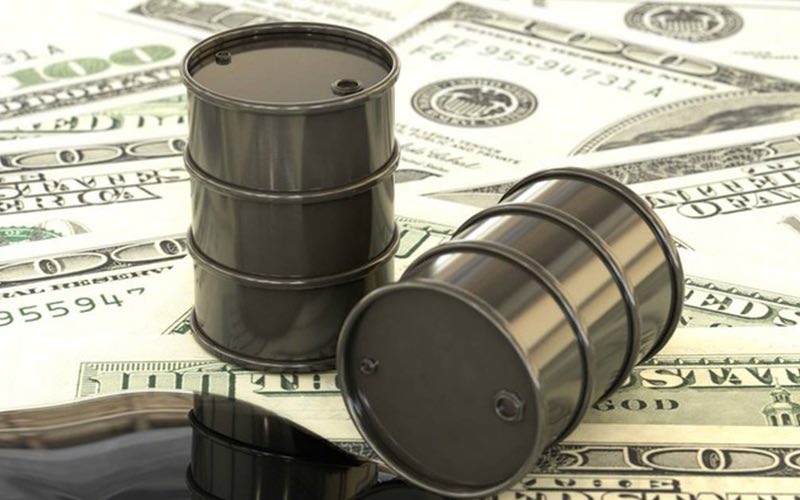
Oil prices break through the $100 mark, putting the Federal Reserve's inflation policy in a dilemma.
2026-09-09 19:50:09
Brent crude oil broke through the $100 per barrel mark for the first time since the end of July. This price level is a psychological watershed and has reignited the debate about whether energy costs can be naturally absorbed by the economic system. This timing is extremely unfavorable for the Federal Reserve, which is hoping for a gradual decline in inflation. The Consumer Price Index (CPI) will be released this Friday, and the Federal Open Market Committee (FOMC) meeting will be held a week later. The core issue is whether the rise in oil prices will solidify into sustained inflation, rather than merely leaving a short-lived shock in the monthly data.  Brent crude oil has climbed above $100 for the first time since the end of July, a price surge that comes at an inopportune time for central banks hoping for a quiet cooling of inflation. This round of oil price increases stems from the rapidly escalating tensions in the Middle East: Houthi attacks on Saudi cities, US strikes against Iranian oil tankers, and Iran missile strikes against US military bases in Jordan. Geopolitical conflicts directly impact the energy supply side, and supply-side changes are historically difficult to offset quickly with policy. With Friday's CPI data release and the Federal Reserve meeting a week later, the surge in energy prices coincides with the most challenging time window—policymakers have virtually no room to maneuver to observe the situation. The price increases are creating a stagnant effect . The market is no longer just worried about a one-off spike in overall inflation. Rising energy costs will be transmitted to the entire macroeconomy, pushing up transportation and production costs, ultimately leading to price increases for almost all goods and services. From port freight to urban logistics, and every step of the manufacturing process, energy prices are silently raising marginal costs at each stage. Once this stage is reached, the supply shock is no longer just a simple supply disturbance, but evolves into widespread inflation. The longer crude oil prices remain above $100, the easier it is for this secondary transmission effect to permeate core inflation indicators, which is the reading most valued by the Federal Reserve when setting interest rate policy. Before the rise in oil prices, inflation was already higher than the policy target. This means that the central bank's starting point was not ideal, leaving it with almost no room to "wait and see." If this is compounded by a sustained energy supply shock, high prices may become deeply entrenched in the economic system, rather than subsiding on their own in the short term. The market has also adjusted its pricing accordingly: after last week's strong jobs report, market pricing indicates a roughly 60% probability of a Fed rate hike in September. The resilience of the labor market gives the Fed room to act, while the inflationary risks fueled by oil prices provide a reason for action. The combination of these two factors significantly raises the threshold for holding rates steady in September. What signals should the CPI data release? This Friday's CPI data will be a key factor in the decision-making process. Inflation remains the core indicator of monetary policy: non-farm payrolls reflect economic growth, but price pressures are the trigger for interest rate hikes. Strong CPI data, especially if it shows energy price increases spreading to core inflation, would confirm the assessment of entrenched inflation, likely leading to a September rate hike. Market volatility may be amplified before and after the data release, as any reading higher than expected will be seen as a signal that a rate hike is imminent. The Producer Price Index (PPI) to be released on Thursday serves as a prelude, providing early insight into upstream inflationary pressures reaching end-consumer levels and helping the market anticipate its general direction before the CPI is released. It also concerns the credibility of the Federal Reserve's policy. Currently, most market expectations lean towards a rate hike. If the Fed chooses to remain on hold, it will be perceived as a concession to geopolitical shocks, which is certainly not the signal a central bank aiming to combat inflation wants to convey. Once the market perceives the Fed as lacking resolve, inflation expectations themselves may loosen and rise, forcing further policy tightening. This is a necessary trade-off between the central bank's credibility and economic fundamentals. Reasons for a Cautious Wait-and-See Approach A practical dilemma: The root cause of this round of inflation is supply-side disruption, but interest rate hikes act on the demand side. Tightening monetary policy cannot clear the Strait of Hormuz, nor can it repair the obstructed oil supply. In other words, the policy toolbox lacks leverage to directly address rising oil prices. Tightening policy against the backdrop of supply shocks may only suppress aggregate demand, but it is unlikely to lower energy prices. This not only fails to solve stagflation but may even create it. Furthermore, the repeated outbreaks of conflict in the Middle East have not escalated into a full-blown protracted war. Once the situation eases, the surge in oil prices will quickly reverse, at which point raising interest rates will seem premature, and may even require subsequent rate cuts to correct the situation, unnecessarily increasing the cost of policy oscillations. In addition, the financial environment itself is already tightening spontaneously. The yield on German 10-year government bonds rose to 3.38%, a new high since April 2011; credit spreads continued to widen, and the stock market as a whole showed signs of risk aversion selling. Rising financing costs are already replacing the central bank in fulfilling some of the tightening functions, providing a realistic basis for the Federal Reserve to remain on hold. If CPI data is weak, the Federal Reserve can choose to remain on the sidelines, relying on the already tightened financial environment to play a regulatory role, and reserving policy ammunition for when more explicit and sustainable risks emerge. Looking ahead to the September 17th policy meeting: The market's bets on a rate hike are based on the assumption that oil prices will transform temporary inflation problems into long-term ones. Friday's CPI data will reveal whether this has already occurred. If the data is strong, clearly showing the transmission of energy prices outwards, then a September rate hike is practically a certainty; if the CPI data is moderate, and oil prices begin to decline, the Fed will have ample reason to maintain interest rates. We can first pay attention to the leading signals from Thursday's PPI, but the final decision of the Federal Open Market Committee (FOMC) on September 17th hinges on whether the $100 oil price is merely a fleeting pulse or a turning point where high prices are formally solidifying. This judgment will not only determine the direction of interest rates in September but will also set the tone for monetary policy in the coming quarters.
Brent crude oil has climbed above $100 for the first time since the end of July, a price surge that comes at an inopportune time for central banks hoping for a quiet cooling of inflation. This round of oil price increases stems from the rapidly escalating tensions in the Middle East: Houthi attacks on Saudi cities, US strikes against Iranian oil tankers, and Iran missile strikes against US military bases in Jordan. Geopolitical conflicts directly impact the energy supply side, and supply-side changes are historically difficult to offset quickly with policy. With Friday's CPI data release and the Federal Reserve meeting a week later, the surge in energy prices coincides with the most challenging time window—policymakers have virtually no room to maneuver to observe the situation. The price increases are creating a stagnant effect . The market is no longer just worried about a one-off spike in overall inflation. Rising energy costs will be transmitted to the entire macroeconomy, pushing up transportation and production costs, ultimately leading to price increases for almost all goods and services. From port freight to urban logistics, and every step of the manufacturing process, energy prices are silently raising marginal costs at each stage. Once this stage is reached, the supply shock is no longer just a simple supply disturbance, but evolves into widespread inflation. The longer crude oil prices remain above $100, the easier it is for this secondary transmission effect to permeate core inflation indicators, which is the reading most valued by the Federal Reserve when setting interest rate policy. Before the rise in oil prices, inflation was already higher than the policy target. This means that the central bank's starting point was not ideal, leaving it with almost no room to "wait and see." If this is compounded by a sustained energy supply shock, high prices may become deeply entrenched in the economic system, rather than subsiding on their own in the short term. The market has also adjusted its pricing accordingly: after last week's strong jobs report, market pricing indicates a roughly 60% probability of a Fed rate hike in September. The resilience of the labor market gives the Fed room to act, while the inflationary risks fueled by oil prices provide a reason for action. The combination of these two factors significantly raises the threshold for holding rates steady in September. What signals should the CPI data release? This Friday's CPI data will be a key factor in the decision-making process. Inflation remains the core indicator of monetary policy: non-farm payrolls reflect economic growth, but price pressures are the trigger for interest rate hikes. Strong CPI data, especially if it shows energy price increases spreading to core inflation, would confirm the assessment of entrenched inflation, likely leading to a September rate hike. Market volatility may be amplified before and after the data release, as any reading higher than expected will be seen as a signal that a rate hike is imminent. The Producer Price Index (PPI) to be released on Thursday serves as a prelude, providing early insight into upstream inflationary pressures reaching end-consumer levels and helping the market anticipate its general direction before the CPI is released. It also concerns the credibility of the Federal Reserve's policy. Currently, most market expectations lean towards a rate hike. If the Fed chooses to remain on hold, it will be perceived as a concession to geopolitical shocks, which is certainly not the signal a central bank aiming to combat inflation wants to convey. Once the market perceives the Fed as lacking resolve, inflation expectations themselves may loosen and rise, forcing further policy tightening. This is a necessary trade-off between the central bank's credibility and economic fundamentals. Reasons for a Cautious Wait-and-See Approach A practical dilemma: The root cause of this round of inflation is supply-side disruption, but interest rate hikes act on the demand side. Tightening monetary policy cannot clear the Strait of Hormuz, nor can it repair the obstructed oil supply. In other words, the policy toolbox lacks leverage to directly address rising oil prices. Tightening policy against the backdrop of supply shocks may only suppress aggregate demand, but it is unlikely to lower energy prices. This not only fails to solve stagflation but may even create it. Furthermore, the repeated outbreaks of conflict in the Middle East have not escalated into a full-blown protracted war. Once the situation eases, the surge in oil prices will quickly reverse, at which point raising interest rates will seem premature, and may even require subsequent rate cuts to correct the situation, unnecessarily increasing the cost of policy oscillations. In addition, the financial environment itself is already tightening spontaneously. The yield on German 10-year government bonds rose to 3.38%, a new high since April 2011; credit spreads continued to widen, and the stock market as a whole showed signs of risk aversion selling. Rising financing costs are already replacing the central bank in fulfilling some of the tightening functions, providing a realistic basis for the Federal Reserve to remain on hold. If CPI data is weak, the Federal Reserve can choose to remain on the sidelines, relying on the already tightened financial environment to play a regulatory role, and reserving policy ammunition for when more explicit and sustainable risks emerge. Looking ahead to the September 17th policy meeting: The market's bets on a rate hike are based on the assumption that oil prices will transform temporary inflation problems into long-term ones. Friday's CPI data will reveal whether this has already occurred. If the data is strong, clearly showing the transmission of energy prices outwards, then a September rate hike is practically a certainty; if the CPI data is moderate, and oil prices begin to decline, the Fed will have ample reason to maintain interest rates. We can first pay attention to the leading signals from Thursday's PPI, but the final decision of the Federal Open Market Committee (FOMC) on September 17th hinges on whether the $100 oil price is merely a fleeting pulse or a turning point where high prices are formally solidifying. This judgment will not only determine the direction of interest rates in September but will also set the tone for monetary policy in the coming quarters.
- Risk Warning and Disclaimer
- The market involves risk, and trading may not be suitable for all investors. This article is for reference only and does not constitute personal investment advice, nor does it take into account certain users’ specific investment objectives, financial situation, or other needs. Any investment decisions made based on this information are at your own risk.