Amid the shadow of oil prices breaking $100, the ECB's interest rate hike has been implemented: Behind the market calm lies greater uncertainty.
2026-09-10 20:28:07
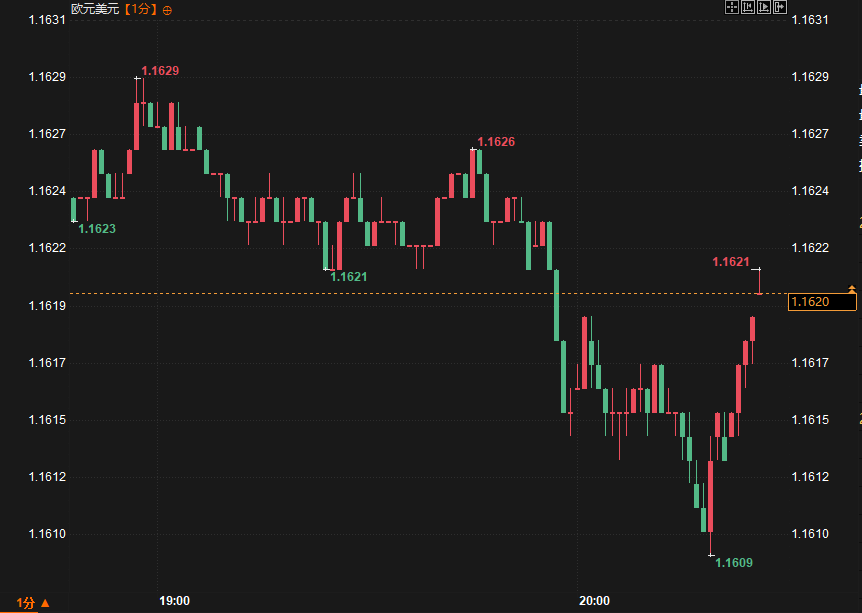
On Thursday (September 10) at 20:15 Beijing time, the European Central Bank (ECB) announced its interest rate decision, raising the policy rate by 25 basis points to 2.50%, marking the second rate hike this year. Prior to the announcement, traders' bets on the ECB's interest rate path remained stable, with the market widely anticipating the rate hike. However, they were also more focused on Lagarde's guidance on inflation at the subsequent press conference, and whether there was room for further tightening given that oil prices remained above $100 per barrel.  Following the announcement, the euro fell by about 5 points against the dollar in the short term, hitting a low of 1.1612, before rebounding; the yield on German 10-year government bonds rose only 1.5 basis points to 3.45%, with the market reaction generally restrained.
  In its statement, the European Central Bank (ECB) noted that the ongoing conflict in the Middle East continues to exert inflationary pressures, and inflation will remain well above target for an extended period. It also raised some of its growth and inflation forecasts, projecting inflation of 3.0% this year, 2.5% next year, and 2.1% in 2028, with economic growth of 0.9%, 1.4%, and 1.5%, respectively. The ECB emphasized that its decisions will be based on subsequent data and did not provide specific forward guidance.
Following the announcement, the euro fell by about 5 points against the dollar in the short term, hitting a low of 1.1612, before rebounding; the yield on German 10-year government bonds rose only 1.5 basis points to 3.45%, with the market reaction generally restrained. In its statement, the European Central Bank (ECB) noted that the ongoing conflict in the Middle East continues to exert inflationary pressures, and inflation will remain well above target for an extended period. It also raised some of its growth and inflation forecasts, projecting inflation of 3.0% this year, 2.5% next year, and 2.1% in 2028, with economic growth of 0.9%, 1.4%, and 1.5%, respectively. The ECB emphasized that its decisions will be based on subsequent data and did not provide specific forward guidance.Deep interconnect analysis
From a fundamental perspective, this rate hike directly addresses the upside risk to inflation brought about by rising energy prices. Compared to historical patterns, the central bank paused rates in July after the June hike; this resumption reflects a reassessment of the sustainability of inflation. Latest quotes show the euro briefly pressured against the dollar to around 1.1612 after the decision, while the yield on German 10-year bonds changed negligibly, indicating the market had fully priced in the rate hike itself. The real focus shifted to Lagarde's remarks at the 20:45 press conference. The contrast between institutional and retail investor views is clear: before the announcement, prominent institutions generally emphasized a possible "hawkish wait-and-see" approach, believing that economic resilience and oil price pressures would leave room for further tightening. Some voices pointed out that while natural gas price transmission is slow, its impact on non-energy inflation is more lasting. Retail investors, on the other hand, focused more on whether this was the last rate hike, with a cautiously optimistic sentiment, anticipating that the euro might experience temporary pressure after the decision met expectations. Following the announcement, institutional perspectives quickly shifted to interpreting Lagarde's speech, believing she was highly likely to maintain an openness to further action. Retail investors focused on the limited short-term decline in the euro and the muted reaction in European bond yields, suggesting the actual impact was weaker than some aggressive expectations. The main discrepancy in expectations lay in the "number of rate hikes"—financial markets still priced in one more rate hike this year and one to two next year, while some economists judged that this hike might be nearing its end, despite rising risks of further tightening. After the interplay of technical and fundamental factors, the euro's slight decline against the dollar following the decision indicated a contraction in short-term bullish momentum; the low volatility in European bond yields reflected a decreased sensitivity of long-term interest rates to a single decision, with more influence from inflation paths and financing conditions. The long-term and short-term logics remain consistent: short-term market activity is primarily focused on digesting the guidance, while the medium-term focus remains on whether inflation will sustainably exceed the target.Trend Outlook
The hawkish tone of Lagarde's press conference will directly influence the subsequent fluctuations of the euro and European bonds. If the guidance maintains its reliance on data and leaves room for further action, the euro's short-term downward pressure may continue, while European bond yields are expected to remain relatively stable. If the wording is cautious, the market may reassess its pricing of the end of interest rate hikes. Overall market trends will continue to be driven by energy price transmission and growth resilience, with subsequent data remaining a key variable.Further Reading
Q: Why did the market react relatively calmly to the euro after the ECB's rate hike? The decision itself was in line with expectations. The euro fell by about 5 points to 1.1612 in the short term, indicating that the rate hike had already been priced in. The real impact comes from subsequent guidance, not the single policy adjustment itself. Q: What are the differences between institutional and retail investors' judgments on the number of subsequent rate hikes? Financial markets are pricing in one more rate hike this year, and possibly one or two more next year; some economists believe that this may be nearing the end of a phase, although the risk of further tightening has increased. The difference mainly stems from different assessments of the persistence of inflation. Q: In what ways did energy prices affect this decision? Oil prices have returned above $100 per barrel, reigniting concerns about fuel import inflation. The central bank explicitly pointed out that the ongoing conflict in the Middle East continues to exert inflationary pressure and raised its inflation forecast, while also reminding that although natural gas transmission is slow, its impact on non-energy inflation is more lasting. Q: What does the minimal change in the yield of German 10-year government bonds indicate? Yields rose only 1.5 basis points to 3.45%, indicating that long-term interest rates are less sensitive to a single policy decision and are more reflecting pricing in the inflation path and overall financing conditions. Q: Why did Lagarde's press conference become the market focus? The central bank did not provide clear forward guidance, only reiterating its reliance on data. Lagarde's wording will determine the market's interpretation of the scope for further action, thus directly affecting the short-term trends of the euro and European bonds.- Risk Warning and Disclaimer
- The market involves risk, and trading may not be suitable for all investors. This article is for reference only and does not constitute personal investment advice, nor does it take into account certain users’ specific investment objectives, financial situation, or other needs. Any investment decisions made based on this information are at your own risk.