Oil prices surged over 3% as Saudi Arabia shut down its pipeline and removed a "safety valve," shifting the risk skewed to further upside.
2026-09-14 08:10:10
On Monday (September 14) during Asian trading hours, WTI crude oil rose more than 3% to $103.44 per barrel. This surge was directly driven by the double impact of the weekend's attack on and closure of a key Saudi oil pipeline, and the disruption to diplomatic proceedings in the Strait of Hormuz. Following a drone attack, Saudi Arabia shut down its East-West pipeline, with a daily capacity of 7 million barrels, and Oman subsequently postponed a planned meeting between Iran and Gulf states to discuss the situation in Hormuz. Meanwhile, an oil tanker was attacked in Hormuz, and Houthi rebels continued their advance near the Bab el-Mandeb Strait. 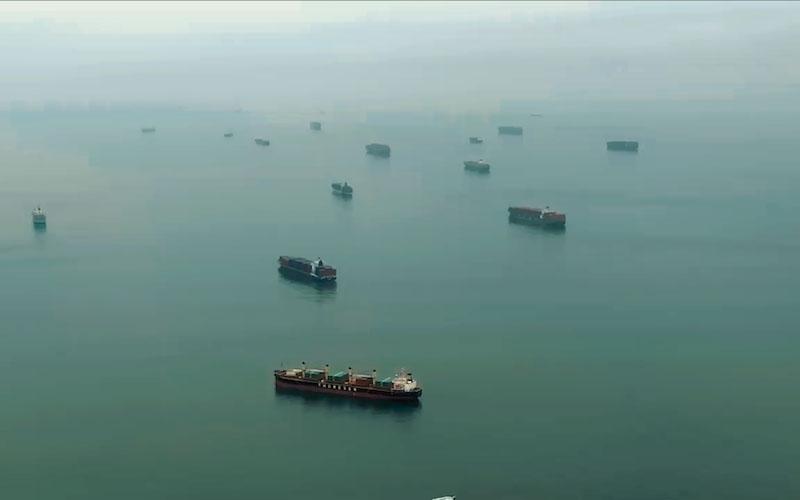
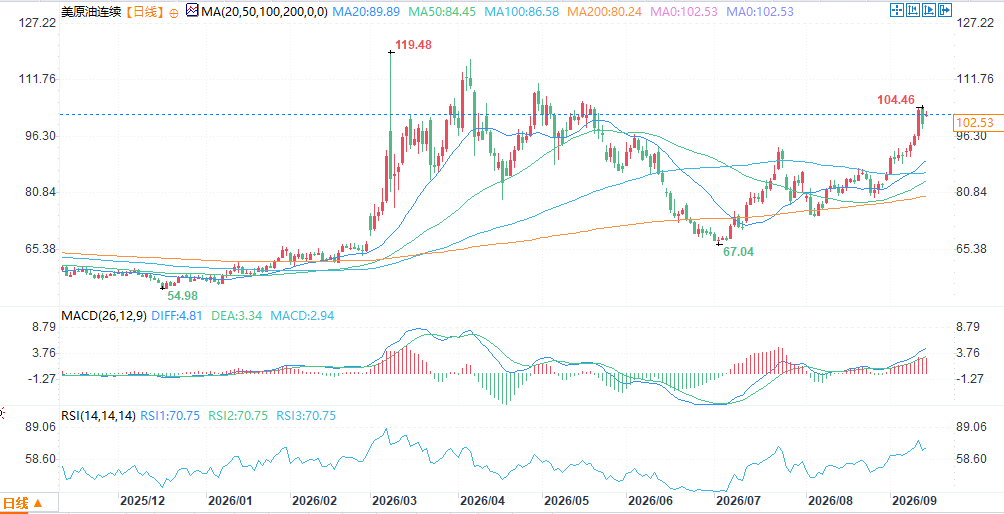 (US crude oil futures daily chart, source: FX678) At 8:03 Beijing time, US crude oil futures were trading at $102.40 per barrel.
Saudi Arabia's East-West pipeline shut down: Safety valve for 7 million barrels per day removed.
A drone launched from Iraq last Thursday damaged Saudi Arabia's East-West pipeline, forcing Riyadh to shut it down. Saudi Arabia has not yet disclosed the extent of the damage or the expected duration of the closure. The pipeline, with a capacity of 7 million barrels per day, connects Saudi Arabia's oil-producing regions near the Persian Gulf with its export terminals along the Red Sea coast and has been a key tool for Saudi Arabia to bypass the Strait of Hormuz during the conflict with Iran. The CEO of Saudi Aramco previously stated in the company's August earnings call that the pipeline's role in stabilizing the oil market was more important than the US-led coordinated release of strategic reserves. This highlights the central role of this artery in Saudi Arabia's export strategy. Its closure, coupled with the attacks on new oil tankers in the Strait of Hormuz and the Houthi advance, points to supply risks accumulating simultaneously on multiple fronts.The Hormuz meeting was postponed: the pipeline attack directly disrupted regional diplomacy.
The pipeline shutdown appears to have directly disrupted regional diplomacy regarding Hormuz. A meeting between Iran and Gulf Arab states, scheduled for Monday in Salalah, Oman, was abruptly postponed following the attack. Oman's Foreign Minister stated on social media, "For the sake of consensus, the regional meeting scheduled for tomorrow in Salalah has been postponed." He added that Oman remains committed to supporting dialogue for regional stability. This statement directly links the postponement to the pipeline attack, a more direct approach than earlier reports that "Tehran and Muscat jointly decided to postpone the meeting at the request of unnamed regional states."Security situation deteriorates across the board: oil tanker attacked, Houthi advances on second choke point
The security landscape across the wider region continues to deteriorate. According to the UK Maritime Trade Action Centre, an oil tanker was attacked in Hormuz on Sunday (September 13), resulting in a major fire on board. Saudi Arabia has also recently faced a series of attacks by Iranian-allian armed groups, including Houthi attacks on energy facilities and other civilian sites earlier last week, which, according to Saudi state media, injured more than 70 people. More worrying for the market is the fact that the Houthi rebels in Yemen have reportedly seized the strategically important Perim Island in the Bab el-Mandeb Strait after capturing the western port city of Mocha. This advance will put the group in a more advantageous position, threatening oil flows through the Bab el-Mandeb Strait—another crucial choke point connecting the southern Red Sea to global shipping routes. Supply risks are accumulating on two fronts simultaneously, rather than being contained solely in Hormuz.Summarize
The Saudi East-West pipeline, shut down after a drone attack in Iraq, removed 7 million barrels per day of transport capacity, a key safety valve for Saudi Arabia to bypass the Strait of Hormuz. Oman subsequently postponed a planned meeting between Iran and the Gulf states in Hormuz on Monday, attributing the delay directly to the pipeline attack. Meanwhile, an oil tanker was attacked and severely burned in the Hormuz on Sunday, and Houthi rebels seized Perim Island in the Bab el-Mandeb Strait after capturing Mocha, threatening a second chokepoint. Supply risks are accumulating on multiple fronts simultaneously, and unless Saudi Arabia quickly clarifies the extent of the pipeline damage and a repair timeline, the risks are tilted towards further upward pressure. (US crude oil futures daily chart, source: FX678) At 8:03 Beijing time, US crude oil futures were trading at $102.40 per barrel.
- Risk Warning and Disclaimer
- The market involves risk, and trading may not be suitable for all investors. This article is for reference only and does not constitute personal investment advice, nor does it take into account certain users’ specific investment objectives, financial situation, or other needs. Any investment decisions made based on this information are at your own risk.