Is a price of 108 for oil just the beginning? The real issue is the transmission chain!
2026-09-14 20:12:09
On Monday (September 14), oil prices surged again, while gold prices fell. The closure of Saudi Arabia's East-West pipeline, continued Houthi pressure in the Red Sea, and the postponement of talks on the Hormuz shipping corridor pushed Brent crude to around $108, while WTI crude rose above $103. However, the market didn't buy into widespread safe-haven demand; instead, it bought into inflation and interest rate hikes. The US dollar index strengthened to around 99, the 10-year US Treasury yield approached 4.98%, and gold was pushed below $4300. What traders should really be focusing on now is not how much higher oil prices can rise, but whether the energy shock will spread from crude oil to natural gas, diesel, and electricity prices, thereby changing central bank policies. 
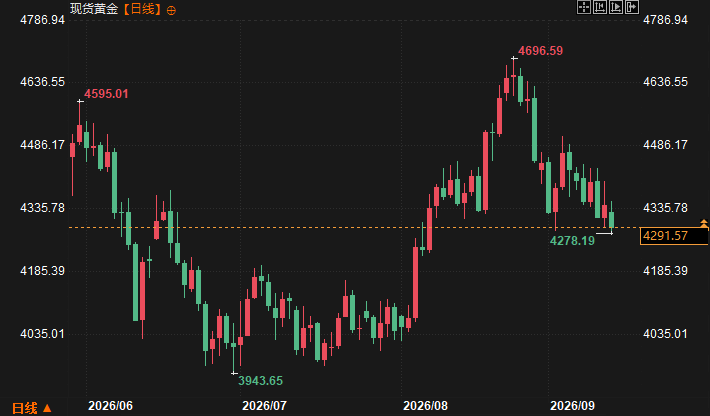
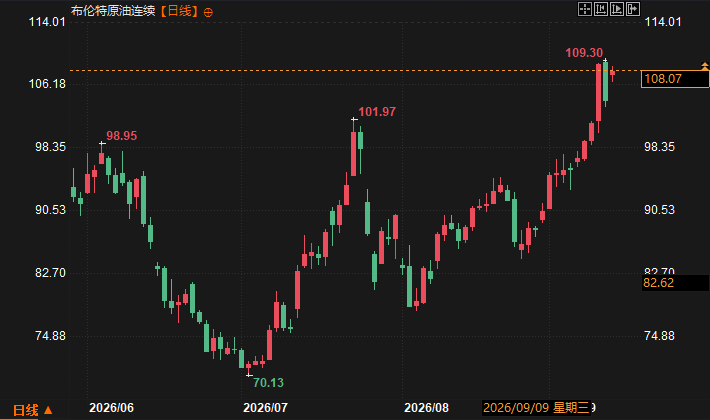
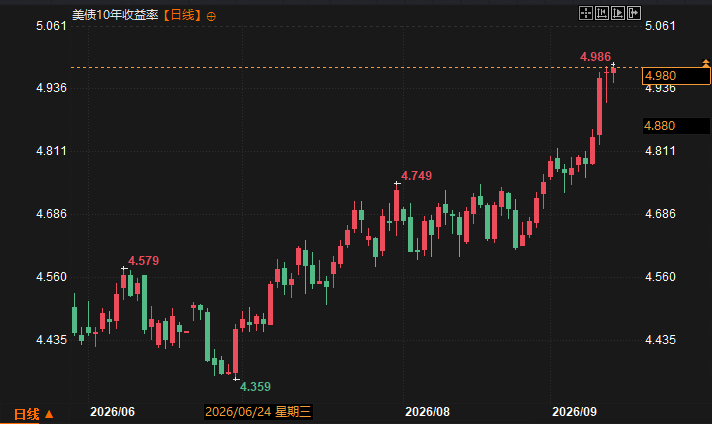
The rise in oil prices and the fall in gold prices are not a sign of a failure in safe-haven demand; rather, the market is repricing interest rate hikes.
Seeing the surge in oil prices, the first reaction might be to buy gold. However, the market tells a different story. The market characterizes this oil price increase as a supply shortage, rather than a comprehensive risk event. Supply shortages drive inflation, inflation drives interest rate hikes, and interest rate hikes push up real interest rates and the dollar. Gold, which doesn't generate interest, is the first to be pressured. Silver and copper also weakened, with funds flowing from safe-haven and industrial metals to crude oil. More importantly, ahead of Wednesday's Fed meeting, the market's pricing of a rate hike probability had risen to about 85% to 90%. This means that the inflationary transmission from oil prices is overshadowing geopolitical safe-haven demand. The focus shouldn't be on how much gold prices fall, but rather on whether real interest rates and the dollar can continue to strengthen. If these two indicators don't reverse, the rebound in precious metals will be incomplete.The pipe closure hurts more than the missile, because Hormuz has developed an alternative anxiety.
The Saudi East-to-West pipeline, shut down after a drone attack, carries approximately 5 to 7 million barrels daily and serves to bypass the Strait of Hormuz. Its closure immediately made the market realize that the risks associated with Hormuz were no longer just theoretical. Talks between the Gulf states and Iran regarding a temporary shipping corridor were postponed, and the Houthis gained control of more key islands and ports in the Red Sea, meaning shipping insurance and bypass costs would be the first to be affected. Tanker tracking accounts are discussing repair timelines, but no one can guarantee how long inventory and alternative routes can sustain the supply in the short term. On the market, natural gas futures rose by more than 2%, diesel had previously hit record highs, and US pump prices briefly exceeded $6 per gallon. This indicates that the energy shock is not a problem for a single commodity. The key factors to watch are the pipeline repair timeline, actual flow rates in the Strait of Hormuz, and changes in Red Sea vessel insurance premiums. These factors, more than a single day's oil price increase, are more indicative of whether supply anxieties have taken root.The institutions say there is no systemic pressure, but their actions are aimed at preventing a second wave of inflation.
The Bank for International Settlements and other institutions still maintain that there is no systemic pressure in the market. Translated into the market context, this means that institutions haven't been forced to deleverage yet, and the decline in risk assets is more like a position adjustment than a liquidity crisis. However, in terms of action, central bank actions and energy inflation are forcing trading desks to recalculate. US Treasury long-term yields remain high, as are European and UK long-term yields. The US dollar is strengthening, putting relative pressure on the euro and pound; the yen, supported by a potential interest rate hike by the Bank of Japan, is strengthening instead. Concerns about a slowdown in AI are simultaneously weighing on chip stocks and SoftBank, putting pressure on Nasdaq futures, and causing Asian Nikkei and South Korean stocks to decline. Risk appetite is suppressed, but there is no widespread panic. The focus should be on the details of the Fed's decision and whether energy inflation will further solidify expectations of "higher and longer" interest rates.What's truly not being priced is the transmission chain of natural gas, diesel, and electricity prices.
Crude oil is the headline, but the secondary effects are more noteworthy. European TTF natural gas prices are high, supported by the Middle East situation, LNG supply competition, and low inventories. Electricity prices in many European countries are still above €200-250/MWh, and gas prices and weather conditions can easily push prices up. Diesel is at historically high levels, and transportation and food inflation will likely follow suit. If there are further disruptions in the Hormuz or Red Sea, gas and electricity prices could take over, turning energy inflation from a single driver of crude oil to a comprehensive driver. In South America, rising oil prices benefit exporters in Brazil, Colombia, and Guyana, but overall stock markets and currencies remain cautious. The focus should be on European natural gas inventory levels before winter, and whether US diesel pump prices and European electricity prices continue to climb.El Niño is adding fuel to the fire; agricultural inflation may be delayed, but it will not be absent.
Beyond energy, the probability of El Niño exceeds 90%, potentially making it one of the strongest in a generation. It has already impacted South America: Chilean copper mines have shut down, Peruvian fishing has been suspended leading to soaring fishmeal prices, and traffic in the Panama Canal has decreased. Asian crops also face risks for rice, sugar, and palm oil. In the short term, this is weather news; in the medium term, it's food inflation. If energy inflation doesn't subside and agricultural inflation follows suit, central bank policy will become even more difficult. The focus should be on the pace of recovery in South American copper mines and Peruvian fishing, as well as rainfall and inventory changes in Asian crop-producing regions. The market is currently pricing in this trend too thinly.Trend Outlook
If the pipeline repair timeline remains unclear, the geopolitical premium in oil prices will remain on the market, while natural gas, diesel, and electricity prices will catch up, and gold will continue to be pressured by real interest rates. If the flow at the Hormuz River Basin recovers and talks resume, crude oil will retrace, inflation trading will cool, the dollar and US Treasury yields will fall, and gold and copper will finally have a breather. Short-term movements are driven by sentiment and events, while medium-term movements are driven by spot market rhythms and shipping capacity. If concerns about a slowdown in AI continue to weigh on tech stocks, Nasdaq futures will underperform energy, indicating a stratification of risk appetite. If European natural gas inventories remain below normal before winter, electricity prices will be more sensitive to gas prices. If El Niño continues to affect South American copper mines and Asian crops, food inflation will create a second wave of pressure after energy.[Further Reading]
Q: Why is gold falling despite rising oil prices? A: The market isn't treating it as a comprehensive safe haven, but rather as a supply shock. Supply shocks drive inflation, inflation drives interest rate hikes, and interest rate hikes raise real interest rates and the dollar. Gold doesn't generate interest, so it's initially suppressed. Q: What are the actual impacts of the Houthi control of the Red Sea islands? A: Not just on oil prices in a day or two, but on shipping insurance and detour costs. Shipowners will first increase insurance premiums, then change routes, slowing down capacity turnover, making diesel and natural gas more susceptible to price increases. Q: What is the relationship between El Niño and trading? A: It affects South American copper mines, Peruvian fisheries, and Asian rice and sugar. In the short term, it's news; in the medium term, it's food inflation. If energy inflation doesn't subside, agricultural products will follow suit, making it even harder for central banks to ease monetary policy.- Risk Warning and Disclaimer
- The market involves risk, and trading may not be suitable for all investors. This article is for reference only and does not constitute personal investment advice, nor does it take into account certain users’ specific investment objectives, financial situation, or other needs. Any investment decisions made based on this information are at your own risk.