Analysis of the Culprits Behind CPI Implementation, Soaring Interest Rates, and Gold Price Decline
2026-09-15 21:28:09
On Tuesday (September 15th) during the Asian and European sessions, spot gold continued to decline, currently trading at $4276, down 0.52%. Recently, real interest rates have continued to surge. While it was initially expected that real interest rates would briefly decline after the CPI release, they ultimately only saw a slight intraday drop before rebounding sharply, even exceeding the rebound of the nominal interest rate represented by the US 10-year yield. The formula is: Nominal Interest Rate = Real Interest Rate + Inflation Expectations + Inflation Risk Premium (IRP). Normally, inflation expectations and IRP are combined into a broader inflation expectations calculation. However, this kind of market reaction after positive news needs to be analyzed separately. The day of the CPI release was considered a "sell-the-news" day, requiring the IRP component to be considered. In other words, the decline in nominal interest rates that day was due to a sudden drop in IRP, as the market believed that although inflation slightly exceeded expectations, concerns about a significant deterioration had subsided. However, the endogenous rise in real interest rates was the real reason for the final increase in interest rates, and also the reason for the recent decline in gold prices. 
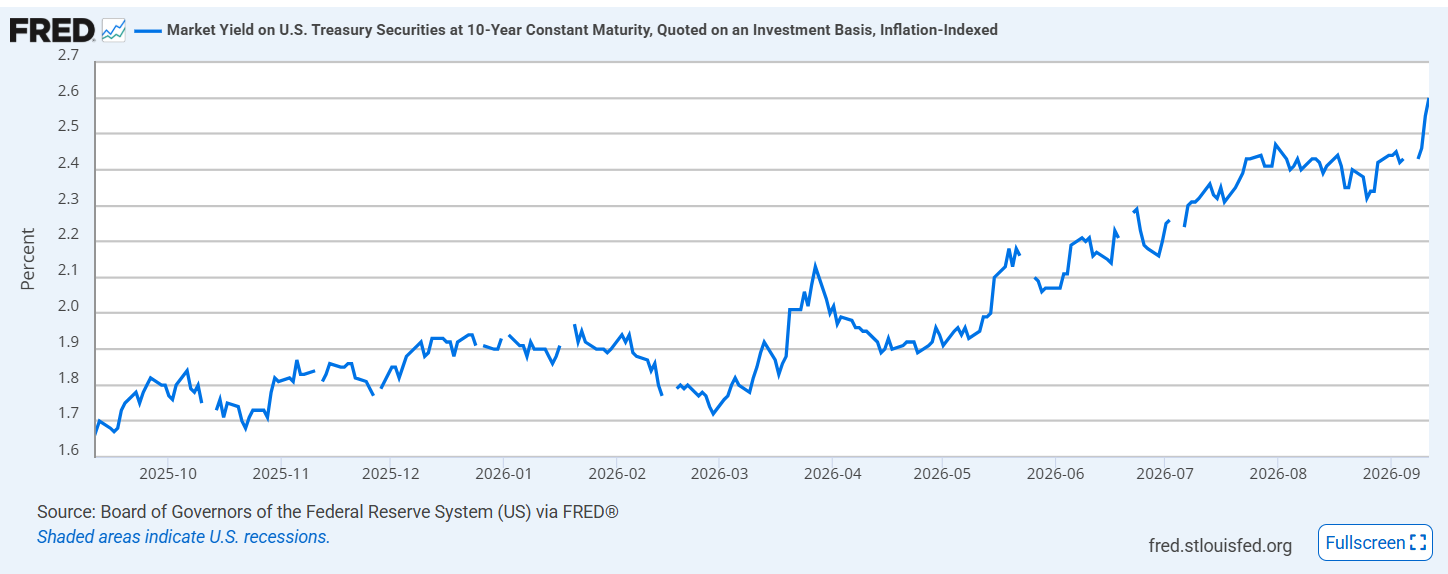
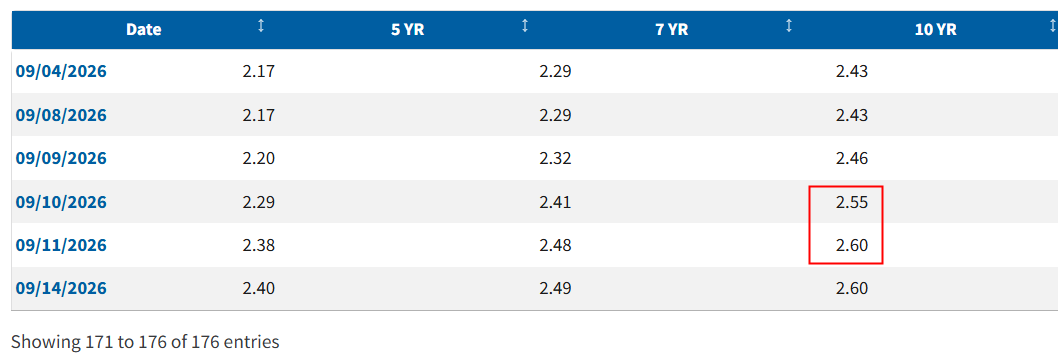 (A summary of 10-year TIPS yields, source: Federal Reserve) By comparing the 10-year US Treasury yields, we can see that after the CPI was released, the 10-year Treasury yield rose by 0.12bp, but the TIPS yield rose by 0.5bp. The main driving force was that the IRP fell sharply by 0.48bp due to the easing of extreme inflation concerns.
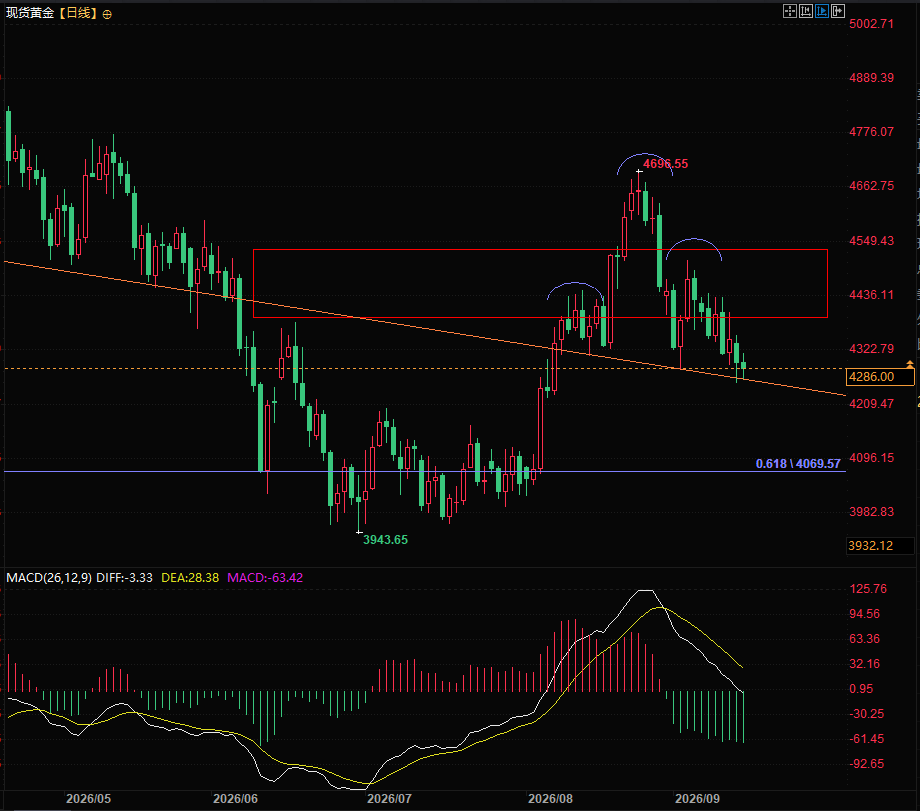 (Spot gold daily chart, source: FX678) At 21:22 Beijing time, spot gold is currently trading at $4285.99.
Inflation resilience: The duration of high interest rates has been prolonged.
US inflation has not exploded, but its decline has been much slower than market expectations, with core services inflation and rent showing strong stickiness. As inflation remains high, the Federal Reserve lacks the room for rapid interest rate cuts, forcing the market to continuously raise its pricing of how long high interest rates will last, and even retaining the possibility of an additional rate hike. From an interest rate decomposition framework perspective, the real interest rate equals the nominal interest rate minus inflation expectations. Inflation stickiness has supported inflation expectations, while the nominal interest rate remains high; both factors combined push up the real interest rate, leading to a rise in TIPS yields. This is the most fundamental and persistent driving force behind the current rise in real interest rates.Economic fundamentals are resilient: the equilibrium real interest rate itself is shifting upward.
The US economy has not fallen into recession; consumption and employment have remained more resilient than expected, and the economy can withstand the current high-interest-rate environment. Under the classical Fisher framework, the real interest rate is the true return on real capital, determined by the equilibrium of savings supply and investment demand: strong economic demand, high corporate investment willingness, and high capital returns naturally lead to higher real costs of capital, and the equilibrium real interest rate itself will rise. The market no longer prices in the expectation that "the Fed will soon be forced to cut interest rates to save the economy." The disappearance of this expectation has further raised expectations for long-term policy interest rates, resonating with the resilience of inflation and jointly pushing up the central level of real interest rates. It's not that interest rate hikes are damaging the economy, but rather that the economy can withstand the pressure, so interest rates can remain high—this is the underlying background for this round of interest rate increases. (A summary of 10-year TIPS yields, source: Federal Reserve) By comparing the 10-year US Treasury yields, we can see that after the CPI was released, the 10-year Treasury yield rose by 0.12bp, but the TIPS yield rose by 0.5bp. The main driving force was that the IRP fell sharply by 0.48bp due to the easing of extreme inflation concerns.Continued volatility in oil prices reinforces expectations that interest rates will remain high.
The continued volatility of international oil prices is an undeniable supply-side disturbance behind the stickiness of this round of inflation. A confluence of factors, including geopolitical conflicts and global supply-demand mismatches, makes it difficult for oil prices to trend downwards; instead, they repeatedly surge at key levels. As a core commodity, rising oil prices will transmit to end-user inflation through multiple channels, including transportation, chemical raw materials, and consumer goods costs, creating imported inflationary pressure. From an interest rate decomposition perspective, oil price disturbances have a dual impact on real interest rates. On the one hand, repeated increases in oil prices amplify the uncertainty of a decline in inflation, supporting or even revising upward inflation expectations, making it more difficult for the Federal Reserve to initiate a rate-cutting cycle. On the other hand, oil price fluctuations are a supply-side shock, pushing up cost-side inflation rather than demand-pull inflation. This "stagflation" pressure will force the Federal Reserve to prioritize inflation over economic growth, further prolonging the period of high interest rates and pushing up real interest rates. Simultaneously, the uncertainty of oil prices will also periodically increase the inflation risk premium (IRP). When the market worries that rising oil prices will trigger a second round of inflation, IRP will be pushed up. The nominal yield on US Treasury bonds will receive additional inflation risk compensation on top of the rise in real interest rates. This, coupled with the term premium brought about by the supply pressure of government bonds, further increases the upward pressure on long-term interest rates, which is one of the main culprits for the sharp rise in 10-year government bonds in various countries.US Treasury supply pressure: Rising term premium coupled with dashed expectations of policy support
With the US federal budget deficit remaining high and the Treasury continuing to issue large amounts of long-term Treasury bonds, the market is worried about an oversupply of long-term bonds. Investors are demanding higher term premiums to buy long-term bonds, which has pushed up nominal Treasury yields from the supply side. Meanwhile, the market is generally pessimistic about the effectiveness of the Treasury's Treasury repurchase program. Nearly half of fund managers expect the repurchase to have almost no impact on yields, and nearly 30% believe it will actually push yields higher. The failure to meet expectations of policy support has essentially removed the "safety cushion" from the bond market, making long-term bond pricing more vulnerable. A concentrated sell-off could easily create a negative feedback loop that causes yields to surge rapidly.Summary and Technical Analysis:
Gold is a long-duration, interest-free asset, and its pricing is highly dependent on the real interest rate, a core discounting factor. A rise in real interest rates means an increased opportunity cost of holding gold, lowering the present value of gold's future cash flows (zero interest), and naturally suppressing gold prices. The current rise in real interest rates is supported by multiple trends: sticky inflation prolonging the duration of high interest rates, economic resilience pushing up equilibrium real interest rates, continued oil price disturbances reinforcing supply-side inflation expectations, and increased term premiums due to supply pressures on US Treasury bonds. These forces collectively form a solid foundation for the upward trend in the central level of real interest rates, rather than being a short-term emotional disturbance. The brief rebound in gold prices caused by the decline in IRP is essentially a one-off emotional release due to the fading of tail risks; its strength is weak and cannot counteract the sustained downward pressure on gold from the trend of rising real interest rates. Therefore, until a clear inflection point is seen in the central level of real interest rates, the medium-term downward pressure on gold is unlikely to fundamentally reverse. Therefore, the observation points are clear: oil prices address inflation expectations, while the strength of economic growth, such as AI, affects the level of real interest rates. Simultaneously, the debt crisis pushes up nominal interest rates, but the market trades on safe-haven demand and recession expectations, thus suppressing real interest rates. In other words, the rise in the futures-spot premium caused by debt will not be bearish for gold. That is, a slowdown in economic growth accompanied by a debt crisis will provide a driving force for a rapid reversal in gold prices. The recent narrative of a slowdown in AI may be the trigger, but ultimately, we still need to look at US data. This article mainly focuses on interest rates, but gold pricing is not solely determined by interest rates. Central bank gold purchases, dollar credit/currency devaluation transactions, and safe-haven demand also constitute independent demand forces, sometimes even able to temporarily offset the suppression of real interest rates. Due to the limitations of this analytical framework, these factors will not be elaborated upon here but will be discussed later. Technical Analysis: Spot gold is currently consolidating at a low level, supported by the neckline of a small head and shoulders pattern, forming a small head formation. However, a head formation at a low level can easily become a bear trap, so bullish investors should not panic excessively. (Spot gold daily chart, source: FX678) At 21:22 Beijing time, spot gold is currently trading at $4285.99.
- Risk Warning and Disclaimer
- The market involves risk, and trading may not be suitable for all investors. This article is for reference only and does not constitute personal investment advice, nor does it take into account certain users’ specific investment objectives, financial situation, or other needs. Any investment decisions made based on this information are at your own risk.