Middle East safe-haven demand and Fed rate hikes are supporting the dollar, while expectations of a Bank of Japan rate hike are supporting the yen. Who will break out of this stalemate first?
2026-09-17 10:54:10
The US dollar edged lower against the Japanese yen in Asian trading on Thursday (September 17), poised to end a three-day winning streak. The pair is currently trading around 156.00, with focus shifting to Friday's highly anticipated Bank of Japan (BOJ) interest rate decision. The market widely expects the BOJ to raise interest rates by 25 basis points to a 31-year high of 1.25%, and is beginning to price in a higher probability of a further rate hike in December, providing support for the yen. Meanwhile, the dollar hit a new high since the end of July after the Federal Reserve's hawkish rate hike on Wednesday, with the dot plot indicating one more rate hike this year. Oil-driven inflation concerns supported the dollar, while escalating tensions in the Middle East further strengthened the safe-haven dollar. 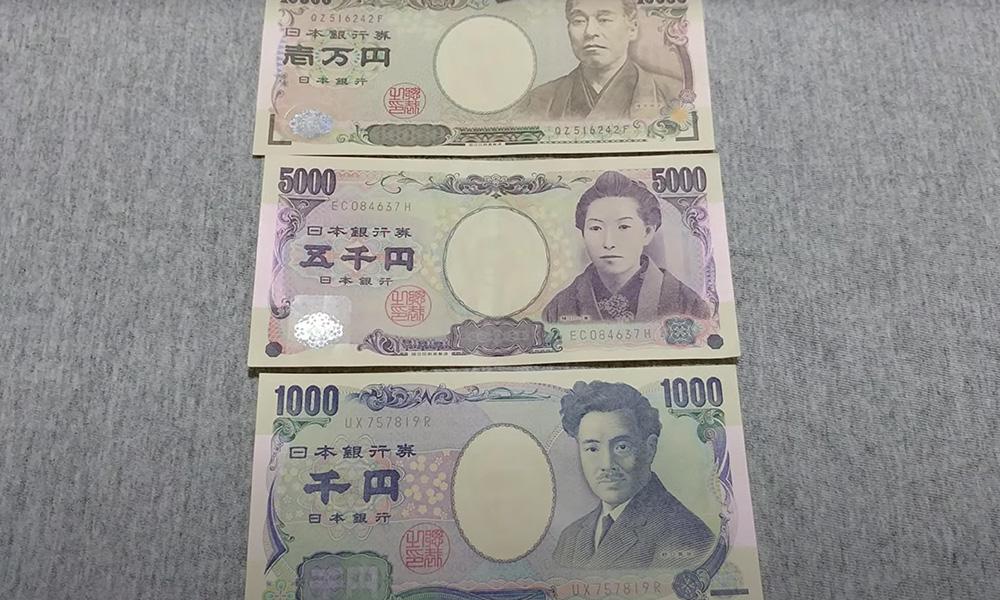
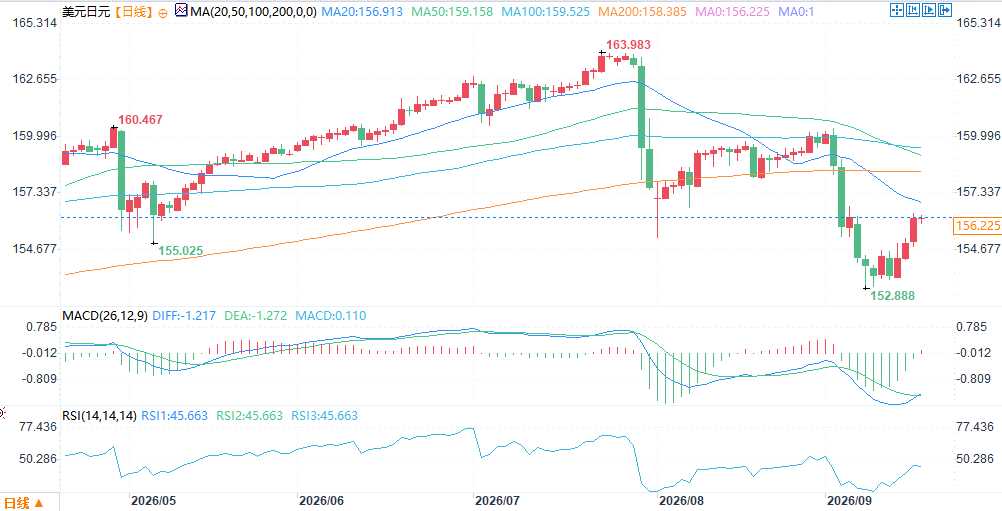 (USD/JPY daily chart, source: FX678) At 10:52 Beijing time, USD/JPY was trading at 156.21/22.
The Bank of Japan expects a 25 basis point rate hike to a 31-year high, with expectations for another rate hike in December rising.
Markets widely expect the Bank of Japan (BOJ) to raise its policy rate by 25 basis points to 1.25% at the end of its September policy meeting, which would be the highest level in approximately 31 years. Traders have begun repricing the possibility of a further rate hike in December, primarily due to rising energy prices pushing up inflation risks. This expectation provides some support for the yen and puts downward pressure on the USD/JPY exchange rate. Analysts believe that the more hawkish repricing of the BOJ's rate hike path is the core reason why the yen has been able to strengthen slightly despite a strong dollar. The energy shock, coupled with continued wage growth, has prompted the central bank to accelerate its normalization pace, shortening the previous interval of approximately once every six months for rate hikes. The market is paying close attention to the wording of Governor Kazuo Ueda's press conference after the meeting to determine whether the pace of tightening will accelerate further. Overall, the expectation of a rate hike has been largely priced into the exchange rate.Dollar Support: Reached New High Since End of July Following Fed Hawkish Rate Hike
The dollar hit a new high since the end of July after the Federal Reserve's hawkish rate hike on Wednesday. The Fed implemented its first rate hike in over three years, and its dot plot indicates room for one more hike this year. Oil-price-driven inflation concerns further supported the prospect of continued Fed tightening, providing direct support for the dollar and the dollar-yen exchange rate. The dollar's strength significantly limited the downside for the dollar-yen exchange rate, and even with rising expectations of a Bank of Japan rate hike, the exchange rate is unlikely to fall significantly. Investors view the Fed's policy shift as a signal of tightening global liquidity, strengthening the trend of funds flowing back into dollar assets. In the short term, the resilience of the dollar index limits the yen's appreciation potential, and the market needs to wait for the actual interest rate differential changes after the policies of both sides are implemented.Geopolitical risks: Escalating tensions in the Middle East provide additional support for the safe-haven US dollar.
Escalating tensions in the Middle East have further supported the safe-haven dollar. Recent developments indicate that the Iranian-backed Houthi rebels claimed Saudi aircraft carried out over 450 airstrikes in Yemen over the past week, and asserted their claim to have shot down a Saudi F-15 fighter jet over Marib province. This event has perpetuated the geopolitical risk premium, benefiting dollar bulls and limiting the downside potential of the USD/JPY pair. The escalating conflict has exacerbated concerns about energy supplies, indirectly reinforcing inflation and deflationary expectations. Risk aversion is driving funds into dollar assets, relatively diminishing the appeal of the yen as a traditional safe-haven currency. The market is closely watching subsequent military developments; any further escalation could extend the dollar's strength. Geopolitical factors have become a crucial external variable in current exchange rate movements.Summary: The tug-of-war between the yen and the dollar; the Bank of Japan's decision will be key to short-term direction.
In summary, the USD/JPY pair is trading in a tug-of-war around 156.00: the yen is supported by expectations of a more hawkish stance from the Bank of Japan, while the dollar is supported by hawkish Fed rate hikes, oil price inflation, and safe-haven demand in the Middle East. The forces on both sides are relatively balanced, ending a three-day winning streak but with limited downside potential. Friday's Bank of Japan decision is key to the short-term direction: if the central bank releases a more hawkish signal than the market expects, the yen may strengthen further; if the tone is cautious or fails to confirm expectations of a December rate hike, the USD/JPY pair may resume its upward trend. Before the Bank of Japan's decision, the 156.00 level is the focus of the battle between bulls and bears. (USD/JPY daily chart, source: FX678) At 10:52 Beijing time, USD/JPY was trading at 156.21/22.
- Risk Warning and Disclaimer
- The market involves risk, and trading may not be suitable for all investors. This article is for reference only and does not constitute personal investment advice, nor does it take into account certain users’ specific investment objectives, financial situation, or other needs. Any investment decisions made based on this information are at your own risk.