September 18th Financial Breakfast: Gold prices were supported by a weaker dollar and easing supply concerns; Trump will meet with Gulf leaders next week; US crude oil opened more than 4% lower.
2026-09-18 07:32:15
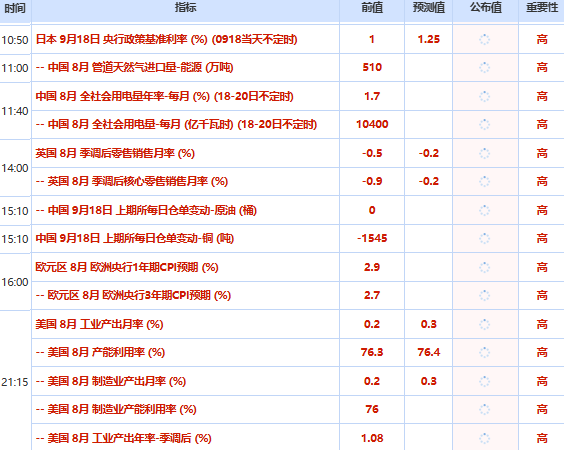
On Friday (September 18, Beijing time) in early Asian trading, spot gold was trading around $4,346 per ounce, supported by falling oil prices and a weaker dollar, while investors were also assessing the impact of the latest Federal Reserve rate hike. US crude oil opened more than 4% lower on Friday, trading around $96.50 per barrel, as investors weighed reports that more Saudi crude oil might enter the global market, easing supply concerns, while the market focused on the meeting between Trump and Gulf leaders next week. 
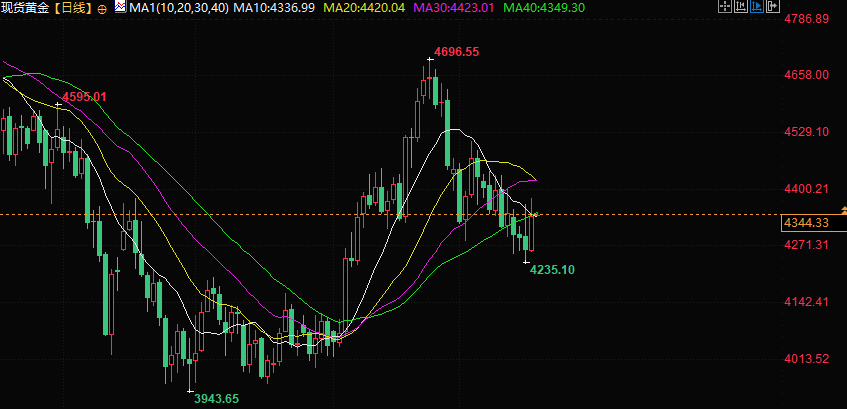 David Meger, director of precious metals trading at High Ridge Futures, stated that gold and energy prices have maintained a very close negative correlation due to inflationary pressures, and the sharp decline in energy prices has alleviated some of the pressure on the gold market. As market concerns about supply disruptions eased, oil prices fell for the second consecutive trading day, hitting a one-week low. The dollar retreated from a seven-week high, making dollar-denominated gold cheaper for holders of other currencies. The benchmark 10-year US Treasury yield also fell, and persistently high risk-free US Treasury yields will diminish the appeal of non-yielding gold. The Federal Reserve raised interest rates on Wednesday and hinted at further rate hikes in the coming months. Fed Chairman Warsh supported this unanimously approved decision, effectively acknowledging that the Trump administration has so far failed to control inflation, and policymakers are concerned that inflation may worsen further. The CME Group's FedWatch tool shows that traders currently expect a 53% probability of another rate hike at the Fed's next meeting in October. Although gold is seen as a hedge against inflation, a high-interest-rate environment increases the attractiveness of interest-bearing assets, thus weakening gold's appeal. UBS stated that widening fiscal deficits, increased debt burdens, a weakening dollar, and expectations that the Federal Reserve will resume its accommodative policy next year should support gold prices, although short-term volatility is possible. The Bank of England kept interest rates unchanged on Thursday, while the Bank of Japan is expected to raise rates to a 31-year high on Friday, signaling its readiness to continue pushing up borrowing costs. Spot silver rose 3.58% to $65.23 per ounce; platinum rose 1.8% to $1783.69 per ounce; and palladium rose 1.6% to $1289.45 per ounce.
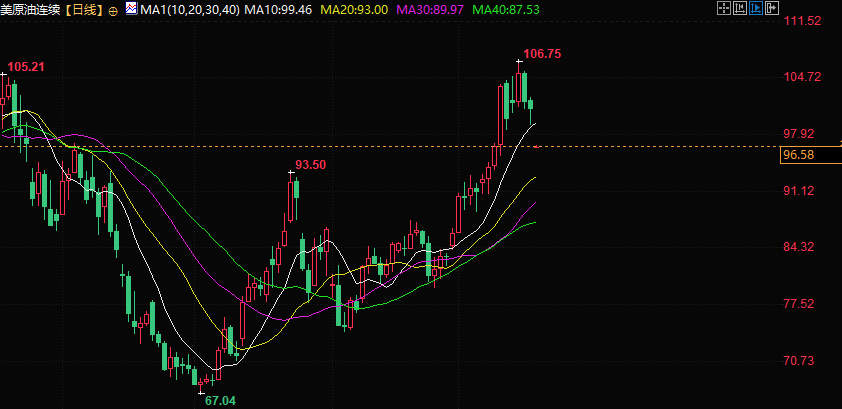 Saudi Arabia and Houthi rebels launched another cross-border attack on Thursday, spreading the Middle East war to Yemen and Saudi Arabia, potentially exacerbating the global energy supply shortage that has worsened since the US-Israel attacks on Iran in February. Earlier reports indicated that Saudi Arabia was supplying more crude oil to Asian refiners via ship-to-ship transshipment outside Oman's port of Sohar and had suspended loading at Yanbu port, diverting more crude oil supplies from Oman, to alleviate some of the supply disruptions caused by the attack on the East-West pipeline to the Red Sea. Bloomberg also reported that Saudi Arabia is seeking to restore about half of the pipeline's capacity within days. Traders said that a prolonged shutdown of the pipeline could disrupt crude oil supplies equivalent to 4% of global oil supply. Saudi Arabia has not specified when operations will resume, but US Energy Secretary Wright said on Tuesday that crude oil should be transported through the pipeline again within days. Assessments by three oil and security sources indicate that three pumping stations serving the East-West pipeline were damaged in last week's attacks, and the repair timeline remains unclear. Exness senior market strategist Christopher Tahir said oil prices extended the previous day's decline on Thursday as concerns about supply disruptions in the Middle East eased somewhat. Saudi Arabia increased seaborne shipments through Oman, boosting crude oil supply, while efforts were underway to restore the East-West pipeline. However, he added that the physical market remained tight, limiting further price declines. Tanker traffic through the Strait of Hormuz continued to decline, and tensions between Saudi Arabia and the Houthis meant that Red Sea shipping and regional energy infrastructure remained at risk of renewed supply disruptions. European diesel futures, a benchmark for diesel prices, closed at a record high on Tuesday, while U.S. ultra-low sulfur diesel futures also hit a record closing high. Local governor Mikhail Yevrayev said on Thursday that a Ukrainian drone attack damaged and started a fire at a refinery in Yaroslavl, Russia, which was subsequently extinguished.
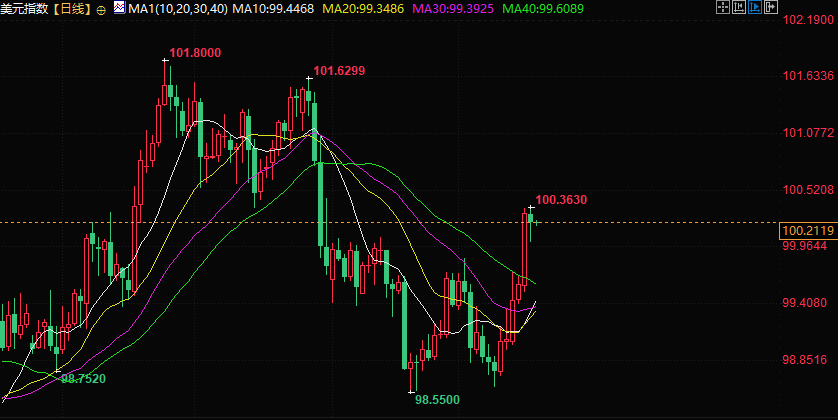 Bannockburn Forex chief market strategist Marc Chandler said the dollar is currently following US interest rate movements, and with Treasury yields retreating after Wednesday's rise, "the dollar has seen some correction." While the Federal Reserve may have met market hawkish expectations, its rate hikes may still fall short of market expectations, making the dollar vulnerable to disappointment. The market sentiment pendulum has swung far. The dollar fell against the euro on Thursday after the Fed raised rates and signaled further tightening the previous day, pushing the dollar to its biggest one-day gain in three months; the euro rose 0.1% against the dollar to $1.1475. The pound fell slightly against both the euro and the dollar after the Bank of England kept interest rates unchanged but warned that a protracted Middle East conflict might require tightening. Market focus has now shifted to the Bank of Japan, which is expected to raise rates to their highest level in 31 years on Friday and hint at a willingness to continue raising borrowing costs. Market participants are watching for clues from the BOJ governor regarding the timing and pace of further rate hikes. When asked about the Federal Reserve's actions, Japanese Chief Cabinet Secretary Minoru Kihara stated that Japan will continue to strive to maintain orderly fluctuations in the yen's exchange rate through close communication with the United States. The yen performed strongly in early September due to market expectations of a hawkish shift in Japanese interest rates, joint intervention by Japan and the US, and speculation about Japanese investors repatriating funds. However, with the strengthening of the US dollar, the yen has weakened in recent trading days. On Thursday, the dollar fell 0.18% against the yen to 155.95 yen. Chidu Narayanan, head of macro strategy for Asia Pacific at Wells Fargo, remains skeptical that the Bank of Japan can be more hawkish than the market has currently priced in an aggressive tightening path, believing there is a risk that the outcome will be more dovish than the market expects. Such an outcome could create room for a renewed rise in the dollar against the yen, especially after the US Federal Open Market Committee meeting was more hawkish than expected.
Key Focus Today
stock market
U.S. stocks rebounded strongly on Thursday, with the Dow Jones Industrial Average rising 0.62% to close at 51,779.85, the S&P 500 gaining 1.14% to 7,637.74, and the Nasdaq Composite climbing 1.69% to 26,418.30. Technology stocks led the gains, with gold and silver mining stocks and chip stocks both rising more than 3%. Financial and consumer staples sectors saw slight declines. Lower oil prices, lower U.S. Treasury yields, and strong initial jobless claims data helped the market digest the impact of the Federal Reserve's first rate hike in more than three years. The Federal Reserve unanimously voted on Wednesday to raise the target range for the federal funds rate for the first time since July 2023, stating its commitment to pushing inflation "more promptly" back to the 2% target, paving the way for further policy tightening this year. CME Group's FedWatch tool showed that the market expects a 53.1% probability of another 25 basis point rate hike in October, up from 27.2% a week earlier. Federal Reserve Chairman Warsh emphasized the strong economy and the Fed's independence, stating that ensuring price stability does not necessarily harm employment. Initial jobless claims fell to near their lowest level since 1969, and the VIX hit a more than one-week low.Gold Market
Gold prices rose on Thursday, with spot gold up 1.82% to settle at $4,341.87 an ounce, supported by falling oil prices and a weaker dollar, as investors assessed the impact of the Federal Reserve's latest interest rate hike. David Meger, director of precious metals trading at High Ridge Futures, stated that gold and energy prices have maintained a very close negative correlation due to inflationary pressures, and the sharp decline in energy prices has alleviated some of the pressure on the gold market. As market concerns about supply disruptions eased, oil prices fell for the second consecutive trading day, hitting a one-week low. The dollar retreated from a seven-week high, making dollar-denominated gold cheaper for holders of other currencies. The benchmark 10-year US Treasury yield also fell, and persistently high risk-free US Treasury yields will diminish the appeal of non-yielding gold. The Federal Reserve raised interest rates on Wednesday and hinted at further rate hikes in the coming months. Fed Chairman Warsh supported this unanimously approved decision, effectively acknowledging that the Trump administration has so far failed to control inflation, and policymakers are concerned that inflation may worsen further. The CME Group's FedWatch tool shows that traders currently expect a 53% probability of another rate hike at the Fed's next meeting in October. Although gold is seen as a hedge against inflation, a high-interest-rate environment increases the attractiveness of interest-bearing assets, thus weakening gold's appeal. UBS stated that widening fiscal deficits, increased debt burdens, a weakening dollar, and expectations that the Federal Reserve will resume its accommodative policy next year should support gold prices, although short-term volatility is possible. The Bank of England kept interest rates unchanged on Thursday, while the Bank of Japan is expected to raise rates to a 31-year high on Friday, signaling its readiness to continue pushing up borrowing costs. Spot silver rose 3.58% to $65.23 per ounce; platinum rose 1.8% to $1783.69 per ounce; and palladium rose 1.6% to $1289.45 per ounce.oil market
Oil prices fell on Thursday, with WTI crude down 0.91% to settle at $101.09 a barrel and Brent crude down 1.43% to settle at $104.06 a barrel, as investors weighed supply disruptions caused by attacks by Saudi Arabia and Iran-backed Houthi rebels in Yemen, as well as reports that more Saudi crude might enter the global market, easing supply concerns. Saudi Arabia and Houthi rebels launched another cross-border attack on Thursday, spreading the Middle East war to Yemen and Saudi Arabia, potentially exacerbating the global energy supply shortage that has worsened since the US-Israel attacks on Iran in February. Earlier reports indicated that Saudi Arabia was supplying more crude oil to Asian refiners via ship-to-ship transshipment outside Oman's port of Sohar and had suspended loading at Yanbu port, diverting more crude oil supplies from Oman, to alleviate some of the supply disruptions caused by the attack on the East-West pipeline to the Red Sea. Bloomberg also reported that Saudi Arabia is seeking to restore about half of the pipeline's capacity within days. Traders said that a prolonged shutdown of the pipeline could disrupt crude oil supplies equivalent to 4% of global oil supply. Saudi Arabia has not specified when operations will resume, but US Energy Secretary Wright said on Tuesday that crude oil should be transported through the pipeline again within days. Assessments by three oil and security sources indicate that three pumping stations serving the East-West pipeline were damaged in last week's attacks, and the repair timeline remains unclear. Exness senior market strategist Christopher Tahir said oil prices extended the previous day's decline on Thursday as concerns about supply disruptions in the Middle East eased somewhat. Saudi Arabia increased seaborne shipments through Oman, boosting crude oil supply, while efforts were underway to restore the East-West pipeline. However, he added that the physical market remained tight, limiting further price declines. Tanker traffic through the Strait of Hormuz continued to decline, and tensions between Saudi Arabia and the Houthis meant that Red Sea shipping and regional energy infrastructure remained at risk of renewed supply disruptions. European diesel futures, a benchmark for diesel prices, closed at a record high on Tuesday, while U.S. ultra-low sulfur diesel futures also hit a record closing high. Local governor Mikhail Yevrayev said on Thursday that a Ukrainian drone attack damaged and started a fire at a refinery in Yaroslavl, Russia, which was subsequently extinguished.Foreign exchange market
The dollar index retreated on Thursday after hitting a two-and-a-half-month high of 100.36, closing at 100.22, mainly as a correction of Wednesday's surge was accompanied by declining U.S. Treasury yields and falling oil prices. Reports that Saudi Arabia would supply more crude oil via Oman eased supply concerns during the U.S. war in Iraq, and the drop in energy prices also contributed to the dollar's weakness. Bannockburn Forex chief market strategist Marc Chandler said the dollar is currently following US interest rate movements, and with Treasury yields retreating after Wednesday's rise, "the dollar has seen some correction." While the Federal Reserve may have met market hawkish expectations, its rate hikes may still fall short of market expectations, making the dollar vulnerable to disappointment. The market sentiment pendulum has swung far. The dollar fell against the euro on Thursday after the Fed raised rates and signaled further tightening the previous day, pushing the dollar to its biggest one-day gain in three months; the euro rose 0.1% against the dollar to $1.1475. The pound fell slightly against both the euro and the dollar after the Bank of England kept interest rates unchanged but warned that a protracted Middle East conflict might require tightening. Market focus has now shifted to the Bank of Japan, which is expected to raise rates to their highest level in 31 years on Friday and hint at a willingness to continue raising borrowing costs. Market participants are watching for clues from the BOJ governor regarding the timing and pace of further rate hikes. When asked about the Federal Reserve's actions, Japanese Chief Cabinet Secretary Minoru Kihara stated that Japan will continue to strive to maintain orderly fluctuations in the yen's exchange rate through close communication with the United States. The yen performed strongly in early September due to market expectations of a hawkish shift in Japanese interest rates, joint intervention by Japan and the US, and speculation about Japanese investors repatriating funds. However, with the strengthening of the US dollar, the yen has weakened in recent trading days. On Thursday, the dollar fell 0.18% against the yen to 155.95 yen. Chidu Narayanan, head of macro strategy for Asia Pacific at Wells Fargo, remains skeptical that the Bank of Japan can be more hawkish than the market has currently priced in an aggressive tightening path, believing there is a risk that the outcome will be more dovish than the market expects. Such an outcome could create room for a renewed rise in the dollar against the yen, especially after the US Federal Open Market Committee meeting was more hawkish than expected.International News
Trump Says He Will Decide Whether to Resume Large-Scale Military Operations According to a report by Axios on September 17, US President Trump told the media that he is facing a critical turning point in the war against Iran, needing to decide whether to restart a large-scale offensive in an effort to end the conflict. Trump reportedly said, "I'm about to make a big decision. Should I just go and wipe them out? That's going to be a big decision. Anything can happen on my end." Axios analysis points out that Trump plans to meet with the leaders of six Gulf states next week on the sidelines of the UN General Assembly in New York. This meeting could shape the next phase of the war, including whether to push for a diplomatic solution again or escalate military action. If Trump wants to resume large-scale military operations, he needs the consent of regional allies. Trump has repeatedly stated in recent days that the war will end soon. However, some US officials have warned that the US and Iran have entered an unsustainable "neither war nor peace" stalemate. They believe that if an agreement is not reached soon, Trump may resume large-scale military action against Iran after the midterm elections (CCTV International News). The US claims to have approved visas for senior Iranian leaders. A spokesperson for the US State Department stated on September 17th that "despite the ongoing conflict, the United States has approved visas for senior Iranian leaders," allowing the Iranian delegation to attend the high-level week of the 81st UN General Assembly in New York next week. The spokesperson said, "The delegation will be subject to travel restrictions and will face restrictions prohibiting the purchase of luxury goods and other items, in accordance with our policy. The delegation is also smaller than last year's." There has been no response from Iran at this time. (CCTV International News) The US imposes new sanctions on Cuba targeting the mining and military sectors. According to a fact list sent via email by the US State Department, the US is "sanctioning eight entities and three individuals to further advance the Trump administration's efforts to comprehensively end the Cuban regime's malign activities." The statement said, "This action includes sanctions against the Cuban regime's nickel mining system and military-industrial complex." The Cuban state-owned mining company Pinares SA is among the sanctioned organizations. The Treasury Department describes some of the sanctioned entities as state-owned research and experimental development institutions. US Central Command says 104 merchant ships have been diverted On September 17, local time, US Central Command released photos showing an F/A-18F Super Hornet fighter jet taking off from the flight deck of the USS George H.W. Bush aircraft carrier; the ship is currently sailing in the relevant waters, continuing to support the US blockade operation against Iran. As of September 17, US Central Command had guided 104 merchant ships to change course to ensure strict compliance with relevant regulations. (CCTV News) India's rice production may see its largest drop in 16 years Due to insufficient rainfall, India's rice production this year is expected to decline for the first time in ten years, and the drop may be the largest in 16 years. B.V. Krishna Rao, president of the All India Rice Exporters Association, said that reduced rainfall will lead to a decline in rice production, with India's rice output expected to decrease by about 10 million tons this year, a nearly 6.5% drop from last year's record 154 million tons, the largest decline since the 2009-2010 season. Data from the Indian Meteorological Department shows that since the start of the monsoon season in June, rainfall across India has been 15% below normal, with some rice-growing states experiencing rainfall shortfalls as high as 42%. Rao said that the persistent drought in recent weeks has significantly weakened the rice production potential of many southern and eastern states. (Xinhua)Domestic News
Wang Yi Speaks with US Secretary of State Rubio by Phone Wang Yi, member of the Political Bureau of the CPC Central Committee and Foreign Minister, spoke by phone with US Secretary of State Rubio on the 17th. The two sides focused on in-depth discussions regarding high-level exchanges between the two countries. Wang Yi stated that for some time now, China-US relations have generally progressed along the constructive strategic stability track set by the two heads of state, which is conducive to meeting the expectations of the international community. Wang Yi emphasized that head-of-state diplomacy is the cornerstone of China-US relations. Both sides should, in the spirit of equality, respect, and mutual benefit, prepare for the next stage of high-level exchanges, strengthen communication, promote cooperation, manage differences, respect each other's core interests, and send a positive message that China and the US are committed to promoting a constructive strategic stability relationship and jointly promoting world peace and development. The two sides also exchanged views on issues such as the situation in the Middle East. (Xinhua) Domestically Produced Industrial Machine Tools Achieve Breakthrough In the first half of this year, the added value of China's equipment manufacturing industry and high-tech manufacturing industry increased by 9.3% and 13.3% respectively, with new growth drivers contributing over 50% to industrial growth in the first seven months. China's advanced manufacturing is building an increasingly solid foundation. The AI-powered direct-drive CNC machine tool achieves a precision of 4 micrometers, equivalent to 1/15th the diameter of a human hair. This machine can work continuously for over 72 hours. Unlike traditional machine tools, it lacks the "standard" components such as ball screws, couplings, and servo motors. After ten years of research and development, the Wenling Municipal Government, in collaboration with a team from Zhejiang University, officially launched the AI-powered direct-drive CNC machine tool this September. The overall performance of the machine is 30% to 60% higher than the national standard. AI enables the machine tool to autonomously perceive, make decisions, and execute tasks, and it can also learn autonomously, becoming "smarter with use." (CCTV Finance) China's Commercial Aerospace Achieves 4 Consecutive Successes in 3 Days This year, China's commercial aerospace sector has seen a series of successes. From rocket recovery to mass satellite networking, this emerging industry continues to achieve breakthroughs in engineering and scale. From September 15th to 17th, China's commercial aerospace sector achieved four consecutive successful launches: Kuaizhou-11, Long March-12, the improved Zhuque-2, and Gravity-1. Of these, three rockets were tasked with building the low-Earth orbit satellite internet constellation currently under construction in my country, while two rockets from private companies marked the beginning of large-scale participation of my country's private commercial aerospace sector in the system's network construction. (CCTV Finance)- Risk Warning and Disclaimer
- The market involves risk, and trading may not be suitable for all investors. This article is for reference only and does not constitute personal investment advice, nor does it take into account certain users’ specific investment objectives, financial situation, or other needs. Any investment decisions made based on this information are at your own risk.