Lacking hawkish guidance after the Bank of Japan's rate hike, USD/JPY rebounded and approached the downtrend line, awaiting a stress test.
2026-09-22 14:18:12
The US dollar strengthened against the Japanese yen in early Asian trading on Tuesday, with USD/JPY rising to around 157.55. The main reason for the recent pressure on the yen is that the Bank of Japan did not provide clear guidance on subsequent policy after raising interest rates last week, thus lowering market expectations for further tightening by the BOJ in the short term. Meanwhile, signals from Federal Reserve officials regarding further rate hikes continue to support the dollar, as expectations of a US-Japan interest rate differential persist.  The Bank of Japan raised its policy rate by 25 basis points to 1.25% last week, the highest level in 31 years, with the decision passed by a 7-2 vote. However, the market is more focused on the subsequent policy path. Currently, the swap market prices less than 20% for another rate hike at the Bank of Japan's meeting at the end of October, while pricing in a rate hike at the December meeting at approximately 90%. This means that the market has not completely ruled out the possibility of the Bank of Japan continuing to tighten policy, but remains cautious about policy actions in the short term. Another important variable facing the yen comes from potential currency intervention by the Japanese authorities. Market news indicates that Japanese officials recently conducted currency inquiries, specifically asking banks for USD/JPY quotes to understand the current market conditions. Currency inquiries are generally seen by the market as an important signal before official action, so as USD/JPY gradually approaches the 160.00 level, traders' vigilance regarding further intervention in the foreign exchange market by the Japanese authorities has significantly increased. If the USD/JPY continues to appreciate rapidly, the Japanese authorities may face greater pressure to communicate their policies. The market had previously considered the 160.00 level a sensitive price area, so even if fundamentals continue to support the dollar, intervention expectations may limit further short-term expansion of the exchange rate. Regarding the dollar, hawkish expectations from the Federal Reserve continue to play a role. St. Louis Fed President Alberto Musaleem stated that if inflation continues to be driven by strong demand and commodity price shocks, the Fed may need to raise interest rates further. He favors a gradual policy adjustment earlier to avoid inflation significantly exceeding the 2% target for an extended period. According to the CME Group's FedWatch tool, the market currently expects a 56.5% probability of at least a 25 basis point rate hike by the Fed in October, up from 43.5% a week ago. If Fed officials continue to release hawkish signals, US interest rate expectations and US Treasury yields may receive further support, thereby expanding the dollar's short-term advantage. However, the USD/JPY is not currently in a one-sided dollar trend. The risk of Japanese official intervention, the Fed's subsequent policy path, and changes in US yields constitute a triple constraint on the exchange rate. Especially when USD/JPY approaches 160.00, market expectations for potential action from the Japanese Ministry of Finance and the Bank of Japan may strengthen significantly, amplifying two-way volatility in the exchange rate. Going forward, the focus will be on speeches by Federal Reserve officials John Williams, Philip Jefferson, and Thomas Barkin, as well as changes in US interest rate expectations. Simultaneously, whether Japan releases further policy signals regarding the exchange rate will also be a crucial factor influencing the yen's trajectory. With the US dollar remaining strong, the closer USD/JPY gets to 160.00, the higher the market's sensitivity to the risk of policy intervention may become. From a daily chart perspective, although USD/JPY has risen to around 157.55, the overall technical structure remains suppressed by the 100-day moving average. Currently, the exchange rate has rebounded above the Bollinger Band middle line at 156.65, indicating some easing of short-term downward pressure. The RSI is around 52, in a slightly bullish neutral zone, but has not yet formed a clear upward trend signal. The first resistance level to watch is the 100-day moving average at 159.55; a successful break above this level would target the upper Bollinger Band at 161.10. On the downside, watch the Bollinger Band middle line around 156.65. If this level is breached, the next support level is around the lower Bollinger Band at 152.18. Looking at the 4-hour chart, USD/JPY has strengthened again in the short term, with the area around 157.50 becoming the current battleground between bulls and bears. If the exchange rate can hold above 157.50 and continue upward to break through 158.00, it may further test the 159.00-159.55 area in the short term; however, as the price approaches 160.00, the potential risk of intervention by Japanese authorities may increase significantly. Conversely, if there is significant profit-taking around 157.50 and a break below 156.65, the short-term rebound structure may be weakened, with further attention focused on the 155.75-155.00 area. Overall, the dollar's interest rate advantage still supports the exchange rate, but the expectation of official intervention makes the upside potential face strong uncertainty.
 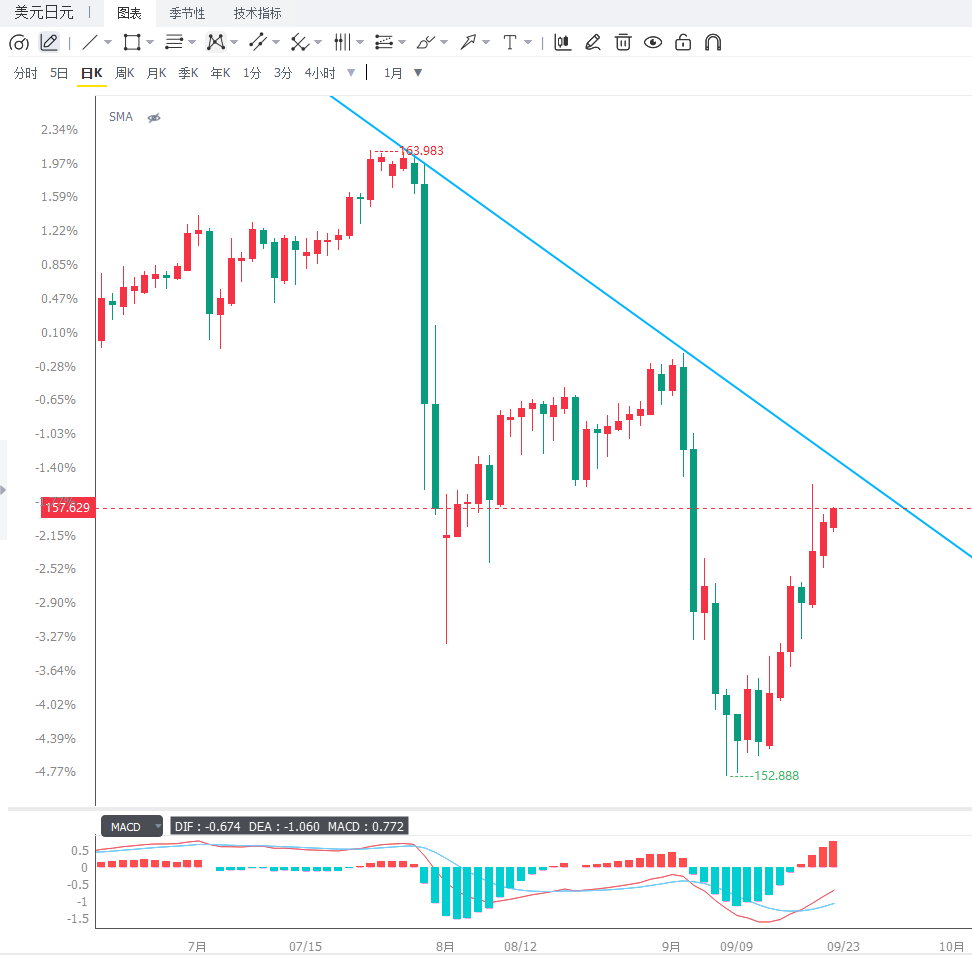 The USD/JPY pair is currently in a tug-of-war between the US dollar's interest rate advantage and the risk of Japanese government intervention. Expectations of further tightening by the Federal Reserve and the lack of clear hawkish guidance from the Bank of Japan are providing support for USD/JPY, but as the exchange rate approaches 160.00, market sensitivity to action by Japanese authorities is increasing. Short-term focus is on the support level of 156.65 and the resistance level of 159.55, while 160.00 is a more significant psychological and policy-sensitive area. Subsequent speeches by Federal Reserve officials, expectations of Bank of Japan policy, and signals of currency intervention will jointly determine the short-term direction of USD/JPY.
The Bank of Japan raised its policy rate by 25 basis points to 1.25% last week, the highest level in 31 years, with the decision passed by a 7-2 vote. However, the market is more focused on the subsequent policy path. Currently, the swap market prices less than 20% for another rate hike at the Bank of Japan's meeting at the end of October, while pricing in a rate hike at the December meeting at approximately 90%. This means that the market has not completely ruled out the possibility of the Bank of Japan continuing to tighten policy, but remains cautious about policy actions in the short term. Another important variable facing the yen comes from potential currency intervention by the Japanese authorities. Market news indicates that Japanese officials recently conducted currency inquiries, specifically asking banks for USD/JPY quotes to understand the current market conditions. Currency inquiries are generally seen by the market as an important signal before official action, so as USD/JPY gradually approaches the 160.00 level, traders' vigilance regarding further intervention in the foreign exchange market by the Japanese authorities has significantly increased. If the USD/JPY continues to appreciate rapidly, the Japanese authorities may face greater pressure to communicate their policies. The market had previously considered the 160.00 level a sensitive price area, so even if fundamentals continue to support the dollar, intervention expectations may limit further short-term expansion of the exchange rate. Regarding the dollar, hawkish expectations from the Federal Reserve continue to play a role. St. Louis Fed President Alberto Musaleem stated that if inflation continues to be driven by strong demand and commodity price shocks, the Fed may need to raise interest rates further. He favors a gradual policy adjustment earlier to avoid inflation significantly exceeding the 2% target for an extended period. According to the CME Group's FedWatch tool, the market currently expects a 56.5% probability of at least a 25 basis point rate hike by the Fed in October, up from 43.5% a week ago. If Fed officials continue to release hawkish signals, US interest rate expectations and US Treasury yields may receive further support, thereby expanding the dollar's short-term advantage. However, the USD/JPY is not currently in a one-sided dollar trend. The risk of Japanese official intervention, the Fed's subsequent policy path, and changes in US yields constitute a triple constraint on the exchange rate. Especially when USD/JPY approaches 160.00, market expectations for potential action from the Japanese Ministry of Finance and the Bank of Japan may strengthen significantly, amplifying two-way volatility in the exchange rate. Going forward, the focus will be on speeches by Federal Reserve officials John Williams, Philip Jefferson, and Thomas Barkin, as well as changes in US interest rate expectations. Simultaneously, whether Japan releases further policy signals regarding the exchange rate will also be a crucial factor influencing the yen's trajectory. With the US dollar remaining strong, the closer USD/JPY gets to 160.00, the higher the market's sensitivity to the risk of policy intervention may become. From a daily chart perspective, although USD/JPY has risen to around 157.55, the overall technical structure remains suppressed by the 100-day moving average. Currently, the exchange rate has rebounded above the Bollinger Band middle line at 156.65, indicating some easing of short-term downward pressure. The RSI is around 52, in a slightly bullish neutral zone, but has not yet formed a clear upward trend signal. The first resistance level to watch is the 100-day moving average at 159.55; a successful break above this level would target the upper Bollinger Band at 161.10. On the downside, watch the Bollinger Band middle line around 156.65. If this level is breached, the next support level is around the lower Bollinger Band at 152.18. Looking at the 4-hour chart, USD/JPY has strengthened again in the short term, with the area around 157.50 becoming the current battleground between bulls and bears. If the exchange rate can hold above 157.50 and continue upward to break through 158.00, it may further test the 159.00-159.55 area in the short term; however, as the price approaches 160.00, the potential risk of intervention by Japanese authorities may increase significantly. Conversely, if there is significant profit-taking around 157.50 and a break below 156.65, the short-term rebound structure may be weakened, with further attention focused on the 155.75-155.00 area. Overall, the dollar's interest rate advantage still supports the exchange rate, but the expectation of official intervention makes the upside potential face strong uncertainty. The USD/JPY pair is currently in a tug-of-war between the US dollar's interest rate advantage and the risk of Japanese government intervention. Expectations of further tightening by the Federal Reserve and the lack of clear hawkish guidance from the Bank of Japan are providing support for USD/JPY, but as the exchange rate approaches 160.00, market sensitivity to action by Japanese authorities is increasing. Short-term focus is on the support level of 156.65 and the resistance level of 159.55, while 160.00 is a more significant psychological and policy-sensitive area. Subsequent speeches by Federal Reserve officials, expectations of Bank of Japan policy, and signals of currency intervention will jointly determine the short-term direction of USD/JPY.
- Risk Warning and Disclaimer
- The market involves risk, and trading may not be suitable for all investors. This article is for reference only and does not constitute personal investment advice, nor does it take into account certain users’ specific investment objectives, financial situation, or other needs. Any investment decisions made based on this information are at your own risk.