Hawkish expectations from the Federal Reserve and safe-haven demand supported the US dollar, with GBP/USD remaining in a low-level consolidation phase.
2026-09-22 14:20:13
The pound traded in a narrow range against the dollar in Asian trading on Tuesday, hovering above 1.3350 and remaining close to its lowest level since July 30th, reached last week. Current market pricing in the pound is primarily driven by the divergence in monetary policy between the US and the UK. The Federal Reserve's hawkish stance has strengthened the dollar's support, while the Bank of England's relatively cautious approach to future policy has left the pound lacking a clear interest rate advantage.  The Federal Reserve has recently become a major driver of the dollar's strength again. The US Federal Reserve raised interest rates by 25 basis points to a range of 3.75% to 4.00% at its previous meeting, signaling the possibility of further policy tightening this year. In contrast, the Bank of England kept its policy rate unchanged and continued to emphasize maintaining a balance between inflation and economic growth. The widening gap in interest rate expectations between the US and the UK has strengthened the dollar's interest rate advantage relative to the pound. The situation in the Middle East also provides safe-haven support for the dollar. Recent regional tensions have not fully eased, and market funds tend to increase their allocation to dollar assets during periods of heightened risk, thus putting pressure on GBP/USD. However, the recent decline in oil prices from their highs and lower energy costs have alleviated global inflation concerns to some extent, while the decline in US Treasury yields has also limited the dollar's further upside potential. For the UK economy, the market will next focus on the latest economic activity data. The UK and the US will release preliminary manufacturing and services PMI figures on Wednesday, which will help investors assess the economic growth momentum of both countries and the future path of monetary policy. If UK economic data remains relatively stable, it may provide some support for the pound; if US data continues to show resilient demand, it could further strengthen the dollar's interest rate advantage. Currently, GBP/USD remains in a weak consolidation phase. A strong dollar, differing expectations regarding UK and US monetary policy, and geopolitical risks are all limiting the pound's rebound, but falling oil prices and declining US yields are providing some buffer. Investors need to closely observe whether the support around 1.3340 can hold and whether the dollar can maintain its recent strength. From a daily chart perspective, GBP/USD is currently still in a weak position, trading below the 100-day simple moving average at 1.3435 and below the 50% Fibonacci retracement level at 1.3407, indicating that short-term bears still hold some initiative. The first support level to watch is the 61.8% Fibonacci retracement level at 1.3344. If this level is breached, the next support level to watch is the 78.6% retracement level around 1.3254, and further down is the structural support around 1.3139. If the price breaks above 1.3407 again, it could test the 100-day moving average at 1.3435, with further resistance at 1.3471 and 1.3549. On the 4-hour chart, GBP/USD is maintaining a weak consolidation around 1.3350, with short-term rebounds still facing resistance above 1.3400. If the price can stabilize above 1.3344 and break above 1.3407 again, the short-term correction structure may be repaired, and a further test of 1.3435 may follow; conversely, if 1.3344 is effectively broken, the downside potential may open up further, and the market will turn to test 1.3254. Currently, short-term momentum is weak, and the technical trend still needs to be confirmed by the performance of the US dollar index, US yields, and UK PMI to determine the breakout direction.
 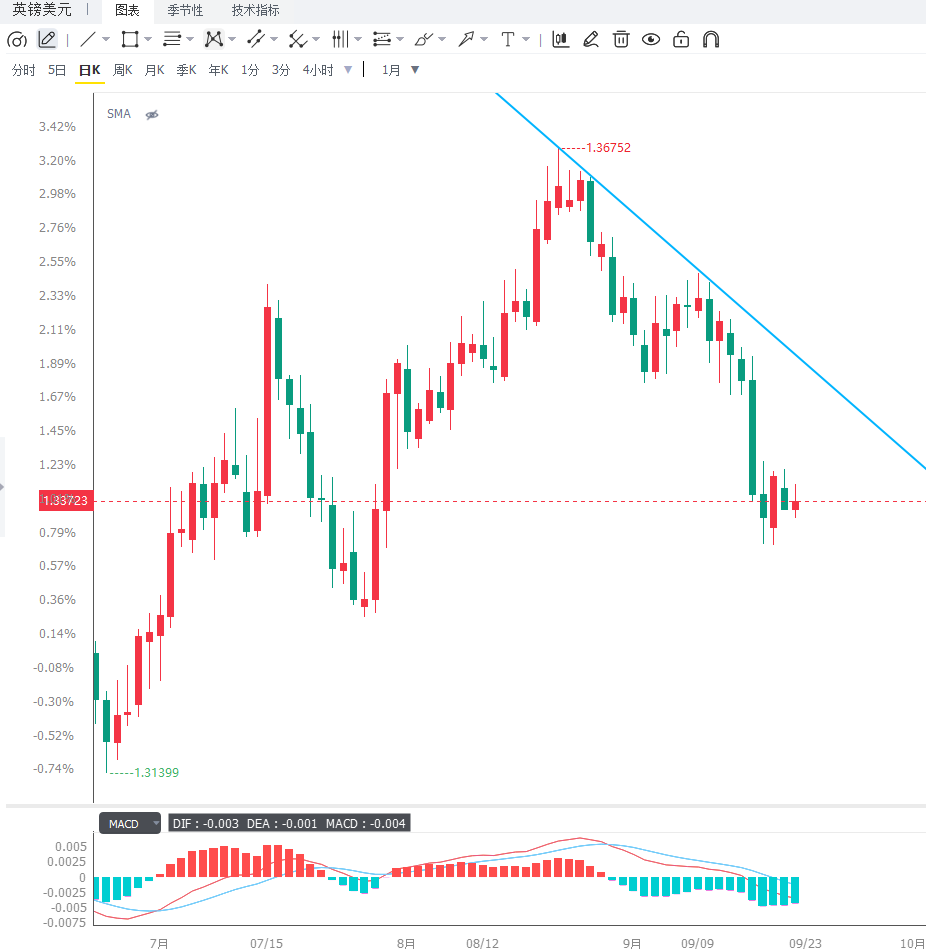 In summary, the GBP/USD pair is currently under significant short-term pressure due to a combination of factors, including expectations of a hawkish Federal Reserve policy, demand for the US dollar as a safe haven, and the divergence in monetary policy between the UK and the US. While falling oil prices and declining US yields can limit further dollar expansion, they are insufficient to change the overall weak structure of the exchange rate. Technically, 1.3344 is a key support level, while 1.3407 to 1.3435 constitutes a key resistance zone for any rebound. Subsequent speeches by Fed officials, UK and US PMI data, and changes in global risk sentiment will continue to determine the short-term direction of the GBP/USD pair.
The Federal Reserve has recently become a major driver of the dollar's strength again. The US Federal Reserve raised interest rates by 25 basis points to a range of 3.75% to 4.00% at its previous meeting, signaling the possibility of further policy tightening this year. In contrast, the Bank of England kept its policy rate unchanged and continued to emphasize maintaining a balance between inflation and economic growth. The widening gap in interest rate expectations between the US and the UK has strengthened the dollar's interest rate advantage relative to the pound. The situation in the Middle East also provides safe-haven support for the dollar. Recent regional tensions have not fully eased, and market funds tend to increase their allocation to dollar assets during periods of heightened risk, thus putting pressure on GBP/USD. However, the recent decline in oil prices from their highs and lower energy costs have alleviated global inflation concerns to some extent, while the decline in US Treasury yields has also limited the dollar's further upside potential. For the UK economy, the market will next focus on the latest economic activity data. The UK and the US will release preliminary manufacturing and services PMI figures on Wednesday, which will help investors assess the economic growth momentum of both countries and the future path of monetary policy. If UK economic data remains relatively stable, it may provide some support for the pound; if US data continues to show resilient demand, it could further strengthen the dollar's interest rate advantage. Currently, GBP/USD remains in a weak consolidation phase. A strong dollar, differing expectations regarding UK and US monetary policy, and geopolitical risks are all limiting the pound's rebound, but falling oil prices and declining US yields are providing some buffer. Investors need to closely observe whether the support around 1.3340 can hold and whether the dollar can maintain its recent strength. From a daily chart perspective, GBP/USD is currently still in a weak position, trading below the 100-day simple moving average at 1.3435 and below the 50% Fibonacci retracement level at 1.3407, indicating that short-term bears still hold some initiative. The first support level to watch is the 61.8% Fibonacci retracement level at 1.3344. If this level is breached, the next support level to watch is the 78.6% retracement level around 1.3254, and further down is the structural support around 1.3139. If the price breaks above 1.3407 again, it could test the 100-day moving average at 1.3435, with further resistance at 1.3471 and 1.3549. On the 4-hour chart, GBP/USD is maintaining a weak consolidation around 1.3350, with short-term rebounds still facing resistance above 1.3400. If the price can stabilize above 1.3344 and break above 1.3407 again, the short-term correction structure may be repaired, and a further test of 1.3435 may follow; conversely, if 1.3344 is effectively broken, the downside potential may open up further, and the market will turn to test 1.3254. Currently, short-term momentum is weak, and the technical trend still needs to be confirmed by the performance of the US dollar index, US yields, and UK PMI to determine the breakout direction. In summary, the GBP/USD pair is currently under significant short-term pressure due to a combination of factors, including expectations of a hawkish Federal Reserve policy, demand for the US dollar as a safe haven, and the divergence in monetary policy between the UK and the US. While falling oil prices and declining US yields can limit further dollar expansion, they are insufficient to change the overall weak structure of the exchange rate. Technically, 1.3344 is a key support level, while 1.3407 to 1.3435 constitutes a key resistance zone for any rebound. Subsequent speeches by Fed officials, UK and US PMI data, and changes in global risk sentiment will continue to determine the short-term direction of the GBP/USD pair.
- Risk Warning and Disclaimer
- The market involves risk, and trading may not be suitable for all investors. This article is for reference only and does not constitute personal investment advice, nor does it take into account certain users’ specific investment objectives, financial situation, or other needs. Any investment decisions made based on this information are at your own risk.