Brent crude fell from $110, but the spot premium tore the structure apart.
2026-09-22 15:56:11
On Tuesday, September 22, Brent crude oil was fluctuating between $101 and $102 per barrel, showing signs of stabilization after four consecutive days of decline. Verifiable reconfigurations of Saudi export routes have occurred over the past two weeks: following the drone attacks on September 10, the East-West oil pipeline was shut down as a precautionary measure, and loading at Yanbu port on the Red Sea was almost completely halted; loading volumes at terminals such as Rastanura on the Gulf side increased, and transshipment arrangements near Sohar in Oman were expanded. Meanwhile, market sources revealed that Saudi Aramco has made informal verbal confirmations to at least three Asian refineries that Yanbu port's oil extraction is expected to reopen, but no written notification or timetable has been released. For refinery procurement, shipping schedules, and regional price spreads, the time lag between verbal arrangements and the official loading window is the core of the current pricing friction. 
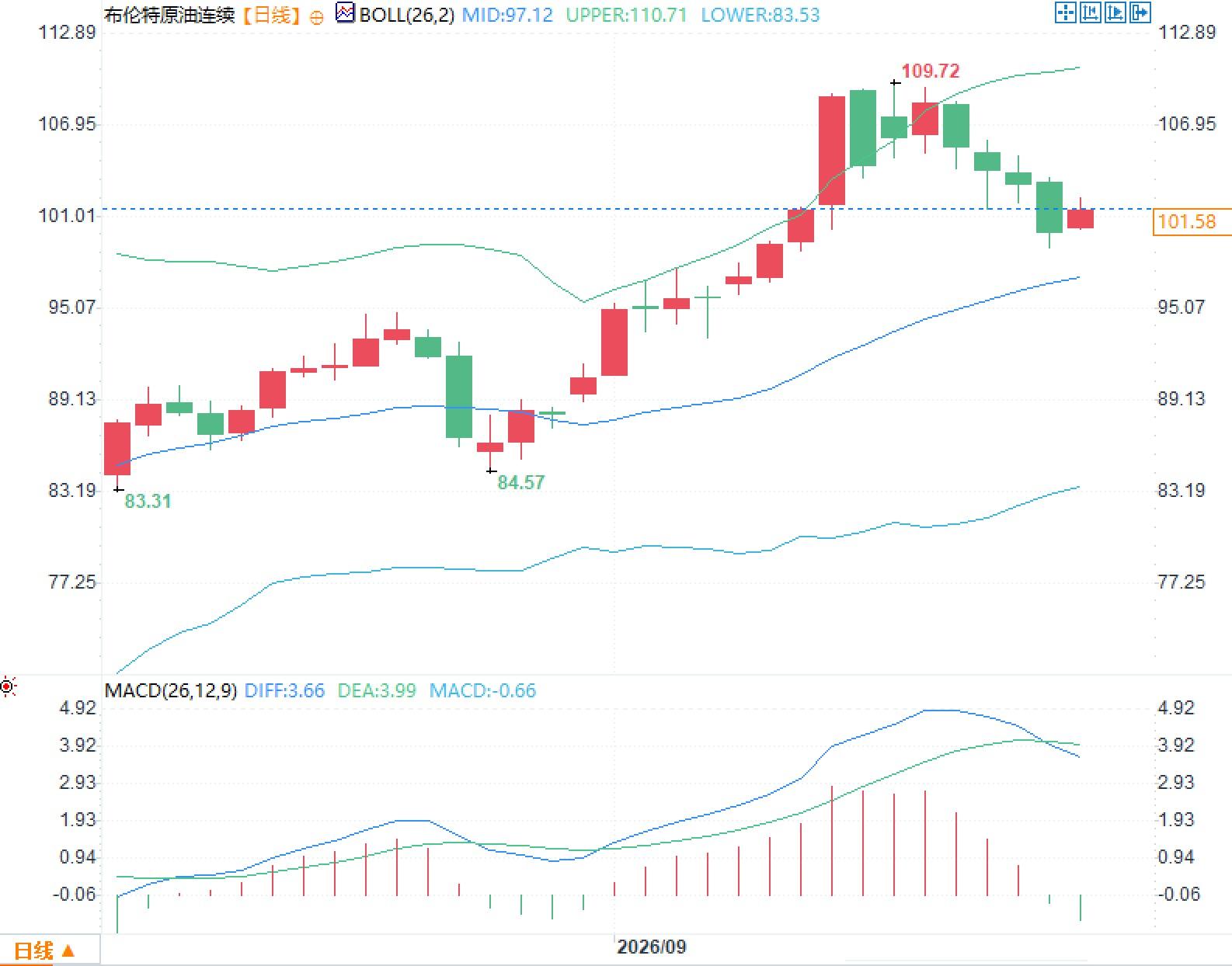 Spot Brent crude rose above $130/barrel during the peak of European restocking; Johns Widrup's record premium indicates that medium-sulfur substitutes are being repriced in Northwest Europe. Dubai-related valuations also rose sharply during the same period, corresponding to increased insurance and freight costs for Asian deliveries and transshipments. Futures declines and spot premiums can coexist: the former reflects the "rerouting has occurred, and some supply is visible," while the latter reflects the "still shortfall in European October long-term contracts and shortages of certain grades." Three things remain to be verified: whether new loading routes emerge at Yanbu port, whether there are written revisions to the October European long-term contracts, and whether Gulf loadings and transshipments can statistically remain stable above the East Coast baseline before the pipeline shutdown.
The misalignment between the Yanbu port confirmation and the loading window
The East-West crude oil pipeline, approximately 1,200 kilometers long, connects eastern oil fields with the Red Sea port of Yanbu, with a designed capacity of about 5 million barrels per day. Following the restrictions on passage through the Strait of Hormuz due to the conflict, this pipeline served as a major diversion route for Saudi Arabia's foreign sales, supplying approximately 4 million barrels per day to Yanbu before the attacks. From September 10th to 11th, drones struck pumping stations along the pipeline between Riyadh and Medina, prompting the Saudi energy authorities to shut it down as a precautionary measure. Shipping tracking shows that virtually no new crude oil has departed from Yanbu port since September 12th. During this period of inactivity, some long-term contract buyers in Asia have missed their scheduled loading dates at Yanbu. Some vessels remain in the waters near the port, while others are still en route. Market sources indicate that Saudi Aramco management made informal assurances to at least three fuel processors that they could soon pick up oil at Yanbu, but these assurances remained verbal, without formal loading notices or specified timeframes. For refineries, verbal confirmation only reduces the lingering fear of a "permanent port closure" and does not directly rewrite missed loading periods, demurrage fees, and alternative cargo contracts. Asian buyers subsequently turned more towards Gulf loading and transshipment off the coast of Oman; European buyers, on the other hand, faced stricter quota constraints.Gulf diversion boosts demand and European quotas return to zero in October.
Following the pipeline shutdown, Saudi Arabia has shifted more of its exports to the eastern Gulf coast. Shipping data shows that since September 12, the average daily loading of Gulf crude oil has been approximately 3.7 million barrels, up from about 2.9 million barrels per day earlier in the month; the average daily loading from the Red Sea between September 1 and 11 was also around 3.9 million barrels per day. An additional 60 million barrels of crude oil are scheduled to be loaded from Rastanura in September and October, transiting the Strait of Hormuz before being transshipped near Sokha in Oman. Transshipment avoids buyers having to send their own fleets directly into the disputed waters, but increases the risk of secondary transshipment, insurance costs, and shipping schedule uncertainties. Regional allocation is asymmetrical. Sources familiar with long-term contract arrangements say that Saudi Aramco notified at least two European refineries last week that they would not receive any crude oil under their long-term agreements in October, and this applies to all long-term contract buyers in Europe. The quota gap is forcing buyers to turn to North Sea and Mediterranean spot markets. Polish refiner Oren has already purchased North Sea cargoes to fill the gap. The Norwegian Johanswedrup premium relative to North Sea spot Brent crude widened by $18.60 per barrel in the week ending September 17, reaching a record high of $24.05 per barrel. During the same period, spot Brent crude briefly rose above $130 per barrel. Asia and Europe face different constraints: the former has access to Gulf cargo and transshipment windows, while the latter is left with zero allocation for October long-term contracts. Shipping analysis firm Vortexa stated that the increased Saudi oil flow through the Strait of Hormuz indicates a shift in export strategies due to damage to the East-West pipeline and limited loading at Yanbu port. The firm's tracking shows that, on a 28-day moving average, transit through the strait rose from approximately 1.2 million barrels per day on September 1 to approximately 1.9 million barrels per day on September 16. The market implications of this are concrete: a diversion has occurred, but this diversion alone cannot automatically restore Red Sea loading or automatically fill the gap in European October long-term contracts.Pump station damage, storage days and recovery pace
Public information indicates that the pipeline itself sustained limited damage, with the main impact concentrated on the pumping stations. Assessments suggest that at least one pumping station suffered significant damage, requiring four to six weeks for repairs. Saudi Arabia had previously expressed an intention to restore approximately half of its capacity within days, but no official updates have been released since. US Energy Secretary Wright stated on September 15th that the assessment was ongoing, with recovery "probably measured in days," while acknowledging the possibility of a longer repair period. Storage capacity at Yanbu Port poses another significant constraint. Assessments suggest that West Coast inventories only cover approximately three days of loading, or about nine days of processing demand from western refineries; Yanbu Port has a storage capacity of approximately 24 million barrels, which had decreased to around 9 million barrels before and after the attack. The market is truly monitoring when the pumping stations will reopen, how western refineries and exporters will schedule production, and the actual loading date of the first ship after the verbal reopening of Yanbu Port. While transshipment and Gulf loading can transfer some barrels, they cannot replicate Yanbu Port's geographical advantages for Europe. The traditional route for long-term European contracts is for goods from Yanbu Port to reach the Mediterranean via pipelines north of Suez or Sumed. After passing through the strait and being transshipped, Gulf cargo mainly corresponds to the shipping schedules and insurance arrangements of Asian refineries.Logistics information in benchmark retracement and spread
On the daily chart, the Bollinger Bands have a middle band at $97.12/barrel, an upper band at $110.71/barrel, and a lower band at $83.53/barrel, with the price currently between the middle and upper bands. The MACD shows a DIFF of 3.66, a DEA of 3.99, a histogram value of -0.66, and the fast line is below the slow line. Spot Brent crude rose above $130/barrel during the peak of European restocking; Johns Widrup's record premium indicates that medium-sulfur substitutes are being repriced in Northwest Europe. Dubai-related valuations also rose sharply during the same period, corresponding to increased insurance and freight costs for Asian deliveries and transshipments. Futures declines and spot premiums can coexist: the former reflects the "rerouting has occurred, and some supply is visible," while the latter reflects the "still shortfall in European October long-term contracts and shortages of certain grades." Three things remain to be verified: whether new loading routes emerge at Yanbu port, whether there are written revisions to the October European long-term contracts, and whether Gulf loadings and transshipments can statistically remain stable above the East Coast baseline before the pipeline shutdown.
- Risk Warning and Disclaimer
- The market involves risk, and trading may not be suitable for all investors. This article is for reference only and does not constitute personal investment advice, nor does it take into account certain users’ specific investment objectives, financial situation, or other needs. Any investment decisions made based on this information are at your own risk.