Federal Reserve's Collins called for "more restrictive" measures, aiming to shorten the time it takes for inflation to return to 2%.
2026-09-22 22:00:12
On Tuesday, September 22, the US dollar index hovered around 100, currently quoted at approximately 100.5. On September 16, the Federal Open Market Committee (FOMC) raised the target range for the federal funds rate by 25 basis points to 3.75% to 4.00% by a vote of 12-0, with the reserve requirement ratio simultaneously adjusted to 3.90%, bringing the effective federal funds rate to approximately 3.88%. This was the first rate hike since 2023. The statement indicated that economic activity was expanding at a solid pace, job growth was broadly in line with labor supply, the unemployment rate remained little changed, and inflation remained elevated. Boston Federal Reserve Bank President Susan Collins shifted the policy narrative today from whether employment was sufficiently fragile to whether prices could return to 2% in a timely manner. For the interest rate and foreign exchange markets, the core of this speech was not a declaration of policy stance, but rather a shift in risk weighting. 
 The euro is trading at around 1.146 against the dollar, and the dollar at around 157 against the yen. The dollar index has the highest weighting for the euro and the yen, and it tends to rise in tandem with upward revisions to interest rate expectations; conversely, the same structure will reflect this when price readings fall or employment weakens again.
After employment stabilized, the bandwidth for the dual mission was reallocated.
Collins's statement was straightforward: the labor market is now on a relatively better footing, and monetary policy can focus on restoring price stability in a timely manner, especially after five consecutive years of inflation exceeding the target. Official data showed that the unemployment rate remained at 4.1% in August, and non-farm payrolls increased by 162,000. For the committee, the employment side no longer poses an immediate constraint for easing, while the shortcomings on the price side are more glaring. She also noted that upside risks to inflation have increased, and labor market conditions appear slightly stronger. This combination changes the balance of risks: the probability of a deterioration in employment has decreased, while the weight of the scenario where inflation remains above 2% has increased. She herself supported last week's rate hike and believes that a somewhat more restrictive federal funds rate will help inflation return to the target sustainably. However, Collins does not have a vote this year and will not be elected president until 2028. Her remarks do not represent the text of the resolution, but they illustrate how regional Fed presidents interpret the September decision: employment data provided room for a rate hike, and price data provided a reason for one.After five years of deviating from the target, the space for observation and waiting has been compressed.
The Federal Reserve's PCE price index rose 3.7% year-on-year in July, while the core PCE rose 3.3% year-on-year, both unchanged from June. The CPI rose 3.4% year-on-year in August and 0.4% month-on-month; the core CPI, excluding food and energy, rose 2.4% year-on-year. The energy component rose 16.3% year-on-year, pulling the overall reading away from the core. A decline in core inflation does not automatically mean the overall task is complete, as the energy shock continues to rewrite the cost curve for households and businesses. Collins said he has not seen the inflation progress he had hoped for. Geopolitical changes may continue to exert pressure from the energy side, increasing the likelihood of a scenario where inflation significantly exceeds 2% and remains high. For the market, this means the supply shock has shifted from being observable over a longer period to being unobservable indefinitely. The September summary of economic projections showed that 16 of the 18 participants believed at least one more 25-basis-point increase was needed in 2026, corresponding to a median year-end interest rate range of approximately 4.00% to 4.25%. The statement removed sentences that attributed the high inflation to supply shocks, and the wording is now closer to the point that inflation itself is high and that policy should shorten the time to return to 2%.The official median and the market path do not automatically coincide.
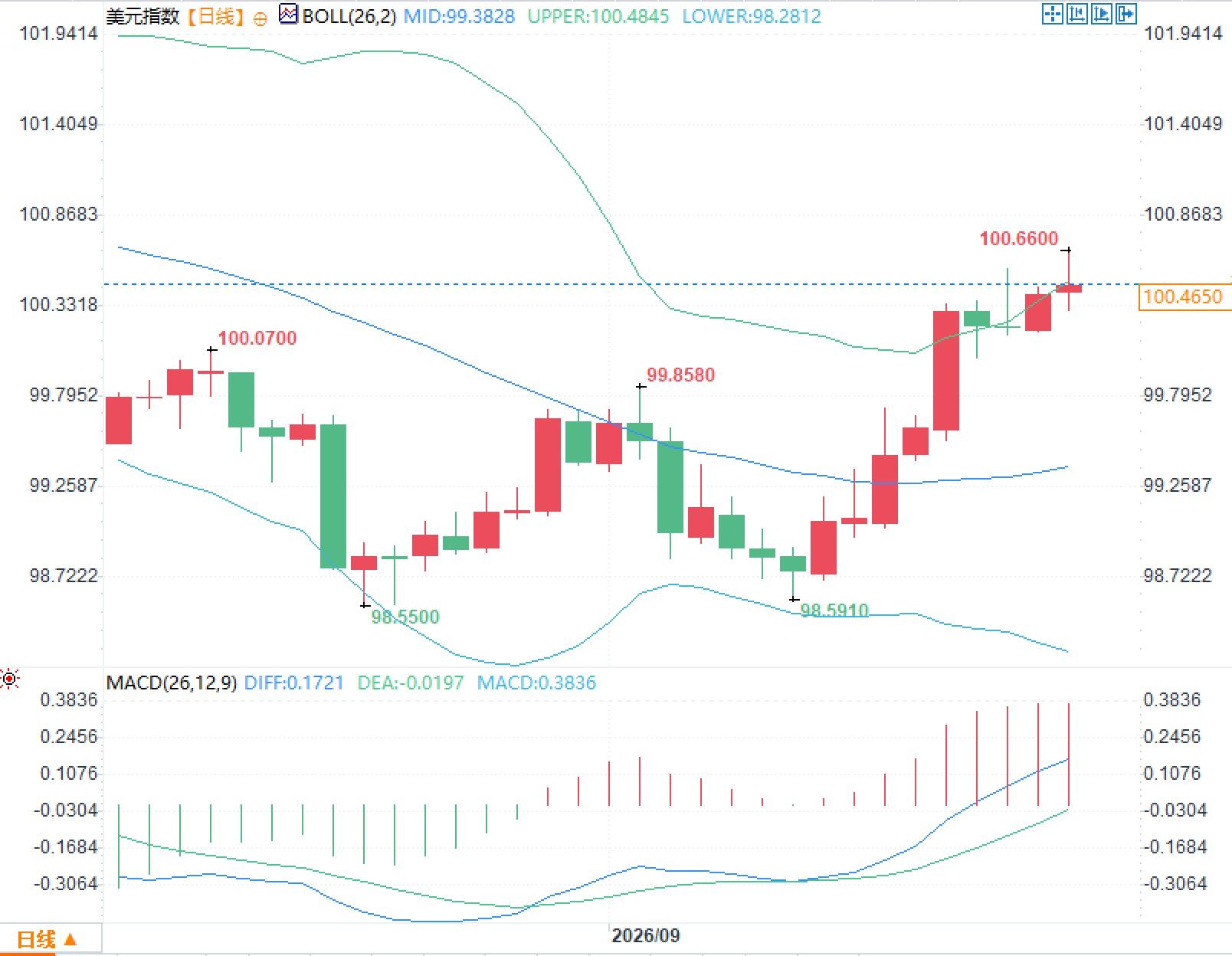
The interest rate market's pricing for the Fed's October 27-28 meeting is roughly evenly split between a rate hike and holding rates steady, with some contracts showing slightly over 50%. The yield curve also factores in several subsequent rate hikes, with a pace close to one step every other meeting. The official median is closer to one more rate hike this year and holding steady next year. Collins also discussed the benchmark of keeping interest rates unchanged next year. The gap stems from two sets of probabilities. The committee presented a conditional path: if price progress is insufficient, it will maintain or increase restrictions. The market is pricing in an unconditional path after discounting the recovery in employment, the energy shock, and post-meeting remarks all at once. The August PCE will be released after the October meeting, and more price and employment readings will be available before the December meeting. Pricing will fluctuate with this information, rather than being nailed down by a single speech. While somewhat more restrictive, it doesn't provide a precise scale for the neutral interest rate. It only indicates that 3.75% to 4.00% is seen by some members as a further tightening of the previous moderate restrictions, aimed at shortening the time it takes for inflation to return to the target, rather than declaring a full tightening cycle has been set.Current structure of the US Dollar Index
The daily Bollinger Bands show the middle band at approximately 99.38, the upper band at approximately 100.48, and the lower band at approximately 98.28. The current index price is around 100.5, near the upper band; a low of around 98.59 was seen in early September. The MACD shows a DIFF of approximately 0.17, a DEA of approximately -0.02, and a positive histogram. The euro is trading at around 1.146 against the dollar, and the dollar at around 157 against the yen. The dollar index has the highest weighting for the euro and the yen, and it tends to rise in tandem with upward revisions to interest rate expectations; conversely, the same structure will reflect this when price readings fall or employment weakens again.
- Risk Warning and Disclaimer
- The market involves risk, and trading may not be suitable for all investors. This article is for reference only and does not constitute personal investment advice, nor does it take into account certain users’ specific investment objectives, financial situation, or other needs. Any investment decisions made based on this information are at your own risk.