Lacking clear hawkish guidance, the USD/JPY pair rose to around 157.60, with markets focusing on the risk of Japanese intervention and the divergence in Federal Reserve policy.
2026-09-23 13:54:12
The US dollar continued to strengthen against the Japanese yen in early Asian trading on Wednesday, rising to around 157.60 and extending its recent upward trend. The yen's weakness was mainly due to the Bank of Japan's failure to signal further tightening after last week's rate hike, while US monetary policy remained relatively hawkish. Changes in the interest rate expectation gap between the two countries continue to be the core factor driving the USD/JPY exchange rate, while the market is also closely watching whether Japanese authorities will take action against a rapid depreciation of the yen. 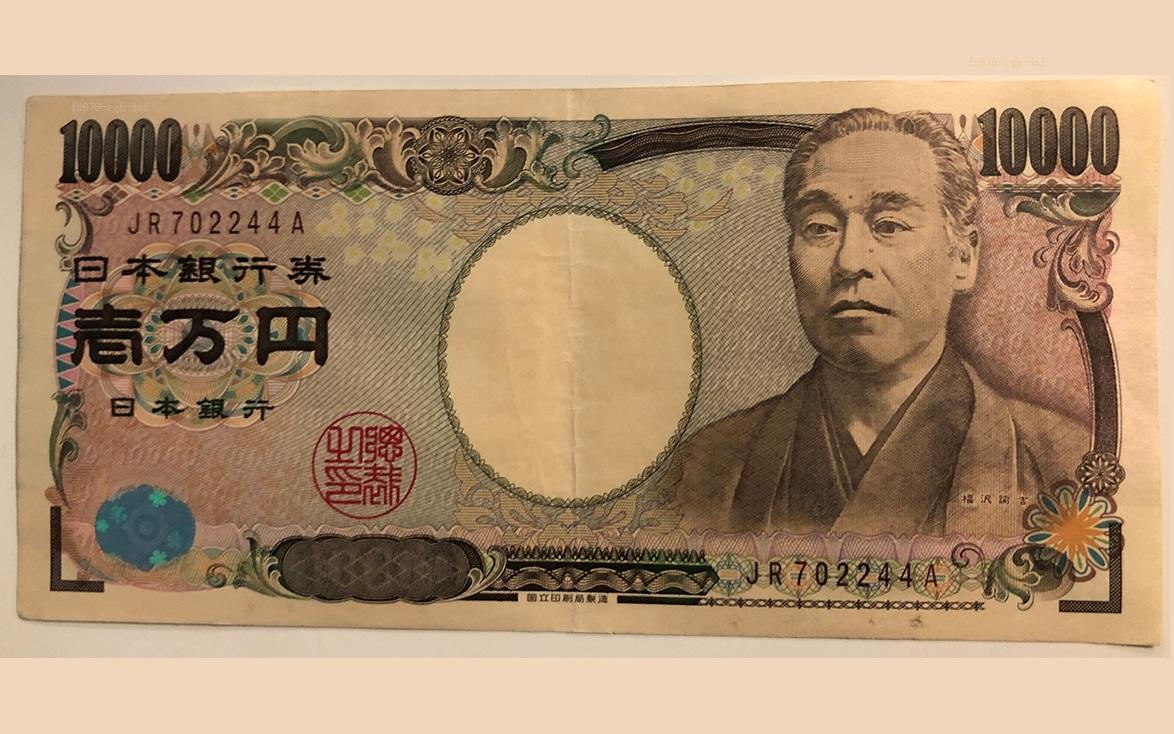 The Bank of Japan (BOJ) raised its policy rate by 25 basis points to 1.25% last week, the highest level since 1995. However, the policy decision was passed by a 7-2 vote, with two members opposing the rate hike. The market believes this divergence indicates differing opinions within the BOJ regarding further tightening, and also reduces investors' certainty about consecutive rate hikes. Consequently, the yen did not receive sustained support from the rate hike itself, and the USD/JPY exchange rate instead moved back towards around 157.60. BOJ Governor Kazuo Ueda stated at a press conference that the central bank would not pre-exclude any options for consecutive rate hikes or larger adjustments before the policy meeting. This statement preserves the policy space for future rate hikes, but the market is more focused on the specific pace of action and whether the BOJ will provide a clearer tightening path in subsequent meetings. ANZ analysts believe that the 7-2 vote may continue to put pressure on the yen in the short term, but the BOJ's increasing willingness to accelerate policy normalization is a more noteworthy medium-term development. The rapid weakening of the yen has also brought the risk of intervention by Japanese authorities back into the market's view. Previously, Japanese officials were reported to have conducted so-called "currency checks," inquiring with financial institutions about exchange rate quotes to assess the foreign exchange market situation. Such operations are often seen by the market as a signal of increased official monitoring. As the USD/JPY pair approaches 160 again, market attention is rising regarding whether Japanese authorities will take further measures to stabilize the exchange rate. For traders, the expectation of intervention may limit the USD/JPY's continued rapid unilateral rise in the short term, but in the absence of actual policy action, it is more of a risk premium than a directional factor of certainty. Meanwhile, US monetary policy remains biased towards the dollar. Boston Fed President Susan Collins recently supported the Fed's previous interest rate hike decision and stated that the likelihood of inflation continuing to significantly exceed the 2% target has increased. Her remarks reinforced market expectations that US interest rates will remain high. The Fed has already raised its policy rate to 3.75%-4.00% and signaled that there is still room for further rate hikes this year. US interest rates are significantly higher than Japan's, continuing to provide interest rate differential support for the dollar. Therefore, USD/JPY is currently being pulled by two forces. On the one hand, the Bank of Japan's gradual exit from its easing policy provides potential support for the yen in the medium term; on the other hand, the Bank of Japan's policy communication remains unclear, while the Federal Reserve maintains a hawkish stance, making it difficult for the USD/JPY interest rate differential to narrow rapidly in the short term. As long as US economic data remains resilient and US Treasury yields remain high, the USD/JPY exchange rate may still attract capital inflows. The upcoming US PMI data will be an important short-term catalyst. If US economic activity continues to expand strongly, the market may further increase its expectations that the Federal Reserve will maintain a restrictive interest rate environment, thereby supporting the dollar; if the PMI cools significantly, the dollar may face some downward pressure. At the same time, investors also need to pay attention to speeches by Bank of Japan officials and changes in the wording of the Japanese government regarding exchange rate fluctuations. From a market sentiment perspective, USD/JPY has returned to its previous high area, so traders need to pay attention not only to the interest rate differential but also to the policy risks following a rapid rise in the exchange rate. If the exchange rate continues to approach 160, the policy communication of the Japanese authorities may significantly affect short-term fluctuations. Conversely, if US economic data weakens and the Bank of Japan further signals interest rate hikes, a narrowing of the USD/JPY interest rate differential may drive a phased recovery in the yen. From a daily chart perspective, USD/JPY is currently still in a wide trading range, trading below the 100-day moving average at 159.55, but above the 20-day Bollinger Band middle line at 156.55. This structure indicates that the price has found some short-term support, but is still under pressure from medium-term trend resistance. The 14-day RSI is around 53.01, slightly bullish but not yet in overbought territory, meaning that the current upward momentum has not reached extreme levels, and there is still room for further testing of the upper resistance. The first resistance level to watch is the 100-day moving average at 159.55, which is also the most important trend resistance. A successful break above this level would target the upper Bollinger Band around 160.85; if the price enters the 160 area, expectations of intervention by Japanese authorities could further impact market volatility. On the downside, the first support level to watch is the middle Bollinger Band at 156.55. If the price falls below this level again, the short-term bullish structure will weaken, and the next support level is the lower Bollinger Band around 152.25. From a 4-hour chart perspective, USD/JPY has maintained an upward trend recently, with the price consistently trading above key short-term moving averages, indicating that buying pressure remains somewhat active. However, as the exchange rate approaches the 159.55-160.00 area, both technical resistance and policy risks are increasing. If the price breaks through and holds above 159.55, it may further test 160.85 in the short term; if it encounters resistance in this area and falls below 156.55, it may re-enter range-bound trading and seek stronger support around 152.25. The current technical outlook is generally bullish, but the policy sensitivity around 160 warrants close attention.
 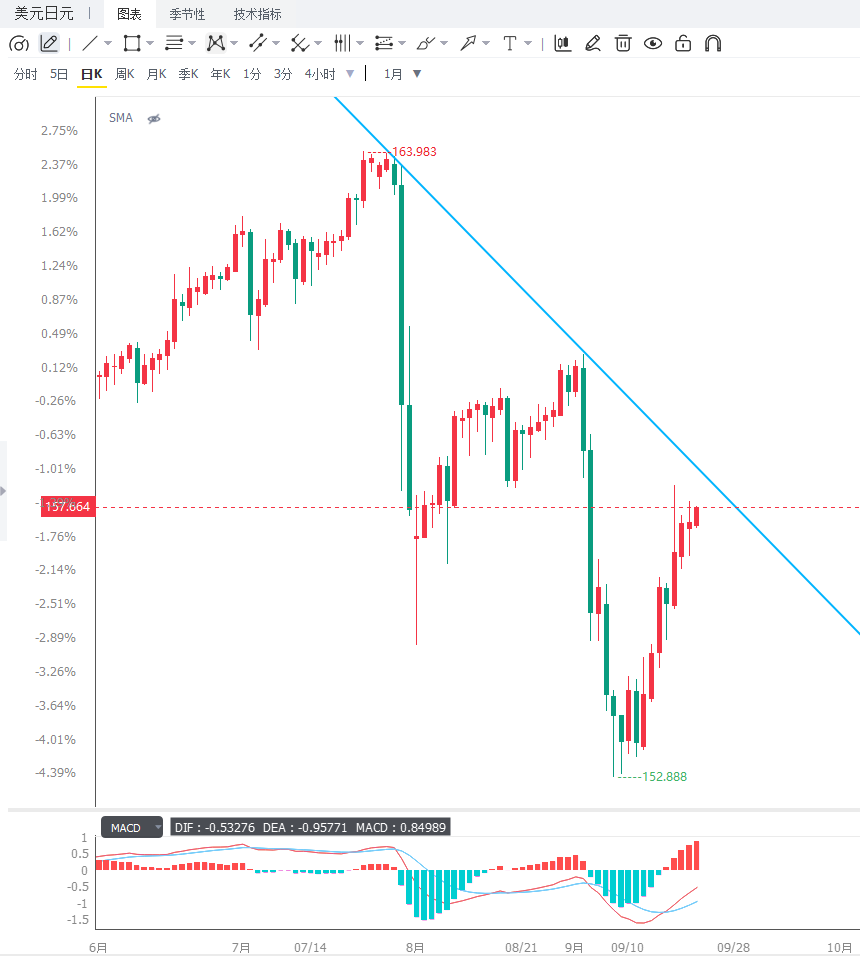 Editor's Summary: The USD/JPY pair is currently in a tug-of-war between the Federal Reserve's hawkish policy and the Bank of Japan's gradual tightening. The Bank of Japan has raised interest rates to 1.25%, but the 7-2 vote and relatively cautious policy guidance have limited the yen's short-term rebound. Meanwhile, the Federal Reserve continues to emphasize inflation risks, maintaining a strong interest rate advantage for the US dollar. In the short term, 156.55 is a key support level for USD/JPY to maintain its relatively strong structure, while 159.55-160.85 constitutes a key resistance zone. US PMI, US yields, and subsequent policy signals from the Bank of Japan will determine the direction of the exchange rate's next breakout. As the exchange rate approaches 160, the potential risk of official intervention by the Japanese government will also become an important variable affecting market volatility.
The Bank of Japan (BOJ) raised its policy rate by 25 basis points to 1.25% last week, the highest level since 1995. However, the policy decision was passed by a 7-2 vote, with two members opposing the rate hike. The market believes this divergence indicates differing opinions within the BOJ regarding further tightening, and also reduces investors' certainty about consecutive rate hikes. Consequently, the yen did not receive sustained support from the rate hike itself, and the USD/JPY exchange rate instead moved back towards around 157.60. BOJ Governor Kazuo Ueda stated at a press conference that the central bank would not pre-exclude any options for consecutive rate hikes or larger adjustments before the policy meeting. This statement preserves the policy space for future rate hikes, but the market is more focused on the specific pace of action and whether the BOJ will provide a clearer tightening path in subsequent meetings. ANZ analysts believe that the 7-2 vote may continue to put pressure on the yen in the short term, but the BOJ's increasing willingness to accelerate policy normalization is a more noteworthy medium-term development. The rapid weakening of the yen has also brought the risk of intervention by Japanese authorities back into the market's view. Previously, Japanese officials were reported to have conducted so-called "currency checks," inquiring with financial institutions about exchange rate quotes to assess the foreign exchange market situation. Such operations are often seen by the market as a signal of increased official monitoring. As the USD/JPY pair approaches 160 again, market attention is rising regarding whether Japanese authorities will take further measures to stabilize the exchange rate. For traders, the expectation of intervention may limit the USD/JPY's continued rapid unilateral rise in the short term, but in the absence of actual policy action, it is more of a risk premium than a directional factor of certainty. Meanwhile, US monetary policy remains biased towards the dollar. Boston Fed President Susan Collins recently supported the Fed's previous interest rate hike decision and stated that the likelihood of inflation continuing to significantly exceed the 2% target has increased. Her remarks reinforced market expectations that US interest rates will remain high. The Fed has already raised its policy rate to 3.75%-4.00% and signaled that there is still room for further rate hikes this year. US interest rates are significantly higher than Japan's, continuing to provide interest rate differential support for the dollar. Therefore, USD/JPY is currently being pulled by two forces. On the one hand, the Bank of Japan's gradual exit from its easing policy provides potential support for the yen in the medium term; on the other hand, the Bank of Japan's policy communication remains unclear, while the Federal Reserve maintains a hawkish stance, making it difficult for the USD/JPY interest rate differential to narrow rapidly in the short term. As long as US economic data remains resilient and US Treasury yields remain high, the USD/JPY exchange rate may still attract capital inflows. The upcoming US PMI data will be an important short-term catalyst. If US economic activity continues to expand strongly, the market may further increase its expectations that the Federal Reserve will maintain a restrictive interest rate environment, thereby supporting the dollar; if the PMI cools significantly, the dollar may face some downward pressure. At the same time, investors also need to pay attention to speeches by Bank of Japan officials and changes in the wording of the Japanese government regarding exchange rate fluctuations. From a market sentiment perspective, USD/JPY has returned to its previous high area, so traders need to pay attention not only to the interest rate differential but also to the policy risks following a rapid rise in the exchange rate. If the exchange rate continues to approach 160, the policy communication of the Japanese authorities may significantly affect short-term fluctuations. Conversely, if US economic data weakens and the Bank of Japan further signals interest rate hikes, a narrowing of the USD/JPY interest rate differential may drive a phased recovery in the yen. From a daily chart perspective, USD/JPY is currently still in a wide trading range, trading below the 100-day moving average at 159.55, but above the 20-day Bollinger Band middle line at 156.55. This structure indicates that the price has found some short-term support, but is still under pressure from medium-term trend resistance. The 14-day RSI is around 53.01, slightly bullish but not yet in overbought territory, meaning that the current upward momentum has not reached extreme levels, and there is still room for further testing of the upper resistance. The first resistance level to watch is the 100-day moving average at 159.55, which is also the most important trend resistance. A successful break above this level would target the upper Bollinger Band around 160.85; if the price enters the 160 area, expectations of intervention by Japanese authorities could further impact market volatility. On the downside, the first support level to watch is the middle Bollinger Band at 156.55. If the price falls below this level again, the short-term bullish structure will weaken, and the next support level is the lower Bollinger Band around 152.25. From a 4-hour chart perspective, USD/JPY has maintained an upward trend recently, with the price consistently trading above key short-term moving averages, indicating that buying pressure remains somewhat active. However, as the exchange rate approaches the 159.55-160.00 area, both technical resistance and policy risks are increasing. If the price breaks through and holds above 159.55, it may further test 160.85 in the short term; if it encounters resistance in this area and falls below 156.55, it may re-enter range-bound trading and seek stronger support around 152.25. The current technical outlook is generally bullish, but the policy sensitivity around 160 warrants close attention. Editor's Summary: The USD/JPY pair is currently in a tug-of-war between the Federal Reserve's hawkish policy and the Bank of Japan's gradual tightening. The Bank of Japan has raised interest rates to 1.25%, but the 7-2 vote and relatively cautious policy guidance have limited the yen's short-term rebound. Meanwhile, the Federal Reserve continues to emphasize inflation risks, maintaining a strong interest rate advantage for the US dollar. In the short term, 156.55 is a key support level for USD/JPY to maintain its relatively strong structure, while 159.55-160.85 constitutes a key resistance zone. US PMI, US yields, and subsequent policy signals from the Bank of Japan will determine the direction of the exchange rate's next breakout. As the exchange rate approaches 160, the potential risk of official intervention by the Japanese government will also become an important variable affecting market volatility.
- Risk Warning and Disclaimer
- The market involves risk, and trading may not be suitable for all investors. This article is for reference only and does not constitute personal investment advice, nor does it take into account certain users’ specific investment objectives, financial situation, or other needs. Any investment decisions made based on this information are at your own risk.