The euro rebounded against the pound for the second consecutive day, with PMI data and the interest rate differential between the UK and Europe becoming key indicators, while fiscal risks limited the euro's upside potential.
2026-09-23 15:18:28
The euro continued its slight upward trend against the pound on Wednesday, rising to around 0.8580, marking its second consecutive day of gains, though it remains in the middle of its recent trading range. With relatively light trading volume, investors have not yet formed clear directional bets, making UK and European economic data a key trigger for short-term repricing.  On Wednesday during the European trading session, Germany, the Eurozone, and the UK will release their preliminary September PMI figures. The latest market expectations indicate that the Eurozone manufacturing PMI is expected to remain around 52.7, while the services PMI is expected to rise slightly from 51.6 in August to 51.7, remaining within a moderate expansionary range. In Germany, manufacturing activity is expected to remain strong, while the services sector may improve compared to August. The UK manufacturing PMI is expected to fall from 51.7 to around 51.4, while the services PMI may decline from 52.5 to 52.0. Therefore, the PMI data may further influence market judgments on the future policy paths of the Bank of England and the European Central Bank. If Eurozone economic activity improves more than the UK, the economic growth expectation gap between the UK and the Eurozone may tilt towards the euro; conversely, if the UK services sector remains resilient while Eurozone data weakens significantly, the pound may receive some support. Another recent support for the euro comes from the decline in energy prices. International oil prices, which previously rose rapidly due to Middle East supply risks, have recently fallen significantly as the situation has shown signs of easing. For Eurozone economies heavily reliant on energy imports, lower energy costs help reduce imported inflationary pressures and improve the cost environment for businesses and residents. The recent decline in oil prices has also alleviated concerns about further dragging down the European economy due to energy shocks. Regarding monetary policy, the European Central Bank (ECB) has maintained a relatively tight stance recently. High inflation continues to limit the ECB's ability to quickly shift to easing, while market focus on future policy paths has provided some interest rate support for the euro. In contrast, the Bank of England kept interest rates unchanged last week, but opinions on rate hikes still exist within the committee, and Governor Bailey has not completely ruled out the possibility of further tightening. Therefore, the pound has not completely lost interest rate support. The UK's fiscal outlook is a crucial variable for the GBP/USD and EUR/GBP markets. Recent UK public sector borrowing data exceeded market expectations, further scrutinizing fiscal space. With the UK government budget approaching, the market needs to assess the impact of potential tax and spending policies on economic growth and the pound's risk premium. Given the high level of fiscal uncertainty, the pound's sensitivity to economic data and changes in UK government bond yields may further increase. The euro also faces fiscal and political risks. Recent German state election results have raised market concerns about pressure on Chancellor Friedrich Merz's ruling coalition. The ruling party performed significantly worse than expected in both state elections, with Merz himself calling the results a "disaster" for his party. These results have increased market attention to the domestic policy environment in Germany, but are not yet sufficient to directly alter the path of Eurozone monetary policy. France's fiscal situation is another risk factor to watch in the Eurozone. The French government projects its public debt-to-GDP ratio to rise to 119.3% in 2026 and further to 121.7% in 2027, a new high since 1978. Meanwhile, rating agency Morningstar DBRS has revised its outlook on France's sovereign credit rating from stable to negative, citing increased risks of fiscal imbalances. While the change in France's rating environment does not necessarily mean a sustained shock to the euro, it has increased investor focus on fiscal divergence among Eurozone member states. If French debt costs continue to rise, or if fiscal consolidation plans fall short of expectations, sovereign bond spreads within the Eurozone could widen, putting pressure on the euro. Therefore, the EUR/GBP exchange rate is currently influenced by offsetting fundamental forces. On the one hand, the euro is supported by lower oil prices, expectations of improved economic activity in the Eurozone, and a relatively tight policy environment from the European Central Bank; on the other hand, political uncertainty in Germany and fiscal pressure in France limit the euro's potential for further expansion. The pound sterling is suppressed by fiscal risks in the UK, but the Bank of England still retains room for policy tightening, which suggests that EUR/GBP may continue to fluctuate within a range in the short term. Going forward, UK and EU PMI data will be a crucial catalyst for short-term direction. If Eurozone economic activity is significantly stronger than that of the UK, the market may reassess the growth differences between the two countries; if UK data shows greater resilience, the pound may regain support. In addition, the yield spread between UK and EU government bonds and energy price movements will continue to influence EUR/GBP fund flows. From a daily chart perspective, EUR/GBP is currently around 0.8580. After rebounding from around 0.8568 on Tuesday, it rose for the second consecutive day, but remains within its recent trading range and has not yet formed a clear trend breakout. The current price still needs to break through the upper edge of the previous range to confirm a stronger upward structure, while the area around 0.8568 is a relatively important short-term support level during the recent rebound. If the bulls can push the exchange rate above the short-term resistance around 0.8580, the next resistance levels to watch are the psychological level of 0.8600 and the previous high area. If the price falls below 0.8568 again, it indicates weakening upward momentum, and the market may return to its recent trading range, further testing lower support levels. On the 4-hour chart, EUR/GBP has recently shown a low-level consolidation structure, with some recovery in short-term buying, but the overall trend still lacks a clear breakout signal. If PMI data shows Eurozone economic activity is stronger than the UK's, the exchange rate may further test the 0.8600 area; if the UK PMI is relatively stable while Eurozone data falls short of expectations, the exchange rate may fall back to around 0.8568. Currently, the technical analysis is more focused on range breakouts than on confirming the trend direction in advance.
 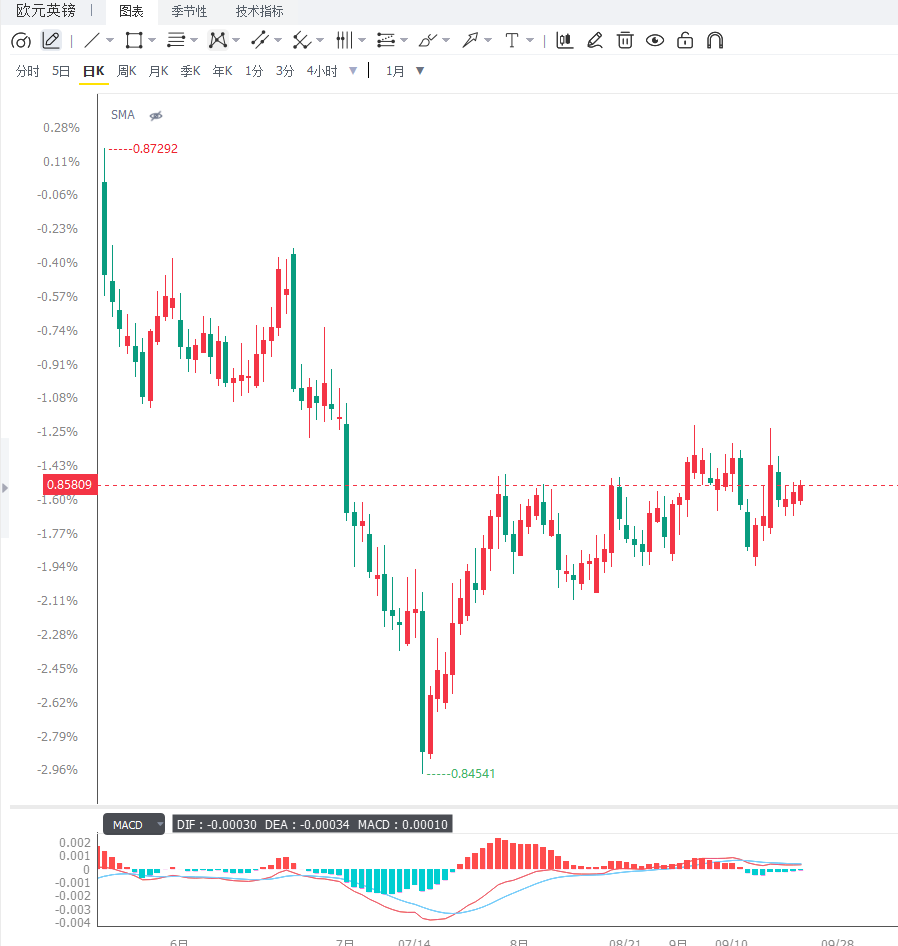 The EUR/GBP pair rebounded for the second consecutive day, but remains within its recent range. The market awaits UK and European PMI data to provide new fundamental clues for the next phase of the trend. The euro was supported by lower oil prices and the ECB's policy environment, while the pound faces uncertainty regarding the UK's fiscal outlook, although the Bank of England still reserves the possibility of further policy adjustments. Meanwhile, the political situation in Germany and rising debt pressures in France constitute risk factors to watch for the euro in the medium term . In the short term, PMI data, the UK-EU interest rate differential, and energy prices will jointly determine the exchange rate's direction; technically, the key focus is on whether the 0.8580 level can be broken further, and whether the support around 0.8568 remains effective.
On Wednesday during the European trading session, Germany, the Eurozone, and the UK will release their preliminary September PMI figures. The latest market expectations indicate that the Eurozone manufacturing PMI is expected to remain around 52.7, while the services PMI is expected to rise slightly from 51.6 in August to 51.7, remaining within a moderate expansionary range. In Germany, manufacturing activity is expected to remain strong, while the services sector may improve compared to August. The UK manufacturing PMI is expected to fall from 51.7 to around 51.4, while the services PMI may decline from 52.5 to 52.0. Therefore, the PMI data may further influence market judgments on the future policy paths of the Bank of England and the European Central Bank. If Eurozone economic activity improves more than the UK, the economic growth expectation gap between the UK and the Eurozone may tilt towards the euro; conversely, if the UK services sector remains resilient while Eurozone data weakens significantly, the pound may receive some support. Another recent support for the euro comes from the decline in energy prices. International oil prices, which previously rose rapidly due to Middle East supply risks, have recently fallen significantly as the situation has shown signs of easing. For Eurozone economies heavily reliant on energy imports, lower energy costs help reduce imported inflationary pressures and improve the cost environment for businesses and residents. The recent decline in oil prices has also alleviated concerns about further dragging down the European economy due to energy shocks. Regarding monetary policy, the European Central Bank (ECB) has maintained a relatively tight stance recently. High inflation continues to limit the ECB's ability to quickly shift to easing, while market focus on future policy paths has provided some interest rate support for the euro. In contrast, the Bank of England kept interest rates unchanged last week, but opinions on rate hikes still exist within the committee, and Governor Bailey has not completely ruled out the possibility of further tightening. Therefore, the pound has not completely lost interest rate support. The UK's fiscal outlook is a crucial variable for the GBP/USD and EUR/GBP markets. Recent UK public sector borrowing data exceeded market expectations, further scrutinizing fiscal space. With the UK government budget approaching, the market needs to assess the impact of potential tax and spending policies on economic growth and the pound's risk premium. Given the high level of fiscal uncertainty, the pound's sensitivity to economic data and changes in UK government bond yields may further increase. The euro also faces fiscal and political risks. Recent German state election results have raised market concerns about pressure on Chancellor Friedrich Merz's ruling coalition. The ruling party performed significantly worse than expected in both state elections, with Merz himself calling the results a "disaster" for his party. These results have increased market attention to the domestic policy environment in Germany, but are not yet sufficient to directly alter the path of Eurozone monetary policy. France's fiscal situation is another risk factor to watch in the Eurozone. The French government projects its public debt-to-GDP ratio to rise to 119.3% in 2026 and further to 121.7% in 2027, a new high since 1978. Meanwhile, rating agency Morningstar DBRS has revised its outlook on France's sovereign credit rating from stable to negative, citing increased risks of fiscal imbalances. While the change in France's rating environment does not necessarily mean a sustained shock to the euro, it has increased investor focus on fiscal divergence among Eurozone member states. If French debt costs continue to rise, or if fiscal consolidation plans fall short of expectations, sovereign bond spreads within the Eurozone could widen, putting pressure on the euro. Therefore, the EUR/GBP exchange rate is currently influenced by offsetting fundamental forces. On the one hand, the euro is supported by lower oil prices, expectations of improved economic activity in the Eurozone, and a relatively tight policy environment from the European Central Bank; on the other hand, political uncertainty in Germany and fiscal pressure in France limit the euro's potential for further expansion. The pound sterling is suppressed by fiscal risks in the UK, but the Bank of England still retains room for policy tightening, which suggests that EUR/GBP may continue to fluctuate within a range in the short term. Going forward, UK and EU PMI data will be a crucial catalyst for short-term direction. If Eurozone economic activity is significantly stronger than that of the UK, the market may reassess the growth differences between the two countries; if UK data shows greater resilience, the pound may regain support. In addition, the yield spread between UK and EU government bonds and energy price movements will continue to influence EUR/GBP fund flows. From a daily chart perspective, EUR/GBP is currently around 0.8580. After rebounding from around 0.8568 on Tuesday, it rose for the second consecutive day, but remains within its recent trading range and has not yet formed a clear trend breakout. The current price still needs to break through the upper edge of the previous range to confirm a stronger upward structure, while the area around 0.8568 is a relatively important short-term support level during the recent rebound. If the bulls can push the exchange rate above the short-term resistance around 0.8580, the next resistance levels to watch are the psychological level of 0.8600 and the previous high area. If the price falls below 0.8568 again, it indicates weakening upward momentum, and the market may return to its recent trading range, further testing lower support levels. On the 4-hour chart, EUR/GBP has recently shown a low-level consolidation structure, with some recovery in short-term buying, but the overall trend still lacks a clear breakout signal. If PMI data shows Eurozone economic activity is stronger than the UK's, the exchange rate may further test the 0.8600 area; if the UK PMI is relatively stable while Eurozone data falls short of expectations, the exchange rate may fall back to around 0.8568. Currently, the technical analysis is more focused on range breakouts than on confirming the trend direction in advance. The EUR/GBP pair rebounded for the second consecutive day, but remains within its recent range. The market awaits UK and European PMI data to provide new fundamental clues for the next phase of the trend. The euro was supported by lower oil prices and the ECB's policy environment, while the pound faces uncertainty regarding the UK's fiscal outlook, although the Bank of England still reserves the possibility of further policy adjustments. Meanwhile, the political situation in Germany and rising debt pressures in France constitute risk factors to watch for the euro in the medium term . In the short term, PMI data, the UK-EU interest rate differential, and energy prices will jointly determine the exchange rate's direction; technically, the key focus is on whether the 0.8580 level can be broken further, and whether the support around 0.8568 remains effective.
- Risk Warning and Disclaimer
- The market involves risk, and trading may not be suitable for all investors. This article is for reference only and does not constitute personal investment advice, nor does it take into account certain users’ specific investment objectives, financial situation, or other needs. Any investment decisions made based on this information are at your own risk.