US-Canada trade disruptions affect the Canadian dollar, while crowded speculative positions in the US dollar suggest a potential reversal risk.
2026-09-23 21:00:14
The ongoing trade friction between the US and Canada, coupled with a significant strengthening of the US dollar against the Canadian dollar (USD/CAD), raises the question: is the trade war truly so beneficial to the US dollar? Actually, the recent sharp depreciation of the Canadian dollar is not primarily related to the trade war itself, but rather to the recent strength of the US dollar. A recent international poll shows that a majority of people in both the US and Canada disapprove of Trump's trade war against Canada. The negative impacts of the trade conflict, such as rising prices and economic disruptions, continue to manifest, profoundly altering market expectations and the political landscape in both countries. This survey, conducted by the London-based independent polling firm Public First, polled 4,183 adults in the US and Canada from September 13th to 15th. Data shows that only a quarter of respondents in the US approve of the US's tariffs on Canada, with half believing that the tariffs drive up prices and are counterproductive. This includes a large number of Trump voters for 2024, indicating a continued rise in public resistance to the tariff policy. In contrast, within Canada, public opinion is highly unified and hardline, with 71% of Canadians supporting Prime Minister Carney's proposed retaliatory tariffs, and only 17% opposing them. More than half of the public are willing to bear the short-term economic cost of rising prices and resolutely resist US trade sanctions. Nearly half of the respondents advocate that the government should never compromise with US trade pressure. This rare cross-party unity in the country has provided emotional support for the bottom of the Canadian dollar. 
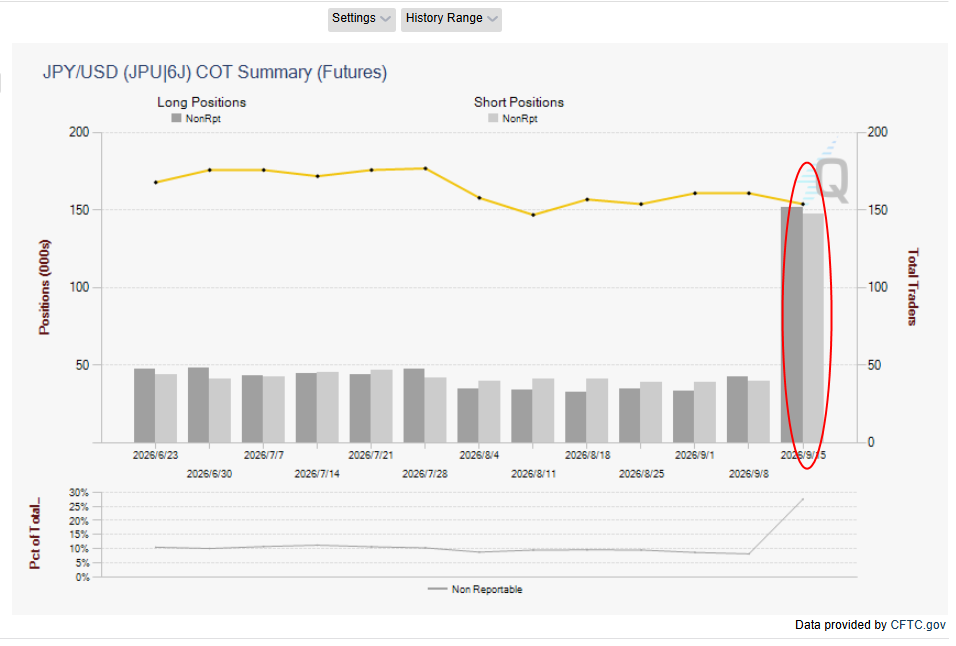 (CFTC USD/JPY Positions Report, Source: CME Group) This extreme funding structure can give rise to typical phased market trends: the US dollar, relying on crowded speculative positions, can quickly experience a one-sided surge; however, once long positions are completely concentrated and there are no new buyers in the market, even a slight shift in fundamental expectations can easily trigger a stampede of stop-loss orders, causing a rapid and deep correction in the US dollar and a collective rebound in non-US currencies.
 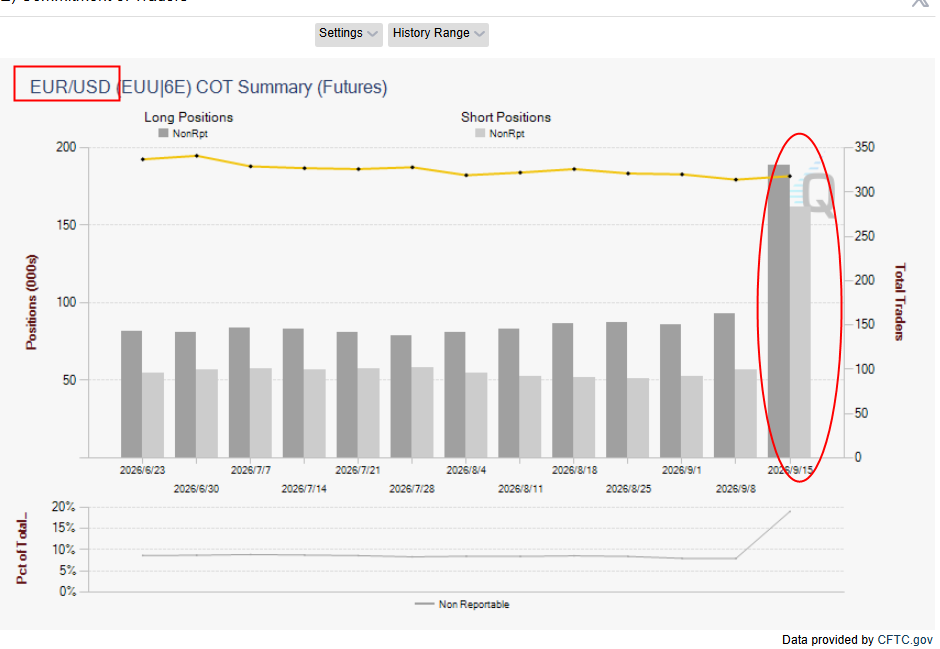 (CFTC Euro/Dollar Positions Report, Source: CME Group)
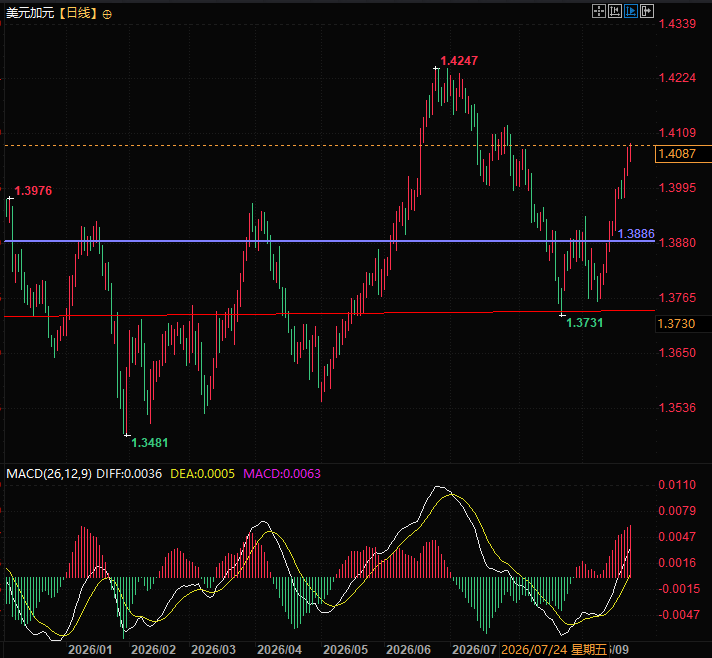 (USD/CAD daily chart, source: FX678) At 20:57 Beijing time, the USD/CAD pair is currently trading at 1.4085/86.
Core background of the trade war: escalating sanctions and domestic pressure on the United States.
This round of trade conflict between the US and Canada began in August when bilateral trade negotiations broke down, with the US imposing a 50% tariff on $20 billion worth of Canadian goods. In response, Canada retaliated with equivalent tariffs on September 8, escalating the trade confrontation. The US then further intensified its efforts, announcing a comprehensive import ban on Canadian motorcycles, whiskey, and other goods on September 29, further exacerbating bilateral tensions. The trade dispute has become deeply entangled in the public discourse surrounding the US midterm elections. In key states like Michigan, Maine, and Texas, which rely heavily on trade with Canada, several Republican politicians have publicly distanced themselves from Trump's trade policies and criticized the drawbacks of the tariffs. Democrats have also consistently criticized the tariffs for driving up domestic inflation and increasing the burden on the public. Even within Trump's core MAGA supporters, internal divisions have emerged: 38% support the tariff policy, but 40% believe it should be delayed until after the midterm elections to avoid impacting the election. Faced with public controversy, the White House has consistently maintained its "America First" stance, arguing that Canada has refused fair trade agreements and unilaterally taken advantage of the US market, emphasizing that the tariff policy aims to protect the interests of American workers and businesses, and that it will not easily adjust its trade and economic strategies. Former Canadian Conservative Prime Minister Stephen Harper also acknowledged that a tough response to the US would come at a significant economic cost, but Canadian society as a whole is prepared to withstand the short-term shock.Canadian Dollar Fundamentals: Dependent on US Trade but Unwilling to Compromise, Intensifying Battle Between Bulls and Bears
From an economic structure perspective, Canada is highly dependent on foreign trade. 84% of Canadians acknowledge the core role of international trade in their economy, and nearly half consider the United States Canada's most important trade partner. The smooth flow of US-Canada trade directly impacts the Canadian dollar's exchange rate. Meanwhile, 38% of respondents believe current US-Canada trade rules are unilaterally favorable to the US, while only 18% believe the rules favor Canada, indicating a widespread demand for trade checks and balances within the country. In the short term, continued trade uncertainty will suppress Canadian economic expectations, negatively impacting the Canadian dollar and temporarily pushing up the USD/CAD exchange rate. However, Canada's unified stance against sanctions means the government will not compromise in the short term, and the trade conflict will be a long-term, recurring struggle, limiting the potential for a sustained unilateral rise in USD/CAD and creating a volatile fundamental environment.Foreign exchange funding structure warning: Crowded dollar speculative positions conceal the risk of a rapid reversal.
Compared to the mild trade negotiations, the current foreign exchange market's capital structure harbors significant risks, directly determining the subsequent price movement of USD/CAD. Recent CFTC positioning data shows a continuous surge in speculative long positions in the US dollar, with speculative funds overwhelmingly betting on a stronger dollar. Simultaneously, in major core currency pairs such as EUR/USD and USD/JPY, retail investors are massively flocking to one-sided long/short bets, resulting in highly congested trading. The current strength of the US dollar is supported by multiple fundamental factors: the Federal Reserve's continued hawkish statements, leading to market pricing in a prolonged period of high interest rates; technological breakthroughs in the US tech sector attracting overseas capital inflows into US stocks; a marginal easing of market concerns about US debt repayment risks; and escalating energy risks in several overseas countries, dragging down the prospects of non-US economies. These factors, coupled with the widening interest rate differentials between the US and Europe, and the US and Japan, as well as the resilience of US employment and core inflation, all contribute to supporting the dollar. (CFTC USD/JPY Positions Report, Source: CME Group) This extreme funding structure can give rise to typical phased market trends: the US dollar, relying on crowded speculative positions, can quickly experience a one-sided surge; however, once long positions are completely concentrated and there are no new buyers in the market, even a slight shift in fundamental expectations can easily trigger a stampede of stop-loss orders, causing a rapid and deep correction in the US dollar and a collective rebound in non-US currencies. (CFTC Euro/Dollar Positions Report, Source: CME Group)The core trading logic for the subsequent USD/CAD market movement
Considering both fundamentals and funding factors, the USD/CAD pair currently exhibits a pattern of "short-term strength, medium-term pressure." In the short term, the ongoing US-Canada trade conflict, coupled with speculative buying of the US dollar, suggests potential upward momentum for USD/CAD. However, the crowded long positions in the US dollar pose the biggest risk, as sustained upward trends are highly unsustainable and a rapid reversal is possible at any time. Going forward, two key themes need to be closely monitored: first, the dynamics of US-Canada trade, with news of escalating or easing sanctions directly dominating short-term Canadian dollar fluctuations; and second, the CFTC speculative positions in the US dollar index and the crowding of retail funds in major currencies such as EUR/USD and USD/JPY. Until speculative positions in the US dollar are cleared, it is crucial to avoid chasing long positions and be wary of the risk of a sharp drop in the US dollar leading to a rapid decline in USD/CAD. (USD/CAD daily chart, source: FX678) At 20:57 Beijing time, the USD/CAD pair is currently trading at 1.4085/86.
- Risk Warning and Disclaimer
- The market involves risk, and trading may not be suitable for all investors. This article is for reference only and does not constitute personal investment advice, nor does it take into account certain users’ specific investment objectives, financial situation, or other needs. Any investment decisions made based on this information are at your own risk.