













September 28th Financial Breakfast: Hawkish Fed and inflation concerns weigh on gold prices; Trump refuses to reopen the Strait of Hormuz; Iran's lack of interest in new round of negotiations boosts oil prices.
2026-09-28 07:18:13
On Monday (September 28, Beijing time) in early Asian trading, spot gold was trading around $4,265 per ounce, as the ongoing US-Iran tensions, concerns about persistently high inflation, hawkish signals from Federal Reserve policymakers, and rising US Treasury yields diminished gold's appeal. US crude oil rose more than 1%, trading around $93.43 per barrel, after Trump rejected Iran's proposal to reopen the Strait of Hormuz last week, and the Iranian delegation in New York has no plans for a new round of negotiations with the US. 

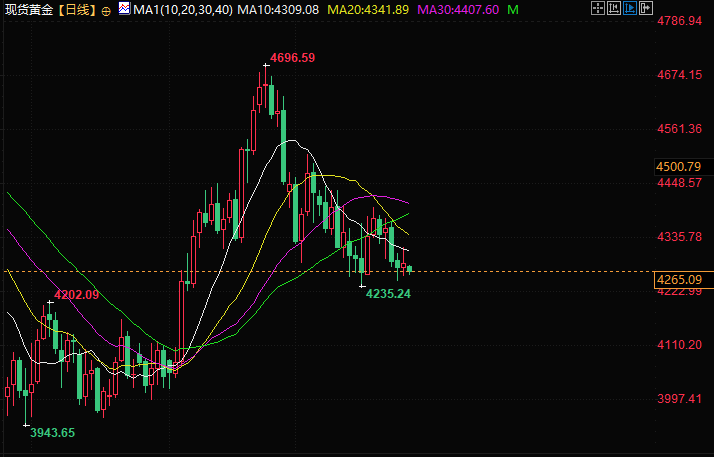 Bybit's chief market analyst, Han Tan, stated that the continued surge in Treasury yields has pushed gold to its fourth weekly decline in the past five weeks. The benchmark 10-year U.S. Treasury yield hit a 19-year high, increasing the opportunity cost of holding non-yielding gold. Tan added that the zero-yielding precious metal faces multiple headwinds, including persistent upside risks to inflation, soaring Treasury yields, and the Federal Reserve's hawkish stance. Since the start of the Iran-Iraq war, rising energy prices have fueled inflation concerns, forcing central banks to adopt tighter policy frameworks to curb price pressures. The CME Group's FedWatch tool shows traders expect a 66% probability of a Fed rate hike in October and a 93% probability in December. Gold has historically been seen as an inflation hedge and a safe-haven investment during periods of geopolitical uncertainty, but higher interest rates have diminished its appeal as investors turn to yield-generating assets. According to sources, negotiators in New York are exploring a phased end to the conflict, including Tehran reopening the Strait of Hormuz and Washington lifting its economic blockade against Iran. Spot silver rose 0.71% to $64.30 per ounce, platinum rose 1.7% to $1,780.28 per ounce, and palladium fell 0.3% to $1,270.30 per ounce. All three precious metals declined on the weekly chart.
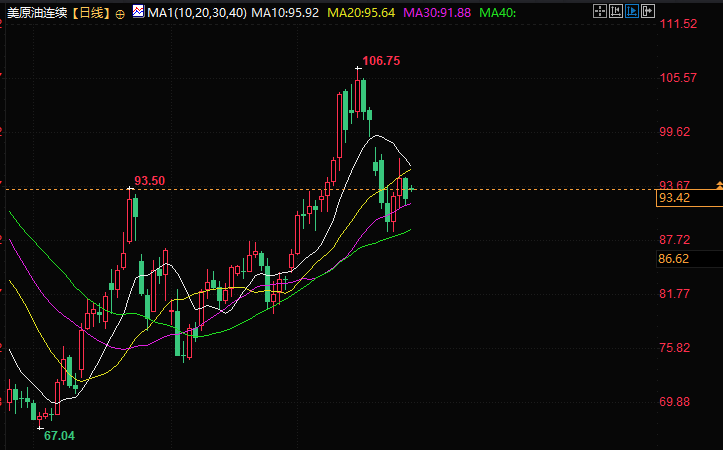 Sources close to the negotiations revealed that U.S. and Iranian negotiators are exploring a phased approach to ending the conflict, which would include Tehran reopening the Strait of Hormuz and Washington lifting its economic blockade against Iran. However, a senior Iranian official stated that even if the U.S. accepts Iran's proposal to reopen the Strait of Hormuz—which calls for measures including lifting the U.S. naval blockade of Iranian ports—Iran will not show any flexibility on its nuclear program. Analysts at energy consultancy Ritterbusch and Associates stated in a report that the market is facing renewed pressure as it continues to assess the possibility of a U.S. diesel export ban, and discussions about diplomatic progress to open the Strait of Hormuz further exacerbated today's sell-off. Talk of a possible diesel export ban from Washington is widening the gap between U.S. crude futures and the global benchmark Brent crude, indicating that the market expects U.S. refiners to reduce crude processing if U.S. diesel production remains domestically. The Brent premium over U.S. crude rose for the third consecutive trading day to its highest level since May, while U.S. gasoline futures fell about 4% on Friday. Given the attacks Saudi Arabia is facing from the pro-Iranian Houthi rebels in Yemen, military leaders from Saudi Arabia, Turkey, and Pakistan will discuss providing aid to Saudi Arabia. The Houthis have launched attacks on the Saudi-backed Yemeni government and repeatedly fired into Saudi territory, disrupting oil shipments from Saudi Arabia, the world's largest energy exporter, and becoming part of a broader conflict in the Middle East. Preliminary ship tracking data released by Kpler last Friday showed that 33.7 million barrels of crude oil were exported through the Strait of Hormuz in the week ending September 20, roughly the same as the previous week; before the outbreak of the war with Iran, about 20% of the world's oil supply was transported through this strait. Furthermore, according to Russian news agencies last Friday, Russian President Vladimir Putin stated that all proposals to resolve the four-and-a-half-year-long war between Russia and Ukraine remain on the negotiating table, but Moscow still needs to assess which solution best serves Russia's interests; any agreement aimed at ending the war could enable Russia to export more energy. According to US energy data, Russia, as a member of OPEC+, will become the world's third-largest crude oil producer by 2025, after the United States and Saudi Arabia.
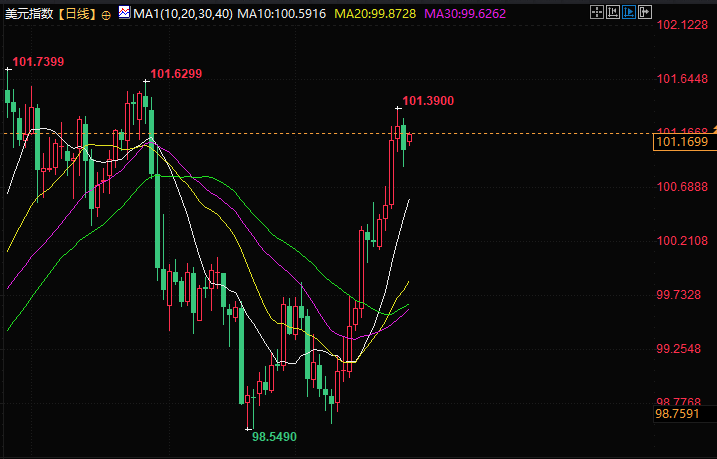 Eugene Epstein, head of trading and structured products at Moneycorp, said the dollar has seen a fairly strong rally in the past few days, perhaps a bit too much, and is now just taking a breather. He wouldn't say the dollar has actually weakened substantially today. Following the Fed's 25 basis point rate hike, comments from Fed officials expressed both concerns about inflation and support for further rate hikes, boosting market expectations for a more aggressive monetary policy path and pushing US Treasury yields sharply higher. The market expects about a 66% chance of a rate hike at the Fed's October meeting. Cleveland Fed President Hammarck said last Friday that she is increasingly concerned that inflation, which has exceeded the Fed's 2% inflation target for years, will lead to a loss of public confidence that price pressures are returning to the target level. On the data front, US manufacturing capital goods orders rose more than expected in August, and the previous month's data was revised significantly upward, indicating that business spending will see another strong quarter of growth as AI infrastructure construction progresses. The University of Michigan Consumer Sentiment Index rose slightly to 48.1 from 47.8, higher than expected. The dollar fell 0.97% against the yen to close at 157.31, marking its biggest one-day gain against the dollar since September 7, as the yen rebounded after Japan stated that it remained firmly committed to the position behind the joint intervention by Japan and the US in July. This followed a statement from Japanese Finance Minister Satsuki Katayama that President Trump had expressed concern about the yen's weakness during his summit with Prime Minister Sanae Takaichi. A statement from the Japanese Ministry of Finance on Friday indicated that Katayama and US Treasury Secretary Bessenter held a phone conversation, reiterating their concern about the yen's undervaluation and stating that Japan and the US would strengthen cooperation. Bessenter stated that they discussed the necessity of a stronger yen and the importance of maintaining close communication on the foreign exchange market. However, the yen still fell for the second consecutive week due to market perceptions that the Bank of Japan's previous interest rate hike to a 31-year high and its latest policy guidance were not hawkish enough. The euro rose 0.11% to $1.1391, but is facing its third consecutive week of declines, its longest losing streak this year. The pound rose 0.19% against the dollar to $1.3243, but remains near a three-month low.
Key Focus Today
stock market
U.S. stocks closed higher on Friday, with the S&P 500 rising 0.51% to 7743.41, the Nasdaq gaining 0.48% to 27068.72, and the Dow Jones Industrial Average climbing 0.93% to 51828.62, boosted by Microsoft and other AI-related technology stocks. However, high oil prices and the recent surge in U.S. Treasury yields continued to unsettle investors. The gains in the S&P 500 and Nasdaq marked the end of a volatile week, with market fluctuations primarily stemming from uncertainty about which sectors would benefit and which would suffer from AI, as well as concerns about the Iran war and soaring U.S. Treasury yields. Shares of software giant Microsoft surged 3.7%, bringing its year-to-date gain to 7%, after the company announced several new features for its Copilot app, including a coding tool and a continuously running AI agent. Chipmaker Qualcomm rose 4%, and Dell gained 5%. Akamai Technologies shares jumped 3.2% after it reached an $11.6 billion cloud services agreement with AI leader Anthropic, which includes warrants that could give Anthropic up to a 5% stake in Akamai. Thomas Martin, senior portfolio manager at Globalt Investments, said this is a positive sign from the perspective of people still investing and transactions still going on, but it's also a cyclical trade. Meta Platforms shares fell 3.3%, after surging about 13% last week on the positive reception of its Muse AI agent. Analysts said Muse AI could benefit technology infrastructure stocks but pose challenges to banks, online shopping platforms, and other consumer businesses. Reports that US and Iran negotiators continued to explore options for a phased end to the war with Iran, including Tehran reopening the Strait of Hormuz and Washington lifting its economic blockade, boosted market sentiment. Data also showed strong AI-related capital spending boosted demand for key manufacturing capital goods, with August's increase exceeding expectations. The benchmark US 10-year Treasury yield hit a 19-year high, rising 3.4 basis points to 5.196% at the close. The CME FedWatch tool showed traders viewed a 66% probability of a Fed rate hike of at least 25 basis points in October, up from about 50% earlier.Gold Market
Spot gold rose slightly by 0.26% on Friday to close at $4,285.90 per ounce, but fell for the week as concerns about persistently high inflation, hawkish signals from Federal Reserve policymakers, and rising U.S. Treasury yields diminished gold's appeal. Bybit's chief market analyst, Han Tan, stated that the continued surge in Treasury yields has pushed gold to its fourth weekly decline in the past five weeks. The benchmark 10-year U.S. Treasury yield hit a 19-year high, increasing the opportunity cost of holding non-yielding gold. Tan added that the zero-yielding precious metal faces multiple headwinds, including persistent upside risks to inflation, soaring Treasury yields, and the Federal Reserve's hawkish stance. Since the start of the Iran-Iraq war, rising energy prices have fueled inflation concerns, forcing central banks to adopt tighter policy frameworks to curb price pressures. The CME Group's FedWatch tool shows traders expect a 66% probability of a Fed rate hike in October and a 93% probability in December. Gold has historically been seen as an inflation hedge and a safe-haven investment during periods of geopolitical uncertainty, but higher interest rates have diminished its appeal as investors turn to yield-generating assets. According to sources, negotiators in New York are exploring a phased end to the conflict, including Tehran reopening the Strait of Hormuz and Washington lifting its economic blockade against Iran. Spot silver rose 0.71% to $64.30 per ounce, platinum rose 1.7% to $1,780.28 per ounce, and palladium fell 0.3% to $1,270.30 per ounce. All three precious metals declined on the weekly chart.oil market
Oil prices fell on Friday, with WTI crude down 2.45% to settle at $92.44 a barrel and Brent crude down more than 9% to settle at $97.40 a barrel, influenced by growing hopes for a ceasefire agreement between the U.S. and Iran and rumors that the U.S. might ban diesel exports. Sources close to the negotiations revealed that U.S. and Iranian negotiators are exploring a phased approach to ending the conflict, which would include Tehran reopening the Strait of Hormuz and Washington lifting its economic blockade against Iran. However, a senior Iranian official stated that even if the U.S. accepts Iran's proposal to reopen the Strait of Hormuz—which calls for measures including lifting the U.S. naval blockade of Iranian ports—Iran will not show any flexibility on its nuclear program. Analysts at energy consultancy Ritterbusch and Associates stated in a report that the market is facing renewed pressure as it continues to assess the possibility of a U.S. diesel export ban, and discussions about diplomatic progress to open the Strait of Hormuz further exacerbated today's sell-off. Talk of a possible diesel export ban from Washington is widening the gap between U.S. crude futures and the global benchmark Brent crude, indicating that the market expects U.S. refiners to reduce crude processing if U.S. diesel production remains domestically. The Brent premium over U.S. crude rose for the third consecutive trading day to its highest level since May, while U.S. gasoline futures fell about 4% on Friday. Given the attacks Saudi Arabia is facing from the pro-Iranian Houthi rebels in Yemen, military leaders from Saudi Arabia, Turkey, and Pakistan will discuss providing aid to Saudi Arabia. The Houthis have launched attacks on the Saudi-backed Yemeni government and repeatedly fired into Saudi territory, disrupting oil shipments from Saudi Arabia, the world's largest energy exporter, and becoming part of a broader conflict in the Middle East. Preliminary ship tracking data released by Kpler last Friday showed that 33.7 million barrels of crude oil were exported through the Strait of Hormuz in the week ending September 20, roughly the same as the previous week; before the outbreak of the war with Iran, about 20% of the world's oil supply was transported through this strait. Furthermore, according to Russian news agencies last Friday, Russian President Vladimir Putin stated that all proposals to resolve the four-and-a-half-year-long war between Russia and Ukraine remain on the negotiating table, but Moscow still needs to assess which solution best serves Russia's interests; any agreement aimed at ending the war could enable Russia to export more energy. According to US energy data, Russia, as a member of OPEC+, will become the world's third-largest crude oil producer by 2025, after the United States and Saudi Arabia.Foreign exchange market
The dollar index fell 0.2% on Friday to close at 101.02, marking its biggest one-day drop in about three weeks. Although it retreated as oil prices fell, it still rose for the second consecutive week due to growing market expectations of interest rate hikes. Eugene Epstein, head of trading and structured products at Moneycorp, said the dollar has seen a fairly strong rally in the past few days, perhaps a bit too much, and is now just taking a breather. He wouldn't say the dollar has actually weakened substantially today. Following the Fed's 25 basis point rate hike, comments from Fed officials expressed both concerns about inflation and support for further rate hikes, boosting market expectations for a more aggressive monetary policy path and pushing US Treasury yields sharply higher. The market expects about a 66% chance of a rate hike at the Fed's October meeting. Cleveland Fed President Hammarck said last Friday that she is increasingly concerned that inflation, which has exceeded the Fed's 2% inflation target for years, will lead to a loss of public confidence that price pressures are returning to the target level. On the data front, US manufacturing capital goods orders rose more than expected in August, and the previous month's data was revised significantly upward, indicating that business spending will see another strong quarter of growth as AI infrastructure construction progresses. The University of Michigan Consumer Sentiment Index rose slightly to 48.1 from 47.8, higher than expected. The dollar fell 0.97% against the yen to close at 157.31, marking its biggest one-day gain against the dollar since September 7, as the yen rebounded after Japan stated that it remained firmly committed to the position behind the joint intervention by Japan and the US in July. This followed a statement from Japanese Finance Minister Satsuki Katayama that President Trump had expressed concern about the yen's weakness during his summit with Prime Minister Sanae Takaichi. A statement from the Japanese Ministry of Finance on Friday indicated that Katayama and US Treasury Secretary Bessenter held a phone conversation, reiterating their concern about the yen's undervaluation and stating that Japan and the US would strengthen cooperation. Bessenter stated that they discussed the necessity of a stronger yen and the importance of maintaining close communication on the foreign exchange market. However, the yen still fell for the second consecutive week due to market perceptions that the Bank of Japan's previous interest rate hike to a 31-year high and its latest policy guidance were not hawkish enough. The euro rose 0.11% to $1.1391, but is facing its third consecutive week of declines, its longest losing streak this year. The pound rose 0.19% against the dollar to $1.3243, but remains near a three-month low.International News
Source: Iranian Foreign Minister Returns Home on Tuesday; No New Round of Talks Scheduled with US According to IRNA, a source denied conflicting reports of talks between Iran and the US in New York. The Iranian delegation is currently in New York attending the UN General Assembly. The source stated that Iran's considerations and position were clearly conveyed to the US through Qatar mediation last Tuesday, and Iran is currently awaiting a response. Therefore, the Iranian delegation has no plans for a new round of negotiations with the US, and the Iranian Foreign Minister will return home on Tuesday after completing his scheduled itinerary. Iran Seizes Second US Unmanned Underwater Vehicle On September 27, the Iranian Islamic Revolutionary Guard Corps announced that its navy, through coordinated intelligence surveillance and electronic warfare operations, successfully seized an advanced US unmanned underwater vehicle (UUV) conducting espionage operations in the Strait of Hormuz. The device, named "Remus 600," is an advanced intelligent UUV and has been seized by the Revolutionary Guard Navy; experts are currently working on data recovery. The Revolutionary Guard Navy solemnly declared that Iran will take decisive and sustained action against dangerous actions and unauthorized passage through the Strait of Hormuz. (CCTV International News) Oman Says It Will Continue to Ensure Safe Navigation in the Strait of Hormuz On September 26, local time, Omani Foreign Minister Badr, in his address to the 81st UN General Assembly, stated that Oman will continue its efforts to ensure safe navigation in the Strait of Hormuz. Badr also called on all parties to cooperate with Oman to ensure the passage of the strait in accordance with international law. The US and Israel launched a preemptive military strike against Iran on February 28, which Iran subsequently retaliated against. Currently, navigation in the Strait of Hormuz remains obstructed, severely impacting crude oil exports. Iran and Oman issued a joint statement on August 25, stating their intention to establish a mutually agreed-upon safe maritime passage in the Strait of Hormuz. Both sides also emphasized the need to consult with other countries along the Persian Gulf, adhere to applicable international law, and respect the sovereign rights of littoral states. (CCTV News) Saudi Arabia's September Exports Hit New High Since the Outbreak of the Iran-Iraq War, Soaring Nearly 80% Month-on-Month. According to data from trade intelligence company Kpler, despite the sharp escalation of the conflict with the Houthi rebels in Yemen, Saudi Arabia's crude oil exports surged this month. Saudi Arabia's crude oil exports reached 6 million barrels per day in September, the highest level since the start of the conflict with Iran about seven months ago. The country's crude oil exports have recovered to the monthly average level expected in 2025. Despite being forced to shut down a key east-west pipeline this month due to drone attacks originating from Iraq, Saudi Arabia successfully boosted its crude oil exports. September exports surged nearly 80% from 3.4 million barrels per day in August. According to Kpler data, the seven-day average of oil exports passing through the Strait of Hormuz reached 13.2 million barrels per day on Wednesday, compared to approximately 17 million barrels per day before the Iranian conflict disrupted shipping. Matt Smith, head of commodities research at Kpler, said, "The surge in Persian Gulf crude oil exports is partly a result of pipeline shutdowns, but it also indicates growing confidence in using the Strait of Hormuz as traffic increases." Iranian Foreign Minister: Awaiting US Final Opinion on Strait Reopening Plan Iranian Foreign Minister Araqchi said on social media on the 26th that Iran had fully and thoroughly conveyed to the US, through mediation, the conditions set by Iran's Supreme National Security Council for reopening the Strait of Hormuz and advancing negotiations during the UN General Assembly. Currently, Iran is awaiting the final opinion from the mediators. Araqchi wrote on social media, "We have defended Iran's position, policies, and established conditions in all meetings. Our proposed plan has been conveyed to the US through the mediators. Iran has seen the initial response from the US President, but the mediators have not yet conveyed any information to us. We are awaiting the final opinion from the mediators and will make a decision accordingly." Araqchi emphasized that Iran's conditions are "clear," and any action to open the Strait of Hormuz must be predicated on meeting these conditions. "We will never back down." He also stated that only diplomatic negotiations could break the deadlock, adding, "Iran has never closed the door to diplomacy and negotiations, nor has it ever relinquished our rights." At a press conference at the UN headquarters in New York on the 25th, Araghchi announced that Iran had conveyed a plan to the United States, through Qatar, regarding the reopening of the Strait of Hormuz. He stated that if the US takes necessary action accordingly, the Strait of Hormuz could be reopened within seven days, resuming normal shipping. Araghchi said that the actions required by the plan were not new conditions, but rather commitments already made by the US in the memorandum of understanding signed in June. US President Trump stated on the 26th that he rejected Iran's proposal to reopen the Strait of Hormuz. In a media interview, Trump claimed that the US completely controls the Strait of Hormuz, and that large quantities of oil are flowing out of it. (Xinhua) Iran Says It Will Not Concession to the US on Pre-Established Conditions Iranian Foreign Minister Araqchi stated on September 27 that Iran will not concede to the US on pre-established conditions. The opening of the Strait of Hormuz depends on whether Iran's proposed conditions are met. Any progress on the opening of the Strait of Hormuz depends on whether these conditions can be implemented. Iran will not compromise on these issues. Araqchi stated that Iran has been informed of the US's initial response to Iran's proposals, but has not yet received any specific information from the mediators. Iran is awaiting the mediators' final position and will make a decision accordingly. (CCTV International News) Iranian President: No Longer Trusts Dialogue with the US The Islamic Republic News Agency (IRNA) reported on the 26th that Iranian President Pezechzian stated in an interview with Al Jazeera that, given the US's attacks and sanctions following each round of negotiations, Iran no longer trusts dialogue with the US. Pezechzian revealed that Qatar and Pakistan are currently mediating between Iran and the US. The negotiations are based on a memorandum of understanding previously signed with the US, and "the US must state its position on this." (Xinhua) Trump Says He Rejects Iran's Proposal to Reopen the Strait of Hormuz US President Donald Trump said on the 26th that he rejected Iran's proposal to reopen the Strait of Hormuz. In a media interview, Trump stated that the US has complete control of the Strait of Hormuz, and large quantities of oil are flowing out of it. Iran hopes to reach an agreement to immediately reopen the Strait of Hormuz, but "I rejected their proposal." (Xinhua)Domestic News
Secondhand Vessels Cost $15 Million More Than New Ships as Buyers Compete for Spot Shipping Capacity Due to tight Middle Eastern oil shipping, the market price of Very Large Crude Carriers (VLCCs) has surged. Some secondhand VLCCs around ten years old have sold for over $150 million, exceeding the current average cost of around $135 million for new ships, resulting in a price inversion. Buyers are willing to pay high premiums to secure immediate shipping capacity. The core reason for this price inversion is the difference in delivery cycles between new and used vessels. Ordering new ships requires waiting for construction and delivery, while purchasing secondhand vessels allows for immediate operation on routes, securing freight orders, and earning high freight rates. (CCTV Finance)- Risk Warning and Disclaimer
- The market involves risk, and trading may not be suitable for all investors. This article is for reference only and does not constitute personal investment advice, nor does it take into account certain users’ specific investment objectives, financial situation, or other needs. Any investment decisions made based on this information are at your own risk.

