













Trump said "negotiations will continue this week," and mediators from Iran and other countries have conveyed the message: will the next round of talks yield results?
2026-09-28 08:28:14
Iran said on Saturday (September 26) that it was awaiting a "final" response from the US through mediators, despite President Trump's public rejection of his latest proposal to reopen the Strait of Hormuz. Under the proposed plan, Iran would open the crucial waterway and resume nuclear negotiations within seven days if the US met certain conditions, including lifting the naval blockade and granting oil sanctions waivers. Trump rejected the proposal on Saturday, calling it "unacceptable." On Sunday, Trump said he expected to continue negotiations with Iran this week. 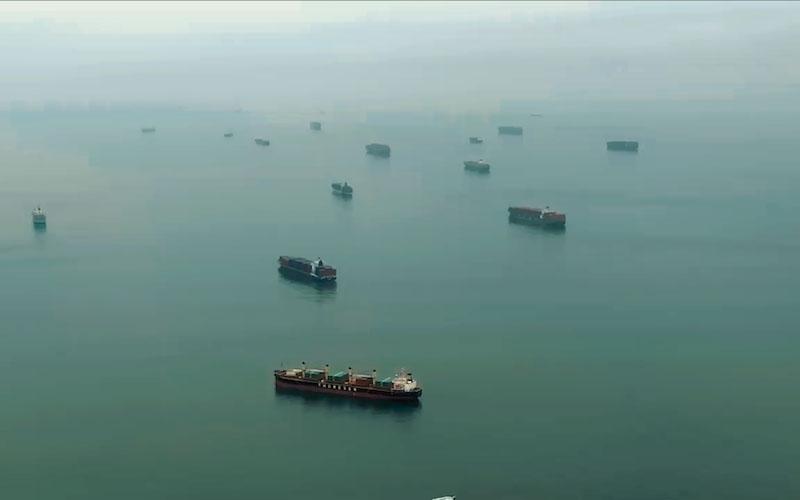
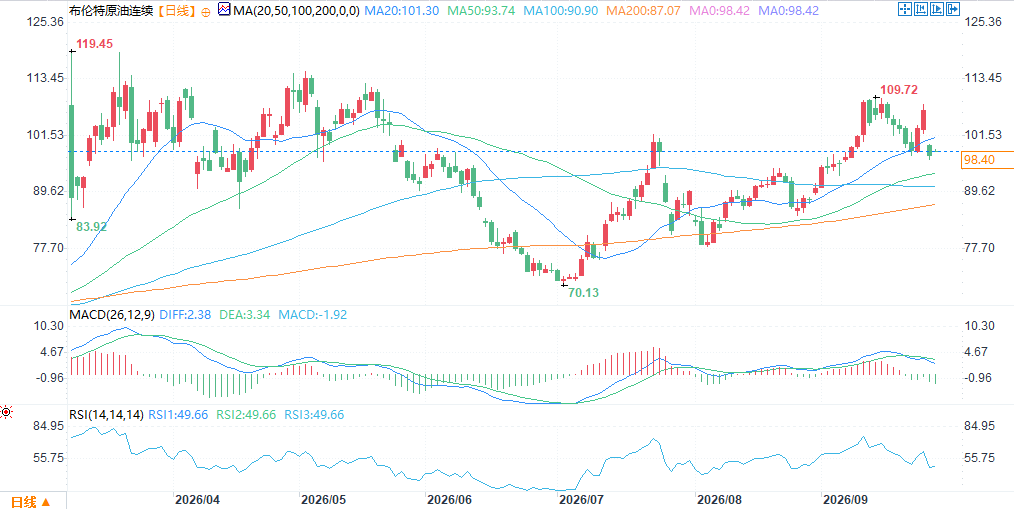 (Brent crude oil futures daily chart, source: EasyTrade) At 8:23 AM Beijing time on September 28, Brent crude oil futures were trading at $98.50 per barrel.
Iran awaits the mediator's final statement; the US says it is in no hurry to reach an agreement.
Iranian Foreign Minister Araqchi stated, "We have seen the initial reaction from the US President, but the mediators have not yet conveyed anything to us." He added, "Of course, the US President has said many good things, and also many contradictory things; unfortunately, we have heard a lot from him. We are waiting for the mediators to convey their final opinions, and we will make a decision based on that." A White House official previously stated that the two sides had engaged in "positive and constructive discussions" through the mediators, adding that "the United States is in a very strong position, controlling the Strait of Hormuz, so we are not in a hurry." US Secretary of State Rubio expressed a similar tone earlier this week, saying that "reaching an agreement with Iran... will require a period of hard work."Trump rejected the proposal, saying Iran "overestimated its cards."
Trump rejected Iran's latest proposal on Saturday, calling it "unacceptable." He stated, "They want an immediate deal to open the Straits because they've lost too badly. They want a deal, and I think that's fine. I like deals too, but that deal is unacceptable." On Sunday, Trump said, "They want a deal, but this isn't the deal I want. This is something we might have agreed to a year ago. They overestimated their hand." U.S. Ambassador to the UN, Walz, stated that Trump rejected the proposal because he didn't believe Iran was negotiating in good faith and considered Iran's "demand for everything" unacceptable. Walz also stated that one persistent problem for the U.S. is whether the Iranian representatives at the negotiating table truly represent Iran's Supreme Leader.Iranian Foreign Minister: Straits to be reopened within seven days if conditions are met
Iranian Foreign Minister Araqchi did not elaborate on the exact conditions of the proposal, but stated that they "do not exceed" the contents of the US-Iran memorandum of understanding signed in June but subsequently collapsed due to renewed fighting. He said, "If the necessary conditions are met, the Strait can be reopened within seven days, and normal maritime passage can be restored. The choice is now in the hands of the United States." He added, "You can't bomb a country, threaten to destroy it, impose a maritime blockade and coercive measures, and expect security and navigation to automatically return."The US may resume bombing after the midterm elections, escalating the conflict in Yemen.
Reports indicate that Trump told staff he might resume bombing operations after the upcoming midterm elections. Officials say Trump's views could change in the coming weeks. In his UN General Assembly speech, Trump stated, "I have a major decision to make—to make a deal with Iran and let them rebuild and create a country stronger than ever before? Or to destroy the Islamic Republic and act swiftly, never giving them another chance to kill and destroy people and countries." An Iranian military spokesman said on Sunday that the US might launch new attacks against Iran due to its "bad regional situation," adding that Tehran was prepared for any confrontation. Meanwhile, Yemen reported new attacks on Sunday, escalating fighting between the Iranian-backed Houthi rebels and a Saudi-backed faction. An attack on a market in Taiz province killed at least seven people and injured dozens, including children.Brent crude oil risk premium remains difficult to eliminate
Trump publicly rejected Iran's proposal, calling it "unacceptable," and US officials clearly stated they were "in no hurry." Iran, however, insisted that lifting the naval blockade and granting oil sanctions waivers were prerequisites for reopening the Strait of Hormuz, creating a structural antagonism between the two sides. This means the likelihood of the Strait of Hormuz returning to normal traffic in the short term is extremely low, and the persistently low traffic volume in the strait is the core reason why Brent crude oil has struggled to break further downwards. More alarmingly, reports suggest the US may resume bombing after the midterm elections, and Trump's statement at the UN General Assembly equated "reaching an agreement" with "eliminating the Islamic Republic," while the Iranian military stated it is prepared for any confrontation. Meanwhile, the conflict in Yemen escalates, with Houthi rebels clashing with Saudi-backed factions, and an attack on a market in Taiz province resulting in at least seven deaths. These overlapping events mean that the risk of supply disruptions not only originates from the Strait of Hormuz but could also spread to the Red Sea and Saudi energy infrastructure through the Yemeni situation. For Brent crude oil, the risk premium is supported by a combination of factors: diplomatic deadlock, sluggish traffic in the Strait of Hormuz, and the risk of military escalation, limiting the downside potential for oil prices. If negotiations fail this week or the conflict in Yemen escalates further, the premium may accumulate again.Summarize
Iran says it is still awaiting a "final" response from the US through mediators, despite Trump's public rejection of its latest proposal. Iran's proposal demands the US lift its naval blockade and waive oil sanctions in exchange for the reopening of the Strait of Hormuz within seven days and the resumption of nuclear negotiations. Trump called the proposal "unacceptable," believing Iran "overestimated its cards," while US officials said they were in no hurry to reach an agreement. Iran's foreign minister stated that the strait would reopen within seven days if the conditions were met, leaving the choice to the US. Reports suggest the US may resume bombing after the midterm elections, and the conflict in Yemen is escalating, with the Houthis clashing with Saudi-backed factions. For the oil market, the lack of substantial progress in US-Iran diplomacy, persistently low traffic volume in the Strait of Hormuz, and the escalating conflict in Yemen mean that supply-side risk premiums are unlikely to subside, limiting the downside potential for oil prices. Future developments will depend on whether US-Iran negotiations continue, whether Trump's promise to "continue negotiations this week" materializes, changes in actual traffic volume in the Strait of Hormuz, and whether the conflict in Yemen further expands. (Brent crude oil futures daily chart, source: EasyTrade) At 8:23 AM Beijing time on September 28, Brent crude oil futures were trading at $98.50 per barrel.
- Risk Warning and Disclaimer
- The market involves risk, and trading may not be suitable for all investors. This article is for reference only and does not constitute personal investment advice, nor does it take into account certain users’ specific investment objectives, financial situation, or other needs. Any investment decisions made based on this information are at your own risk.

