US Treasury yields remaining above 5% weighed on the pound, with GBP/USD falling to around 1.3250, but hawkish signals from the Bank of England provided support.
2026-09-29 14:40:14
The British pound continued to be pressured against the US dollar in early Asian trading on Tuesday, with GBP/USD falling to around 1.3250. The dollar has recently been supported by rising US Treasury yields and expectations of further monetary tightening, while the pound faces a complex environment of slowing UK economic growth and energy inflation pressures. The market is currently awaiting speeches from Federal Reserve officials for further clues about the next phase of US interest rate policy.  In the US, resilient energy supply risks and recent economic data have reignited market concerns about persistent inflationary pressures. Yields on 10-year and longer-term US Treasury bonds remain above 5%, multi-year highs. Rising long-term yields have increased the attractiveness of dollar assets and widened the interest rate differential between the dollar and other major currencies. High US Treasury yields are one of the main external pressures currently facing GBP/USD. Rising energy prices further reinforce this logic. Uncertainty remains regarding energy supplies in the Middle East, and persistently high oil prices could transmit to US inflation through fuel, transportation, and production costs. If energy prices continue to strengthen, the market may further increase expectations that the Federal Reserve will maintain high interest rates or even raise rates further, thus supporting the dollar. The situation between the US and Iran is also an important external support factor for the dollar. Energy supply risks have caused significant volatility in oil prices and pushed up US yields. In this environment, market funds tend to reallocate to dollar assets, thus putting additional pressure on GBP/USD. In the UK, Bank of England Deputy Governor Dave Ramsden released a relatively hawkish policy signal. He stated that if upward pressure on the inflation outlook continues to strengthen, the possibility of further increases in bank interest rates cannot be ruled out. Ramsden was among the majority of the Bank of England's Monetary Policy Committee members who kept interest rates unchanged this month. The Bank of England's vigilance regarding upside risks to inflation provided some support for interest rate expectations for the pound. However, the policy environment facing the Bank of England is significantly more complex. On the one hand, rising energy prices could reignite inflationary pressures; on the other hand, UK labor demand and private sector growth momentum remain relatively weak. Further interest rate hikes by the Bank of England could further increase the risk of pressure on economic activity. Therefore, even if the market increases its expectations for future tightening policies in the UK, it will not simply view this as a sustained positive factor for the pound. The UK's economic growth prospects are also a focus. Market analysts believe that the weak momentum in the UK private sector, coupled with the relatively resilient performance of the US economy, may continue to limit the pound's performance. The pound currently faces a policy dilemma of "high inflation and weak growth" simultaneously, which constrains the Bank of England's room for further action. The market will next focus on speeches by Federal Reserve officials, as well as US inflation and employment data. If US data continues to show strong economic resilience, the dollar's yield advantage may further widen, and GBP/USD will still face downward pressure; if US inflation cools and yields fall, the pound may gain some room for recovery. Meanwhile, UK inflation and employment data will determine whether the market further increases its expectations for a Bank of England interest rate hike. From a daily chart perspective, GBP/USD remains in a short-term bearish structure, with the price consistently trading below the Bollinger Band middle line and the 100-day moving average, indicating significant selling pressure above. The 14-day RSI is around 30, approaching oversold territory, suggesting a substantial recent decline, but no clear reversal signal has yet formed. The first resistance level to watch is the 1.3410-1.3415 area, which is simultaneously suppressed by the Bollinger Band middle line and the 100-day moving average. Only a decisive break above this area could alleviate the short-term weakness, with a further target around the upper Bollinger Band near 1.3645. From a 4-hour chart perspective, GBP/USD continues its downward trend with relatively limited rebound strength. The area around 1.3300 is a key short-term observation zone. If the price regains its footing above this level and breaks through 1.3410 to 1.3415, a further short-term correction is possible. However, if it continues to be resisted and falls below 1.3250, the next support level to watch is the lower Bollinger Band around 1.3175. If 1.3175 is breached, bearish pressure may intensify, and the price may seek support in the mid-1.31 area.
 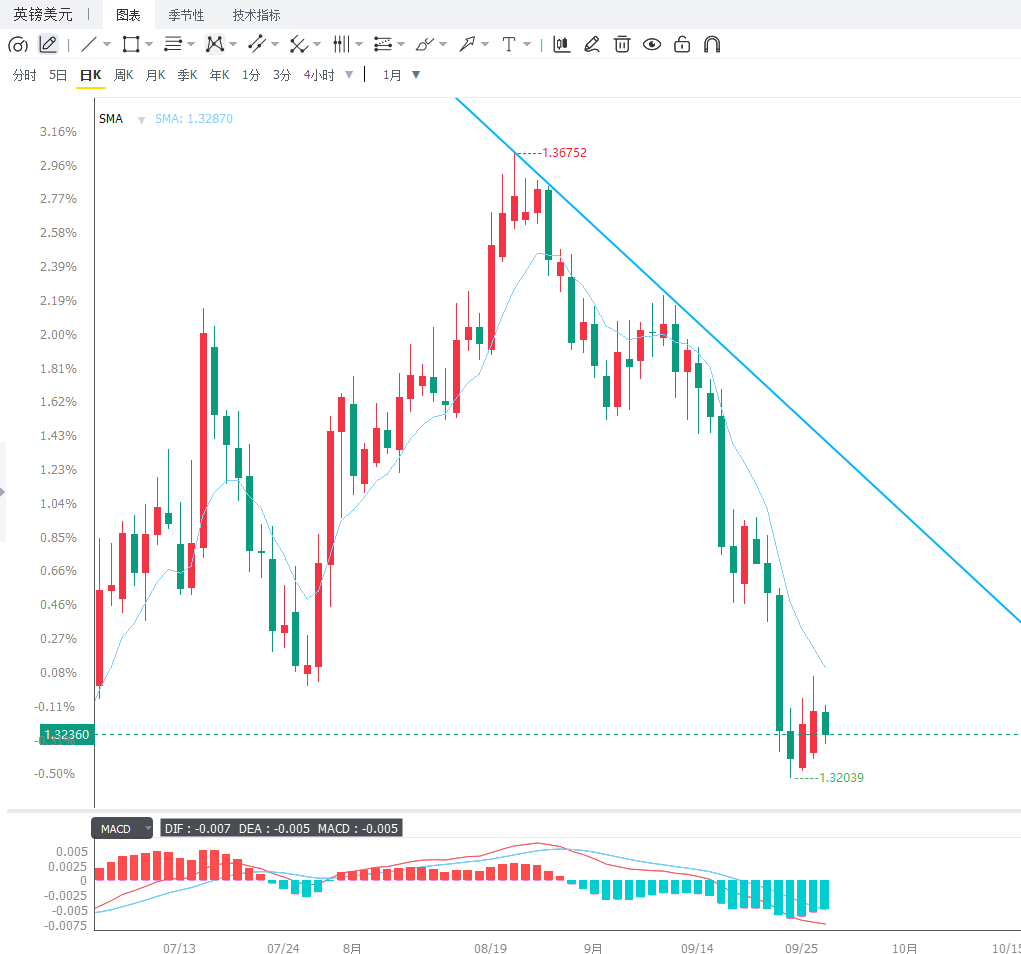 In summary, GBP/USD is currently caught in a tug-of-war between a strong US dollar and hawkish expectations from the Bank of England. High US yields and concerns about energy inflation continue to support the dollar, while the Bank of England's focus on upside risks to inflation is limiting the speed of further declines in the pound. In the short term, the area around 1.3250 is a key observation zone, with 1.3175 as a key support level. On the upside, 1.3410 to 1.3415 represents significant resistance to determine whether the weak structure can be repaired. Subsequent policy signals from the Federal Reserve, US economic data, and UK inflation performance will continue to determine the direction of GBP/USD.
In the US, resilient energy supply risks and recent economic data have reignited market concerns about persistent inflationary pressures. Yields on 10-year and longer-term US Treasury bonds remain above 5%, multi-year highs. Rising long-term yields have increased the attractiveness of dollar assets and widened the interest rate differential between the dollar and other major currencies. High US Treasury yields are one of the main external pressures currently facing GBP/USD. Rising energy prices further reinforce this logic. Uncertainty remains regarding energy supplies in the Middle East, and persistently high oil prices could transmit to US inflation through fuel, transportation, and production costs. If energy prices continue to strengthen, the market may further increase expectations that the Federal Reserve will maintain high interest rates or even raise rates further, thus supporting the dollar. The situation between the US and Iran is also an important external support factor for the dollar. Energy supply risks have caused significant volatility in oil prices and pushed up US yields. In this environment, market funds tend to reallocate to dollar assets, thus putting additional pressure on GBP/USD. In the UK, Bank of England Deputy Governor Dave Ramsden released a relatively hawkish policy signal. He stated that if upward pressure on the inflation outlook continues to strengthen, the possibility of further increases in bank interest rates cannot be ruled out. Ramsden was among the majority of the Bank of England's Monetary Policy Committee members who kept interest rates unchanged this month. The Bank of England's vigilance regarding upside risks to inflation provided some support for interest rate expectations for the pound. However, the policy environment facing the Bank of England is significantly more complex. On the one hand, rising energy prices could reignite inflationary pressures; on the other hand, UK labor demand and private sector growth momentum remain relatively weak. Further interest rate hikes by the Bank of England could further increase the risk of pressure on economic activity. Therefore, even if the market increases its expectations for future tightening policies in the UK, it will not simply view this as a sustained positive factor for the pound. The UK's economic growth prospects are also a focus. Market analysts believe that the weak momentum in the UK private sector, coupled with the relatively resilient performance of the US economy, may continue to limit the pound's performance. The pound currently faces a policy dilemma of "high inflation and weak growth" simultaneously, which constrains the Bank of England's room for further action. The market will next focus on speeches by Federal Reserve officials, as well as US inflation and employment data. If US data continues to show strong economic resilience, the dollar's yield advantage may further widen, and GBP/USD will still face downward pressure; if US inflation cools and yields fall, the pound may gain some room for recovery. Meanwhile, UK inflation and employment data will determine whether the market further increases its expectations for a Bank of England interest rate hike. From a daily chart perspective, GBP/USD remains in a short-term bearish structure, with the price consistently trading below the Bollinger Band middle line and the 100-day moving average, indicating significant selling pressure above. The 14-day RSI is around 30, approaching oversold territory, suggesting a substantial recent decline, but no clear reversal signal has yet formed. The first resistance level to watch is the 1.3410-1.3415 area, which is simultaneously suppressed by the Bollinger Band middle line and the 100-day moving average. Only a decisive break above this area could alleviate the short-term weakness, with a further target around the upper Bollinger Band near 1.3645. From a 4-hour chart perspective, GBP/USD continues its downward trend with relatively limited rebound strength. The area around 1.3300 is a key short-term observation zone. If the price regains its footing above this level and breaks through 1.3410 to 1.3415, a further short-term correction is possible. However, if it continues to be resisted and falls below 1.3250, the next support level to watch is the lower Bollinger Band around 1.3175. If 1.3175 is breached, bearish pressure may intensify, and the price may seek support in the mid-1.31 area. In summary, GBP/USD is currently caught in a tug-of-war between a strong US dollar and hawkish expectations from the Bank of England. High US yields and concerns about energy inflation continue to support the dollar, while the Bank of England's focus on upside risks to inflation is limiting the speed of further declines in the pound. In the short term, the area around 1.3250 is a key observation zone, with 1.3175 as a key support level. On the upside, 1.3410 to 1.3415 represents significant resistance to determine whether the weak structure can be repaired. Subsequent policy signals from the Federal Reserve, US economic data, and UK inflation performance will continue to determine the direction of GBP/USD.
- Risk Warning and Disclaimer
- The market involves risk, and trading may not be suitable for all investors. This article is for reference only and does not constitute personal investment advice, nor does it take into account certain users’ specific investment objectives, financial situation, or other needs. Any investment decisions made based on this information are at your own risk.