Gold has just left $4,110. Where is the Hormuz plan stuck on the 7th?
2026-09-30 18:32:21
On Wednesday, September 30th, spot gold was trading below $4200 per ounce, having rebounded from the low of around $4110 reached during the session on September 28th. The market is simultaneously digesting two developments: indirect negotiations between the US and Iran regarding passage arrangements in the Strait of Hormuz have intensified, easing geopolitical premiums; and following New York Fed President John Williams' remarks on September 29th, federal funds futures pricing in a Fed rate hike in October has fallen from approximately 70% to around 45% to 50%. The Fed's September rate meeting raised its target range by 25 basis points to 3.75% to 4.00%, the 10-year Treasury yield remains around 5.23%, and the dollar index is near 101, meaning the opportunity cost of holding gold has not disappeared. After retreating from its January highs, gold's short-term pricing has returned to the intersection of policy path and expectations regarding passage through the Strait of Hormuz. 
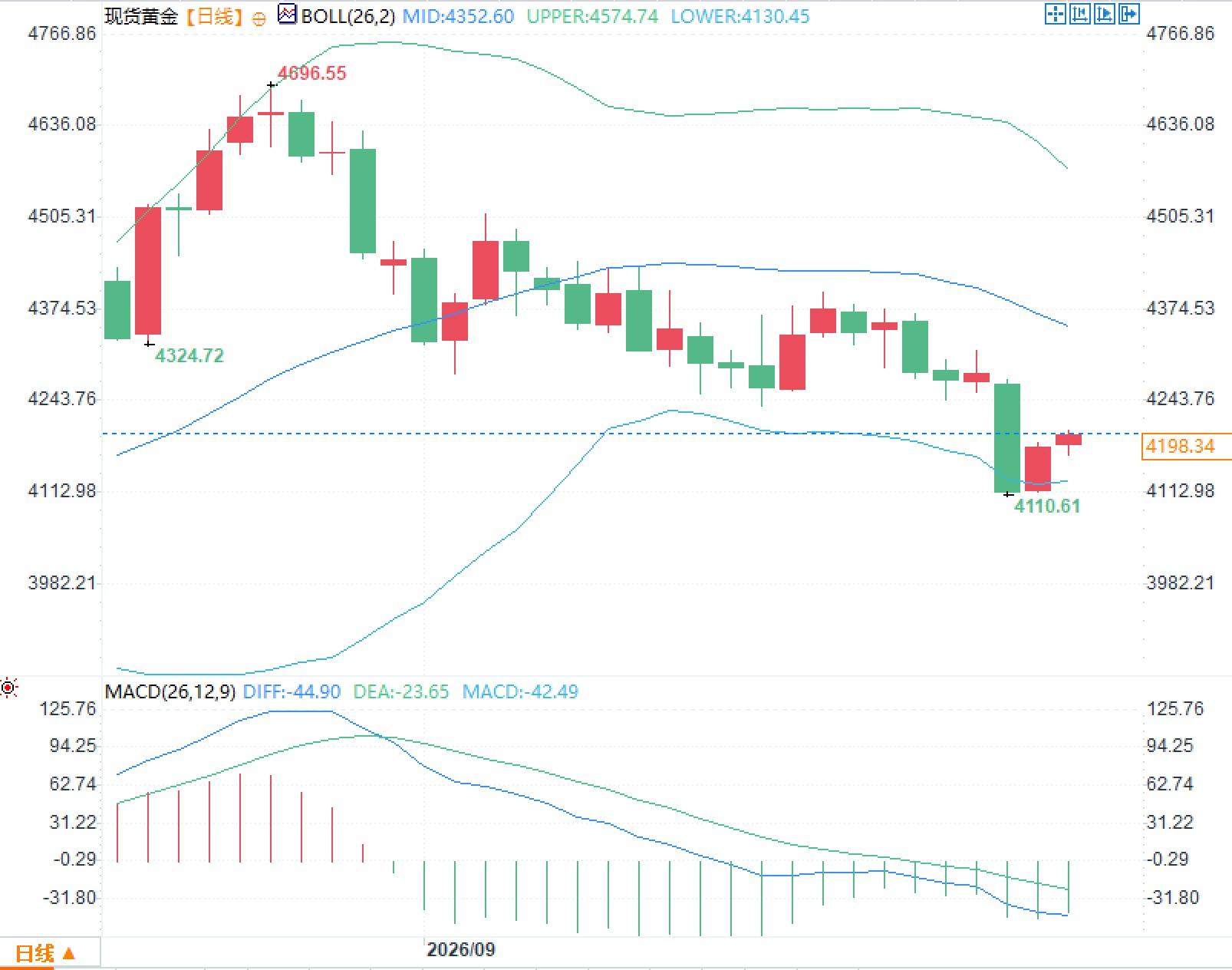 The momentum indicator presents the other side of the same information. In the MACD, the DIFF is approximately -44.90, the DEA is approximately -23.65, and the histogram value is approximately -42.49, with both the fast and slow lines below the zero axis. The histogram value is still negative, meaning that the medium-term momentum has not yet completed its transition from negative to positive.
How the Hormuz transit arrangement will rewrite the safe-haven premium
The US and Iran are still in indirect contact regarding a revised proposal. The core of the proposal is to restore passage through the Strait of Hormuz within seven days under specific conditions. The dispute has shifted from the list of terms to the order of steps: whether to restore passage and adjust maritime restrictions first, or to address broader constraints first. Qatar continues to act as a mediator, and the two sides' public statements are inconsistent, causing the market to price in both the ongoing negotiations and the misaligned order. For spot gold, the mechanism of this trend is not complex. Increased expectations for passage through the strait lead to a decline in the premium for energy supply disruptions, thus reducing safe-haven demand; conversely, a stalemate in negotiations causes the premium to rise again. It's important to distinguish that current pricing reflects fluctuations in the negotiation process itself, not that the final text has been finalized. Failure to agree on the order of steps often prolongs uncertainty more than the terms themselves, and gold is most sensitive to this state of "negotiations in progress."Interest Rate Path Repricing Following Williams' Speech
Williams' speech in Buffalo clearly addressed the issue of pace. He stated that after the policy action taken in September, "there is no need to rush into action," and the committee has time to gather more information. If the economy performs broadly in line with its forecasts, the federal funds target range may be raised again later this year to push inflation back to the 2% target more quickly. He also provided his own forecast framework: US inflation this year will be around 3.5%, real GDP growth will be around 2.25%, and the unemployment rate will move towards around 4% in the next year. The market focused on the "no rush for consecutive rate hikes in October" rather than denying the possibility of another rate hike this year. Federal funds futures subsequently reduced the probability of a rate hike at the Fed's October meeting from around 70% to around 45% to 50%. This adjustment changes near-term real interest rate expectations, not the long-term policy endpoint. The 10-year US Treasury yield remains around 5.23%, indicating that the pressure on gold from medium- and long-term funding costs has not been simultaneously relieved. The US dollar index above 101 constitutes a pricing constraint on dollar-denominated spot gold. The key points to watch are: the U.S. personal consumption expenditure price index, the employment report, and the interest rate meeting on October 27-28 will all help to recalibrate the near-term path.The daily chart shows a volatile structure.
From a daily chart perspective, spot gold has been trading between the middle and lower Bollinger Bands after retreating from its recent highs. The current middle band is around $4352.60, the upper band around $4574.74, and the lower band around $4130.45. Around September 28th, the price briefly approached the outer edge of the lower band before recovering to around $4200, indicating that short-term fluctuations are using the lower band area as an important reference. The momentum indicator presents the other side of the same information. In the MACD, the DIFF is approximately -44.90, the DEA is approximately -23.65, and the histogram value is approximately -42.49, with both the fast and slow lines below the zero axis. The histogram value is still negative, meaning that the medium-term momentum has not yet completed its transition from negative to positive.Pricing Logic and Subsequent Observation Window
By placing fundamentals and technical structure on the same chart, the current pricing of spot gold can be broken down into three layers. The first layer is the near-term policy rate: after the Fed's October rate hike pricing fell back, the near-term slope of real interest rate expectations slowed, and gold's sensitivity to holding costs decreased accordingly. The second layer is the expectation of cross-strait negotiations: once there are new developments or new bottlenecks in the sequence of steps, the safe-haven premium will rewrite short-term fluctuations before macroeconomic data. The third layer is the volatility structure itself: the price is in the lower half of the Bollinger Bands, and the MACD is still below the zero line, indicating that the market is still processing the pullback of the first three quarters of this year, rather than confirming a new volatility center. The next two weeks will be information-dense. Any public statements regarding the cross-strait negotiations will first impact the correlation between energy and safe-haven assets; US price and employment data will determine whether the pricing of the October interest rate decision will swing again. Gold typically reacts faster to these two types of information than to medium- to long-term growth narratives.Frequently Asked Questions
Question 1: Is the recent stabilization of spot gold mainly due to the Straits negotiations or interest rate pricing? Answer: Both factors are at play. Rising expectations for Straits passage are lowering the energy disruption premium; Williams' speech reduced the probability of a Fed rate hike in October from about 70% to 45%-50%. The former changes safe-haven demand, while the latter changes near-term holding costs. The short-term rebound is a result of both combined, not a single factor. Question 2: Does the decreased probability of an October rate hike mean the Fed will not adjust interest rates again this year? Answer: No. Williams clearly separated the statements about "no need for immediate, continuous action" and "if the economy meets forecasts, another rate hike may be possible later this year." The market is repricing the October meeting, not the policy space before the end of the year. The 10-year Treasury yield is still around 5.23%, indicating that medium- to long-term cost constraints remain.- Risk Warning and Disclaimer
- The market involves risk, and trading may not be suitable for all investors. This article is for reference only and does not constitute personal investment advice, nor does it take into account certain users’ specific investment objectives, financial situation, or other needs. Any investment decisions made based on this information are at your own risk.