The conflict, which lasted four to six weeks, has dragged on for seven months. What's Trump's next step: talks or war?
2026-10-01 21:48:15
In a recent media interview, Trump stated that the conflict with Iran has lasted far longer than his initial expectation of four to six weeks, and seven months later, there are still no clear signs of an end. This conflict has disrupted oil flows in the Strait of Hormuz, driven up energy prices, and created a transmission chain within the United States, from oil prices to inflation, then to interest rates and mortgage costs. Trump continues to defend military action, claiming its purpose is to prevent Iran from acquiring nuclear weapons, and has indicated that the United States may resume or escalate bombing efforts after the midterm elections if negotiations fail. 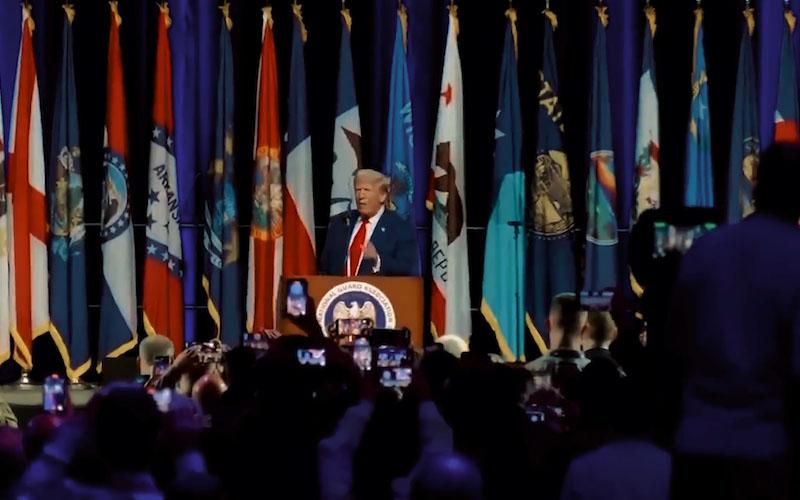
The conflict has far exceeded expectations: from four to six weeks to seven months with no end in sight.
According to media interviews, Trump initially expected the conflict to last only four to six weeks, but seven months later, there is still no clear sign of an end. The conflict has disrupted oil flows through the Strait of Hormuz, driven up energy prices, and caused significant economic and geopolitical consequences. Trump continues to defend his decision to launch the conflict, arguing that military action was necessary to prevent Iran from acquiring nuclear weapons. He points to the subsequent weakening of Iran's position as proof that the military action has achieved important objectives. However, the conflict's duration has far exceeded expectations, making it increasingly difficult for the administration to find a way to end the conflict while preserving these gains.The Strait of Hormuz and its economic impact: The transmission chain from oil prices to interest rates
The Strait of Hormuz, due to its importance to global energy markets, became the epicenter of the conflict. Iran's disruption of oil flows through the strait led to a sharp rise in energy prices, with U.S. gasoline prices increasing significantly since the conflict began. The economic consequences have extended beyond the energy market. Rising oil prices, coupled with increased costs due to Trump's tariffs, further exacerbated inflationary pressures. This combination complicated the Federal Reserve's policy decisions and pushed up interest rates and mortgage costs. The conflict thus established a direct link between the situation in the Middle East and U.S. financial conditions.The cost of conflict is rising: ammunition stockpiles are declining and spending exceeds $25 billion.
The conflict has also put pressure on U.S. military resources. In the interview, Trump acknowledged that stockpiles of certain types of munitions had dwindled after the U.S. deployed a large number of missile interceptors and other military equipment. He stated that the administration had reached agreements with defense companies to expand production and replenish supplies. The costs of the conflict are also escalating. According to figures cited in the interview, the conflict had cost the U.S. over $25 billion at the time of the discussion. U.S. military casualties have also increased significantly since the start of the operation, adding another layer of political and strategic costs to a conflict that has lasted far longer than initially anticipated.Trump's stance on ending the conflict: Failure of negotiations could escalate the blow.
Despite the protracted conflict, Trump appears unwilling to simply withdraw. He has stated that the U.S. might resume or escalate bombing after the midterm elections if negotiations fail to produce an acceptable agreement. His argument is that Iran cannot be allowed to rebuild its nuclear capabilities, and that continued military pressure may ultimately be necessary to ensure a lasting solution. This creates a difficult strategic situation for the administration. The longer the conflict continues, the greater the economic, military, and political costs will be, but ending the conflict without ensuring that Trump's objectives are achieved could also weaken his justification for the initial intervention.Tensions with Israel: Netanyahu's role becomes complicated
According to interviews, the relationship between Trump and Israeli Prime Minister Netanyahu became more complicated during the conflict. Netanyahu initially pushed for military action against Iran, but subsequently disagreed on how to manage the conflict and seek a final solution. Trump reportedly believed that Israel's military actions—including the strikes in Lebanon—had at times complicated U.S. efforts to bring the broader conflict to an end. His remarks suggest that Washington's priorities are not always entirely aligned with the Israeli government, particularly regarding the timing and scope of further military action.Exit Strategy: Balancing Military Pressure and Negotiated Resolution
The government needs an outcome that resolves the Iranian nuclear issue while also allowing the US to reduce military involvement and stabilize energy markets. Trump's rhetoric suggests he still views military pressure as a primary tool for achieving this goal. Meanwhile, the protracted conflict and its escalating economic costs make a negotiated solution increasingly important. The future of the conflict will depend on whether Washington and Tehran can ultimately reach an agreement that satisfies US demands while providing sufficient incentives for Iran to accept a solution.Editor's Summary
The conflict, evolving from short-term expectations into a seven-month-long saga, highlights the close link between geopolitical military action and its economic consequences. The obstruction of the Strait of Hormuz has driven up energy prices, which in turn have impacted inflation, interest rates, and mortgage costs, increasing the complexity of domestic policy in the United States. Military spending has exceeded $43.6 billion, and rising ammunition stockpiles and personnel costs have further amplified political pressure. Trump's insistence on a parallel approach of military options and negotiations reflects the difficult balance between achieving nuclear objectives and controlling costs. The difficulty of coordination with Israel and the midterm elections add uncertainty to the future path. Markets will continue to focus on the impact of energy supply recovery and diplomatic progress on global financial conditions.Frequently Asked Questions
Q: What is the difference between Trump's initial expectations of the conflict's duration and reality? A: He initially anticipated only four to six weeks, but seven months later there are still no clear signs of an end. This gap has led to a continuous accumulation of economic and military costs and has further complicated the formulation of an exit strategy. Q: How has the conflict affected the US economy through the Strait of Hormuz? A: The obstruction of oil flows through the Strait has pushed up global oil prices, significantly increasing US gasoline prices. Combined with tariffs, this has exacerbated inflation, further driving up interest rates and mortgage costs, forming a transmission chain from energy to financial conditions. Q: What level have the direct costs to the US in the conflict reached? A: The latest Pentagon estimates show that expenditures reached $43.6 billion by early September, with ammunition consumption accounting for a significant portion. The government is expanding production to replenish stockpiles, while increased casualties bring additional political costs. Q: What is Trump's stance on ending the conflict? A: He has stated that if negotiations fail, he may increase bombing after the midterm elections, emphasizing that Iran cannot be allowed to rebuild its nuclear capabilities. Military pressure remains seen as a key tool, but its protracted nature also highlights the necessity of negotiations. Q: What impact has the conflict had on US-Israel relations? A: Netanyahu initially pushed for action, but disagreements subsequently arose over governance and solutions. Trump believed that some of Israel's actions complicated U.S. efforts to end the conflict, demonstrating that the two sides' priorities were not entirely aligned.- Risk Warning and Disclaimer
- The market involves risk, and trading may not be suitable for all investors. This article is for reference only and does not constitute personal investment advice, nor does it take into account certain users’ specific investment objectives, financial situation, or other needs. Any investment decisions made based on this information are at your own risk.