Oil prices face both bullish and bearish factors; the G7 agreed to release 100 million barrels of diesel and crude oil, and the OPEC+ capacity assessment was postponed to November.
2026-10-03 09:42:16
International oil prices closed mixed on Friday. Brent crude rose 0.45% to settle at $102.70 a barrel, up 5.44% for the week; WTI crude fell 1.78% to settle at $91.26 a barrel, down 1.28% for the week. This followed European leaders agreeing to a request from US President Trump to release diesel reserves in an effort to lower oil prices and reduce fuel imports from the United States.  G7 Agrees to Release 100 Million Barrels of Diesel and Crude Oil The G7 members agreed on Friday to release 100 million barrels of diesel and crude oil from their emergency reserves and pledged to avoid imposing energy export restrictions. The United States led pressure on the European Union to use its emergency diesel reserves. The Trump administration warned that the U.S. might ban diesel exports if the EU did not act. Such an export ban could significantly reduce supplies to Europe, which is increasingly reliant on U.S. diesel, and an export ban could cause substantial economic losses for the EU. Trump is seeking to stabilize soaring fuel prices ahead of the November midterm elections. Trump tweeted on Truth Social, "Europe has agreed to release a large amount of diesel reserves." He had previously stated that he was considering banning U.S. diesel exports. “Europe is in a very vulnerable position right now,” said Phil Flynn, senior analyst at Price Futures Group. “If we ban diesel exports, Europe will be one of the hardest hit regions.” Trump subsequently stated, “Europe has a lot of diesel, and they will make a significant contribution to the world, and so will we. We will not impose an export ban. We will do what we should do.” The G7 stated in a joint statement, “In light of commitments already fulfilled, we will coordinate the release of 100 million barrels of reserves through the IEA to implement our commitments.” It remains unclear how much of the oil involved in the new agreement will come from the portion not yet released under the March agreement. IEA Executive Director Birol stated this week that member countries have already released about two-thirds of the total 400 million barrels under the agreement. The statement said the release will begin immediately and continue for four months, with G7 members and partners releasing large quantities of diesel within 20 days. The statement did not provide specific details on the quantities of crude oil, diesel, and other products to be released, nor did it specify which countries will participate. The statement also said, "In the coming days, we will meet within the IEA framework to discuss the possibility of further releasing diesel if necessary." Two sources familiar with the matter said the White House is preparing an executive order to address record U.S. diesel prices, which could be released as early as next week. The sources said the executive order is expected to include measures to expand the use of duty-free red-dyed diesel, as well as other tax adjustments aimed at reducing fuel costs. Details are still being finalized and are subject to change. The G7 statement said member states will avoid imposing export restrictions on each other's energy products. This move may ease pressure on the Trump administration to implement a U.S. diesel export ban. "This is a political statement, not a concrete and binding commitment," Energy Aspects analysts said in a report. "The statement presents this strikingly large number in an attempt to persuade President Trump not to implement a diesel export ban." Refined product supply becomes the main pressure on the market . "This highlights that with the recovery of Middle Eastern crude oil supplies, the main pressure on the energy market is no longer crude oil supply, but refined product supply," said Ole Hansen, head of commodities strategy at Saxo Bank. "Refined product supply is being limited by declining refining capacity and output in the Middle East and Russia." Europe has increased its imports of US diesel this year due to disruptions in Gulf oil-producing countries' supplies caused by the war in Iran. IEA Executive Director Fatih Birol said on Friday that oil prices have begun to fall after the decision to release 100 million barrels of oil and fuel reserves. Birol stated that oil prices have fallen by about $5 after the International Energy Agency announced the release of oil and diesel reserves into the market in the coming days. He added, "After consultations with member states, we will finalize the allocation plan. Our reserves are ample, and we can release more inventory if necessary." Barclays stated that despite improved Middle Eastern crude oil supplies, the fundamentals of the physical market remain strong, inventories are still declining, and there is a significant premium for near-month spot cargoes over forward prices. The bank raised its fourth-quarter Brent crude oil price forecast by $20 to $115 per barrel and its 2026 forecast to $100 per barrel. Hamad Hussein, senior climate and commodities economist at Capital Economics, said that if the recent increase in Middle Eastern crude oil supplies continues, further releases of oil inventories "could be enough to push the overall market back into a slight oversupply." Meanwhile, news that the US is sending a third aircraft carrier and up to 10,000 additional troops to the Middle East as Trump considers resuming strikes against Iran after the midterm elections also supported oil prices. OPEC+ Delays Oil Production Capacity Assessment Two sources familiar with the matter said that the capacity assessment aimed at helping determine OPEC+ members' 2027 oil production quotas has been delayed because the war in Iran has disrupted Middle East capacity expansion projects, making future capacity potential estimates uncertain. OPEC+ requested a capacity assessment of all member countries by the end of 2025, originally scheduled for completion by the end of September 2026. Sources said the deadline has been postponed and is expected to be completed in mid-November. OPEC did not immediately respond. At its June meeting, OPEC reiterated the importance of completing the assessment of maximum sustainable production capacity for all member countries, which will serve as a benchmark for 2027 production. The US consulting firm DeGolyer and MacNaughton is assessing the capacity of OPEC+ member countries, excluding Russia, Iran, and Venezuela. The two sources said the firm will not submit its report to OPEC until mid-November, which would still allow OPEC+ to review it at its next plenary meeting in late November. Russian Deputy Prime Minister Novak said OPEC+ countries are still assessing maximum capacity. The Middle East conflict has delayed some OPEC+ countries' planned capacity expansion projects, complicating the assessment. Not all countries have submitted data. Uncertainty complicates politically sensitive tasks. Countries with lower capacity assessments may face pressure to lower quotas, while those that have expanded capacity may seek higher quotas. The UAE, which previously pushed for a higher quota, withdrew from the alliance in May. Iraq is also seeking a higher quota and had considered leaving OPEC.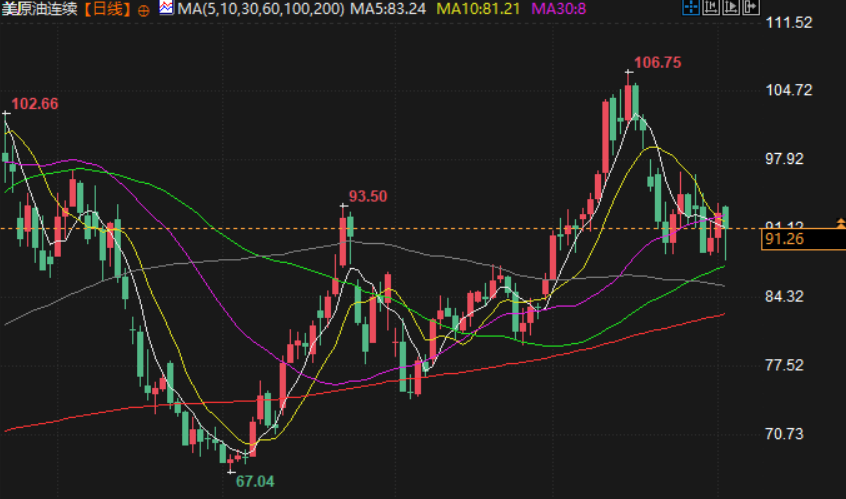
G7 Agrees to Release 100 Million Barrels of Diesel and Crude Oil The G7 members agreed on Friday to release 100 million barrels of diesel and crude oil from their emergency reserves and pledged to avoid imposing energy export restrictions. The United States led pressure on the European Union to use its emergency diesel reserves. The Trump administration warned that the U.S. might ban diesel exports if the EU did not act. Such an export ban could significantly reduce supplies to Europe, which is increasingly reliant on U.S. diesel, and an export ban could cause substantial economic losses for the EU. Trump is seeking to stabilize soaring fuel prices ahead of the November midterm elections. Trump tweeted on Truth Social, "Europe has agreed to release a large amount of diesel reserves." He had previously stated that he was considering banning U.S. diesel exports. “Europe is in a very vulnerable position right now,” said Phil Flynn, senior analyst at Price Futures Group. “If we ban diesel exports, Europe will be one of the hardest hit regions.” Trump subsequently stated, “Europe has a lot of diesel, and they will make a significant contribution to the world, and so will we. We will not impose an export ban. We will do what we should do.” The G7 stated in a joint statement, “In light of commitments already fulfilled, we will coordinate the release of 100 million barrels of reserves through the IEA to implement our commitments.” It remains unclear how much of the oil involved in the new agreement will come from the portion not yet released under the March agreement. IEA Executive Director Birol stated this week that member countries have already released about two-thirds of the total 400 million barrels under the agreement. The statement said the release will begin immediately and continue for four months, with G7 members and partners releasing large quantities of diesel within 20 days. The statement did not provide specific details on the quantities of crude oil, diesel, and other products to be released, nor did it specify which countries will participate. The statement also said, "In the coming days, we will meet within the IEA framework to discuss the possibility of further releasing diesel if necessary." Two sources familiar with the matter said the White House is preparing an executive order to address record U.S. diesel prices, which could be released as early as next week. The sources said the executive order is expected to include measures to expand the use of duty-free red-dyed diesel, as well as other tax adjustments aimed at reducing fuel costs. Details are still being finalized and are subject to change. The G7 statement said member states will avoid imposing export restrictions on each other's energy products. This move may ease pressure on the Trump administration to implement a U.S. diesel export ban. "This is a political statement, not a concrete and binding commitment," Energy Aspects analysts said in a report. "The statement presents this strikingly large number in an attempt to persuade President Trump not to implement a diesel export ban." Refined product supply becomes the main pressure on the market . "This highlights that with the recovery of Middle Eastern crude oil supplies, the main pressure on the energy market is no longer crude oil supply, but refined product supply," said Ole Hansen, head of commodities strategy at Saxo Bank. "Refined product supply is being limited by declining refining capacity and output in the Middle East and Russia." Europe has increased its imports of US diesel this year due to disruptions in Gulf oil-producing countries' supplies caused by the war in Iran. IEA Executive Director Fatih Birol said on Friday that oil prices have begun to fall after the decision to release 100 million barrels of oil and fuel reserves. Birol stated that oil prices have fallen by about $5 after the International Energy Agency announced the release of oil and diesel reserves into the market in the coming days. He added, "After consultations with member states, we will finalize the allocation plan. Our reserves are ample, and we can release more inventory if necessary." Barclays stated that despite improved Middle Eastern crude oil supplies, the fundamentals of the physical market remain strong, inventories are still declining, and there is a significant premium for near-month spot cargoes over forward prices. The bank raised its fourth-quarter Brent crude oil price forecast by $20 to $115 per barrel and its 2026 forecast to $100 per barrel. Hamad Hussein, senior climate and commodities economist at Capital Economics, said that if the recent increase in Middle Eastern crude oil supplies continues, further releases of oil inventories "could be enough to push the overall market back into a slight oversupply." Meanwhile, news that the US is sending a third aircraft carrier and up to 10,000 additional troops to the Middle East as Trump considers resuming strikes against Iran after the midterm elections also supported oil prices. OPEC+ Delays Oil Production Capacity Assessment Two sources familiar with the matter said that the capacity assessment aimed at helping determine OPEC+ members' 2027 oil production quotas has been delayed because the war in Iran has disrupted Middle East capacity expansion projects, making future capacity potential estimates uncertain. OPEC+ requested a capacity assessment of all member countries by the end of 2025, originally scheduled for completion by the end of September 2026. Sources said the deadline has been postponed and is expected to be completed in mid-November. OPEC did not immediately respond. At its June meeting, OPEC reiterated the importance of completing the assessment of maximum sustainable production capacity for all member countries, which will serve as a benchmark for 2027 production. The US consulting firm DeGolyer and MacNaughton is assessing the capacity of OPEC+ member countries, excluding Russia, Iran, and Venezuela. The two sources said the firm will not submit its report to OPEC until mid-November, which would still allow OPEC+ to review it at its next plenary meeting in late November. Russian Deputy Prime Minister Novak said OPEC+ countries are still assessing maximum capacity. The Middle East conflict has delayed some OPEC+ countries' planned capacity expansion projects, complicating the assessment. Not all countries have submitted data. Uncertainty complicates politically sensitive tasks. Countries with lower capacity assessments may face pressure to lower quotas, while those that have expanded capacity may seek higher quotas. The UAE, which previously pushed for a higher quota, withdrew from the alliance in May. Iraq is also seeking a higher quota and had considered leaving OPEC.
- Risk Warning and Disclaimer
- The market involves risk, and trading may not be suitable for all investors. This article is for reference only and does not constitute personal investment advice, nor does it take into account certain users’ specific investment objectives, financial situation, or other needs. Any investment decisions made based on this information are at your own risk.