The non-farm payrolls report dampened expectations of a Fed rate hike, putting pressure on the dollar, but it remains strong on the weekly chart. The yen's long-term trend may be shifting towards appreciation.
2026-10-03 09:00:16
The dollar index closed lower at 101.91 on Friday, despite hitting an 18-month high this week. However, weaker-than-expected U.S. job growth in September caused the dollar to give back some of its recent gains.  U.S. nonfarm payrolls increased by only 29,000 in September, less than a third of economists' expectations of 90,000. The August increase was revised down to 133,000 from the previously reported 162,000; July's figure was revised to a decrease of 10,000, marking the second consecutive month of negative growth this year. The combined job gains in July and August were 60,000 fewer than previously estimated. Over the past three months, jobs have averaged 51,000 per month, compared to 23,000 in the same period in 2025. Economists estimate that the U.S. economy needs to add about 50,000 jobs per month to keep pace with the growth of the working-age population; the lower job growth needed to maintain labor market balance is due to a reduced labor supply caused by retirements and the Trump administration's tightening immigration policies. The report shows that healthcare continued to contribute the majority of new jobs, adding 17,000 in September; construction, manufacturing, and leisure and hospitality also saw increases. The information technology, financial activities, and professional and business services sectors saw job losses, while government lost 17,000 jobs. The percentage of industries reporting job growth fell to 49.0% from 57.6% in August, an 11-month low. Economists point out that non-farm payroll data tends to be weak when Labor Day falls relatively late in September, and this year is no exception. Currently, there are no signs of widespread layoffs, and initial jobless claims remain near a 57-year low, indicating a labor market characterized by "fewer hiring and fewer layoffs." Unemployment Rate, Wages, and Labor Force Participation As more people enter the labor market, the unemployment rate rose to 4.2% in September from 4.1% in August. The household survey showed that employment increased by 406,000 in September, but this was insufficient to absorb the 485,000 new entrants to the workforce; the labor force participation rate rose to 61.8% from 61.6% in August. Wage growth slowed: after rising 0.3% in August, average hourly earnings rose only slightly by 0.1% in September, with the year-on-year increase falling to 3.0% from 3.1% in August. Slower wage growth confirms that the labor market is not a source of inflation, but it also raises concerns about the sustainability of strong consumer spending and economic growth; with wage growth lagging behind the inflation rate, consumers are reducing savings and drawing on their reserves to fund consumer spending. The number of long-term unemployed rose, and the median duration of unemployment increased to 11.5 weeks from 11.4 weeks in August, nearing a four-and-a-half-year high; the broader unemployment rate fell to 7.6% from 7.7% in August. Scott Anderson, chief U.S. economist at BMO Capital Markets, said the report showed no signs of a genuinely troubled job market, but the foundation for its resilience may not be as solid as GDP growth. The September jobs report virtually ruled out another rate hike this month. The CME FedWatch tool showed that financial markets initially lowered the probability of a rate hike at the Fed's October 27-28 meeting to 13%, then raised it to about 23%, little changed from Thursday; the probability of further monetary tightening has fallen sharply from about 70% at the beginning of the week due to lower-than-expected inflation data in July and August. Traders expect an 86% chance that the Fed will keep rates unchanged later this month, compared to 36% a week ago. Chicago Fed President John Goolsby stated that the latest employment data indicates a stable labor market, while excessive inflation remains a more significant policy concern for the Fed. When asked whether to raise rates this month or pause, he said, "Any option is under consideration." Olu Sonola, head of US economics at Fitch Ratings, said that weak job growth, a slightly rising unemployment rate, and controlled wages, coupled with previous downward revisions to data, give the Fed little reason to continue considering an October rate hike. With inflation still above the 2% target, economists continue to expect a December rate hike. Dominic Bunning, head of G10 FX strategy at Nomura, believes the employment data has a "Goldilocks" characteristic: economic activity remains resilient but has not generated significant inflationary pressure, which is relatively favorable for risk assets and high-beta currencies, and may slightly reduce the tail risk of another Fed rate hike in October. The European Central Bank continues to face pressure to raise rates . The euro rose against the dollar on Friday, but fell for the fourth consecutive week, its longest losing streak since mid-May 2025. Key support came from the sell-off of European government bonds, high US Treasury yields, and market expectations of a hawkish stance from the Fed. The benchmark 10-year U.S. Treasury yield initially fell after the non-farm payroll report, but subsequently rose 5.14 basis points to 5.285%. However, U.S. Treasury yields remain near multi-decade highs, with escalating concerns about the fiscal outlook in parts of Europe and rising oil prices prompting investors to reduce their exposure to the currencies of major energy-importing countries, including the euro and the yen. European countries agreed on Friday to release diesel inventories after Trump pressured governments to take action to curb the surge in fuel prices linked to the war with Iran. Eurozone inflation is likely to rise in the coming months, putting continued pressure on the European Central Bank to raise interest rates. With the 2027 election approaching, markets expect policy rates to rise, and political risks are increasing, putting selling pressure on French and Italian government bonds in recent weeks. The yield on French 10-year bonds jumped to its highest level since 2002 on Thursday; the spread between French and German 10-year bond yields widened to over 150 basis points on Friday, the widest since the end of 2011. Bank of America analysts said that despite persistent market concerns about French risks, the euro's resilience against the Swiss franc was remarkable before this week's sharp sell-off, with the risk reversal option skew premium widening to historical extremes. The euro fell 0.15% against the Swiss franc to 0.9327 francs; the euro was flat against the yen at 177.67 yen, both down for the week. German Economic Resilience German central bank president Nagel said on Friday that the German economy is likely to grow by about 1% this year, roughly double the latest forecast, driven by strong export demand and government investment. The German central bank predicted in June that the German economy would grow by 0.5% this year. Germany's economy has barely grown over the past three years, and the war with Iran is expected to further damage the country's industry by pushing up energy costs. However, Nagel said that German economic output has shown unexpected resilience and is currently in a cyclical recovery phase, although underlying growth remains weak. Federal government debt financing and additional spending focused on defense, infrastructure, and climate protection are factors driving economic growth; Germany has also benefited from unexpectedly strong overseas demand. Strong German economic performance has prompted forecasting agencies to continuously raise their Eurozone economic growth forecasts, now expecting the Eurozone to reach or exceed its potential growth rate of around 1% this year. However, resilient economic growth also means rising inflationary pressures. Current price increases are already close to twice the European Central Bank's 2% target and may accelerate further, potentially forcing the ECB to raise interest rates further. The dollar fell 0.15% against the yen on Friday, closing at 157.83. Citi strategists stated that with the Bank of Japan raising interest rates and Japanese interest rates rising, the long-term trend of the yen may have shifted to appreciation. Strategists believe that the policy stance of the Sanae Takashi government has changed significantly, with its previous pro-inflation policy orientation possibly weakening. Citi stated that after Japan escaped deflation under former Prime Minister Shinzo Abe's "Abenomics" policies, the shift from supporting a weaker yen to supporting a stronger yen is a necessary change. The US policy stance has also changed, from previously limiting excessive yen weakness to guiding yen strength.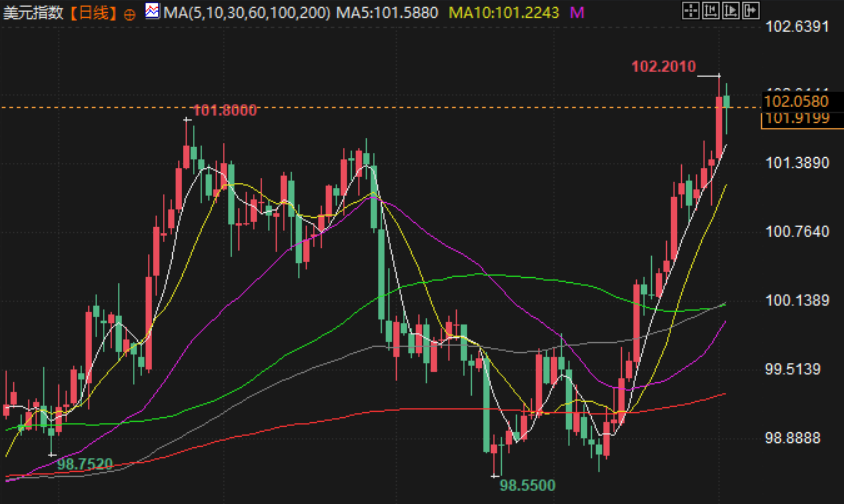
U.S. nonfarm payrolls increased by only 29,000 in September, less than a third of economists' expectations of 90,000. The August increase was revised down to 133,000 from the previously reported 162,000; July's figure was revised to a decrease of 10,000, marking the second consecutive month of negative growth this year. The combined job gains in July and August were 60,000 fewer than previously estimated. Over the past three months, jobs have averaged 51,000 per month, compared to 23,000 in the same period in 2025. Economists estimate that the U.S. economy needs to add about 50,000 jobs per month to keep pace with the growth of the working-age population; the lower job growth needed to maintain labor market balance is due to a reduced labor supply caused by retirements and the Trump administration's tightening immigration policies. The report shows that healthcare continued to contribute the majority of new jobs, adding 17,000 in September; construction, manufacturing, and leisure and hospitality also saw increases. The information technology, financial activities, and professional and business services sectors saw job losses, while government lost 17,000 jobs. The percentage of industries reporting job growth fell to 49.0% from 57.6% in August, an 11-month low. Economists point out that non-farm payroll data tends to be weak when Labor Day falls relatively late in September, and this year is no exception. Currently, there are no signs of widespread layoffs, and initial jobless claims remain near a 57-year low, indicating a labor market characterized by "fewer hiring and fewer layoffs." Unemployment Rate, Wages, and Labor Force Participation As more people enter the labor market, the unemployment rate rose to 4.2% in September from 4.1% in August. The household survey showed that employment increased by 406,000 in September, but this was insufficient to absorb the 485,000 new entrants to the workforce; the labor force participation rate rose to 61.8% from 61.6% in August. Wage growth slowed: after rising 0.3% in August, average hourly earnings rose only slightly by 0.1% in September, with the year-on-year increase falling to 3.0% from 3.1% in August. Slower wage growth confirms that the labor market is not a source of inflation, but it also raises concerns about the sustainability of strong consumer spending and economic growth; with wage growth lagging behind the inflation rate, consumers are reducing savings and drawing on their reserves to fund consumer spending. The number of long-term unemployed rose, and the median duration of unemployment increased to 11.5 weeks from 11.4 weeks in August, nearing a four-and-a-half-year high; the broader unemployment rate fell to 7.6% from 7.7% in August. Scott Anderson, chief U.S. economist at BMO Capital Markets, said the report showed no signs of a genuinely troubled job market, but the foundation for its resilience may not be as solid as GDP growth. The September jobs report virtually ruled out another rate hike this month. The CME FedWatch tool showed that financial markets initially lowered the probability of a rate hike at the Fed's October 27-28 meeting to 13%, then raised it to about 23%, little changed from Thursday; the probability of further monetary tightening has fallen sharply from about 70% at the beginning of the week due to lower-than-expected inflation data in July and August. Traders expect an 86% chance that the Fed will keep rates unchanged later this month, compared to 36% a week ago. Chicago Fed President John Goolsby stated that the latest employment data indicates a stable labor market, while excessive inflation remains a more significant policy concern for the Fed. When asked whether to raise rates this month or pause, he said, "Any option is under consideration." Olu Sonola, head of US economics at Fitch Ratings, said that weak job growth, a slightly rising unemployment rate, and controlled wages, coupled with previous downward revisions to data, give the Fed little reason to continue considering an October rate hike. With inflation still above the 2% target, economists continue to expect a December rate hike. Dominic Bunning, head of G10 FX strategy at Nomura, believes the employment data has a "Goldilocks" characteristic: economic activity remains resilient but has not generated significant inflationary pressure, which is relatively favorable for risk assets and high-beta currencies, and may slightly reduce the tail risk of another Fed rate hike in October. The European Central Bank continues to face pressure to raise rates . The euro rose against the dollar on Friday, but fell for the fourth consecutive week, its longest losing streak since mid-May 2025. Key support came from the sell-off of European government bonds, high US Treasury yields, and market expectations of a hawkish stance from the Fed. The benchmark 10-year U.S. Treasury yield initially fell after the non-farm payroll report, but subsequently rose 5.14 basis points to 5.285%. However, U.S. Treasury yields remain near multi-decade highs, with escalating concerns about the fiscal outlook in parts of Europe and rising oil prices prompting investors to reduce their exposure to the currencies of major energy-importing countries, including the euro and the yen. European countries agreed on Friday to release diesel inventories after Trump pressured governments to take action to curb the surge in fuel prices linked to the war with Iran. Eurozone inflation is likely to rise in the coming months, putting continued pressure on the European Central Bank to raise interest rates. With the 2027 election approaching, markets expect policy rates to rise, and political risks are increasing, putting selling pressure on French and Italian government bonds in recent weeks. The yield on French 10-year bonds jumped to its highest level since 2002 on Thursday; the spread between French and German 10-year bond yields widened to over 150 basis points on Friday, the widest since the end of 2011. Bank of America analysts said that despite persistent market concerns about French risks, the euro's resilience against the Swiss franc was remarkable before this week's sharp sell-off, with the risk reversal option skew premium widening to historical extremes. The euro fell 0.15% against the Swiss franc to 0.9327 francs; the euro was flat against the yen at 177.67 yen, both down for the week. German Economic Resilience German central bank president Nagel said on Friday that the German economy is likely to grow by about 1% this year, roughly double the latest forecast, driven by strong export demand and government investment. The German central bank predicted in June that the German economy would grow by 0.5% this year. Germany's economy has barely grown over the past three years, and the war with Iran is expected to further damage the country's industry by pushing up energy costs. However, Nagel said that German economic output has shown unexpected resilience and is currently in a cyclical recovery phase, although underlying growth remains weak. Federal government debt financing and additional spending focused on defense, infrastructure, and climate protection are factors driving economic growth; Germany has also benefited from unexpectedly strong overseas demand. Strong German economic performance has prompted forecasting agencies to continuously raise their Eurozone economic growth forecasts, now expecting the Eurozone to reach or exceed its potential growth rate of around 1% this year. However, resilient economic growth also means rising inflationary pressures. Current price increases are already close to twice the European Central Bank's 2% target and may accelerate further, potentially forcing the ECB to raise interest rates further. The dollar fell 0.15% against the yen on Friday, closing at 157.83. Citi strategists stated that with the Bank of Japan raising interest rates and Japanese interest rates rising, the long-term trend of the yen may have shifted to appreciation. Strategists believe that the policy stance of the Sanae Takashi government has changed significantly, with its previous pro-inflation policy orientation possibly weakening. Citi stated that after Japan escaped deflation under former Prime Minister Shinzo Abe's "Abenomics" policies, the shift from supporting a weaker yen to supporting a stronger yen is a necessary change. The US policy stance has also changed, from previously limiting excessive yen weakness to guiding yen strength.
- Risk Warning and Disclaimer
- The market involves risk, and trading may not be suitable for all investors. This article is for reference only and does not constitute personal investment advice, nor does it take into account certain users’ specific investment objectives, financial situation, or other needs. Any investment decisions made based on this information are at your own risk.