With gunfire still raging in the Middle East and a hurricane adding to the chaos, oil prices experienced a rollercoaster ride this week, with Brent crude returning to $104!
2026-10-10 11:24:17
This week, the international crude oil market experienced a classic rollercoaster ride. From a significant drop at the opening on Monday (October 5th), to consolidation mid-week, followed by a surge of over 4% on Thursday (October 8th), and a slight increase on Friday (October 9th), Brent crude ultimately recorded a significant weekly gain, while US crude also recovered lost ground and achieved a weekly increase. The price movement throughout the week fully reflected the intense interplay between bullish and bearish factors in the current market: on one hand, there were expectations of supply easing due to unexpected increases in Middle Eastern exports and the G7's release of strategic reserves; on the other hand, there were geopolitical and weather premiums supported by the ongoing conflict with Iran, escalating shipping threats in the Strait of Hormuz, Houthi attacks in Yemen, and large-scale production shutdowns caused by hurricanes in the Gulf of Mexico. Ultimately, concerns about supply disruptions prevailed, and oil prices broke upwards amidst volatility. 
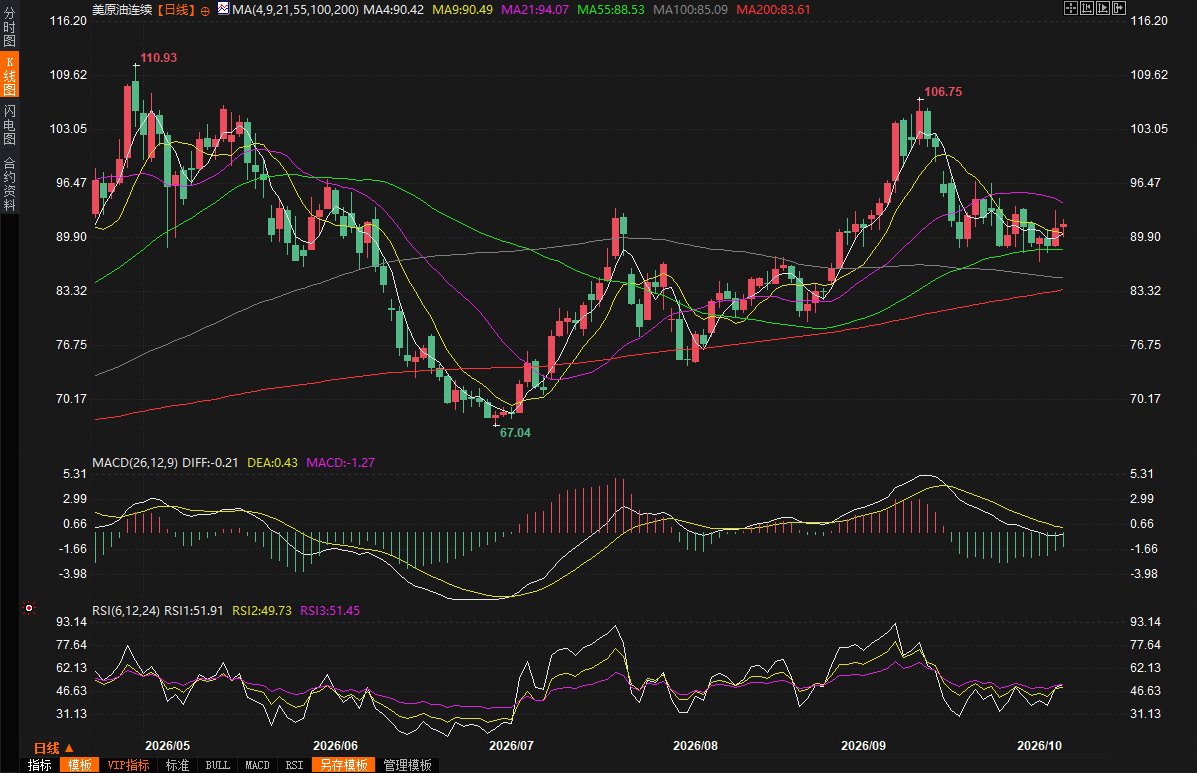 (Brent crude oil daily chart, source: EasyForex)
Monday's sharp drop set the stage for a double whammy: a rebound in Middle Eastern exports and G7 reserve releases created a volatile environment.
Oil prices faced significant selling pressure at the start of the week. Brent crude futures closed down nearly $2 at $100.32 a barrel, while U.S. crude fell by about $1.68 to $89.43. The core catalysts came from two aspects. First, shipping data showed that despite ongoing attacks on ships in the Strait of Hormuz, Middle Eastern crude oil exports exceeded pre-war levels for four days in the last week of September, indicating the market was beginning to digest the signal that "supply was not as completely disrupted as previously expected." Second, the G7, under pressure from U.S. President Trump, agreed to release 100 million barrels of diesel and crude oil from emergency reserves and pledged not to impose energy export restrictions, further strengthening expectations of ample supply. However, the decline did not spiral out of control. The market remains wary of prolonged supply disruptions caused by the war in Iran. Analysts point out that a ceasefire in the Middle East is far off, and renewed hostilities between Saudi Arabia and the Houthis will continue to increase the risk of attacks on energy infrastructure and ships. Meanwhile, the CEO of Saudi Aramco publicly stated that crude oil and refined product supplies will remain tight, and global inventories may take two years to replenish after the emergency release of reserves. The U.S. strategic petroleum reserve has fallen to its lowest level since 1982, providing some support to the market.Tuesday's stabilization and Wednesday's volatility: Details of export recovery intertwined with IEA's accelerated reserve releases
Oil prices were largely unchanged on Tuesday, with Brent crude rising slightly to $100.58 and U.S. crude remaining almost entirely still. The market entered a digestion phase. The CEO of commodities trading giant Vitol revealed that approximately 12 million barrels per day of crude oil and 2 million barrels per day of refined products had been shipped from the Middle East by tanker over the past seven to ten days, and the Saudi East-West Pipeline had transported 5.8 million barrels to the Yanbu export hub, further confirming the recovery in exports. Meanwhile, Houthi attacks on Saudi airports in Yemen and a 100% assessment of the possibility of a cyclone forming in the Gulf of Mexico limited further declines in oil prices. On Wednesday, prices closed lower amid volatility, with Brent falling back to $100.20 and U.S. crude experiencing a larger drop, closing at $88.28. The International Energy Agency's agreement to accelerate its previously announced reserve releases, prioritizing diesel, became a significant factor suppressing oil prices. Analysts believe that Europe, as a region severely affected by fuel shortages, will see its demand for U.S. crude oil alleviated to some extent by releasing reserves, thereby easing supply pressure in the U.S. The U.S. Energy Information Administration's inventory data was unexpectedly tight, with crude oil inventories falling by 3.2 million barrels in the week ending October 2, a stark contrast to analysts' expectations of an increase. Gasoline inventories rose while distillate fuel inventories fell, indicating a structural tightness in refined product inventories. Warnings that a Gulf of Mexico storm might develop into an Atlantic hurricane, along with news of a Ukrainian attack on Russian oil facilities, provided support for oil prices.Thursday's surge continued on Friday: Hurricane-induced capacity shutdowns and repricing of Middle East risk premiums.
The real turning point came on Thursday. Oil prices surged more than 4% in a single day, with Brent crude closing at $104.28 and U.S. crude at $91.49, both contracts rising by more than $5 at one point during the session. The driving factors were clear and strong: on the one hand, renewed concerns about the Middle East war, with the number of attacks on oil tankers in the Strait of Hormuz rising to the highest level since the outbreak of the war. The war with Iran has entered its eighth month, and oil and fuel transported through the strait still account for about 20% of the global total; on the other hand, Hurricane Isaias approached the Gulf of Mexico, and data from the U.S. Marine Minerals Administration showed that as of Thursday, about 1.3 million barrels per day of crude oil production had been shut down, accounting for more than 60% of total production. Shell and Chevron reduced operations, and BP even evacuated all personnel and shut down production on key platforms. Trump's comments about "productive discussions" with Iran and his promise not to launch attacks before the midterm elections had briefly caused oil prices to fall from their highs, but market concerns about actual supply disruptions were clearly more dominant. Oil prices continued to rise slightly on Friday, with Brent crude closing at $104.72 and U.S. crude at $91.85. The hurricane continued its advance, pushing up the shutdown rate of oil production capacity in the Gulf of Mexico to over 70%. News that major Asian countries planned to resume refined oil exports after the Golden Week holiday, and comments from Trump hinting at a possible major announcement on diesel and considering suspending the federal gasoline tax, put some downward pressure on oil prices, but failed to reverse the weekly upward trend. (Brent crude oil daily chart, source: EasyForex)Deep tensions between fundamentals and sentiment: Capacity uncertainty and the challenge of inventory rebuilding
Throughout the week, the market oscillated between "short-term supply increases" and "rising medium- to long-term supply risks." The war in Iran disrupted capacity expansion projects in the Middle East, making future capacity potential estimates uncertain, leading OPEC+ to postpone its review of 2027 member country production quotas. The U.S. Energy Information Administration further lowered its 2026 global oil production and demand forecasts. Saudi Aramco unexpectedly lowered its official selling price for crude oil to Asia in November to the lowest level in six years, reflecting its delicate balance between gaining market share and maintaining prices. On the inventory front, U.S. strategic petroleum reserves are at historically low levels, while commercial inventories, although expected to rebound at times, are actually facing structural shortages in refined products. Analysts generally believe that even if the G7 and IEA release reserves, it will be difficult to quickly fill the long-term supply gap caused by geopolitical conflicts, and global inventory rebuilding may take a considerable amount of time. The sharp fluctuations in oil prices this week are essentially a rebalancing process between geopolitical risk premiums and actual supply recovery. The temporary rebound in Middle Eastern exports and the release of strategic reserves have eased extreme market panic. However, the ongoing threat from the Strait of Hormuz, Houthi attacks, substantial production shutdowns caused by the Gulf of Mexico hurricane, and the long-term drag on production expansion from the Iranian war have collectively supported oil prices, which fluctuated at high levels and ultimately broke upwards. Looking ahead, the market will closely monitor the actual passage through the Strait of Hormuz, the final impact of the hurricane on Gulf of Mexico production, the specific implementation pace of the IEA's reserve releases, and diplomatic signals between the US and Iran. As long as the situation in the Middle East fails to show substantial easing, the risk premium of supply disruptions will be difficult to completely dissipate, and oil prices will continue to seek a new equilibrium point amidst high volatility.- Risk Warning and Disclaimer
- The market involves risk, and trading may not be suitable for all investors. This article is for reference only and does not constitute personal investment advice, nor does it take into account certain users’ specific investment objectives, financial situation, or other needs. Any investment decisions made based on this information are at your own risk.