Institutions: Gold prices withstood the US debt crisis in the third quarter, but volatility risks in the fourth quarter should not be ignored.
2026-10-13 13:22:19
The gold market continues to face multiple headwinds, including high inflation, rising interest rates, and soaring US Treasury yields. However, gold prices have demonstrated remarkable resilience, achieving substantial gains even as US long-term Treasury yields climbed to a 24-year high in the third quarter. Invesco market analysts, in their latest quarterly outlook, pointed out that inflationary pressures, rising interest rates and yields, coupled with central bank structural gold purchases and the return of funds to gold ETFs—these two opposing forces are expected to continue to dominate gold price movements in the final three months of this year. With short-term high yields exerting downward pressure and long-term structural support coexisting, gold is currently in a critical phase of intense tug-of-war between bulls and bears.
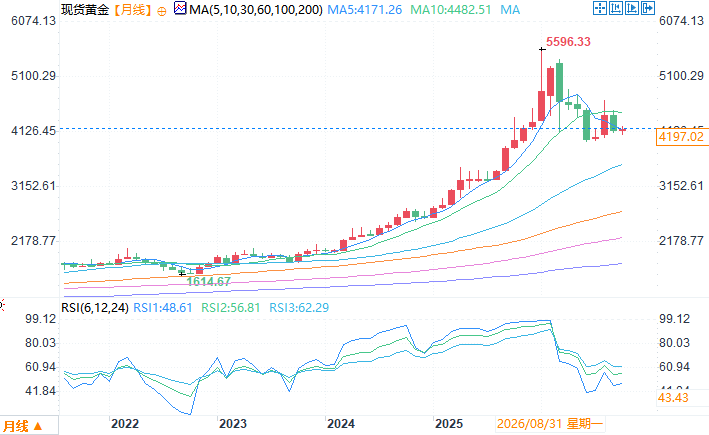 Spot gold monthly chart source: FX678. As of 13:21 Beijing time on October 13th, spot gold was trading at $4197.42 per ounce.
Gold prices bucked the trend and rose in the third quarter, unaffected by the US debt crisis.
Invesco analysts stated that gold closed at $4,157 per ounce at the end of September, up 3.7% in the third quarter. This positive return was hard-won, as the global bond market experienced a significant sell-off during the same period, with US long-term Treasury yields rising to their highest levels in over two decades. The 10-year US Treasury yield closed at 5.28% at the end of September, and the 30-year US Treasury yield reached 5.63%, both marking their highest closing levels since 2002. Analysts explained that rising bond yields, especially real yields, increase the opportunity cost of holding non-interest-bearing assets like gold. However, analysts also pointed out that the historical correlation between gold and real interest rates has weakened significantly in recent years. Analysts stated that since 2022, the historical correlation between gold and real yields has weakened significantly. In that year, the freezing of Russian reserve assets prompted central banks around the world to continuously purchase gold regardless of price, reshaping the traditional pricing logic between gold prices and interest rates.Inflation remains the biggest short-term risk, and the Federal Reserve maintains its tightening stance.
Looking ahead, Invesco believes that persistently high inflation remains the most significant short-term risk facing gold, especially given the current resilience of economic growth. The report notes that the Federal Reserve raised interest rates by 25 basis points in September, increasing the policy target range to 3.75% to 4%. The Fed's latest economic projections also signal at least one more rate hike this year. However, Invesco points out that weaker-than-expected personal consumption expenditure (PCE) inflation data released at the end of September significantly reduced market expectations for an October rate hike. According to CME FedWatch Tool data, the market currently sees only a 21% probability of a rate hike later this month. The Fed is likely to keep interest rates unchanged at its October meeting, with policymakers awaiting more economic data before assessing whether to raise rates in December. Analysts predict that persistent inflationary pressures will force the Fed to maintain a tight stance; meanwhile, Invesco warns that stronger economic growth is pushing up bond yields, posing additional challenges for gold investors.Escalating fiscal risks could put pressure on US Treasury supply and push up yields.
Invesco also pointed out that market concerns about US federal government borrowing continue to rise, with US national debt exceeding $40 trillion in the third quarter. As fiscal risks accumulate, investors may demand greater risk compensation for holding long-term government bonds, further pushing up bond yields. Although rising term premiums are generally seen as a factor suppressing gold prices, concerns about fiscal sustainability may also lead some investors to re-evaluate the status of sovereign bonds as safe-haven assets, indirectly benefiting gold's safe-haven value.ETF holdings rebounded from their lows, and central bank gold purchases hit a new record.
Despite numerous challenges, Invesco emphasizes that the underlying investment logic for gold remains solid. The report shows that for most of 2026, global physical gold ETF holdings continued to decline, with high gold prices coupled with a strong stock market diminishing gold's appeal in diversified portfolios. However, this trend reversed sharply in the third quarter, with global gold ETF holdings reaching their highest level in 12 months at the end of September. Central bank demand also provides significant support. Invesco cites data from the World Gold Council, indicating that central bank gold purchases in the second quarter of 2026 reached a record high for the period. Reserve managers are increasingly focused on geopolitical risks and the security of gold reserves, and this structural demand is expected to continue in the fourth quarter. Invesco judges that central bank reserve diversification, geopolitical uncertainty, and a recovery in investment demand will continue to support gold prices, even if high interest rates and high bond yields pose significant challenges in the short term.Volatility risks remain in the fourth quarter, and a liquidity crunch needs to be guarded against.
Invesco maintains a bullish outlook on gold's long-term prospects but cautions investors to prepare for continued volatility in the fourth quarter. Analysts say that if financial markets remain highly volatile, gold price fluctuations are not unexpected, and such fluctuations may even be unrelated to the fundamental outlook for gold itself. During periods of significant stress in financial markets, even investors with a long-term bullish view on gold may be forced to sell their gold holdings to meet margin calls or cover losses in other parts of their portfolios. This risk is particularly significant for investors who have accumulated substantial unrealized profits during recent gold price increases. Nevertheless, Invesco believes that continued central bank gold purchases to diversify reserves will continue to provide structural support for gold.Conclusion
In summary, gold is at the intersection of short-term macroeconomic headwinds and long-term structural support. High inflation, high interest rates, and high bond yields will continue to suppress gold prices in the fourth quarter, but continued central bank gold purchases, inflows into gold ETFs, and fiscal and geopolitical uncertainties constitute a strong long-term buying force. Invesco advises investors to maintain confidence while also being wary of volatility; gold may not be entirely immune to market fluctuations. The short-term direction of gold prices largely depends on inflation data and the Federal Reserve's policy path, while the real support comes from the deeper trend of restructuring the global reserve system. Spot gold monthly chart source: FX678. As of 13:21 Beijing time on October 13th, spot gold was trading at $4197.42 per ounce.
- Risk Warning and Disclaimer
- The market involves risk, and trading may not be suitable for all investors. This article is for reference only and does not constitute personal investment advice, nor does it take into account certain users’ specific investment objectives, financial situation, or other needs. Any investment decisions made based on this information are at your own risk.