Houthi missiles struck Saudi Aramco's headquarters building, reigniting supply risks and pushing oil prices to a two-week high.
2026-10-14 09:42:19
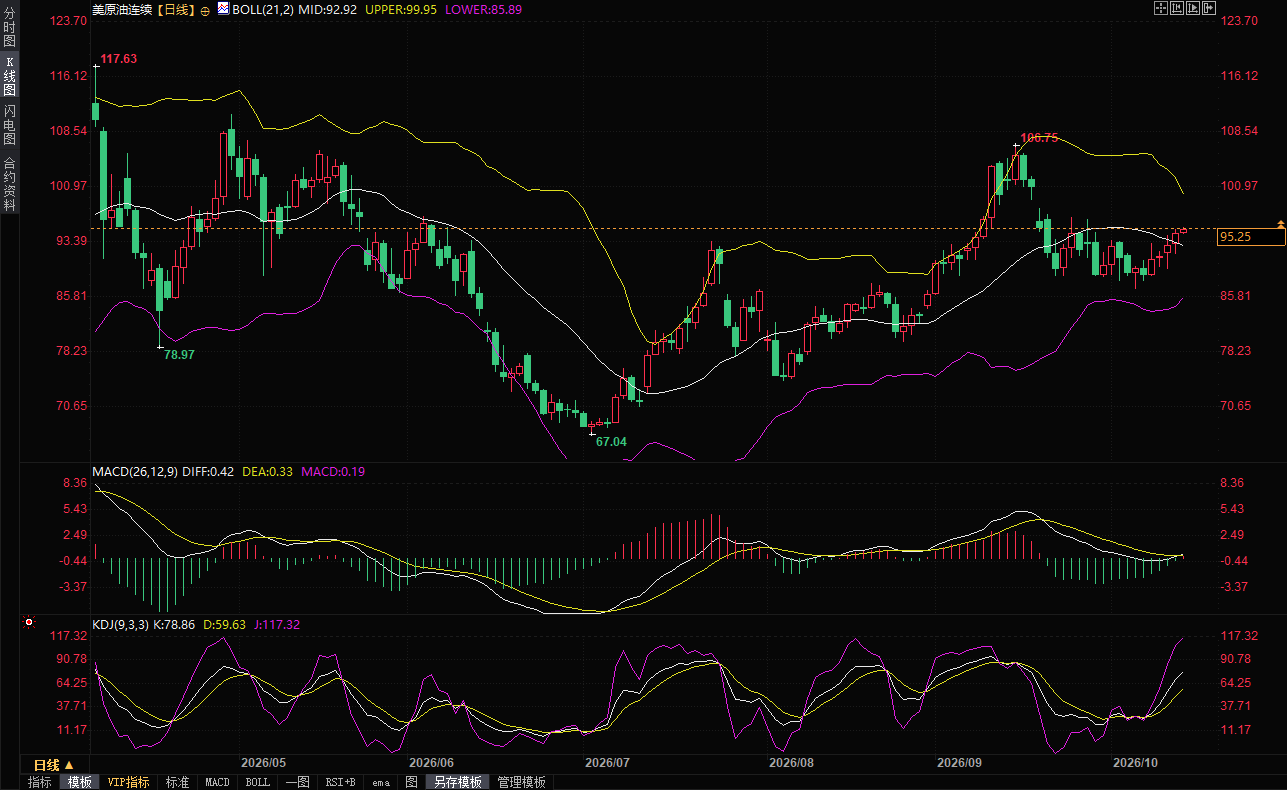
On Tuesday evening (October 13), in the latest round of missile and drone attacks launched by Yemen's Houthi rebels against Saudi Arabia, a ballistic missile struck the administrative building of Saudi Aramco's headquarters in the eastern city of Dhahran, causing damage to the top three floors and triggering a limited fire. The Saudi Ministry of Energy subsequently confirmed the incident but emphasized that there were no casualties. This attack, occurring against the backdrop of renewed civil war in Yemen and continued disruptions to shipping in the Strait of Hormuz, further increased global energy supply risk premiums. On Wednesday (October 14) in early Asian trading, international oil prices continued their upward trend, with US crude oil rising nearly 0.5% to $95.40 per barrel from Tuesday's closing price, reaching its highest level since September 28; Brent crude oil rose nearly 1% to $107.15 per barrel. 
Attack details and official confirmation
According to multiple sources and official Saudi reports, an office building at Saudi Aramco's Dhahran headquarters was attacked on the night of October 13, with the top three floors damaged and on fire. The campus houses the company's key operations center, responsible for coordinating a vast network of onshore and offshore drilling platforms, pipelines, refineries, and export terminals. The Saudi Ministry of Energy stated on Wednesday that the attack on the administrative building resulted in a "limited fire," and that authorities responded quickly and took necessary measures, causing no casualties or deaths. The fire has been extinguished. The Saudi-led coalition stated that it intercepted and destroyed multiple missiles and drones heading towards Dhahran, Riyadh, and the southern region, with debris from one missile landing in a residential area near Dhahran. In Riyadh, debris from two intercepted cruise missiles injured four people (two women, one man, and one child) and damaged 15 homes. Saudi Aramco has not yet issued an official comment, but reports indicate that employees were asked to work from home on Wednesday. Previously, Houthi spokesman Yahya Saree had explicitly threatened to target the Dharan Aramco headquarters and the Riyadh oil refinery, and warned oil workers to stay away from potential attack sites.Escalating Conflict and Resurgence of War in Yemen
This attack is a continuation of the Houthi rebels' ongoing missile and drone strikes against key Saudi facilities over the past week. The attack on Riyadh International Airport on Saturday (October 10th) killed 13 people, becoming the deadliest incident in Saudi Arabia in nearly a decade, and subsequently grounded all flights nationwide, coinciding with the country hosting a major energy conference. Prior to the attack, the Saudi cabinet, chaired by Crown Prince Mohammed bin Salman, explicitly warned the Houthis that they would face consequences for their repeated attacks. The renewed civil war in Yemen stems from broader regional conflicts. Since the US-Israel attacks on Iran on February 28, 2026, the Yemeni conflict has intensified as a spillover effect. Last month, the Houthis suddenly moved south along the Red Sea coast, threatening the Bab el-Mandeb Strait, a crucial energy route. The Saudi-led coalition has restarted military operations, supporting the internationally recognized Yemeni government forces, in an attempt to reverse the situation. The coalition announced on Tuesday evening that it had struck fuel depots, including the Yemeni Oil Company's Sabah Central Station, on the outskirts of Sana'a, aiming to eliminate the Houthis' ability to threaten Saudi Arabia, Yemen, and international waterways. Houthi media outlets claim that Saudi Arabia attacked the relevant oil facilities. Saudi Arabia is seeking broader support from allies to defend against missile and drone attacks, but the United States, its most powerful ally, has so far refused to directly intervene in the war against the Houthis. Iranian Foreign Minister Abbas Araqchi previously expressed his willingness to mediate between Saudi Arabia and the Houthis.Impact on global energy markets and oil prices
Saudi Aramco, the world's largest oil company and a core pillar of the Saudi economy, boasts a maximum sustainable crude oil production capacity of 12 million barrels per day, fully operational within days. The company has recently demonstrated strong performance, with net profit reaching 120.13 billion riyals (approximately US$32 billion) in the first quarter of 2026, a year-on-year increase of 25.6%; adjusted net profit for the first half of the year was approximately US$67.2 billion. While the attack did not immediately disrupt production, the damage to its headquarters, the operational hub, coupled with recent attacks on airports and facilities, has exacerbated market concerns about the security of Saudi energy infrastructure. International oil prices have already reflected supply risks. On Wednesday, oil prices rose nearly 2%, reversing earlier losses of over 2% and returning to a two-week high, continuing the upward trend. Since the outbreak of the US-Iran conflict, oil prices have generally surged, with Brent crude rising over 70% this year. The Saudi Energy Minister previously emphasized the resilience of the Kingdom's energy supply, but the market remains highly vigilant regarding potential escalation. Aramco CEO Amin Nasser recently pointed out that the company's systems are sound, its strategic reserves are sufficient to meet customer needs, and it is exploring more export routes to cope with the Hormuz risk.The risks of the Strait of Hormuz are compounded.
Parallel to the Houthi attacks is Iran's continued pressure in the Strait of Hormuz. On the 13th, the Iranian Navy warned transit vessels to keep their electronic equipment switched on and to coordinate with Iranian forces, stating that it had discovered an oil tanker that had been damaged and caught fire after violating regulations while sailing in the restricted area. Two senior Iranian officials revealed that Iran adjusted its ship-attacking tactics about 10 days ago, changing the type and pace of attacks, with the aim of maintaining high oil prices and attempting to influence the US midterm elections. US military officials confirmed that the Islamic Revolutionary Guard Corps, after its radar capabilities were compromised, began using unarmed observers on small boats to identify targets. Recent attacks in and around the strait have been frequent, with up to six ships attacked in a single day, and shipping volume remains far below pre-conflict levels. This series of events more closely links regional conflict with global energy security. The Bab el-Mandeb Strait has become an alternative passage due to the Red Sea situation, while the continued disruption of the Strait of Hormuz, a vital choke point for the Persian Gulf, further drives up transportation costs and risk premiums.Editor's Summary
The attack on Saudi Aramco headquarters highlights the direct threat posed by the escalating conflict in Yemen to the infrastructure of the world's largest oil exporter. While production has not yet been substantially affected, the combined effects of shipping disruptions in the Strait of Hormuz and high oil prices have significantly increased market concerns about the stability of Middle Eastern energy supplies. With ongoing clashes between regional parties and external mediation, the short-term supply risk premium is unlikely to dissipate, while the medium- to long-term outlook depends on conflict control and the restoration of shipping routes. The global energy market will continue to adopt a cautious approach to potential further escalation.Frequently Asked Questions
Q: What specific damage did Saudi Aramco's headquarters suffer? Will it affect oil production? A: On the evening of October 13, an administrative office building in the Dhahran headquarters campus was hit by a ballistic missile (or damaged by debris from an intercepted missile). The top three floors were damaged, and a limited fire broke out. The fire has been extinguished, and there were no casualties. The campus houses a crucial operations center responsible for managing the drilling, pipeline, refinery, and export terminal network. The Saudi Ministry of Energy confirmed that the fire was limited and there were no casualties. There are currently no reports of production disruptions. Aramco's maximum sustainable production capacity remains at 12 million barrels per day. The company emphasizes that its systems are intact and reserves are sufficient, and the impact on actual crude oil production in the short term is limited. However, the damage to the operations center increases uncertainty in management and security. Q: How is this attack related to the Yemeni civil war and the wider regional conflict? A: The Houthi rebels have continued to retaliate against Saudi-backed Yemeni government forces with missiles and drones over the past week. The Yemeni civil war has reignited due to the spillover effects of the US-Israel attacks on Iran in February 2026, and the Houthis advanced to the vicinity of the Bab el-Mandeb Strait last month. The Saudi-led coalition has resumed military operations and struck fuel facilities in Yemen, while the Houthis have threatened and actually attacked Saudi airports and energy targets. Saturday's attack on Riyadh airport killed 13 people, becoming the deadliest incident in nearly a decade. Iran is accused of allying with the Houthis, while simultaneously exerting pressure in the Strait of Hormuz, creating multiple interconnected risks. Q: What is the current level of international oil prices? How will the attack affect the market? A: As of October 14, Brent crude oil remained around $107 per barrel, and WTI crude oil around $95. Brent has risen more than 70% this year, reflecting supply concerns since the US-Iran conflict. Although this attack did not directly disrupt production, it reinforced perceptions of the vulnerability of Saudi infrastructure, and coupled with shipping disruptions in the Strait of Hormuz, increased market risk premiums. Short-term oil prices may fluctuate due to sentiment, while medium-term prices will depend on whether the conflict further impacts actual export capacity. Q: What is the current shipping situation in the Strait of Hormuz? What new tactics has Iran adopted? A: Shipping volume in the Strait remains significantly lower than the pre-conflict level of approximately 138 ships per day. Recent attacks have been frequent, with a maximum of six ships attacked in a single day. Iran has adjusted its tactics, changing the type and pace of attacks about 10 days ago, using small vessels as observers to identify targets in an attempt to maintain high oil prices and influence the US midterm elections. The Iranian Navy requires transit vessels to activate their electronic devices and coordinate passage, taking action against vessels that violate these rules. These measures have exacerbated transportation costs and delays, indirectly supporting oil prices. Q: As the world's largest oil company, how can Saudi Aramco's financial and production capacity support the current challenges? A: Aramco's net profit for the first quarter of 2026 was 120.13 billion riyals (approximately US$32 billion), a year-on-year increase of 25.6%; its adjusted net profit for the first half of the year was approximately US$67.2 billion, a strong performance. Its maximum sustainable production capacity of 12 million barrels per day can be brought online within days, offering a significant cost advantage. The company is exploring additional export routes and expanding overseas storage to address the Hormuz risk. Despite the attack on its headquarters, its financial resilience and production capacity flexibility provide a buffer for short-term supply, but the long-term security environment remains a key variable. At 09:39 Beijing time, US crude oil is currently trading at $95.34 per barrel.- Risk Warning and Disclaimer
- The market involves risk, and trading may not be suitable for all investors. This article is for reference only and does not constitute personal investment advice, nor does it take into account certain users’ specific investment objectives, financial situation, or other needs. Any investment decisions made based on this information are at your own risk.