Energy Boosts CPI, Wages Pose Hidden Risks: IMF Warns of US Fiscal Dilemma
2026-10-14 20:48:18
US September CPI and core inflation both exceeded expectations, with a significant rebound in energy prices pushing up overall prices. Core inflation remained sticky, but a negative month-on-month wage growth revealed concerns about domestic demand. Following the data release, the US dollar index briefly surged 35 points to 102.54. Coupled with the IMF's warnings at its Bangkok annual meeting about the US fiscal deficit and debt risks, short-term expectations for a Fed rate cut have been delayed. In the medium to long term, the dollar is constrained by high debt levels. The market will await tomorrow's PPI sub-indices data to determine whether this inflation is an imported shock from energy or a sustained price increase driven by domestic demand. 
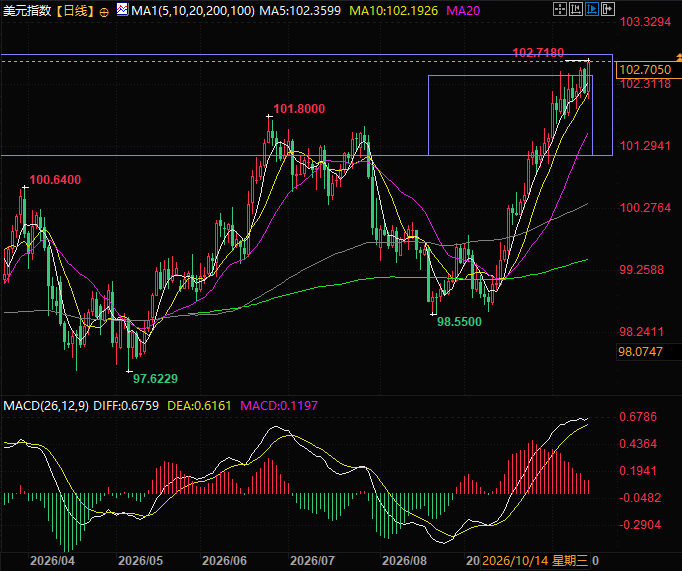 (US Dollar Index Daily Chart, Source: FX678) At 20:45 Beijing time, the US Dollar Index is currently at 102.66.
September CPI Core Data Review
The US September CPI data has been officially released, with all figures exceeding market expectations. Inflation exhibits a structural divergence, driven by energy, with a slight increase in core stickiness and weakening wages: Overall CPI annualized growth was 3.7%, compared to an expected 3.6% and a previous value of 3.4%; Core CPI (excluding food and energy) annualized growth was 2.6%, compared to an expected 2.5% and a previous value of 2.4%; Energy CPI surged year-on-year to 20.4%, up from 16.9% previously, making it the most significant contributor to the overall CPI increase; Housing CPI remained resilient, with a previous value of 3%, continuing to support core inflation as the highest-weighted service sub-item; Weekly wage growth was -0.5% month-on-month, down from 0.2% previously, turning negative month-on-month; Weekly wage growth was -0.1% year-on-year, down from 0.3% previously, with both year-on-year and month-on-month wage declines signaling a significant cooling of labor income. Structurally, the primary driver of this inflation rebound was rising energy prices, significantly boosting the overall CPI due to oil prices. Core CPI also rose slightly more than expected, indicating that the stickiness of service-related inflation, excluding energy, has not completely disappeared. However, wage data showed a significant decline, creating a contradictory signal: while prices rebounded slightly, real income contracted month-on-month, suggesting weakening domestic demand. Following the data release, the US dollar index rose rapidly by about 35 points, reaching a high of 102.54. The market pricing logic is very straightforward: higher-than-expected inflation will compress the Fed's room for interest rate cuts, further delaying rate cut expectations, and driving up US Treasury yields, leading to a surge in dollar buying. However, the signal of declining wages limited the dollar's upside potential; the market did not unilaterally bet on a resumption of rate hikes, but rather traded on a downward revision of rate cut expectations.IMF Global Fiscal Warning: High Debt Makes US Inflation More Complex
On the same day the CPI was released, the IMF issued a significant fiscal warning at the World Bank Annual Meetings in Bangkok, adding medium- to long-term macroeconomic constraints to current US inflation and dollar pricing. IMF Managing Director Kristalina Georgieva pointed out that the US cannot simply rely on economic growth to reduce debt and fiscal deficits; it must implement fiscal austerity measures such as tax or spending adjustments. Currently, rising global bond yields have significantly eroded national fiscal budgets, drastically narrowing the policy maneuvering space for highly indebted economies. The report's core assessment of global economic imbalances is: the US needs to increase savings and reduce its deficit; China needs to shift from export-oriented to expanding domestic consumption; and Europe needs to increase investment in competitiveness sectors. Furthermore, ECB President Christine Lagarde stated that the primary solution to France's debt problem lies in domestic fiscal consolidation, and that direct central bank intervention in the bond market should not be expected, further reinforcing market expectations that "high debt cannot be bailed out by monetary easing." This information is linked to the CPI data: in the short term, inflation is rebounding, making it difficult for the Federal Reserve to quickly cut interest rates; however, in the medium to long term, the high US fiscal deficit and government debt pressure persist. If fiscal expansion continues, it will continue to push up the supply of US Treasury bonds and raise long-term yields, which in turn will suppress the long-term strengthening of the dollar. Short-term trading is driven by inflation, while medium- to long-term pricing depends on the sustainability of US fiscal policy; these are the two main themes driving the current dollar market.Key points to watch for tomorrow's PPI: Differentiating between imported inflation and demand-side inflation.
CPI reflects the prices of end-consumer goods, while PPI reflects the ex-factory prices of industrial production. Combining the two can help determine whether the current price increase is imported inflation from external commodities or domestic demand-driven inflation, which is crucial for the Federal Reserve's subsequent policy decisions. Imported Inflation Characteristics (Energy-Driven): If the PPI increase is mainly concentrated in upstream raw material sub-items such as crude oil, energy, and chemicals, while the price increases of midstream and downstream processed goods and consumer goods are limited, it indicates that the source of this round of price increases is international commodities, classifying it as imported inflation. This type of inflation is characterized by its concentrated impact on the energy sub-item in the overall CPI, with a relatively weak transmission to core services. The Federal Reserve has a relatively higher tolerance for this type of inflation and does not need to tighten policy immediately. Correspondingly, the dollar's upward momentum tends to be weak after a brief surge. Demand-Driven Inflation Characteristics : If the PPI increase spreads widely to related production prices of consumer goods, equipment, and services, with price increases across the entire supply chain, coupled with continued increases in housing and core service CPI, it indicates overheated domestic end-consumer demand in the United States, classifying it as domestic demand-driven inflation. This type of inflation is more persistent and more easily embedded in core prices, forcing the Federal Reserve to maintain high interest rates for longer and even retain the option to raise rates, thus providing stronger and more lasting support for the US dollar. Simultaneously, we need to cross-validate wages: the weekly wage growth has already turned negative this month. If PPI rises sharply but wages continue to weaken, it means that business costs are rising but difficult to pass on to downstream consumers, putting pressure on corporate profits, and the subsequent inflation transmission chain is likely to break. Summary and Technical Analysis: In the short term, the September CPI exceeded expectations, the market lowered its expectations for a Fed rate cut, and the US dollar index surged to 102.54 in the short term, representing a pulse-like movement driven by inflation data. However, there are contradictions within the data: energy pushed up the overall CPI, wages declined month-on-month, and domestic demand was weak. Relying solely on a single month's CPI data makes it difficult to confirm a second, sustained rebound in inflation. The PPI data tomorrow will be crucial for verification: if only upstream energy components of the PPI strengthen, it's considered an imported shock, with limited inflationary pressure, and this round of dollar appreciation is likely a short-term impulse; if the PPI strengthens across the board, it indicates continued demand, further confirming inflation stickiness, and opening up upward potential for the dollar. Looking at a longer timeframe, the IMF's fiscal warnings are medium- to long-term variables. The US's high deficit and debt will continue to constrain US Treasury bonds and the dollar. Even if short-term inflation delays interest rate cuts, the dollar is unlikely to experience a sustained bull market, and the market will likely exhibit more volatile and fluctuating characteristics. In trading, focus on the PPI component structure, distinguishing the sources of inflation, and combining this with US Treasury yields and subsequent employment data to judge the Fed's policy path and the continuity of the dollar's trend. Technically, the dollar still faces pressure from fulfilling its double-box upward target. The large bearish candlestick in the previous trading day is evidence of recent dollar price stagnation and increased divergence between bulls and bears. (US Dollar Index Daily Chart, Source: FX678) At 20:45 Beijing time, the US Dollar Index is currently at 102.66.
- Risk Warning and Disclaimer
- The market involves risk, and trading may not be suitable for all investors. This article is for reference only and does not constitute personal investment advice, nor does it take into account certain users’ specific investment objectives, financial situation, or other needs. Any investment decisions made based on this information are at your own risk.