Diesel fuels secondary energy shock, Middle East geopolitical tensions disrupt oil market pricing.
2026-10-15 17:54:20
The ongoing US-Iran standoff, coupled with the pressure of the US midterm elections, has shifted the main focus of the energy market from simply betting on crude oil supply disruptions to closely monitoring diesel supply and demand and crack spreads. Recently, the market seems to have experienced another energy shock from diesel, namely a second wave of inflation. Concerns about inflation and economic slowdown have led to significant adjustments in global assets. Frequent attacks on ships in the Strait of Hormuz have pushed up oil transportation costs, and the IEA has warned that the global diesel shortage may continue until 2027. Trump's approval rating has fallen to a two-term low, and rising fuel and inflationary pressures have forced the White House to introduce a series of policies, including plans to introduce Russian diesel and consider easing sanctions on the Shadow Fleet, but these policies face significant obstacles in implementation. Diesel price fluctuations are inversely influencing crude oil pricing through refinery operating rates and logistics inflation, becoming the most crucial pricing variable in the short-term oil market. 
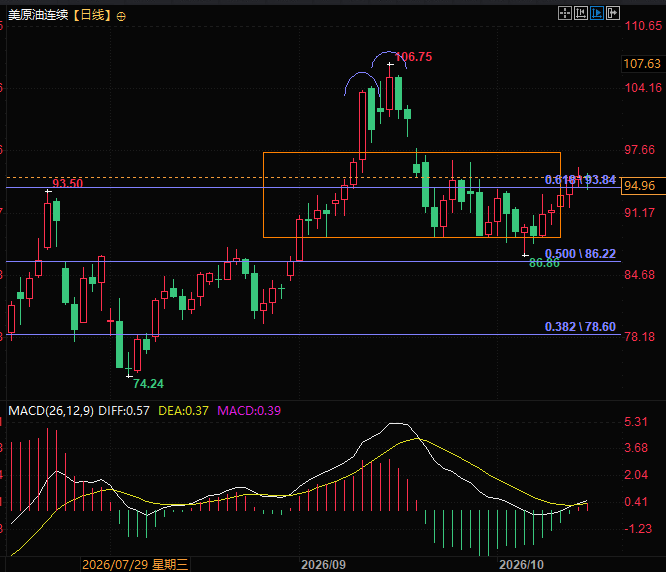 (WTI crude oil futures main contract daily chart, source: EasyTrade) At 17:51 Beijing time, WTI crude oil futures main contract is currently trading at $94.96 per barrel.
The main theme shifts: Funds focus on diesel supply and demand, while energy inflation intensifies election pressure.
The US-Iran conflict in the Persian Gulf has lasted for nearly eight months and is the underlying driver of the current diesel shortage. A recent Fox News poll shows Trump's overall approval rating has plummeted to its lowest point in his two terms, with only 36% of voters approving of his performance and 64% disapproving. Voter dissatisfaction centers on inflation and energy costs, with only 22% approving of his handling of inflation. Data shows that current US gasoline is around $4.33 per gallon, up $1.25 year-on-year. Trump initially predicted the war would last only a few weeks, but now he can't find a way out. He admitted that the US doesn't even know who to negotiate with to end the war with Iran, lamenting, "Perhaps we should have preserved the Iranian leadership, otherwise we wouldn't have found a negotiating partner." US-Iran negotiations have stalled in recent weeks, with both the Treasury Secretary and Secretary of State expressing pessimism about the prospects for peace talks. The US demands that Iran take concrete action on nuclear enrichment, insisting on "actions for actions." With the midterm elections approaching, rising energy and inflationary pressures are forcing the White House to introduce various policies to suppress diesel prices. The IEA has warned that conflicts in the Middle East are disrupting the supply of refined oil products, and the global diesel shortage may continue until 2027. The strength of diesel prices is inversely influencing crude oil pricing.The Strait of Hormuz shipping crisis has driven up diesel transport premiums.
According to data from the International Maritime Organization, as of the 14th, 22 ships have been attacked in the Strait of Hormuz and surrounding waters this month. The attacks have intensified since the end of September, reflecting the escalating power struggle between the US and Iran over control of the strait. Among the incidents, the container ship GFS Pride sank in the southern part of the strait. The increased shipping risks have driven up insurance and tanker freight rates, restricting cross-regional diesel transport. Kpler data shows that 40% of Gulf crude oil now bypasses the strait via pipelines (compared to only 17% before the conflict). Although the strait remains navigable, the ongoing attacks support a risk premium for diesel shipping. Diesel is a core fuel for logistics, construction machinery, and agricultural machinery. Diesel shortages have increased crack spreads, improved refinery profitability, and increased crude oil purchases, supporting oil prices. However, the continued surge in diesel prices is also raising logistics costs and inflation. High interest rates are suppressing the economy, weakening crude oil demand, and depressing oil prices. Therefore, short-term oil price adjustments do not indicate a reduction in inflationary pressures; rather, they suggest that inflation is driving an economic recession.US policy attempts to alleviate pressure on diesel and oil shipping, but the Shadow Fleet plan faces numerous uncertainties.
To lower domestic diesel prices, Trump plans to import Russian diesel, but the total volume is limited, equivalent to less than a day's consumption in the US, making it difficult to fundamentally change the tight balance. Furthermore, delivery faces multiple obstacles, including shipping disruptions and damage to Russian refineries. Meanwhile, the US is considering easing sanctions on the Shadow Fleet transporting oil from Russia, Iran, and Venezuela, attempting to lower record freight rates. However, this plan faces many obstacles: there is a risk that funds could indirectly flow to entities affiliated with the Iranian Revolutionary Guard; these vessels are generally old and unlikely to pass port security checks; even with international ship-to-ship transshipment, compliant tankers may be flagged by risk control systems. The EU, UK, Switzerland, and other countries have already blacklisted these vessels, allowing each country to independently enforce sanctions. France recently implemented similar restrictions, meaning that even if the US eases restrictions, other jurisdictions may not follow suit. Analysts point out that the Shadow Fleet itself is unlikely to completely solve the capacity gap, but the crews' experience with the grey oil transport network is a key factor for regulators to squeeze this smuggling route. Coupled with the disruptions to global energy trade flows caused by Trump's tariff rhetoric, market sentiment has become cautious. The interplay between high freight rates and the implementation of sanctions by multiple countries is a key variable in the short-term oil market. Going forward, it's crucial to monitor whether the US can implement its plans and whether other sanctioned countries will adjust their positions accordingly. Energy Aspects also believes that easing sanctions on the Shadow Fleet will have limited impact on increasing effective shipping capacity.Summary and Technical Analysis:
Diesel fuel is a basic fuel for road freight, agricultural machinery, and construction machinery. A surge in diesel prices will raise overall logistics costs, push up inflation in goods and services, and force central banks to maintain high interest rates. Currently, the impact of energy on inflation and the economy is no longer limited to oil prices themselves; diesel supply and demand are also key indicators of this energy inflation. Going forward, we will focus on monitoring diesel inventory, diesel crack spread, and tanker freight rates, while closely watching the progress of US-Iran negotiations and any new US measures to control oil prices. If attacks on Middle East shipping lanes resume and the US-Iran conflict escalates again, the anticipated tightening of diesel supply will drive a rebound in oil prices; conversely, if relevant US policies are implemented, the expectation of diesel shortages will ease, putting downward pressure on oil prices. Technically, WTI crude oil futures continue to hold above the 0.618 Fibonacci retracement level, with support at 93.84 and resistance around 97.5, near the upper edge of the trading range and the previous downward gap in oil prices. (WTI crude oil futures main contract daily chart, source: EasyTrade) At 17:51 Beijing time, WTI crude oil futures main contract is currently trading at $94.96 per barrel.
- Risk Warning and Disclaimer
- The market involves risk, and trading may not be suitable for all investors. This article is for reference only and does not constitute personal investment advice, nor does it take into account certain users’ specific investment objectives, financial situation, or other needs. Any investment decisions made based on this information are at your own risk.