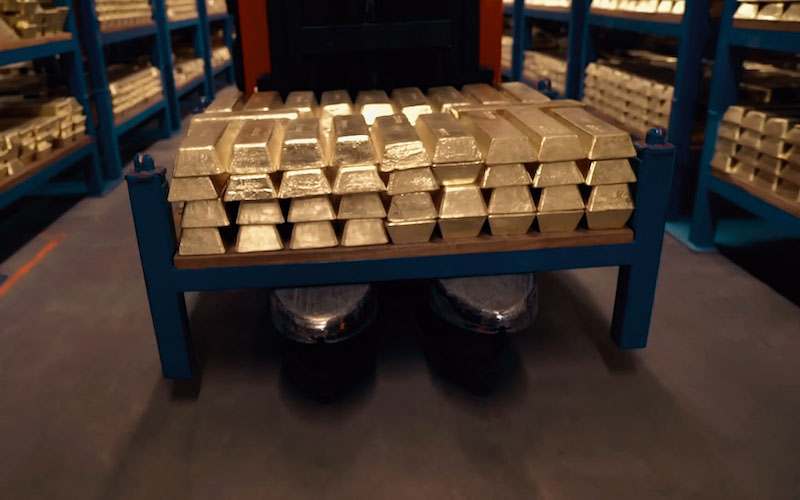
Industry experts have made a startling revelation: US Treasury yields will continue to rise, and long-term currency depreciation will benefit gold.
2026-10-16 12:14:20
On Wednesday (October 14), the US September inflation report was released, with the CPI rising to 3.7% year-on-year. Gold prices plummeted in response, dropping by about $80 to around $4,073 at one point. However, as Federal Reserve officials hinted at no rush to raise interest rates further, the dollar index and US Treasury yields fell sharply from their highs, and gold prices rebounded. On Friday (October 16) in Asian trading, spot gold rose as much as 0.35% to $4,186.41 per ounce. Mario Innecco, a veteran trader with about 20 years of experience as a London government bond futures broker and who bought his first gold investment back in 2002, pointed out that the bigger story is actually in the bond market. In his view, the 40-year bond bull market has ended, interest rates will turn upward, and savers will pay the price. He asserted that against the backdrop of high inflation and high debt, the Federal Reserve can no longer replicate Volcker's aggressive tightening.
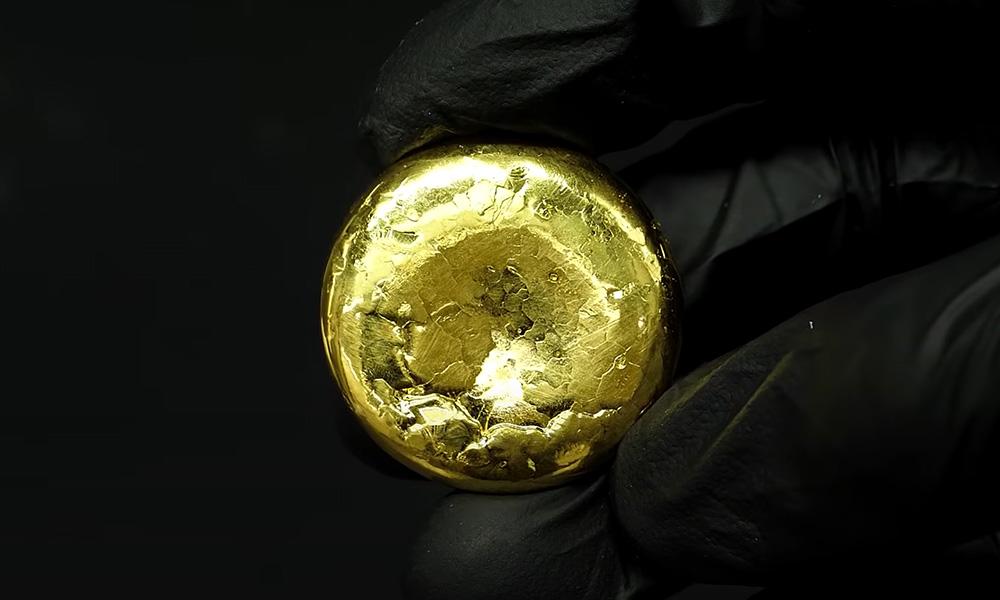
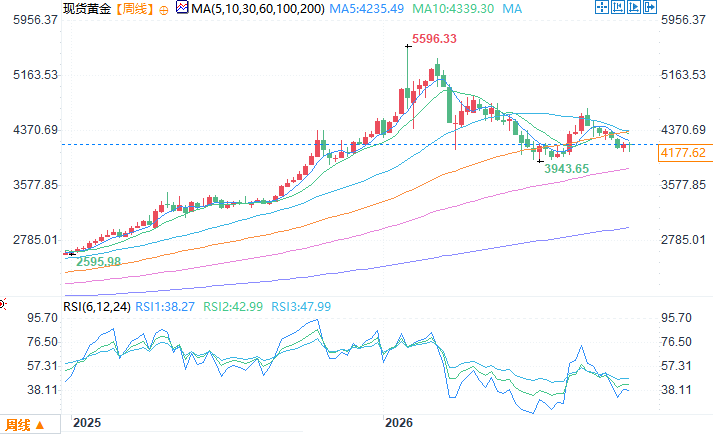 Spot gold weekly chart source: FX678. As of 12:12 PM Beijing time on October 16th, spot gold was trading at $4177.62 per ounce.
Gold prices fall as inflation rises.
Data released on Wednesday showed that the September CPI rose 3.7% year-on-year, higher than August's 3.4%, with gasoline prices surging 9.1% in a single month, contributing more than half of the increase. Following the data release, spot gold fell as much as $82 from the previous close, hitting a low of $4078.80; silver prices fell by more than 5% at one point. US Treasury yields subsequently rose, with the 2-year yield rising 15 basis points to 4.94% and the 10-year yield rising 11 basis points to 5.32%. The CME FedWatch Tool showed that futures traders' expectations for a rate hike on October 28th doubled in one day to approximately 50%. Ineko stated that professional traders interpreted high inflation as a signal that the Fed would further tighten monetary policy, which increased the opportunity cost of holding gold relative to holding US Treasury bonds or bank deposits.The bond bull market is over; interest rates may surge, fall, and then rebound.
Ineko believes the bigger trend reversal is in the bond market. In August 2020, the 10-year US Treasury yield hit a historic low of 0.52%, and gold prices broke through $2,000 for the first time; however, by October 7, the yield had risen to 5.36%, the highest since 2002, and gold prices remained above $4,000. He said that during the bond bull market from 1981 to 2021, persistently low interest rates allowed governments and mortgage holders to refinance at lower costs, keeping the economy running; but now, he believes the bond market has entered a bear market. He predicts that in the next 3 to 6 months, the 10-year yield may see a counter-trend rebound to around 4.5% or even 4.25%, and then climb towards 6%. He advises savers seeking higher returns to hold short-term US Treasury bonds with maturities of one year or less. Calculations show that if the yield rises to 6.25%, a 10-year bond bought now at 5.3% will be worth only about 94 cents after two years. He said that in the 1970s, bonds were called "forfeiture certificates," and this scenario could repeat itself today. The US government and the Federal Reserve don't seem to mind because it's equivalent to writing off debt. Rising yields mean the Federal Reserve is losing control of the currency, and the currency is becoming increasingly worthless.Suspicions of market manipulation coexist with a buying frenzy for physical goods.
Ineko stated bluntly that there are people deliberately suppressing gold and silver prices, especially silver, because it is more susceptible to being dumped. Traders manipulate paper prices and know exactly which price levels will attract buying. He also mentioned that during the Golden Week holidays in major Asian countries, the gold market is closed, often becoming a window for precious metals banks to suppress gold and silver prices. Regulators have previously punished such manipulation; in September 2020, JPMorgan Chase agreed to pay over $920 million to settle a U.S. investigation into its years of order manipulation in gold, silver, and U.S. Treasury futures. Despite this, Ineko said that almost no one is selling physical metals. He said that if there is any opportunity, it is likely to be the time to buy more gold and silver at lower prices and continue accumulating.The real cost of inflation and the long-term risk of dollar depreciation
Ineko defines inflation as the growth of the money and credit supply, not CPI data. He estimates that broad money supply (M2) is expanding at an annualized rate of about 6.7% this year. He doesn't entirely trust official inflation data, pointing out that the government replaces cheaper goods in the CPI basket and masks price increases with quality adjustments. On the same day, the U.S. Social Security Administration announced a 3.6% adjustment for the cost of living in 2027, increasing the average monthly check for retired workers by about $75 to $2,170. Ineko believes this is far from enough to offset inflation. He says the newly added money first flows to Wall Street and large corporations, and by the time it reaches the bottom 50%, it has already depreciated, buying far less. He bluntly states that inflation is a tax, and an unfair one at that.The Federal Reserve is unlikely to replicate Volcker's success; a revaluation of gold prices may be a turning point.
Ineko argues that the Federal Reserve is itself a creator of inflation, and what they are fighting is merely managing the public's perception of inflation. On September 16, the Fed raised its policy target range to 3.75% to 4%, the first rate hike since July 2023 and the first since Kevin Warsh became chairman. Ineko calls Warsh relatively independent and says he wouldn't be surprised if the Fed raises rates again. However, he judges that rate hikes strong enough to cripple inflation would also cripple the economy. In 1981, when Paul Volcker pushed interest rates to 20%, federal debt was about one-third of the economy; now, federal debt surpassed $40 trillion in August, exceeding annual economic output. He says it's no longer possible to replicate Volcker-style tightening. He anticipates that money printing will continue until the public loses confidence in the currency ; on that day, people will want anything but money. He also discussed the US Treasury's gold revaluation. The Treasury's gold reserves, valued at $42.2222 per ounce by law, are worth approximately $11 billion. However, at market prices, the same amount of gold would be worth over $1 trillion. If Congress approves a revaluation, the Treasury could retain the gold while simultaneously gaining approximately $1 trillion, but this would drive up inflation. He cautioned that in 1933, Franklin D. Roosevelt mandated the surrender of gold reserves, and the price of gold was revalued overnight; changes can happen very quickly, even within a weekend.Conclusion
In summary, Ineko's entire viewpoint paints a picture of high inflation, high debt, and currency devaluation: the bond bull market is over, and rising interest rates will put heavy pressure on savers; the precious metals market shows signs of artificial suppression, yet physical buying continues on dips; the Federal Reserve, under debt pressure, is unable to aggressively tighten monetary policy and can only rely on printing money to dilute debt, which may ultimately trigger unconventional measures such as fiscal revaluation of gold. Having accumulated gold for 24 years, he frankly admits that his biggest surprise is that the authorities have been able to delay for so long, thanks to the 40-year bond bull market. Now the winds have changed, and sailing against the winds, the road ahead will be even more difficult. Spot gold weekly chart source: FX678. As of 12:12 PM Beijing time on October 16th, spot gold was trading at $4177.62 per ounce.
- Risk Warning and Disclaimer
- The market involves risk, and trading may not be suitable for all investors. This article is for reference only and does not constitute personal investment advice, nor does it take into account certain users’ specific investment objectives, financial situation, or other needs. Any investment decisions made based on this information are at your own risk.