The Federal Reserve Chairman spoke publicly in Bangkok, offering no predictions about the meeting's decisions or revealing the policy path.
2026-10-16 14:02:22
On October 16, Federal Reserve Chairman Kevin Warsh held a fireside chat with IMF Managing Director Kristalina Georgieva at the IMF and World Bank Annual Meetings in Bangkok. The conversation took place at 11:30 AM Beijing time (10:30 AM Bangkok time). This was the Fed's last public statement before entering its policy meeting blackout period, and the last window for the market to glean the Fed's policy direction before the October 27-28 policy meeting. Warsh was cautious in his wording on inflation and interest rates, clearly stating the Fed's commitment to price stability while refusing to predict any meeting's decisions, leaving ample policy suspense for an October rate hike. His lengthy discussion on artificial intelligence injected a broader, long-term perspective into this short-term policy game.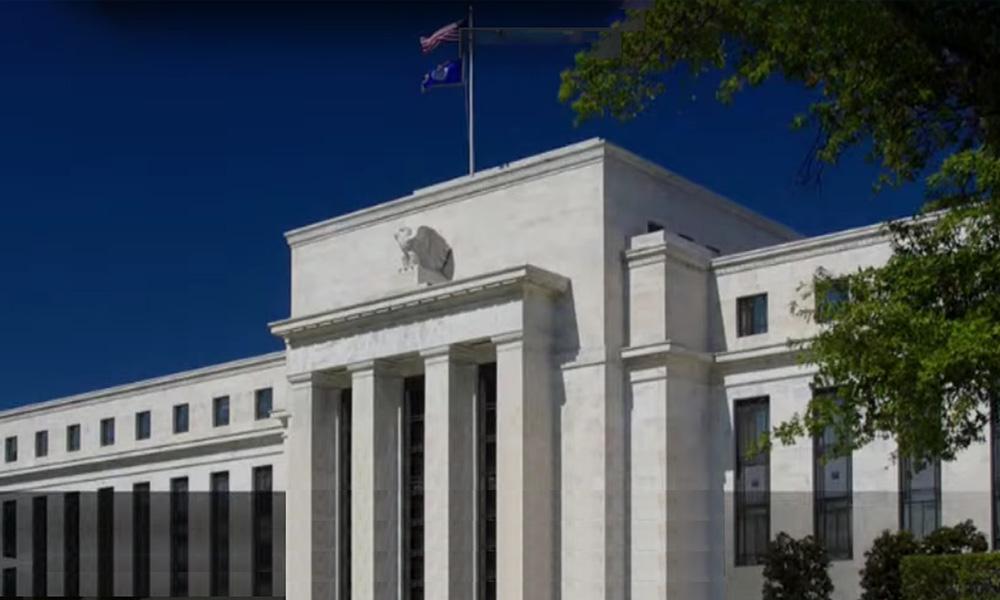
Interest Rate Stance: Remain Data-Driven, Refuse to Predict Meeting Decisions
Facing market inquiries about whether to raise interest rates again in October, Warsh maintained his usual restraint. He stated that the Fed had clearly indicated its intention to achieve price stability and withdraw some degree of monetary easing when it raised rates in September. However, he immediately emphasized that he would not predict the decisions of any meeting, nor should he reveal what actions might be taken at the remaining meetings this year. This statement is highly consistent with Warsh's policy communication style since the Jackson Hole Economic Symposium. He advocates significantly weakening forward guidance, believing that central banks should not prematurely commit to the interest rate path to the market, so as not to restrict policy flexibility. Against the backdrop of high inflation and a stronger-than-expected September CPI, Warsh neither released a strong signal of an immediate rate hike nor closed the door to further tightening, but rather left the decision-making power to the economic data at that time. This stance of "no prediction, no commitment, and leaving room for maneuver" is itself the greatest way to preserve the suspense of the October meeting.Macroeconomic Analysis: The global investment boom is acknowledged, and the spillover effects of policies are emphasized.
At the macro level, Warsh offers a relatively positive assessment. He believes the global economy is currently in a phase of structural growth and has witnessed an investment boom, which he attributes to sound policies, calling it the most crucial factor for positive global economic development. This statement echoes his consistent view on the resilience of the US economy and provides context for the Federal Reserve's trade-off between inflation and growth. Warsh also cautions that the Fed's policies will spill over to other parts of the world, and the policies of other countries, in turn, will affect the US economy. This statement emphasizes global policy coordination and, to some extent, suggests that the Fed needs to consider the complex interaction between the external economic environment and policy feedback when determining interest rates. For him, price stability and maintaining the global status of the dollar and the US economy are inseparable.AI Long-Term Issue: Hearing Results Do Not Provide Basis for Interest Rate Hikes in the Short Term
Another key focus of his speech was artificial intelligence. Warsh called AI the most far-reaching economic development issue of his lifetime and revealed that the Federal Reserve will hold a hearing on AI in the San Francisco Bay Area on November 16. He believes that the impact of AI on the demand side of the economy will appear before the supply-side shocks. AI will change the real economy, but its short-term impact on employment remains uncertain. He expects AI to make the economy more efficient and create more wealth, but the road to this goal will be fraught with difficulties. On the monetary policy front, he believes AI will help central banks have more confidence in data and monetary policy. Including AI in the Fed's long-term research agenda is a prominent feature of Warsh's work since taking office. However, from a policy transmission perspective, AI is a far-reaching but difficult-to-quantify structural variable in the short term and will not directly become the basis for raising interest rates at this meeting. This also means that the focus of the AI issue is on long-term framework building, rather than current interest rate decisions.Conclusion
In his concluding remarks, Warsh did not provide the market with clear guidance regarding the October policy meeting, consistent with his usual style of "no predictions, no commitments." He reiterated the Fed's commitment to price stability, reserved the possibility of further tightening under inflationary pressures, but refused to reveal specific timing. He affirmed the global investment boom and the resilience of the US economy, while emphasizing the spillover and feedback effects of policy. Given the stronger-than-expected September CPI and the market's doubling of the probability of an October rate hike, Warsh's comments neither fueled the hawks' anger nor eased the doves' burdens. The real answer will only be revealed at the October 27-28 policy meeting. Until then, the interaction between inflation data and market interest rate pricing will continue to dominate short-term expectations.- Risk Warning and Disclaimer
- The market involves risk, and trading may not be suitable for all investors. This article is for reference only and does not constitute personal investment advice, nor does it take into account certain users’ specific investment objectives, financial situation, or other needs. Any investment decisions made based on this information are at your own risk.