The dollar's safe-haven appeal fails, and the Swiss franc and British pound surge! Weekly Forex Market Review: A Rare Reshuffle of Six Major Currencies
2026-10-17 09:16:19
The US dollar index fell back to around 101.77 this week, poised for its first weekly decline in over a month. Higher-than-expected inflation data initially roiled the market, but comments from Federal Reserve officials reduced the urgency for further tightening, coupled with concerns triggered by a sell-off in the AI sector, leading to a rare simultaneous decline in both the dollar and tech stocks. The Swiss franc and British pound led the gains, the euro rebounded during the week, the yen ended its losing streak, and the Canadian dollar was supported by weaker oil prices and a weaker dollar. 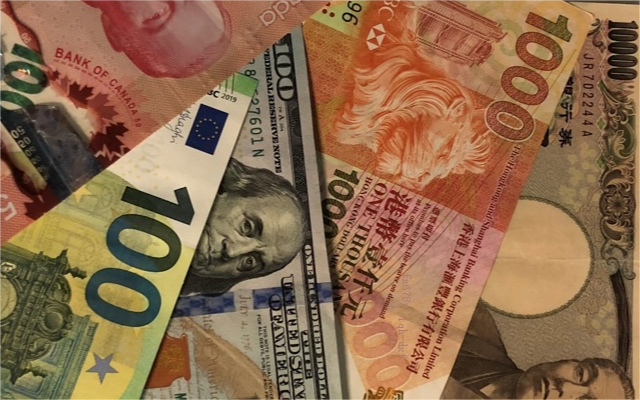
 This week's main theme in the currency market was not the better-than-expected inflation data, but rather the market's repricing of the Federal Reserve's policy path and the capital migration triggered by the sell-off of AI assets. When tech stock declines no longer automatically translate into dollar buying, cracks appeared in the traditional safe-haven framework, leading to gains for the Swiss franc and the British pound. Next week, attention will be focused on statements from Fed officials ahead of the October meeting, and the depth of the spread of AI sector volatility to the credit market; these two factors will determine whether the dollar's weekly decline continues.
US Dollar Index: A Week Where Safe-Haven Logic Failed
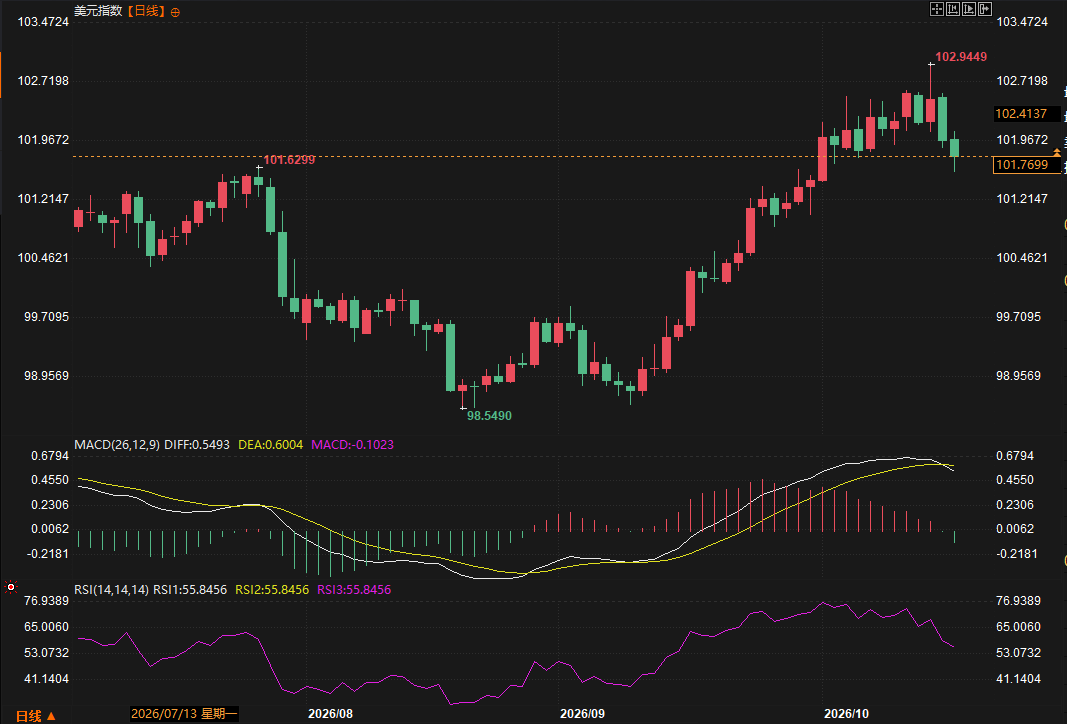
The US dollar index fell 0.17% to around 101.77 on Friday, a cumulative decline of about 0.35% for the week, marking its first weekly decline in a month. In terms of price action, the dollar has been retreating since reaching a high of around 102.94 in early October, closing around 101.77 on Friday, with short-term momentum indicators weakening. On the data front, both consumer price and producer price data released this week were higher than expected, initially causing market unease. However, subsequent statements from Federal Reserve officials suggesting no rush to further tighten policy stabilized US Treasury yields. Major overseas institutions point out that the dollar should typically be boosted by safe-haven buying when tech stocks are sold off, but this week funds flowed into bonds rather than the dollar, with the negative correlation between the dollar and AI trading being the biggest surprise; the market expects the probability of the Fed holding rates steady in October to rise to 83%.Euro: A dramatic rebound amid fiscal gloom
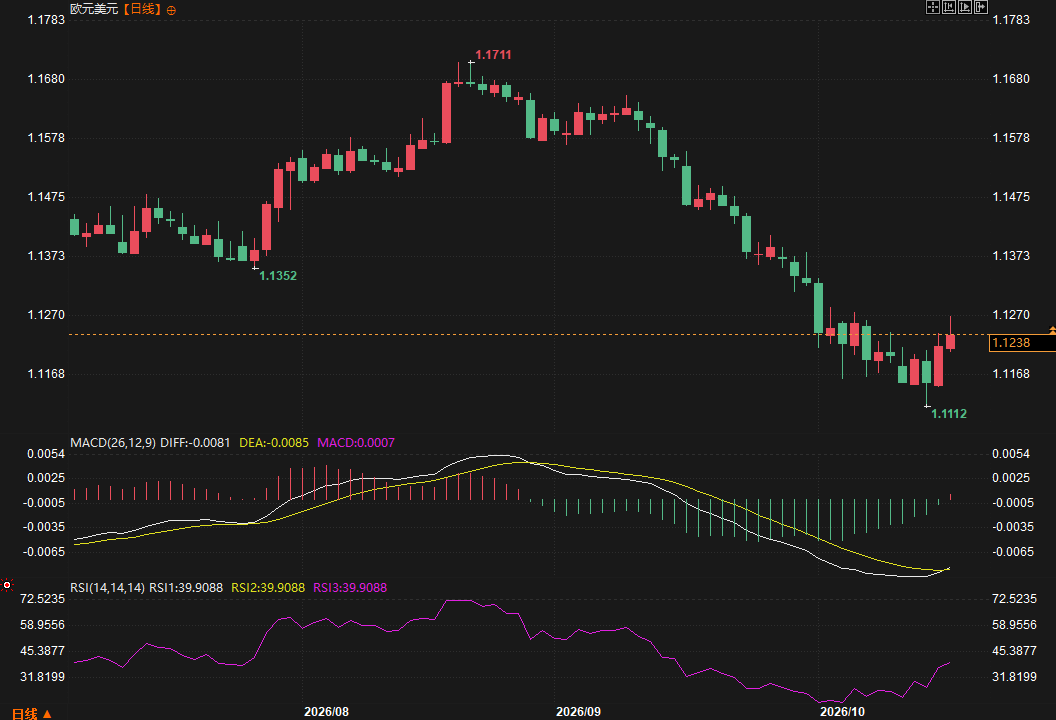
The euro edged higher against the dollar on Friday, closing near 1.1238, up about 0.23% for the week. Looking back, the euro had previously fallen from above 1.1711 to a low near 1.1112, before rising 0.56% on Thursday, its biggest one-day gain in two months, and continuing its recovery on Friday. Regarding data and events, after the surge in French government bond risk premiums in early October, fiscal risk in the Eurozone remains a core concern for the market, suppressing the euro's previous performance. Analysts believe that with the cooling of expectations for a Fed rate hike, a weaker dollar has provided a respite for the euro; at the same time, market expectations that US authorities will avoid further escalation of the Middle East or Russia-Ukraine tensions, and the decline in geopolitical premiums, are also conducive to the stabilization of European currencies. In the short term, attention will be focused on whether fiscal disturbances can be eased.British Pound: Weekly Leader Among Major Currencies
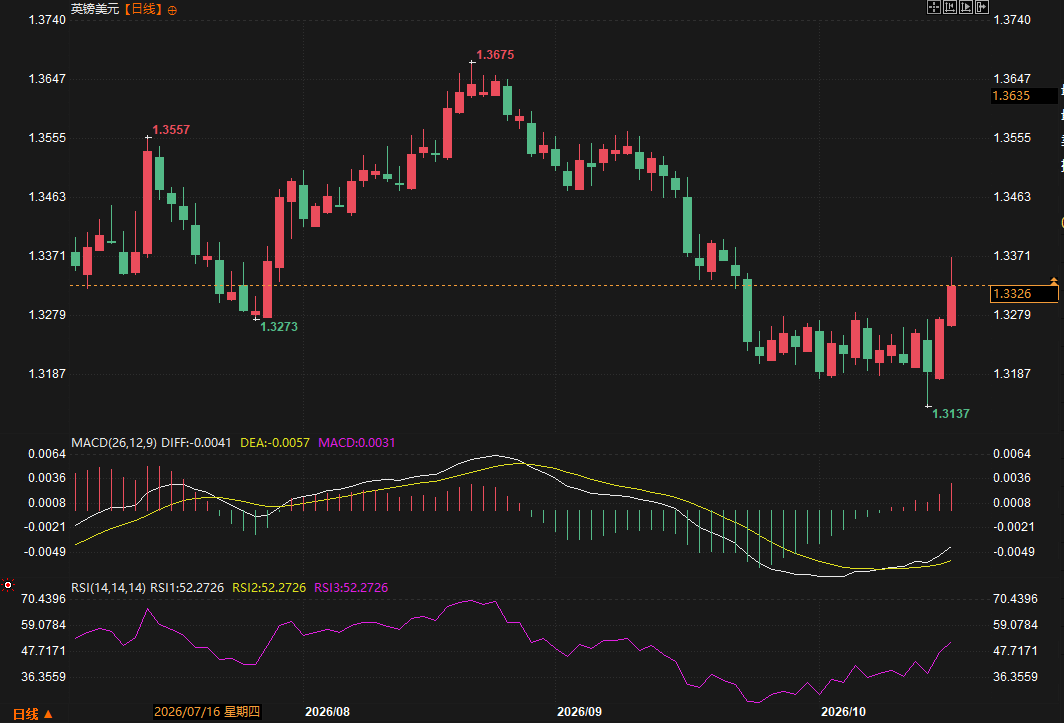
The pound rose 0.31% against the dollar to around 1.3326 on Friday, gaining 0.63% for the week, ranking among the top gainers among major currencies. Looking back, the pound had previously retreated from a high of 1.3675, briefly dipping to around 1.3137 in October, before quickly recovering its losses in the latter half of the week, returning above 1.33. In terms of events, the pound's strength was not driven by any major domestic data releases, but rather benefited from the overall weakening of the dollar and cross-asset fund reallocation. Major overseas institutions point out that against the backdrop of increased correlation between the dollar and AI trading, previously pressured currencies like the pound received buy-back pressure; at the same time, the UK market's pricing of the Bank of England's policy path remained relatively stable, with no new interest rate disturbances. The technical oversold rebound and the weakening dollar resonated, propelling the pound to lead the week.Yen: A Breath of Breath After Four Weeks of Declines
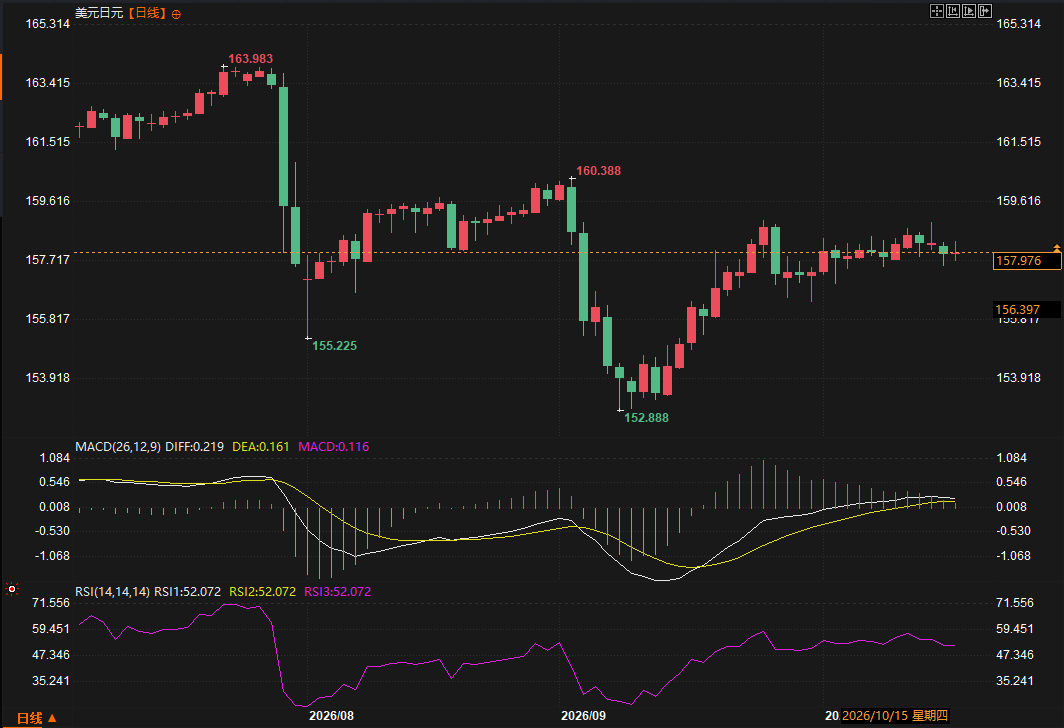
The USD/JPY pair edged lower on Friday, closing near 157.98. The yen rose approximately 0.13% this week, ending a four-week losing streak. Looking back, the pair retreated from around 160.39 in early October, briefly dipping during the week before stabilizing amidst support for the dollar from the Iranian conflict. In terms of events, Bank of Japan Governor Kazuo Ueda reiterated on Friday that the risk of core inflation exceeding the 2% target remains, leaving room for expectations of policy normalization. Analysts believe that recent oil price increases have continued to benefit the dollar and suppress currencies of energy-importing countries like the yen. However, the cooling of expectations for a Fed rate hike has weakened the narrative of a further widening of the Japan-US interest rate differential. If the Bank of Japan releases clearer signals, there is potential for continued recovery in the yen's price action.Swiss Franc: The Zero Interest Rate Bottom Line Behind Two-Day Surge
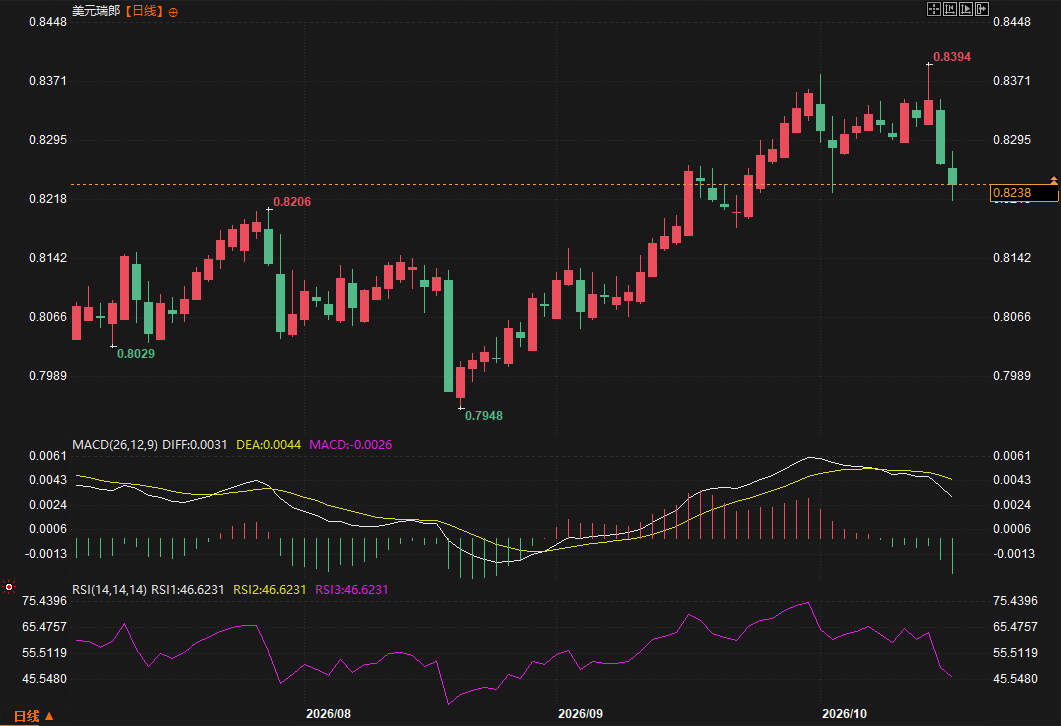
The US dollar fell 0.25% against the Swiss franc to around 0.8238 on Friday, a cumulative decline of 0.67% for the week. The Swiss franc, however, has surged more than 1.4% in the last two trading days, showing a strong upward trend. Looking back, the exchange rate has been declining steadily from its high of around 0.8394 in early October, accelerating its downward trend after breaking through the support level around 0.8250. In terms of events, the Swiss franc was significantly boosted by safe-haven demand, with sell-offs in the AI sector and pressure in the credit market driving funds into traditional safe-haven assets. Major overseas institutions point out that the market expects the Swiss National Bank to be unlikely to lower its current zero policy rate into negative territory even if interest rates are further reduced, an expectation that forms a bottom support for the Swiss franc. With the US dollar's safe-haven appeal failing this week, the Swiss franc actually absorbed some of the safe-haven funds, becoming one of the biggest beneficiaries this week.Canadian Dollar: A Double Gift from Oil Prices and a Weaker US Dollar
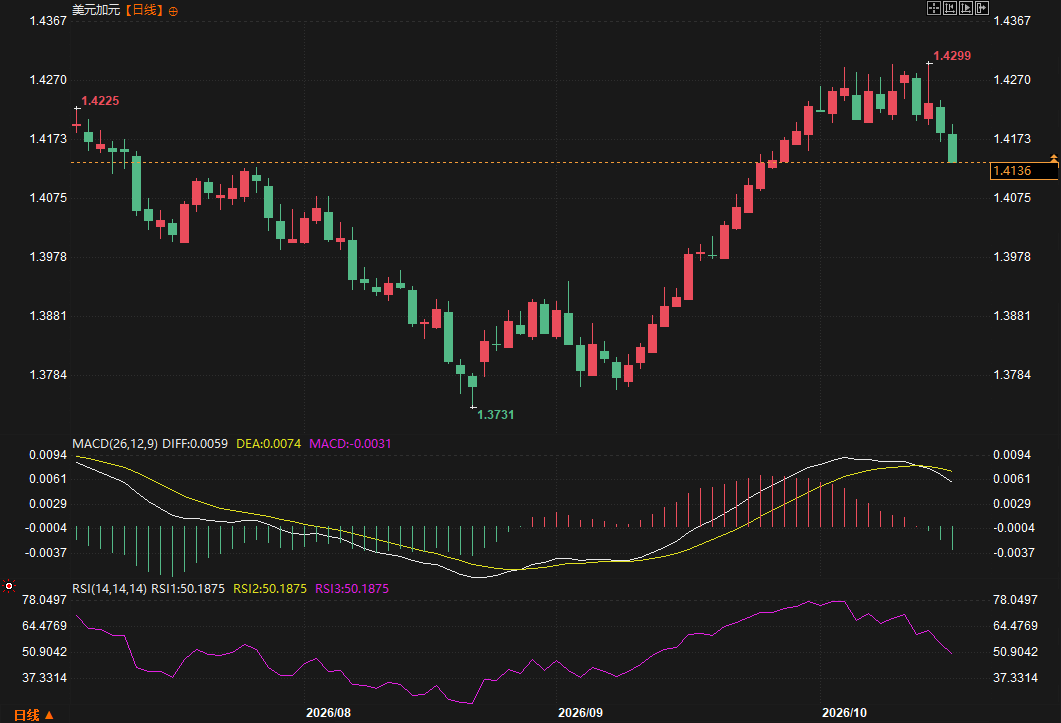
The USD/CAD pair fell significantly to around 1.4136 on Friday, a rapid decline from its mid-October high of around 1.4299. Looking back, the pair had been trending upwards from its September low of around 1.3731, before experiencing a significant pullback in the latter half of the week. In terms of events, recent oil price increases have benefited Canada's terms of trade as an energy exporter, and the weakening US dollar on the weekly chart has provided double support for the Canadian dollar. Analysts believe that the Canadian dollar had largely priced in the USD/CAD interest rate differential in the previous period, and with the cooling of expectations for a Fed rate hike and a generally weakening US dollar, the resilience of energy currencies is beginning to emerge. However, if the oil price rally fades due to easing geopolitical tensions, the support for the Canadian dollar may weaken, and its future trend will still depend on marginal changes in the strength of the US dollar and commodities. This week's main theme in the currency market was not the better-than-expected inflation data, but rather the market's repricing of the Federal Reserve's policy path and the capital migration triggered by the sell-off of AI assets. When tech stock declines no longer automatically translate into dollar buying, cracks appeared in the traditional safe-haven framework, leading to gains for the Swiss franc and the British pound. Next week, attention will be focused on statements from Fed officials ahead of the October meeting, and the depth of the spread of AI sector volatility to the credit market; these two factors will determine whether the dollar's weekly decline continues.QA module
Why did the dollar fall despite higher-than-expected inflation data? Higher-than-expected inflation initially fueled tightening concerns, but Federal Reserve officials subsequently signaled a lack of urgency, raising the market's probability of no change in October from 49% to 83%. With the tightening narrative failing to materialize, the dollar lost its biggest upward momentum, and its previous gains were reversed. Why did the dollar and AI trading begin to fall in tandem? Historically, tech stock sell-offs triggered safe-haven buying into the dollar, but this week funds clearly flowed into bonds and the Swiss franc. Analysts point out that the market's concern is not a liquidity crisis, but rather the profitability of the AI supply chain. This structural risk aversion has not benefited the dollar, indicating a change in the destination of safe-haven funds. Can the Swiss franc's strength continue? The expectation that the Swiss National Bank will not restart negative interest rates under a zero-interest-rate environment forms the bottom logic for the Swiss franc, coupled with safe-haven demand, providing short-term support. However, if the AI sell-off subsides, the safe-haven premium may quickly fade, and the Swiss franc's gains risk being reversed. Does the yen's rebound signify a trend reversal? Currently, it is only a technical correction after four consecutive weeks of declines and is insufficient to confirm a reversal. The Bank of Japan governor reiterated the upside risks to inflation, leaving room for policy normalization, but high oil prices continue to weigh on the yen, and the interest rate differential logic has not been completely overturned. What will be the biggest variable next week? The Fed's October meeting is the key juncture. If the meeting's outcome aligns with the 83% expectation of keeping rates unchanged and the tone is dovish, the dollar's weakness may continue; if it signals tightening in December, this week's decline will be overturned.- Risk Warning and Disclaimer
- The market involves risk, and trading may not be suitable for all investors. This article is for reference only and does not constitute personal investment advice, nor does it take into account certain users’ specific investment objectives, financial situation, or other needs. Any investment decisions made based on this information are at your own risk.