Trump's waiver of sanctions against Russia has suppressed oil prices, but the diesel crisis and the midterm elections are still providing support.
2026-10-19 09:40:21
International oil prices saw a significant pullback in Asian trading on Monday (October 19), with Brent crude futures briefly falling below the $109 mark, and West Texas Intermediate (WTI) crude also declining. The core logic behind the market trading was US President Trump's executive order exempting Russia from impending sanctions and related tariffs. The market worried that this move could prompt Russia to increase fuel exports, thereby easing supply tensions previously fueled by geopolitical conflicts. Meanwhile, Ukraine's renewed attacks on Russian energy facilities and the attacks on Middle Eastern oil tankers continued to unfold, creating a complex interplay of bullish and bearish factors, leading to price consolidation at high levels. 
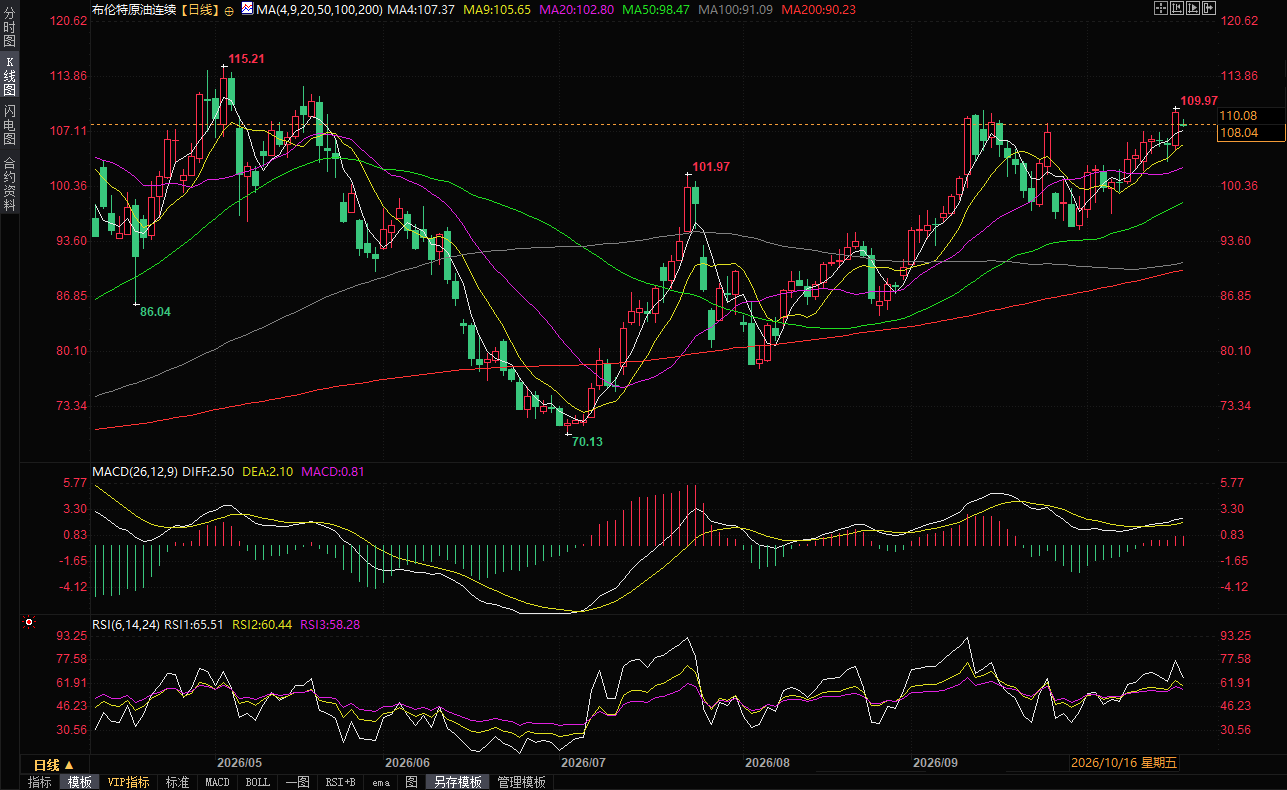 (Brent crude oil daily chart, source: EasyForex)
Details of the oil price correction and the latest market performance
On Monday morning in Asia, Brent crude futures fell as much as 1.7% to around $107.73 per barrel, before hovering around $108.20; WTI crude futures for December delivery fell to around $97.40 per barrel and are currently trading at $97.73 per barrel. Brent touched its highest level since mid-May last Friday, and this pullback mainly reflects the market's repricing of supply-side expectations. Traders pointed out that the news of Trump's waiver of sanctions against Russia quickly changed some long positions. The market had already fully priced in the geopolitical premium, and once sanctions pressure eases and Russian exports may rebound, the short-term supply tightness logic will be impacted.Core content and background of Trump's exemption measures
In mid-September, Trump signed the Lindsey Graham Act of 2026, which outlines sanctions against Russia and Iran. The bill originally planned to impose tariffs of up to 100% on goods imported into the U.S. from the top five countries purchasing Russian crude oil or natural gas, and similar measures against countries assisting Russia in circumventing sanctions. The bill also included stricter restrictions on Russian oil and gas exports. Just before the bill was about to officially take effect, Trump issued an executive order granting exemptions. White House documents explicitly stated that this move was in the national interest of the United States, and the exemptions would remain in effect until Trump or his senior officials determined that further action was necessary. Trump subsequently emphasized on social media that the decision was "very simple"—currently, negotiations are underway regarding peace in the Russia-Ukraine war, and he did not want to do anything "stupid" that would remove Russia from the negotiating table. This move is also closely related to domestic political and economic considerations in the United States. With only weeks left until the midterm elections, Republicans are attempting to maintain a slim majority in Congress. Analysts believe that strict enforcement of the new sanctions could further push up oil prices, exacerbating the already rising energy costs for American consumers due to the situation in the Middle East. Trump's recent softening stance towards Russia, coupled with his public criticism of Ukrainian President Zelensky and even hints that Kyiv might need a new leader, echoes the decision to grant waivers. Major Asian powers and India, as key buyers of Russian oil, had previously expressed concerns about the sanctions bill. Following the announcement of the waivers, some market participants began assessing whether Russian fuel exports would increase significantly.Geopolitical conflicts continue to provide support: Ukraine's strikes and Middle East oil tanker attacks
Despite downward pressure from the exemption news, oil prices did not experience a collapse, with geopolitical risks continuing to provide significant support. In Ukraine, St. Petersburg Governor Beglov stated that a local oil terminal and storage facility caught fire following a large-scale drone attack by Ukrainian forces on Sunday. According to shipping data company Kpler, the terminal exports approximately 120,000 barrels of refined products daily, primarily fuel oil. The extent of the damage is still being confirmed. Previously, on October 11, Trump announced an energy ceasefire agreement between Kyiv and Moscow, temporarily halting Ukraine's attacks on Russian energy facilities; however, after Russia continued its attacks on Ukrainian energy infrastructure, Zelensky stated he would resume retaliatory strikes. In the Middle East, a report from the UK's Maritime Trade Action Centre indicated that two oil tankers were attacked on Friday in the Persian Gulf near Saudi Arabia: one unidentified tanker was attacked by a rocket-propelled grenade, and another, named ST3, was hit by an unidentified projectile. Iran has previously escalated its attacks on oil tankers in the Persian Gulf, the Strait of Hormuz, and the Gulf of Oman, attempting to disrupt regional crude oil export routes. These events continue to remind the market that the risk of supply disruptions is far from over.Editor's Summary
Trump's decision to waive sanctions and tariffs on Russia temporarily altered market expectations of limited Russian exports, directly triggering a correction in oil prices. Brent crude fell back to around $108, and WTI crude dropped below $98. Meanwhile, the resumption of attacks on energy facilities in Ukraine and the continued attacks on oil tankers in the Middle East continued to provide geopolitical premium support for oil prices. With both bullish and bearish factors present, the oil market has entered a phase of high-level consolidation. Going forward, key factors to watch include changes in actual Russian export data, progress in Russia-Ukraine negotiations, shipping security in the Middle East, and policy signals before and after the US midterm elections. Supply-side uncertainty remains the core variable driving oil price direction. (Brent crude oil daily chart, source: EasyForex)Frequently Asked Questions
Q: Why did Trump choose to waive sanctions against Russia before the bill took effect? A: Trump clearly stated in his executive order and social media posts that the waivers were intended to keep Russia at the table of Russia-Ukraine peace negotiations and avoid taking actions that could "kick Russia out of the negotiating table." At the same time, the US faced midterm election pressure, and high oil prices would push up consumer costs; the waivers helped stabilize energy price expectations. The bill itself grants the president the power to grant waivers based on national interest, and Trump acted accordingly. Q: What exactly does the waiver include? What impact will it have on Russian oil exports? A: The waiver covers punitive tariffs (up to 100%) on countries purchasing Russian oil and gas, additional tariffs on Russian goods, and some measures related to assisting countries in circumventing sanctions. The waiver will remain in effect until officially determined that further action is necessary. The market expected this move to reduce barriers to Russian exports, leading to increased fuel supply and easing global supply tensions, which was the direct trigger for Monday's oil price drop. Q: Why didn't oil prices collapse significantly due to the waiver news? A: Despite the expected increase in supply due to the exemptions, Ukraine's renewed attacks on Russian energy facilities in St. Petersburg and other locations, along with the continued attacks on Middle Eastern oil tankers, maintain a high premium for supply disruption risks. Uncertainty surrounding the impact on the St. Petersburg terminal's export capacity of approximately 120,000 barrels of refined products per day, coupled with concerns about shipping security around the Strait of Hormuz, are supporting oil prices to remain volatile at high levels after the recent pullback. Q: What impact will this have on major Asian countries and India, as key buyers? A: The original bill planned to impose high tariffs on goods imported into the US from the top five countries importing Russian crude oil or natural gas. Major Asian countries and India, as key buyers, had previously expressed concerns. With the exemptions, these punitive tariffs are temporarily suspended, reducing the potential cost risks of these two countries importing Russian energy and re-exporting related products to the US market, thus benefiting their energy procurement flexibility in the short term. Q: What factors will drive future oil price movements? A: Key observation points include: whether Russia's actual exports have rebounded significantly, the progress of the attacks on Russian and Ukrainian energy facilities and negotiations, whether the Middle Eastern oil tanker attacks have escalated and affected passage through the Strait of Hormuz, and further energy and Russia policy signals from the Trump administration before and after the US midterm elections. The battle between bulls and bears will continue, with geopolitical events and policy changes remaining key variables driving price fluctuations. At 09:37 Beijing time, Brent crude oil was trading at $108.05 per barrel.- Risk Warning and Disclaimer
- The market involves risk, and trading may not be suitable for all investors. This article is for reference only and does not constitute personal investment advice, nor does it take into account certain users’ specific investment objectives, financial situation, or other needs. Any investment decisions made based on this information are at your own risk.