With inflationary pressures still high, the housing market has already slowed down. Will the Federal Reserve continue to raise interest rates?
2026-10-21 10:44:20
The Federal Reserve Chairman's fight against inflation is encountering a thorny contradiction: overall price pressures remain stubborn, while the housing market continues to weaken. Several September housing data released on Tuesday (October 20) further deteriorated, adding uncertainty to an already difficult monetary policy decision. If short-term interest rates are raised as expected by the market, already high mortgage rates may continue to rise, further increasing the burden of homeownership. Coupled with a housing supply shortage, the downward pressure on the housing market will continue to intensify.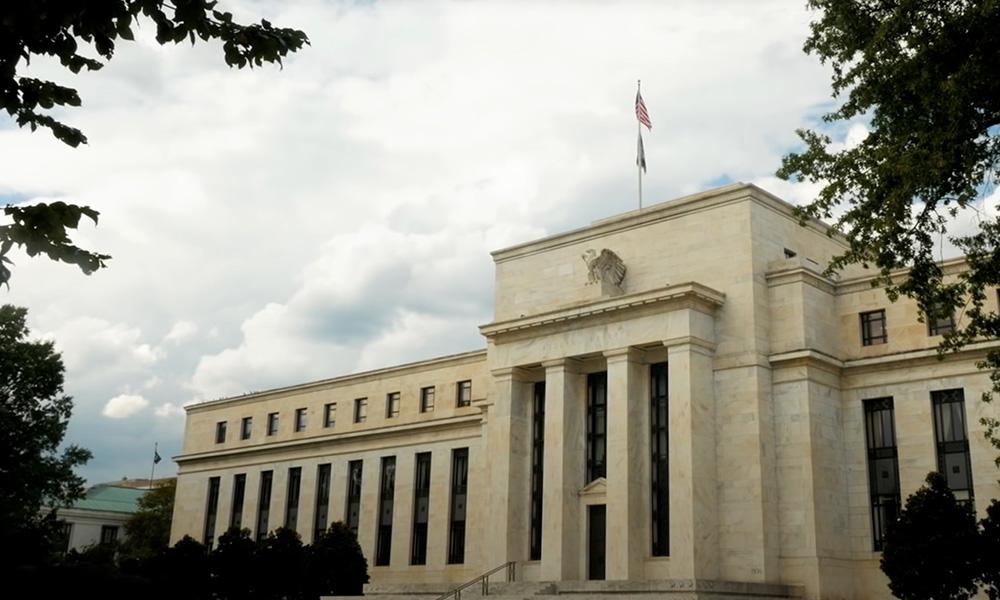
September housing data showed weakness across the board, with many indicators hitting new lows for the period.
The National Association of Realtors (NARL) reported that its leading indicator, pending home sales, hit a record low in September since records began in 2001, declining 7.3% month-over-month and 11.3% year-over-year, far exceeding market expectations of a mere 0.4% decline. Data released simultaneously by the U.S. Department of Commerce also fell short of expectations. On a seasonally adjusted annualized basis, private residential housing starts declined 5.2% month-over-month, compared to market expectations of a 0.4% decline; building permits fell slightly by 0.2%, while the market had anticipated a 2% increase. Single-family home permits totaled only 845,000 units, a 4% decrease from August, marking the lowest level since 2023. NARL Chief Economist Lawrence Yun stated that the market weakness in September stemmed from rapidly rising mortgage rates. While job and income growth can support housing demand, purchasing power is more significantly affected by fluctuations in mortgage rates. Chris Rupkey, chief economist at Fwdbonds, said the housing market will stagnate deeply unless Washington adjusts its policies and lowers the cost of buying a new home; the market is already frozen before the winter has even arrived.High mortgage rates continue to suppress housing demand.
The 30-year fixed mortgage rate remained above 7% for most of September, approaching 7.6% at the end of the month, compared to only about 3% five years ago. Low interest rates fueled a housing boom during the pandemic. Currently, in addition to sluggish sales data, homeowner confidence has also fallen to a 14-year low. Theoretically, a weak housing market could be a reason for a shift to looser monetary policy, with interest rate cuts reducing borrowing costs and stimulating demand. However, the Federal Reserve's primary objective remains curbing inflation. Last week's consumer and producer price data did not offer any positive signals; wholesale prices rose 2.6% year-on-year, the highest increase in this statistical series since December 2009. Federal Reserve officials continue to monitor the inflationary impact of artificial intelligence investment, which has driven up chip and electronics prices. They also hope that the AI industry's benefits will offset the weakness in sectors such as housing. Goldman Sachs economist Ronnie Walker stated in a client research report that the housing market will likely continue to weaken before stabilizing.The lock-up effect is trapping the housing market, and the medium- to long-term outlook is bleak.
The current housing market exhibits a significant interest rate lock-in effect, with over 95% of existing mortgage borrowers holding interest rates lower than current levels, and 65% holding rates more than 2 percentage points lower. Homeowners are unwilling to incur higher borrowing costs when upgrading their homes. Goldman Sachs predicts that residential investment will decline by 2.5%, 4%, and 1% respectively in the next three quarters, and the decline could widen further if mortgage rates remain high. Institutions expect new single-family home starts in 2027 to remain at 875,000 units, with existing home sales at 3.9 million units, roughly the same as in 2026, and 26% lower than pre-pandemic 2019 levels. Ronnie Walker stated that the housing market's upward momentum has been limited in recent years due to weak purchasing power, relying on a long-term housing shortage for support. However, in 2027, purchasing power pressure will dominate, further suppressing real estate transaction activity.Market interest rate expectations and a hint of optimism
The market widely expects the Federal Reserve to keep its benchmark interest rate unchanged at its policy meeting next week, but interest rate futures pricing suggests a higher probability of another 25 basis point rate hike in December and March 2027. However, Lawrence Yun offers a relatively optimistic view, stating that mortgage rate increases have far exceeded the Fed's short-term policy rate hikes, suggesting that mortgage rates may have peaked, and both buyers and sellers are waiting for interest rates to improve before making any moves.Conclusion
On one hand, persistent inflation is limiting the scope for interest rate cuts; on the other hand, the real estate market continues to cool under the impact of high interest rates. The Federal Reserve's monetary policy is in a dilemma. The subsequent trend of mortgage rates, changes in inflation data, and whether the housing market can withstand the pressure will be key clues determining the Fed's interest rate path.- Risk Warning and Disclaimer
- The market involves risk, and trading may not be suitable for all investors. This article is for reference only and does not constitute personal investment advice, nor does it take into account certain users’ specific investment objectives, financial situation, or other needs. Any investment decisions made based on this information are at your own risk.