With Budget Week approaching, how will the trade-offs in fiscal discipline affect the pound?
2026-10-21 21:52:24
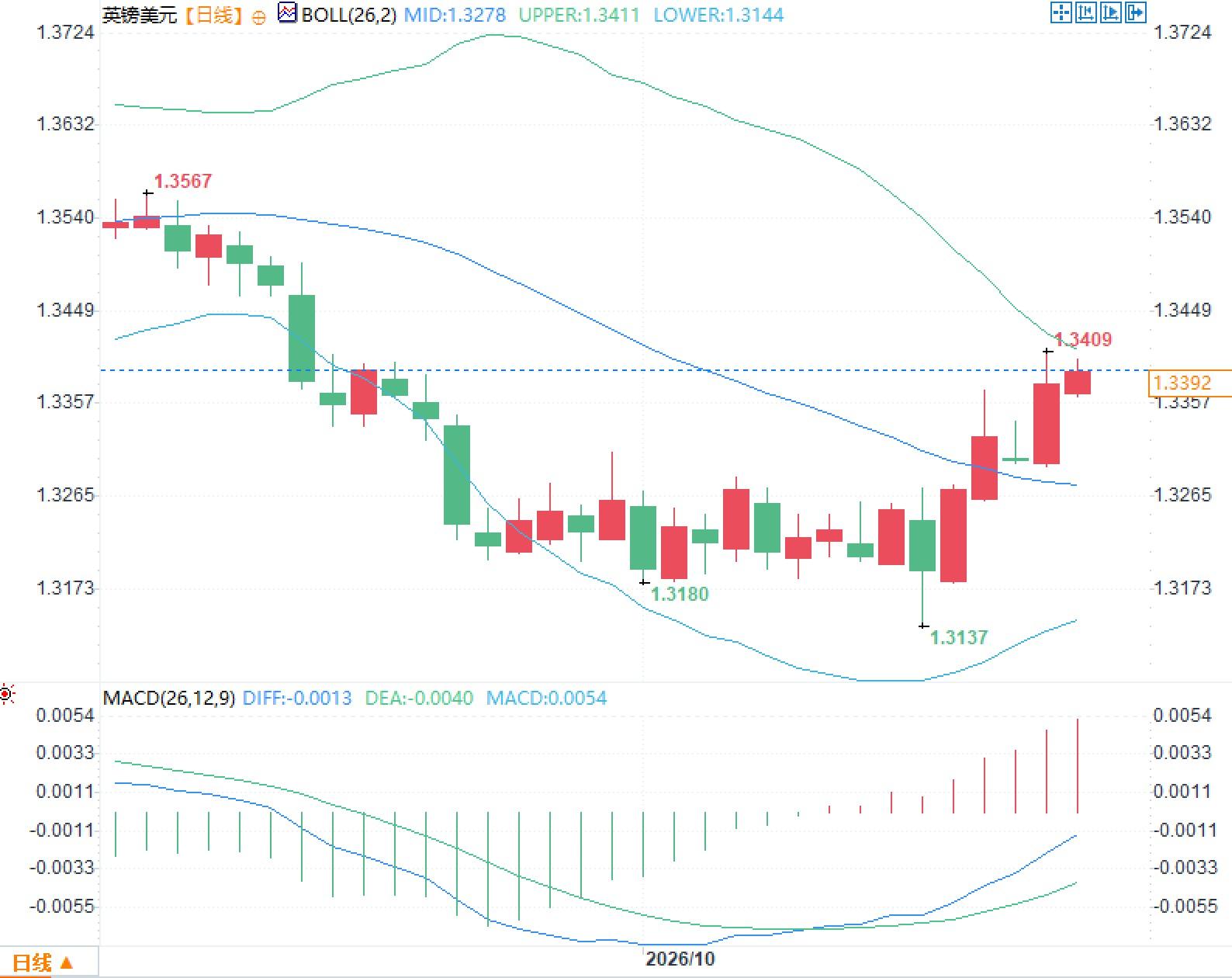
On Wednesday, October 21, the pound was trading around 1.340 against the dollar, near its recent highs. The UK Office for National Statistics released September inflation and public sector fiscal data on the same day. Higher-than-expected inflation strengthened expectations of a Bank of England rate hike on November 4, while a sharp rise in net public sector borrowing reignited discussions about fiscal sustainability. 
Drivers of faster-than-expected inflation
The UK's Consumer Price Index (CPI) rose 3.5% year-on-year in September, a significant rebound from 3.1% in August, and increased 0.4% month-on-month, both exceeding market expectations. Core CPI rose 2.8% year-on-year, with services inflation reaching 3.7% and goods inflation at 3.2%. Energy prices, particularly motor fuels, were the main driver, with petrol prices rising 8.2 pence to 169.5 pence per liter and diesel by 10.7 pence to 192.5 pence per liter, accelerating fuel inflation from 23.0% to 29.8%. Housing and household services, communications, and entertainment also saw increases. Food inflation remained unchanged at 1.3%, while restaurant and hotel inflation slowed slightly. The persistently high energy prices, coupled with supply chain disruptions related to the Middle East conflict, have strengthened signs that inflation is spreading from the energy sector to a wider range of sectors. The Bank of England had previously projected in its July forecast that September inflation would only rise to around 3.0%, but the gap between the actual data and policy expectations has widened further.Rising public borrowing and fiscal pressure
Public sector net borrowing data released at the same time showed that borrowing reached £24.5 billion in September, an increase of £1.8 billion, or 7.7%, compared to the same period last year. This was the highest monthly level in more than five years and exceeded the Office for Budget Responsibility's forecast by approximately £1.9 billion. Interest payments on central government debt reached £10.9 billion, an increase of £1.6 billion year-on-year, becoming the main source of the borrowing increase. Cumulative borrowing for the fiscal year up to September reached £97.8 billion, lower than the same period last year, but still £6 billion higher than the Office for Budget Responsibility's forecast. Public sector net debt surpassed £3 trillion for the first time, reaching £3.005 trillion, accounting for 94.0% of GDP. Although this was a decrease of 0.7 percentage points compared to the same period last year, it remained at a high level not seen since the early 1960s. Debt interest costs are rigidly increasing along with inflation and rising interest rates, compressing fiscal space. Chancellor John Healy is preparing the budget to be announced next week, and the market is watching how he will balance cost-of-living support with fiscal discipline. Healy previously stated that the budget will protect economic resilience and ruled out the option of raising the capital gains tax.Monetary policy path and interest rate expectations
Inflation data has further solidified market pricing in a Bank of England rate hike on November 4th. Recent surveys by multiple institutions show that most economists expect the benchmark interest rate to rise by 25 basis points from the current 3.75% to 4.0%, potentially the first rate hike in over three years. Bank of England Chief Economist Hugh Peele has repeatedly voted in favor of rate hikes, noting that market expectations of consecutive rate increases may be overly aggressive. The minutes of the September meeting already indicated that inflation may slightly exceed 4% by early 2027, and there is increased concern within the policy committee about the risks of persistently high energy prices. The simultaneous rise in both service inflation and core inflation complicates the trade-off between price stability and growth for policymakers. While market pricing has partially reflected the likelihood of a rate hike, economists remain divided on whether to continue raising rates after November. Some institutions predict only one insurance rate hike, while others see room for further increases in early 2027.Exchange Rate Performance and Market Pricing Logic
The pound has rebounded nearly 2% against the dollar since last week's lows, currently trading between 1.3390 and 1.3400, with limited intraday volatility. Technical indicators show the price near the upper Bollinger Band, the MACD histogram turning positive and continuing to expand, while the DIFF and DEA lines remain below the zero line. Rising energy price-driven inflation supports the pound's interest rate sensitivity, while rising debt interest costs increase long-term fiscal uncertainty, potentially constraining the exchange rate through real interest rates and risk appetite. The dollar has remained relatively stable, without significant policy or data shocks, making the pound's relative pricing more driven by UK domestic fundamentals. Next week's budget details and the Bank of England's November meeting will be key variables in subsequent pricing.Frequently Asked Questions
Question 1: From which sectors did the higher-than-expected inflation in September mainly originate, and what does this mean for the Bank of England's policy? Answer: Energy and motor fuel contributed the most, while services and core inflation rose simultaneously to 3.7% and 2.8% respectively, indicating that price pressures have spilled over from the energy sector. This significantly increases the probability of a rate hike in November, but the subsequent path still depends on whether energy prices can fall and whether a second round of effects emerges. Question 2: Why did public sector borrowing reach a five-year high in September, and what role did debt interest play? Answer: Borrowing reached £24.5 billion, a 7.7% year-on-year increase, mainly due to debt interest payments rising to £10.9 billion, a rigid increase influenced by inflation and interest rate paths. Cumulative fiscal year borrowing remains higher than budget forecasts, compressing the policy space for next week's budget.- Risk Warning and Disclaimer
- The market involves risk, and trading may not be suitable for all investors. This article is for reference only and does not constitute personal investment advice, nor does it take into account certain users’ specific investment objectives, financial situation, or other needs. Any investment decisions made based on this information are at your own risk.