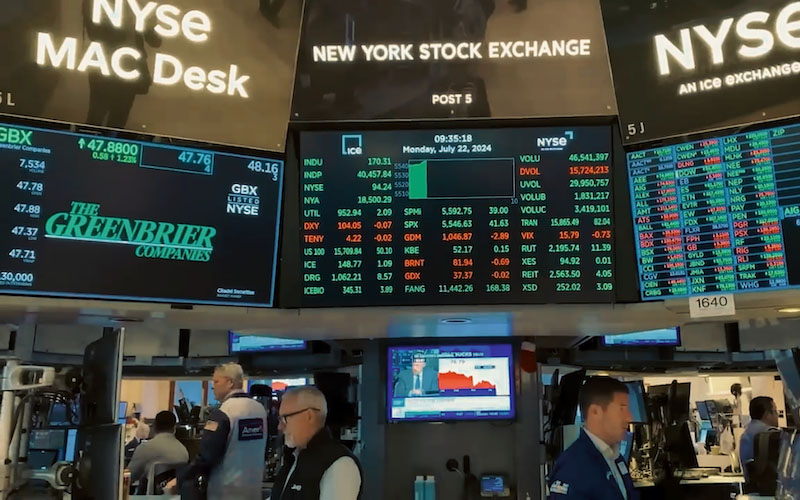
The US withdrawal order has shaken the Gulf, with more than 24 US warships gathering in the Middle East, and oil prices are about to surge again.
2026-10-22 11:16:22
On Wednesday (October 21), a U.S. State Department evacuation order pushed the Gulf region to a new high point in the current Middle East tensions. Media reports, citing two U.S. officials, indicated that the State Department was preparing to order the evacuation of some staff and their families from several U.S. embassies in the Gulf region due to the possibility of renewed attacks on Saudi Arabia by the Houthi rebels in Yemen. The U.S. Embassy in Riyadh issued a security alert on the same day, explicitly citing the recent deadly attack on Riyadh airport as the immediate context of the evacuation. Following the news, international oil prices fluctuated and rose more than 1% in after-sales trading. On Thursday (October 22) in Asian trading, Brent crude futures rose above $110 per barrel, and WTI rose above $98. High oil prices and inflation concerns supported expectations of further interest rate hikes by the Federal Reserve this year. Spot gold fell as much as 0.8% to around $4107.43 per ounce in Asian trading on Thursday. 
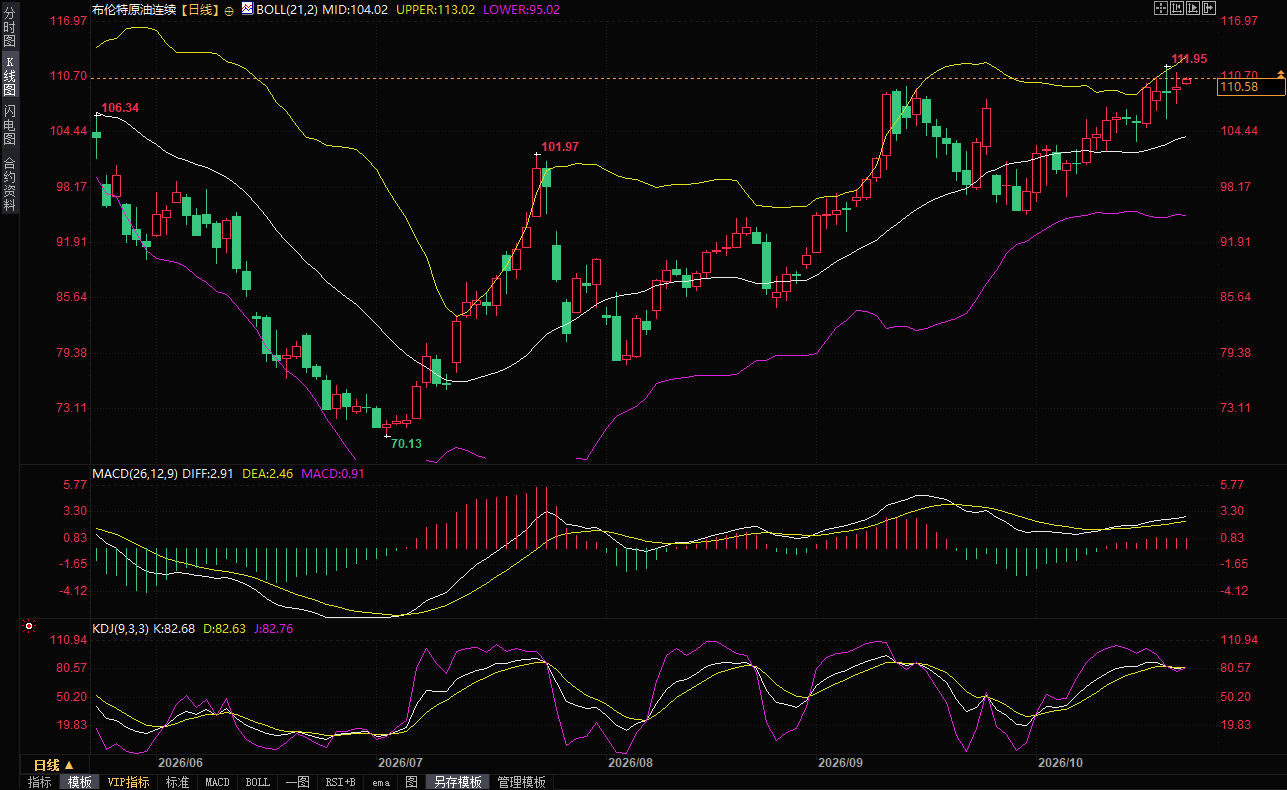 (Brent crude oil daily chart, source: EasyForex)
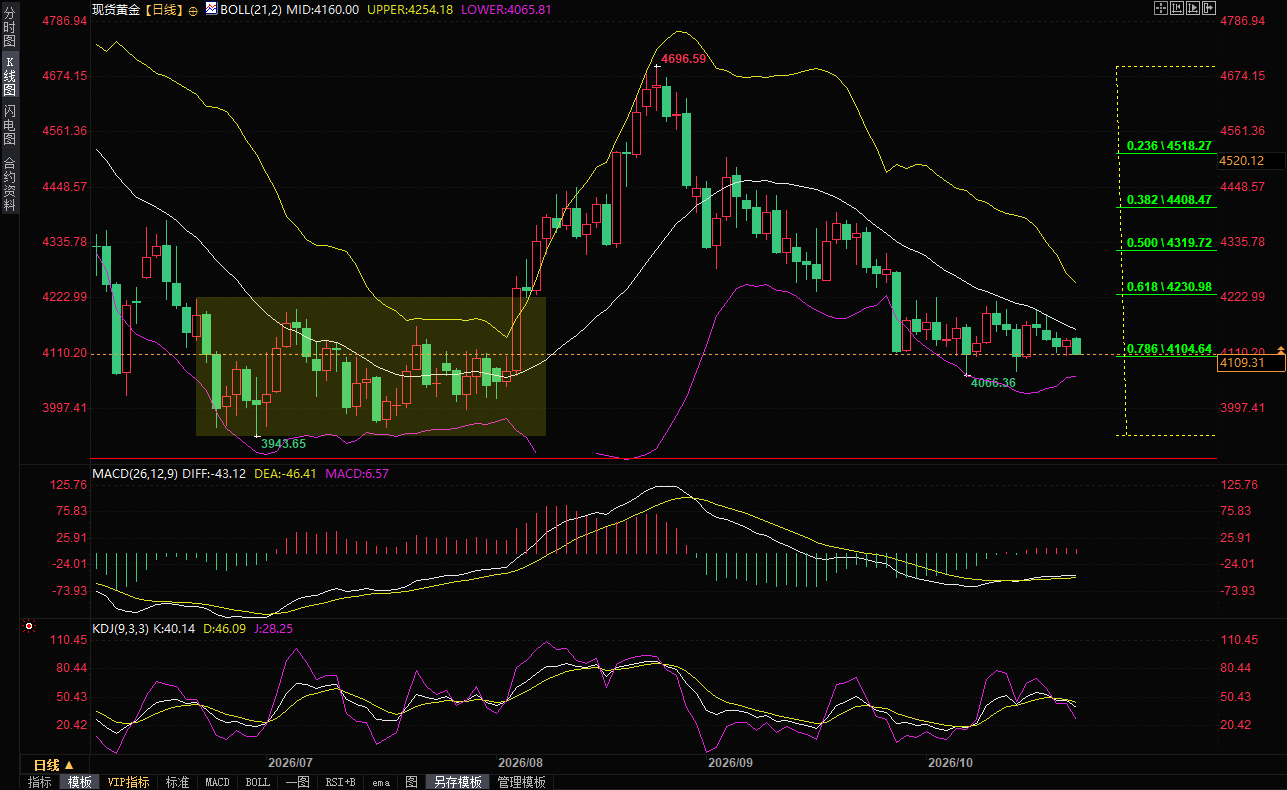 (Spot gold daily chart, source: FX678)
I. The essence of the evacuation order: It is not a "full-scale evacuation of citizens," but its signaling significance should not be underestimated.
First, it's crucial to clarify one fact: State Department spokesperson Pigott denied on social media the claim of "evacuating all personnel from the entire Persian Gulf," emphasizing that the actual order only applies to non-emergency government employees and their families at the US mission in Saudi Arabia. However, this doesn't mean the situation is being underestimated. A US official stated that the forced evacuation "may include the complete evacuation of all staff and their families from the US mission in Saudi Arabia." The tension between these two statements reflects Washington's balance between caution in action and a tough stance in signaling. Even more noteworthy is the geographical scope of the evacuation. According to AFP, citing diplomatic sources, the evacuation order also covers the families of staff at the US embassies in the UAE, Jordan, Qatar, and Bahrain. This indicates that the US is preparing for a potential escalation affecting the territories of all Gulf Cooperation Council member states, not just a response to the security situation in Saudi Arabia alone.II. Tightening of both military and proxy lines simultaneously
While the withdrawal order was issued, two military threads were progressing in parallel, forming a key framework for understanding the current situation. The first thread was the mobilization of U.S. military forces. Currently, two carrier strike groups, the USS George H.W. Bush and the USS George Washington, are deployed in the Middle East, with a third strike group en route from the Pacific. The USS Theodore Roosevelt departed its home port of San Diego on September 27, and the amphibious assault ship USS Makin Island, carrying Marines, departed at the same time. If the additional forces arrive and existing ships do not rotate out, the total number of U.S. warships in the Middle East is expected to increase from the current approximately 20 to over 24, significantly enhancing the ability to conduct continuous day and night maritime operations. This would be the first time since the 2003 Iraq War that the U.S. has simultaneously deployed three carrier strike groups in the Middle East. The second thread was the Houthi rebels' continued attacks on Saudi energy and aviation hubs. On October 19, the Houthi rebels claimed responsibility for six strikes against Saudi oil facilities, aviation facilities, and military targets in the past 48 hours. Targets included Saudi Aramco facilities in Yanbu, the Shaybay oil field in the east, King Khalid International Airport in Riyadh, and Abha International Airport in the southwest. The Saudi Press Agency confirmed that a drone strike on a Saudi Aramco oil field killed two people. Previous attacks on Riyadh airport had already resulted in 12 deaths and 309 injuries, a casualty level that directly underscores the "deadly attack" description in the US embassy security alert. Kpler data shows at least 18 ship attacks have been recorded in the past two weeks, and LSEG analysts warned that Iran's attacks on oil tankers have extended from the Strait of Hormuz to the Gulf of Oman, directly jeopardizing ship-to-ship operations for loading and supporting crude oil in the Gulf.III. The Geopolitical Premium of Oil Prices and the Inverse Relationship Between Monetary Policy
Brent crude oil has risen by about 80% this year, with diesel and other refined oil prices rising even more. The disruption of shipping through the Strait of Hormuz and Ukraine's attack on Russian oil refineries have created a double squeeze on the supply side. Geopolitical risk premiums are a difficult but undeniable component of the current Brent price of around $110. However, the transmission path of high oil prices to gold in this cycle has shown a counterintuitive direction. Traditionally, geopolitical conflicts drive up oil prices, increase inflation expectations, and benefit gold. But in the current market pricing mechanism, high oil prices reinforce expectations of further tightening of monetary policy by the Federal Reserve, rather than simply boosting safe-haven demand. The Fed completed its first 25 basis point rate hike of the year in September, and the market has priced in a 92% probability of a rate hike in December. The 10-year US Treasury yield remains around 5.12%, and US Treasuries, with their higher real yields, are substituting for gold as a safe-haven asset. Although spot gold briefly touched around $4107 in Asian trading on October 22, it remains within a trading range of $4100-$4150, with the $4066-$4073 area considered a key technical support level. Geopolitical risks providing bottom support for gold prices, coupled with interest rate expectations exerting top pressure, constitute the core tension in current precious metal pricing. (Brent crude oil daily chart, source: EasyForex) (Spot gold daily chart, source: FX678)IV. The Structural Problems of the Diplomatic Impasse
Mediation efforts have not ceased. Pakistani Army Chief of Staff Munir flew to Tehran on October 20, followed by a Qatari diplomatic delegation. The mediators' proposals included releasing some of Iran's frozen funds and their interest in exchange for concessions on the nuclear issue, and transferring Iran's enriched uranium stockpile to Russia. However, Rezaei, Secretary of Iran's Supreme National Security Council, clearly stated that "all enriched uranium will remain in Iran for use." Iranian Foreign Minister Araqchi further defined the preconditions for negotiations: Iran would only negotiate if the United States abandoned its military options; the Strait of Hormuz would remain closed until the US accepted Iran's conditions. The core disagreement between the US and Iran lies in the order of the negotiation topics: Washington demands to discuss the nuclear program first, while Tehran demands to discuss the reopening of the Strait of Hormuz and the lifting of the maritime blockade first. Behind this dispute over the order is a struggle for a "fait accompli"—the US attempts to shape the starting point of negotiations through military pressure and economic sanctions, while Iran tries to force the US to make verifiable concessions by citing the energy costs incurred from the strait's closure. The mediators conveyed a message that Iran needs to seriously participate in negotiations to avoid a renewed US attack. This message angered Iranian officials and further reduced the possibility of reaching a framework agreement in the short term.V. Israel's Election Clock and Washington's Midterm Election Constraints
Israel's Channel 12 reported that dozens of Israeli fighter jets and aerial refueling tankers flew over Syrian and Iraqi airspace from the evening of October 19 to the early morning of October 20, approaching the Iranian border before turning back. The flight formation and route were described as "similar to an attack on Iran." Israel described the operation as a deterrent exercise, but US officials believe Israel may be attempting to provoke Iranian air defenses into firing, thus gaining a pretext for an attack. This military posture is closely intertwined with two election timelines: the Israeli parliamentary elections are scheduled for October 27, and the US midterm elections are scheduled for November 3. The Financial Times, citing three sources, reported that Netanyahu originally planned to launch an attack on Iran on October 10, targeting nuclear facilities, government institutions, and civilian infrastructure, but the plan was shelved after Trump decided not to resume military operations before the midterm elections. Netanyahu himself stated on October 14 that it was "inconvenient" to take such action before the Israeli parliamentary elections. The two election clocks have temporarily locked the window for large-scale military action, but have not eliminated the options—Netanyahu continues to publicly push for a resumption of strikes against Iraq, and the Israeli military has been on high alert for several weeks, with the list of targets constantly being updated.Editor's Summary
The core characteristic of the current situation in the Middle East is that the speed of escalating security signals has outpaced the speed of actual military action, with the market pricing in the former and reserving judgment on the latter. The evacuation order, the deployment of three aircraft carriers, and the Houthi attacks on Saudi energy hubs have collectively driven up the geopolitical premium for crude oil. However, the clear commitment by the US not to attack Iran before the midterm elections, Netanyahu's self-restraint before the Israeli elections, and the indirect communication channels between the US and Iran, though deadlocked, are constraining the upside potential for prices. The volatile pattern in gold reveals another layer of logic: geopolitical risks have not automatically translated into one-way buying of interest-free assets. When inflationary expectations driven by oil prices reinforce the path of interest rate hikes, the power of interest rates temporarily outweighs the power of safe-haven assets. The key point to observe in the coming weeks is not whether a particular attack occurs, but whether the relative weight between military options and the diplomatic track will substantially shift after the two election constraints mentioned above are lifted after November 3rd.Frequently Asked Questions
Q: Does the US evacuation of its embassy personnel in Saudi Arabia signify an impending war? A: The evacuation order itself does not equate to impending war, but it is a risk signal that needs to be taken seriously. The scope of this order has been deliberately narrowed—the State Department spokesperson explicitly denied a "full-scale evacuation," and it actually covers non-emergency government employees and their families within the diplomatic mission in Saudi Arabia. However, the geographical extension of the evacuation includes families of diplomatic personnel in the UAE, Jordan, Qatar, and Bahrain, indicating that the threat scenario assessed by the US is not limited to Saudi Arabia alone, but rather encompasses risks across the entire Gulf Cooperation Council region. Historically, during the US-Israel military action against Iran in February 2026, the US also reduced personnel at some bases and its embassy. The trigger for this evacuation order was the Houthi attack on Riyadh airport and the attack on Saudi Aramco oil fields, pointing to an escalation of proxy attacks rather than a prelude to direct US-Iran war. The real window of opportunity to be wary of is after the US midterm elections on November 3rd: Trump's promise not to attack Iran before the election will expire, and Netanyahu's self-restraint will also be lifted after the Israeli elections on October 27th, potentially increasing the relative weight of military options. Q: Why did the Houthi attacks on Saudi Arabia shake global oil prices? A: The Houthi targets were not randomly chosen. The Saudi Aramco facilities in Yanbu, the Shaybah oil field in the east, and the airports in Riyadh and Abha correspond to crude oil export terminals, upstream production nodes, and air logistics hubs, respectively. The attack on the Shaybah oil field resulted in two deaths, and the previous attack on Riyadh airport resulted in 12 deaths and 309 injuries, indicating that the Houthis possess the capability to conduct precision strikes against high-value targets deep within Saudi Arabia. More importantly, Kpler recorded at least 18 ship attacks in the past two weeks, and LSEG warned that Iranian attacks could extend from the Strait of Hormuz to the Gulf of Oman—a crucial waterway for loading and transshipping crude oil in the Gulf. Continued disruption to this link affects not just the export volume of any one country, but the logistical reliability of crude oil shipments from the entire Gulf region. The geopolitical premium embedded in Brent crude prices precisely reflects this expectation of "supply not necessarily interrupted, but a systemic increase in transportation and insurance costs." Q: What is Iran's real bargaining chip in insisting on the closure of the Strait of Hormuz? A: Iran is directly linking the strait closure to the order of nuclear negotiations, essentially turning this vital global energy flow into a time lever on the negotiating table. Tehran's calculation is that a continued closure of the strait will push up oil prices and global inflationary pressures, which in turn will constrain the Federal Reserve's policy space, ultimately leading to Washington softening its negotiating terms. Iranian Foreign Minister Araqchi, in an op-ed published in the Financial Times, warned that escalating tensions would pose "significant risks to the global economy." This statement was not intended for Tehran's domestic audience, but rather for the Gulf Arab states, European energy importers, and Wall Street. However, the effectiveness of this bargaining chip has limitations: Saudi Arabia and the UAE possess land-based pipelines bypassing the Strait of Hormuz; the US itself is a net exporter; and Iran's economic dependence on oil export revenue means that a prolonged closure of the Strait would be no less damaging to Tehran than its adversaries. The value of this bargaining chip lies in the credibility of the threat, not in the actual cost-benefit of its execution. Q: Why did Netanyahu push for military action against Iran before the Israeli elections? A: Netanyahu's motivation for pushing for an attack on Iran needs to be understood within the domestic political framework of Israel's October 27 parliamentary elections. Taking a hardline military stance against Iran has a direct function in mobilizing right-wing and centrist security voters in Israeli electoral politics. However, details revealed by the Financial Times expose another constraint: the planned October 10 attack was halted by Trump, who was unwilling to reignite hostilities before the US midterm elections. This illustrates that Netanyahu's freedom of action is constrained by Washington's political clock—Israel's military options are highly dependent on the United States in terms of logistics, intelligence, and aerial refueling capabilities. Without US tacit approval or participation, the feasibility of large-scale, sustained airstrikes significantly decreases. The current Israeli warplanes' flights "approaching the Iranian border and then turning back" are essentially a compromise strategy to maintain a deterrent posture during the election-bound period while preserving action options after the election. Q: Given the tense situation in the Middle East, why hasn't gold price continued to rise? A: Gold faces two opposing forces acting simultaneously in the current environment. Geopolitical risks have indeed provided a bottom support for gold prices, with spot gold showing resilience around $4100, and the $4066-$4073 area widely considered key technical support. However, high oil prices and rising inflation expectations have strengthened the pricing of further Fed rate hikes—the probability of a December rate hike is as high as 92%, and the 10-year US Treasury yield remains around 5.12%. Gold does not generate interest. When US Treasury bonds offer nominal yields above 5% and inflation expectations are driven up by oil prices, institutional funds tend to favor US Treasury bonds over gold as a safe-haven asset. Furthermore, although the US dollar index has slightly retreated from its highs, it remains in a relatively strong range, putting downward pressure on gold prices, which are denominated in US dollars. The volatile pattern in gold prices does not reflect the market's disregard for geopolitical risks, but rather that the forces of interest rates currently outweigh the forces of safe-haven assets. A break in this balance could come from the Federal Reserve's actual policy path deviating from current interest rate hike pricing, or from a substantial impact on the dollar's credibility due to escalating geopolitical tensions—neither of which is currently the baseline scenario. At 11:11 Beijing time, Brent crude oil was trading at $110.53 per barrel.- Risk Warning and Disclaimer
- The market involves risk, and trading may not be suitable for all investors. This article is for reference only and does not constitute personal investment advice, nor does it take into account certain users’ specific investment objectives, financial situation, or other needs. Any investment decisions made based on this information are at your own risk.