The Federal Reserve is expected to keep interest rates unchanged, but the battle against inflation is far from over.
2026-10-22 21:26:22
At Wednesday's Federal Reserve policy meeting, the market widely anticipated that interest rates would remain unchanged, but a pause does not mean the fight against inflation has ended. Since the September rate hike, inflation has rebounded, and coupled with the resilience of the labor market, room remains for another rate hike this year. Investors need to pay close attention to the remarks made by Federal Reserve Chairman Warsh after the interest rate decision announcement on October 26. 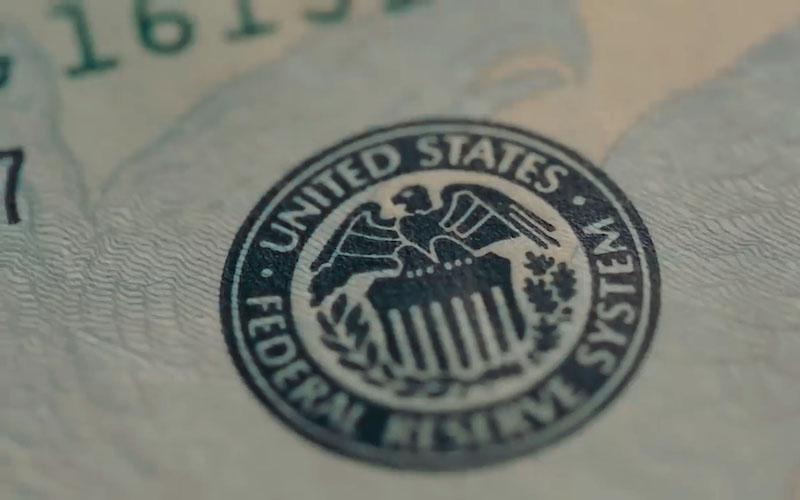
Inflation continues to rebound, making it difficult to fall back to the 2% target.
Rising inflation is the core logic supporting further interest rate hikes. The US CPI rose 3.7% year-on-year in September, higher than August's 3.4%; the PPI jumped sharply by 1.3% month-on-month, and some of the cost pressures accumulated by businesses will be passed on to end consumers. International crude oil prices remain high, continuing to push up transportation and production costs, and upward pressure on inflation will persist for several months. The market has already lowered its expectations for the pace of inflation returning to the 2% target. Neil Dutta of Renaissance Technologies commented that the Fed's internal inflation forecasts are optimistic; rising energy prices, sticky housing inflation, and supply chain disruptions are intertwined, and price pressures are likely to continue into next year. Many analysts further warn that continuous supply shocks, coupled with new demand brought about by AI capital expenditures, are reshaping market inflation expectations, and the lessons of stagflation in the 1970s are worth heeding. At present, AI is primarily driving capital goods investment, and the productivity dividend has not yet been realized; instead, it has become a new driver of inflation, and the 2% target will not be reached on its own. The Federal Reserve completed its first interest rate hike since 2023 in September, raising the benchmark interest rate by 25 basis points to a range of 3.75%-4.00%. December is the next most watched potential window for a rate hike.The bond market is tightening spontaneously, but this is unlikely to replace monetary policy.
On the other hand, the financial market had already priced in tightening expectations, passively raising financing costs, which became a key reason for pausing interest rate hikes. Following the September rate hike, US Treasury yields rose rapidly, with the 10-year yield briefly exceeding 5.3% in October, reaching a more than two-decade high; mortgage rates remained firmly above 7%, putting significant pressure on the already weak housing market, and financing costs for high-risk companies rose accordingly. Although US Treasury yields subsequently declined somewhat, overall borrowing costs remained high. The transmission path of market-driven tightening is clear: higher financing costs suppress corporate capital expenditures, inhibit household consumption, cool aggregate demand, and thus lower inflation. However, this mechanism has significant shortcomings; the tightening力度 is difficult to quantify, and the impact is highly differentiated. Technology companies are still investing heavily in AI infrastructure, while new housing starts have already fallen back to recession-era levels. Several institutions have warned that if the Federal Reserve hopes to use rising long-term bond yields to complete its tightening, it is essentially handing over the initiative of monetary policy to bond market traders. The impact of high interest rates is uneven: cash-rich tech giants are highly tolerant of rising interest rates, while real estate and small and medium-sized enterprises (SMEs) are the first to be affected. Simply relying on the bond market to tighten spontaneously will only cause structural bleeding and cannot suppress broad inflation at its root. Claudia Sam, former Federal Reserve economist and chief economist at New Century Advisors, also disagrees with over-reliance on market adjustments. She points out that US Treasury yields fluctuate extremely rapidly, and financial conditions change in an instant; the core responsibility for controlling inflation rests solely with the Federal Reserve. In her view, while a small interest rate hike at present is not an immediate crisis, it is a reliable inflation insurance measure that can mitigate the risk of long-term sticky price increases and reduce the possibility of being forced to take aggressive interest rate hikes in the future.Initial jobless claims data weakened, but the resilience of the job market supports expectations of an interest rate hike.
The unemployment claims data released on the eve of the interest rate meeting further confirmed the resilience of the labor market and strengthened expectations for an interest rate hike this year. For the week ending October 17, initial jobless claims totaled 194,000, a decrease of 6,000 from the revised figure of 200,000 the previous week, and below the market expectation of 200,000, ending a short-term rebound and returning to a downward trend. Continuing jobless claims, a week later and tallied up to October 10, totaled 1.73 million, an increase of 25,000 from the previous week. The resilience of the employment fundamentals gives the Federal Reserve room for tightening operations, and the mainstream market view is that there is still a chance for an interest rate hike this year, likely at this meeting or the December meeting. However, there is also a clear divergence in trading: those bullish on interest rate hikes believe that this initial claims data breaks the expectation of "a natural cooling of employment, no need for further tightening," and the solid employment base provides the Fed with a buffer for trial and error; the other side is relatively cautious, arguing that initial claims are only a short-term marginal indicator, and the continued rise in continuing claims hides concerns, suggesting that the labor market is actually in a slow cooling phase. If the Federal Reserve is swayed by a single strong employment report and hastily increases monetary policy, the recession will be more destructive once the lagged effects of monetary policy are fully released.The Fed is caught in a dilemma: wait and see or continue tightening?
The Federal Reserve's policy balance is currently in turmoil. Several officials have stated that there is insufficient urgency to raise interest rates immediately; Warsh also mentioned this month that the economic trend since September has largely aligned with the Fed's predictions, and he himself leaned towards a wait-and-see approach. However, a series of overheated inflation data makes the policy logic of continued observation increasingly difficult to maintain. At the press conference early Thursday morning, Warsh's core task will be to explain to the market how the Fed is weighing the risks on both sides and what signals would trigger a new round of rate hikes. The timing of this meeting is special, less than a week before the midterm elections. Historically, elections rarely influence Fed interest rate decisions, but the arrangements for this meeting will inevitably attract political scrutiny. For investors, the core question next week is very clear: Will the Fed determine that the tightening of financial conditions brought about by the bond market is sufficient, in exchange for more observation time; or will Warsh and his colleagues still need to personally complete the remaining tightening work at the December meetings and beyond? The two camps in the market have very different opinions: Hawks believe that repeated pauses will erode the central bank's credibility in fighting inflation, and that inflation will remain above target for a long time. Every postponement means paying the price of higher interest rates and a deeper economic downturn in the future. Doves, on the other hand, argue that much of the current inflationary pressure comes from the supply side, and that additional interest rate hikes are a delayed response that is unlikely to cure rigid inflation in sectors such as energy and housing. Instead, they may actively trigger a deep recession.- Risk Warning and Disclaimer
- The market involves risk, and trading may not be suitable for all investors. This article is for reference only and does not constitute personal investment advice, nor does it take into account certain users’ specific investment objectives, financial situation, or other needs. Any investment decisions made based on this information are at your own risk.