Rising expectations of a Bank of Canada interest rate hike couldn't offset the weakening oil prices, resulting in a slight increase in the USD/CAD exchange rate.
2026-10-26 15:26:23
The US dollar edged higher against the Canadian dollar in European trading on Monday (October 26), currently trading around 1.4010. Falling oil prices pressured the commodity-linked Canadian dollar. Traders are preparing for Thursday's interest rate decisions from the Federal Reserve and the Bank of Canada. Oil prices fell on Monday after reports that Qatari mediators traveled to Tehran on Sunday to cooperate with US efforts to de-escalate regional tensions. Canada is a major oil exporter, and lower oil prices typically negatively impact the Canadian dollar. Vandana Hari, founder of oil market analysis firm Vanda Insights, said, "Concerns about a renewed military hostilities in the Middle East—which drove most of last week's oil gains—have eased somewhat this morning, but this respite may be temporary." 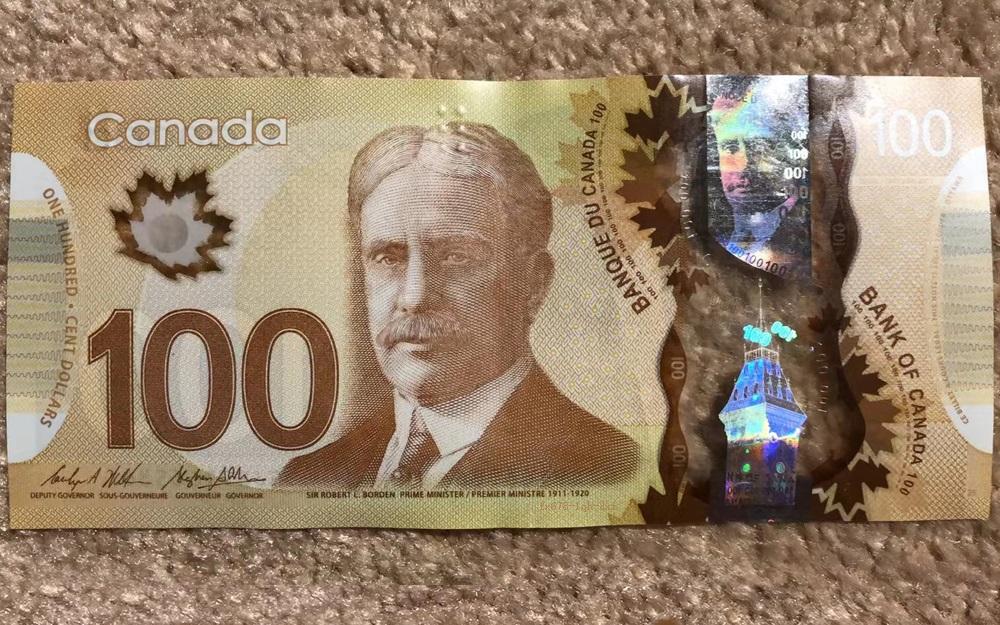
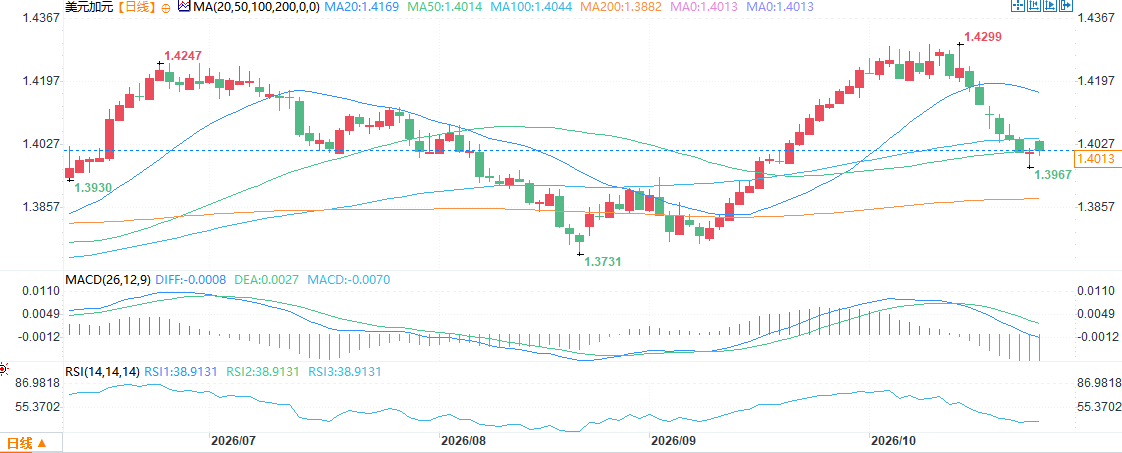 (USD/CAD daily chart, source: EasyForex) At 15:04 Beijing time, USD/CAD was trading at 1.4015/16.
The Bank of Canada expects to raise interest rates to 2.50% on Thursday, with most economists predicting another hike before March next year.
A recent survey of economists by a prominent institution shows that most respondents expect the Bank of Canada to raise its overnight interest rate by 25 basis points to 2.50% at its October monetary policy meeting this Wednesday. The survey also indicates that the market generally believes the central bank will not stop there, but will raise rates again before the end of March next year to curb further increases in inflation expectations. Analysts point out that although some recent hard data has been weak, the recovery in long-term consumer inflation expectations and the potential transmission pressure from energy prices remain important factors supporting continued tightening. If this rate hike is implemented, it will further strengthen the Bank of Canada's forward-looking stance on inflation targeting and could have an immediate impact on the Canadian dollar and the local bond market.The Federal Reserve expects a 90.6% probability of keeping interest rates unchanged in October, and officials have expressed caution.
The cautious tone of Federal Reserve officials may put pressure on the US dollar against the Canadian dollar. Federal Reserve Chairman Kevin Warsh stated on October 16 that he would not prejudge future interest rate decisions. New York Fed President John Williams indicated that another rate hike this year might be appropriate. Meanwhile, Fed Vice Chairman Philip Jefferson and Governor Christopher Waller stated that there is no need to rush into further rate hikes. According to the CME FedWatch tool, the probability of keeping interest rates unchanged at the October meeting is currently 90.6%.Canadian fundamentals: Confidence improves but growth base is fragile; tariffs and inflation pose concerns.
Rabobank analysts noted that the recent improvement in Canadian confidence was partly driven by the financial and labor market environment, with "most of the improvement in the CSCE indicator" attributed to improved financial market prospects and "confidence in the labor market." However, they warned that the underlying growth picture remains fragile. In their view, "US tariffs pose a risk to Canadian manufacturing and could reverse some of the improvements in the goods-producing sector," while "Canadian investment has had a weak post-pandemic recovery, and high trade tensions continue to drag down businesses' capital expenditures and hiring plans." Regarding inflation, Rabobank pointed out that "consumer short- and medium-term inflation expectations have recently converged with rising five-year expectations and remain well above the Bank of Canada's 2% target," highlighting persistent price pressures. Against this backdrop, the bank warned that "higher borrowing costs will only exacerbate the pressure on households already facing high prices, rather than substantially improve the cost of living for Canadian consumers," suggesting limited room for further policy tightening without exacerbating existing household pressures.Warsh's speech interpretation: He emphasized the surge in investment and AI, but avoided mentioning pre-commitments on interest rates.
Federal Reserve Chairman Warsh's comments about being "overly alarmed by the global financial crisis" highlight that even as he emphasizes structural growth and a surge in investment driven by "good policy," a risk-management bias remains, while he refuses to predict the upcoming FOMC decision. His emphasis on AI as a recent demand-side force and a tool to enhance confidence in data adds a forward-looking, structurally hawkish tone, but he offers no clear guidance on the dollar's path. Given Warsh's emphasis on price stability, investment strength, and financial stability risks, the market may perceive the dollar as supported, anticipating the Fed will remain inclined to tighten policy unless the data is substantially disappointing.Summarize
The US dollar rose slightly against the Canadian dollar in European trading on Monday to around 1.4010, as a decline in oil prices weighed on the Canadian dollar. The Bank of Canada is expected to raise interest rates by 25 basis points to 2.50% on Wednesday, with most economists predicting another hike before March next year; the probability of the Federal Reserve keeping rates unchanged in October is about 90.6%, and Warsh declined to predict the interest rate decision in advance. Rabobank cautioned that while Canadian confidence has improved, the growth base is fragile, and concerns remain regarding US tariffs, high inflation expectations, and rising borrowing costs, limiting the scope for further policy tightening. Warsh's remarks were slightly cautious but remained generally hawkish, which is expected to support the US dollar. The short-term direction of the exchange rate depends on the relative signals from the decisions of the two major central banks on Wednesday. (USD/CAD daily chart, source: EasyForex) At 15:04 Beijing time, USD/CAD was trading at 1.4015/16.
- Risk Warning and Disclaimer
- The market involves risk, and trading may not be suitable for all investors. This article is for reference only and does not constitute personal investment advice, nor does it take into account certain users’ specific investment objectives, financial situation, or other needs. Any investment decisions made based on this information are at your own risk.