Eurozone credit survey reveals hidden concerns behind interest rate hike expectations
2026-10-27 17:56:25
On Tuesday, October 27th, the European Central Bank (ECB) released the results of its third-quarter bank lending survey, revealing further tightening of credit standards and a general weakening of loan demand across the board. The current deposit facility rate remains at 2.50%, with the market pricing in nearly 90% that the rate will remain unchanged at the October 29th meeting, and approximately 70% of the probability of a 25 basis point rate hike in December. Meanwhile, the Eurozone's harmonized inflation rate rose to 3.8% in September, energy prices increased by 18.9% year-on-year, and core inflation was 2.5%. Corporate lending growth in September remained at 4.2% year-on-year, household lending at 3.1%, and broad money supply (M3) growth at 3.5%. These data collectively paint a complex picture: while monetary policy transmission has shown effects, inflationary pressures persist. 
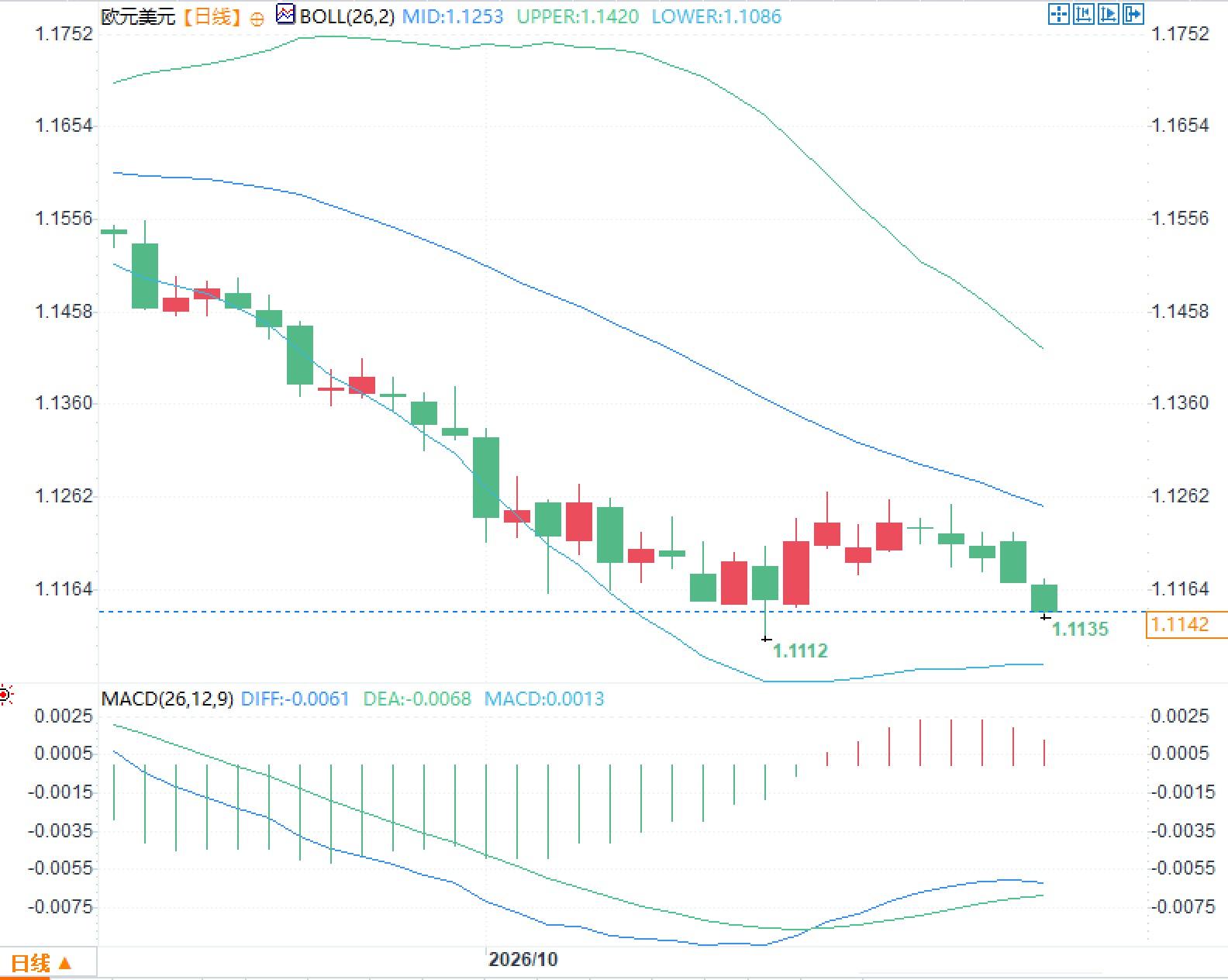
Specific manifestations of tightening credit conditions and shrinking demand
The survey covered the third quarter of 2026, with 159 banks participating and a 100% response rate. Corporate lending standards tightened net by 9%, higher than the previously expected 5% and the previous quarter's 7%, primarily driven by increased risk perception and decreased risk tolerance. Some banks cited pressure from geopolitical uncertainty and energy price volatility. Consumer lending standards tightened net by 14%, while housing loan standards remained largely unchanged. On the loan demand side, corporate loan demand declined net by 6%, reversing the 3% growth of the previous quarter; housing loan demand fell net by 27%, the largest decline since the third quarter of 2023; and consumer credit demand decreased slightly by 2%. Banks expect lending standards to continue tightening in the fourth quarter, with housing loan demand expected to weaken further. The suppressive effect of higher interest rates on borrowing activity is clearly reflected on the demand side, while deteriorating risk perception limits the scope for credit expansion.The actual path of monetary policy transmission
European Central Bank President Christine Lagarde recently pointed out that the energy shock is too large to be completely ignored, but a prudent response is still necessary to control inflation. She also stated that the significant rise in long-term interest rates has tightened financing conditions, which will slow economic growth and inhibit the transmission of energy prices to other prices, exceeding the extent predicted in September. The current deposit rate is 2.50%, and after two increases of 25 basis points each in June and September, actual credit conditions have tightened significantly. Survey results confirm the suppressive effect of rising interest rates on investment and consumption. Corporate loan demand has declined due to weakened willingness to invest in fixed assets and a partial shift to other financing channels, while housing loan demand has contracted sharply due to declining interest rates and consumer confidence. Banks have also shown a more cautious lending attitude in response to credit quality pressures and portfolio adjustments. These changes indicate that the tightening effect of monetary policy is being transmitted to the real economy through the banking system, but the speed and intensity of this transmission are still constrained by risk appetite.Inflationary pressures and the continued impact of energy factors
The Eurozone's harmonized inflation rate reached 3.8% in September, a near three-year high, with energy prices contributing significantly. Service prices rose 3.2% year-on-year, while food and other prices rose 1.3%. Core inflation rose to 2.5%. Lagarde emphasized that no significant secondary transmission of energy prices to other prices and wages has yet exceeded existing forecasts, but the short-term inflation path remains dominated by energy market volatility. Tighter credit conditions help curb demand-side pressures, thus creating conditions for a decline in inflation, but if energy prices remain high, the pace of inflation decline may slow. Bank surveys also show that risk perception and credit quality indicators have a net tightening effect on credit standards, with indicators related to corporate loans at 6% and consumer credit at 9%. This combination means that even if interest rates remain at current levels, cautious attitudes on the credit supply side may further suppress economic activity, adding another dimension to subsequent policy assessments.Considerations for balancing market pricing and policy
The market has largely priced in a rate-fixing decision at the October meeting, while the probability of a rate hike in December is around 70%. The survey results provide the ECB with additional grounds for caution, especially given the backdrop of fiscal pressures and slowing economic momentum; further tightening requires more data to confirm the scope. Corporate loan growth remained at 4.2% year-on-year in September, while household loan growth was 3.1%, and money supply growth remained stable, indicating that credit stock has not yet contracted sharply. However, the net decline in demand and tightening standards suggest that future liquidity may weaken. Lagarde emphasized that policy will be based on a comprehensive assessment of the inflation outlook, potential inflation dynamics, and the strength of monetary policy transmission, without pre-committing to a specific path. Fiscal conditions and energy price trends will continue to influence the pace of decision-making, while the banking system's risk-averse attitude provides a window for policy observation.Frequently Asked Questions
Question 1: The bank loan survey shows tightening credit standards and declining demand. Does this mean that current interest rates have already significantly suppressed the economy? Answer: The survey shows a net decrease of 6% in corporate loan demand and a net decrease of 27% in housing loan demand, mainly driven by higher interest rates and risk perception. This indicates that the tightening effect has already manifested through the banking channel. However, the growth rate of outstanding loans remained positive in September, and the degree of suppression needs to be judged comprehensively based on subsequent data. Question 2: How should we understand Lagarde's recent statements on financing conditions and inflation transmission? Answer: She pointed out that rising long-term interest rates will slow growth and reduce energy price transmission, exceeding the September forecast. She also emphasized that the energy shock is too large to ignore, but requires a cautious response. This reflects the policy's trade-off between controlling inflation and observing the transmission effect. Question 3: What is the relationship between the market's pricing of the ECB's December meeting and the survey results? Answer: The market has about a 70% probability of a rate hike in December. The tightening standards and weakening demand in the survey provide a cautious reason for further action, but inflation remains above the target. The final decision still depends on the evolution of subsequent inflation and economic activity data.- Risk Warning and Disclaimer
- The market involves risk, and trading may not be suitable for all investors. This article is for reference only and does not constitute personal investment advice, nor does it take into account certain users’ specific investment objectives, financial situation, or other needs. Any investment decisions made based on this information are at your own risk.